

Vitiligo Skincare Routine: A Dermatological Guide and Daily Regimen Template
Aggressively treating pigment loss often does far more harm than good. When vulnerable skin lacks melanin, standard brightening scrubs and harsh chemical exfoliants don't just cause redness; they can trigger entirely new depigmentation. Building an effective vitiligo skincare routine requires a different rulebook, one that calms underlying inflammation and fortifies the moisture barrier before targeting color recovery. If you feel frustrated by one-size-fits-all beauty advice, or live with the constant fear that an abrasive product might provoke a fresh flare, your hesitation is completely justified.
You shouldn't have to gamble with delicate skin or decipher contradictory ingredient lists on your own. In this dermatological guide, you'll discover how to assemble a gentle, science-backed daily regimen that shields unprotected patches from environmental stress and supports natural cellular recovery. Ahead, we share a clear, step-by-step AM and PM layering blueprint designed to defend your barrier, soothe irritation, and restore your skin with lasting confidence.
Key Takeaways
- Understand why depigmented skin suffers from higher transepidermal water loss and requires a barrier-first strategy rather than conventional brightening treatments.
- Discover which common active ingredients suppress melanocytes and how to replace them with supportive botanical compounds.
- Master a step-by-step AM and PM vitiligo skincare routine designed to shield vulnerable patches and lock in vital cellular moisture.
- Learn how to tailor your daily care between sensitive facial contours and friction-prone body zones like the hands and joints.
- Explore how consistent topical application and plant-powered nutrition support the natural timeline of skin tone recovery.
Understanding the Vitiligo Skin Barrier: Why Standard Routines Fail
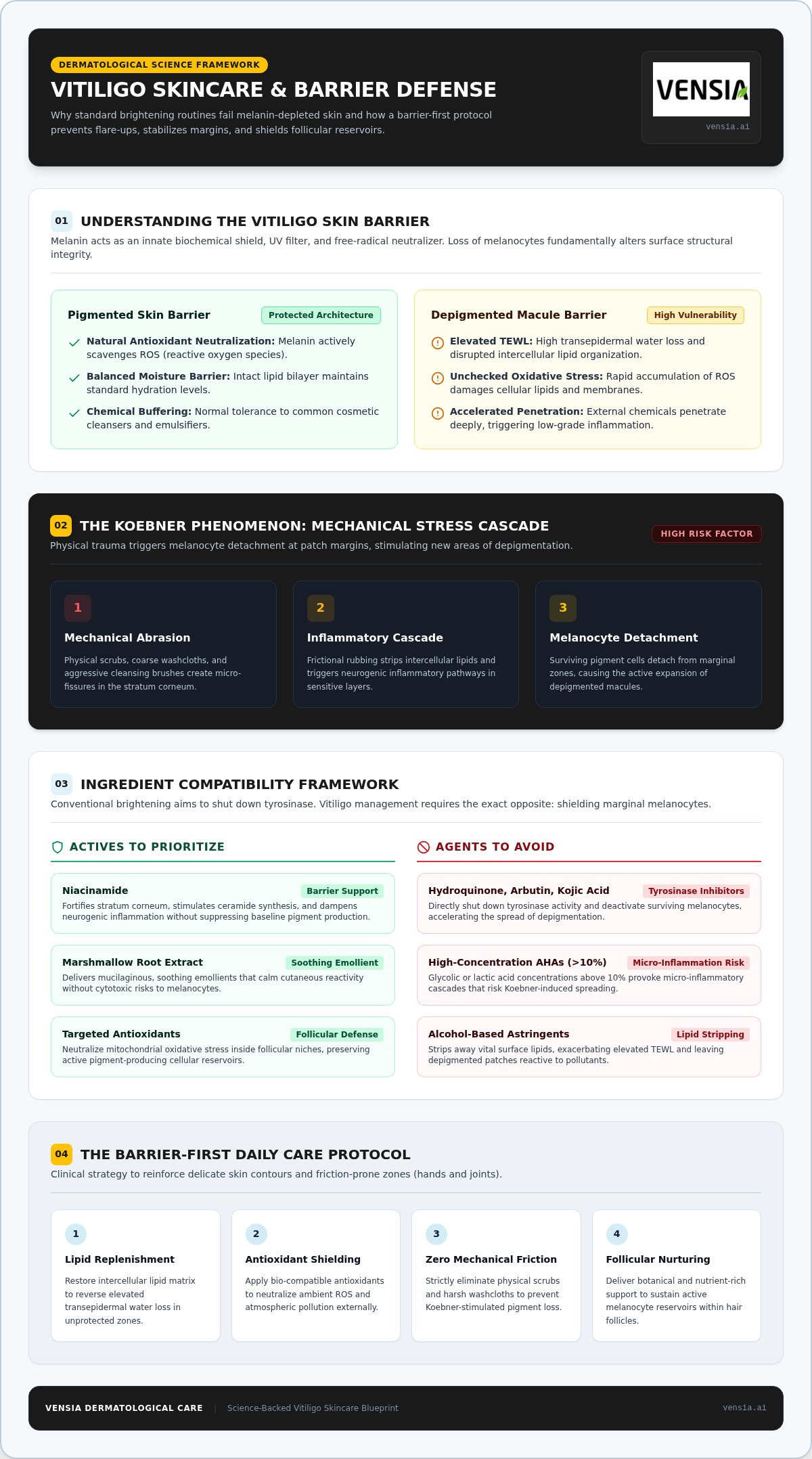
Melanin is far more than a biological pigment; it is your skin's primary biochemical shield. Beyond imparting color, melanin serves as an innate free-radical neutralizer and ultraviolet filter. When autoimmune activity eliminates functional melanocytes, the skin barrier undergoes a profound structural shift. Depigmented macules exhibit elevated transepidermal water loss (TEWL) alongside disrupted intercellular lipid architecture. Standard commercial cosmetics, frequently formulated with harsh emulsifiers and synthetic fragrances, trigger low-grade surface inflammation that melanin-compromised zones simply cannot buffer. In understanding vitiligo, recognizing this structural vulnerability is essential. A corrective vitiligo skincare routine must pivot away from conventional aesthetic goals to focus on lipid replenishment, antioxidant supplementation, and barrier defense.
The Consequences of Melanin Loss at the Surface
Without functional pigment, keratinocytes face direct exposure to ambient ultraviolet light and atmospheric pollutants. Deprived of melanin's natural free-radical scavenging capacity, depigmented skin accumulates reactive oxygen species (ROS) at an accelerated rate. This unchecked oxidative stress damages cellular lipids and weakens cell membranes, creating an environment where external chemicals penetrate too quickly. Because the skin can no longer shield itself from within, your topical regimen must step in. Applying bio-compatible topical antioxidants provides an external line of defense, neutralizing environmental stressors before they provoke deeper cellular irritation.
The Role of the Koebner Phenomenon in Skincare
Physical trauma is just as disruptive to depigmented skin as biochemical stress. Vitiligo skin is notoriously susceptible to the Koebner phenomenon, where micro-injuries, persistent friction, or mechanical abrasions stimulate new patches of depigmentation. Common cleansing habits often sabotage skin health unintentionally:
- Physical scrubs and coarse washcloths create micro-fissures in the vulnerable stratum corneum.
- Aggressive cleansing brushes strip away protective intercellular lipids, leaving the surface reactive.
- Frictional rubbing stimulates inflammatory cascades that prompt melanocyte detachment at patch margins.
Eliminating physical abrasives is non-negotiable within an effective vitiligo skincare routine. Protecting these fragile zones requires gentle handling and restorative care. To learn more about stabilizing vulnerable skin margins and avoiding environmental triggers, explore practical techniques in how to stop vitiligo from spreading.
Ingredient Evaluation Framework: What to Use and Avoid
Most commercial skincare products target dark spots by shutting down melanin synthesis. In vitiligo, that exact mechanism works directly against your goals. Skincare that suppresses tyrosinase activity can deactivate surviving melanocytes in marginal zones. Selecting the right ingredients for your vitiligo skincare routine requires filtering products through an explicit compatibility framework: supply cellular energy, reinforce moisture retention, and eliminate chemical cytotoxicity. Following dermatologist-recommended self-care principles starts with knowing what touches your skin daily.
Repigmentation-Friendly Actives to Prioritize
Prioritize non-irritating compounds that nurture follicular reservoirs and restore lipid integrity:
- Niacinamide: Fortifies the stratum corneum, stimulates ceramide synthesis, and dampens neurogenic inflammation without suppressing baseline pigment production.
- Marshmallow Root Extract: Delivers mucilaginous, soothing emollients that calm cutaneous reactivity without cytotoxic risks to melanocytes.
- Targeted Antioxidants: Neutralize mitochondrial oxidative stress inside follicular niches, preserving active pigment-producing cells.
Potential Triggers and Depigmenting Agents to Avoid
Screen product labels closely. Aggressive depigmenting chemicals and high-strength exfoliants trigger barrier collapse and melanocyte detachment:
- Hydroquinone, Arbutin, and Kojic Acid: Directly inhibit tyrosinase activity and can accelerate the expansion of depigmented macules.
- High-Concentration AHAs: Glycolic or lactic acid concentrations above 10% provoke micro-inflammatory reactions that risk Koebner-induced spreading.
- Alcohol-Based Astringents: Dissolve delicate surface lipids, driving up dehydration and cutaneous irritation.
Comparing Topical Solutions for Balanced Pigment
Depigmentation and hyperpigmentation require completely opposite strategies. While dark spots call for melanin-suppressing formulas, vitiligo demands barrier-nourishing topicals that support natural tone recovery. Check our pigmentation removal cream guide to see how traditional brightening mechanisms differ from restorative care. For sensitive patches needing daily botanical nourishment, exploring gentle solutions from VENSIA ensures your vitiligo skincare routine protects vulnerable zones while fostering long-term balance.
The Daily Vitiligo Skincare Routine Template: Step-by-Step
A successful vitiligo skincare routine relies on disciplined layering. Throwing random serums at depigmented patches invites chemical incompatibility and compromises your barrier. Instead, follow a structured sequence: cleanse without stripping, apply targeted nourishment, lock in hydration, and shield vulnerable tissue. Structuring these steps chronologically ensures every active ingredient absorbs effectively while protecting delicate borders from friction.
- Gentle Cleansing: Wash with a sulfate-free, non-foaming cream cleanser to lift impurities while maintaining lipid balance.
- Targeted Application: Smooth targeted restorative topicals directly over depigmented patches on completely dry skin.
- Barrier Reinforcement: Seal the area with a ceramide-rich cream to curb moisture loss and calm underlying tissue.
- Mineral Photoprotection: Finish during daylight hours with a broad-spectrum physical sunscreen rated SPF 50+.
The Morning Regimen: Defense and Cellular Shielding
Daytime care centers entirely on environmental shielding. Start with a splash of lukewarm water or an ultra-mild cream wash. Avoid hot water, which strips natural surface oils. Pat dry with a soft cloth using light pressure; never scrub. Next, pat in a soothing antioxidant serum to neutralize daylight-induced free radicals before they reach unprotected keratinocytes.
Sun protection is the most critical daytime step. Coat exposed patches thoroughly with a mineral sunscreen featuring zinc oxide or titanium dioxide. Mineral blockers sit atop the stratum corneum, reflecting UV rays without the heat absorption or chemical irritation common with synthetic filters. Reapply your mineral shield every two hours during prolonged sun exposure to preserve skin stability.
The Evening Regimen: Nourishment and Active Recovery
Nighttime is when cellular renewal peaks. Cleanse thoroughly to wash away mineral sunscreen, accumulated city grime, and excess sebum. A gentle emulsion breaks down physical UV filters without aggressive tugging. Towel-dry the skin gently, leaving no pooled moisture that could dilute your leave-on treatments.
Apply your targeted restorative topicals directly onto clean, dry depigmented macules. Let the formula absorb for two to three minutes. Finally, seal treated areas with a lipid-dense emollient. This nocturnal lipid envelope locks in moisture, blocks transepidermal water loss, and gives delicate tissue the undisturbed recovery window it needs to rebuild.
Customizing Your Routine: Facial Patches vs. Body Application
Your skin is not uniform across your body, and your approach shouldn't be either. Treating a macule on your cheek identically to one on your elbow overlooks clear anatomical realities. The facial epidermis is notably thinner, richly vascularized, and packed with sebaceous glands. Extremities like hands, wrists, and feet possess a thicker stratum corneum, minimal natural sebum, and endure constant physical wear. A targeted vitiligo skincare routine must adapt its textures and lipid densities to these distinct biological environments.
Facial Vitiligo Protocols: Gentle Care and Contrast Management
Facial skin absorbs active compounds readily, yet it reacts sharply to pore-clogging bases. Heavy balms can spark follicular occlusion, causing breakouts that risk secondary pigment disturbances. Focus on lightweight, non-comedogenic emulsions that deliver botanical actives directly to depigmented zones. When blending cosmetics or tinted mineral shields, use soft patting motions with your fingertips or a damp sponge; dragging makeup brushes across bare patches triggers unwanted micro-friction. For a comprehensive walkthrough on addressing sensitive facial contours, consult our anti vitiligo cream resource.
Body Protocols: Managing Friction, Roughness, and Extremities
Body vitiligo demands high-density lipid repair to counteract persistent dryness and everyday abrasion. Hands and feet face repeated handwashing, detergent contact, and shoe friction, stripping away moisture faster than sebum can replenish it. To protect these vulnerable zones:
- Trap Moisture Fast: Smooth rich hydrators over damp skin within three minutes of leaving the shower to seal water in the upper dermal layers.
- Soothe Rough Friction Points: Apply targeted blends of marshmallow root and barrier-building vitamins to rough elbows, knees, and ankles.
- Wear Breathable Fabrics: Swap restrictive elastic bands and coarse synthetic clothes for soft, loose-fitting cotton to prevent friction along waistbands and wrists.
Replenishing full-body hydration keeps rough patches supple while guarding against environmental damage. Explore how to fortify resilient skin with our niacinamide body lotion to restore smooth comfort from head to toe. For specialized full-body formulas designed specifically for melanin-depleted zones, shop the VENSIA skincare collection today to elevate your daily regimen.
Integrating Targeted Care with VENSIA: Long-Term Consistency
True cellular renewal requires patience. Melanocyte migration from deep within follicular reservoirs operates on an extended biological cycle, meaning visible shifts don't happen overnight. Skipping days or switching products erratically disrupts the calm microenvironment needed for natural recovery. Anchoring a dedicated vitiligo skincare routine into your morning and evening schedule delivers the continuous nourishment that vulnerable patches depend on.
Building Your 90-Day Regimen Commitment
Committing to a 90-day window provides the necessary runway for measurable progress. Subtle day-to-day shifts are difficult to see in the mirror, so structured self-monitoring keeps your momentum strong:
- Capture Baseline Photos: Take close photos of treated patches every 30 days under identical, indirect natural daylight. Avoid harsh artificial flash, which artificially washes out skin contrast.
- Assess Texture and Comfort: Note functional improvements first, such as reduced dryness, eliminated flaking, and improved surface smoothness.
- Evaluate Border Stability: Watch the outer perimeter of each patch. Calm, well-hydrated margins signal that your barrier defenses are successfully resisting environmental stress.
The VENSIA Daily Skincare Advantage
Targeted care demands formulations engineered specifically for melanin-depleted zones. VENSIA Anti Vitiligo Cream integrates directly into Step 2 of your daily regimen, delivering focused botanical compounds and nutritional actives directly to depigmented patches. To ensure full-body comfort, pairing targeted care with VENSIA Niacinamide Marshmallow Body Lotion reinforces the skin's lipid envelope across broader, friction-prone limbs.
Sustained care transforms vulnerable skin from reactive to resilient. By combining daily barrier defense with restorative botanical nourishment, you create the optimal environment for lasting skin health. Elevate your vitiligo skincare routine with the VENSIA collection today and support your skin with the focused nourishment it deserves.
Reclaim Balance and Confidence in Your Daily Care
Supporting pigment recovery begins with respecting your skin's unique biological needs. When you replace aggressive brighteners with barrier-first nourishment, vulnerable zones shift from reactive to stable. A well-constructed vitiligo skincare routine doesn't just shield depigmented patches from daylight stress; it replenishes vital structural lipids and creates the calm cellular environment necessary for natural balance.
Consistency transforms daily care into visible progress. VENSIA formulations are engineered specifically for compromised, melanin-depleted skin profiles. Infused with strengthening niacinamide and soothing botanicals like marshmallow root extract, each treatment integrates seamlessly into both morning and evening home routines. You don't have to navigate skin changes with uncertainty or settle for harsh products that compromise your barrier. Take control of your daily regimen and Explore VENSIA Targeted Skincare Solutions to give your skin the focused, restorative care it deserves.
Frequently Asked Questions
Can a daily skincare routine cure vitiligo permanently?
No, a skincare routine cannot cure vitiligo permanently because vitiligo is an underlying autoimmune condition. However, a targeted vitiligo skincare routine plays an essential role in managing it daily. Consistent care reinforces the compromised lipid barrier, reduces oxidative stress, and calms surface irritation. By defending vulnerable patches against environmental triggers and physical friction, a structured regimen supports natural repigmentation efforts and prevents avoidable barrier breakdown.
Why is broad-spectrum sunscreen mandatory for vitiligo patches?
Broad-spectrum sunscreen is mandatory because depigmented patches lack melanin, leaving underlying cells without natural ultraviolet protection. Without this biological filter, unshielded keratinocytes burn quickly under ambient daylight. Sunburns generate intense localized inflammation, which can trigger the Koebner phenomenon and cause patches to expand. Applying a physical mineral sunscreen with zinc oxide provides a continuous external shield, preventing UV-induced cellular trauma and reducing contrast with surrounding skin.
Can I use exfoliating acids like AHA or BHA if I have vitiligo?
You should generally avoid high-strength exfoliating acids on or near active vitiligo patches. Strong chemical exfoliants like glycolic acid or salicylic acid strip protective surface lipids and induce micro-inflammation. In sensitive skin, this chemical trauma can destabilize melanocytes and prompt new pigment loss. If you require gentle texture refining on unaffected areas, choose low-concentration, buffered formulas and never apply chemical peels directly across depigmented margins.
How long does it take to see results from a vitiligo skincare routine?
Most people notice barrier improvements within two to four weeks, while pigment recovery typically requires at least 90 to 180 days of disciplined care. Hydration levels, smoothness, and flaking improve rapidly once you restore essential lipids. However, melanocyte reactivation and migration operate on a much slower biological timeline. Adhering consistently to your morning and evening vitiligo skincare routine while taking monthly photos ensures you track genuine changes accurately.
Can I apply makeup or camouflage over my vitiligo skincare products?
Yes, you can safely apply cosmetic camouflage once your skincare products have fully absorbed. Allow your targeted treatments, moisturizers, and mineral sunscreen to set for three to five minutes before applying makeup. Always use gentle patting or stippling motions with clean fingers or a soft sponge. Never aggressively rub foundation or concealer onto patches, as physical friction can irritate the skin barrier and potentially provoke spreading.
Does moisturising help stop vitiligo patches from spreading?
Moisturizing does not cure the autoimmune process itself, but it significantly helps stabilize patch perimeters. Depigmented skin loses moisture rapidly, causing microscopic cracking and surface stress. Applying ceramide-rich creams or nourishing lotions reinforces the stratum corneum, locking in hydration and shielding delicate tissue from ambient allergens. By keeping the barrier intact, diligent moisturizing minimizes the localized irritation that frequently accelerates patch expansion.
What ingredients should someone with vitiligo avoid in daily cosmetics?
People with vitiligo should avoid skin-bleaching agents, synthetic fragrances, and harsh alcohol astringents. Ingredients like hydroquinone, arbutin, kojic acid, and industrial phenolic compounds directly suppress tyrosinase activity, which can deactivate surviving melanocytes. Additionally, synthetic scents, drying denatured alcohols, and sulfates strip away natural protective sebum. Review product labels carefully and choose restorative, soothing formulas that preserve barrier integrity rather than stripping it.


