

VENSIA Anti Vitiligo Cream: 2026 Repigmentation Guide
Why spend another morning layering heavy makeup over your skin when you could be stimulating the cells that actually create your natural color? It's exhausting to manage the social anxiety that comes with visible patches, especially when a new anti vitiligo cream fails to deliver. You likely feel the confusion between products that merely hide the white spots and those designed to encourage actual pigment return.
We agree that your skin deserves more than a temporary fix. This 2026 guide explains how specialized topical treatments support melanocyte restoration, helping you reclaim a more even and confident skin tone. You'll discover how to distinguish between different formulas and learn why a consistent 90-day cycle is the key to seeing real change. We will explore the latest advancements in skin health and provide a simplified daily routine that fits into your life without the complexity of clinical phototherapy.
Key Takeaways
- Distinguish between topical creams that stimulate melanocytes for actual repigmentation and cosmetic products that only provide temporary camouflage.
- Understand why a consistent 90-day application period is necessary to align with your skin's natural biological timeline and see visible results.
- Learn how a high-quality anti vitiligo cream offers a simpler, more accessible alternative to frequent in-clinic phototherapy sessions or harsh prescription steroids.
- Discover the step-by-step routine for maximizing cream absorption and why sun protection is vital for protecting newly restored pigment.
- Explore how professional-grade solutions like VENSIA combine dermatological precision with gentle ingredients for a balanced approach to skin recovery.
Understanding Anti Vitiligo Cream: Restoration vs. Concealment
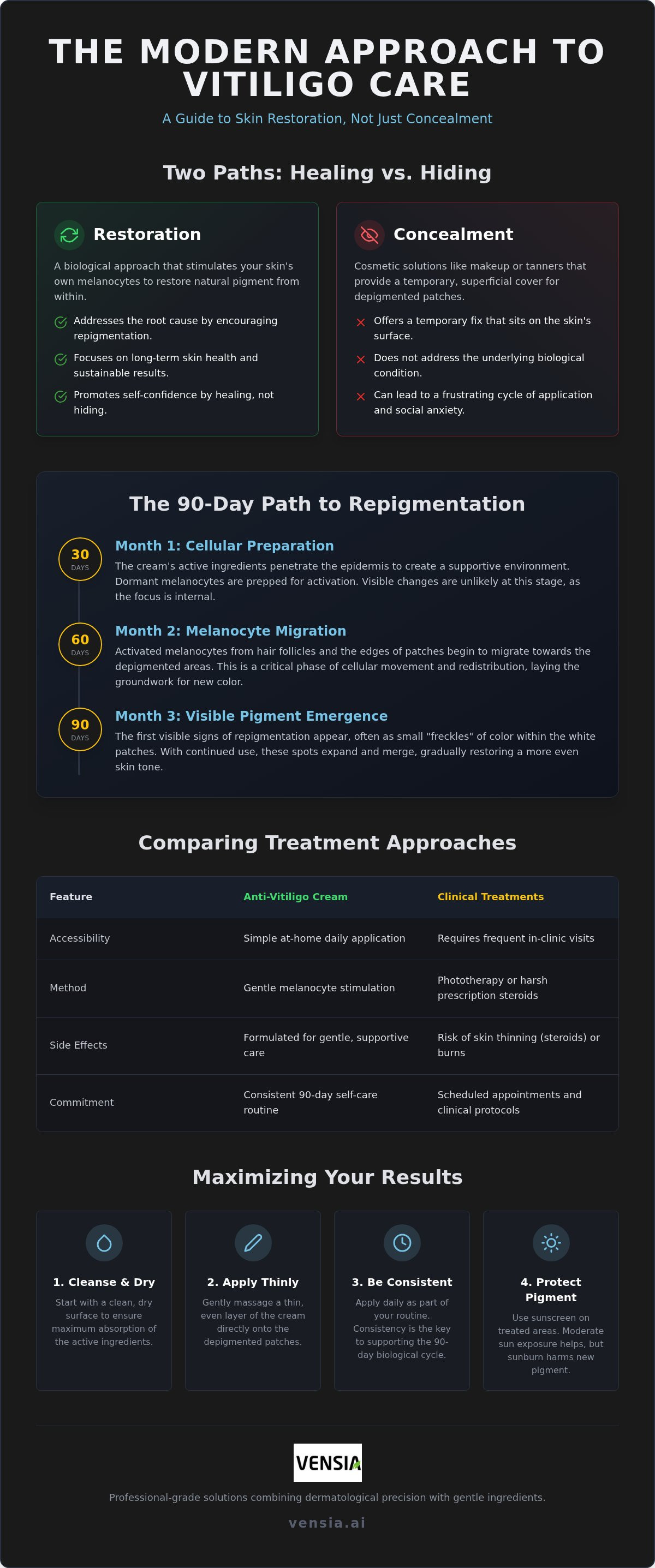
An anti vitiligo cream is a specialized topical formula designed to address the underlying cause of depigmented patches. Unlike cosmetic solutions that sit on the surface, these creams focus on stimulating melanocytes, the cells responsible for producing skin pigment. The primary goal is to return the skin to its natural, balanced state by encouraging the body to resume its own pigment production. It's a biological approach to a biological challenge.
Choosing restoration over concealment offers a profound psychological shift. While waterproof makeup or self-tanners provide a quick fix for visible patches, they don't address the biological reality of the condition. This constant cycle of hiding can lead to frustration and social anxiety. In contrast, using a restorative treatment represents a commitment to long-term skin health. It moves the focus from hiding to healing, fostering a sense of agency and restored self-confidence. For a comprehensive overview of vitiligo and its cellular impact, it's helpful to understand that these cells need specific signals to begin producing melanin again.
How Topical Repigmentation Works
Melanocytes live at the base of the epidermis. In areas affected by depigmentation, these cells are either dormant or inactive. Modern anti vitiligo cream formulas use active ingredients that penetrate the epidermis to reach these depigmented areas directly. By creating a supportive environment, the cream encourages these cells to migrate and multiply. Melanocyte stimulation serves as the core mechanism of action for effective repigmentation.
Who is the Ideal Candidate for This Treatment?
Success with topical restoration often depends on the current state of your skin. Candidates with stable vitiligo, where patches haven't changed significantly in size for several months, often see the most predictable results. However, those experiencing active spreading can still benefit by integrating a restorative cream into a supportive skincare routine. Early intervention is vital; addressing new patches quickly is often more effective than treating long-standing depigmentation. These formulas are typically suitable for all skin tones on the Fitzpatrick scale, from very fair to very dark skin. This path is specifically for individuals ready to commit to a 90-day application cycle, as results vary by individual and require time to manifest at a cellular level.
The Science of Repigmentation: Why Consistency Matters
Biological restoration isn't an overnight event; it's a marathon. Modern research has moved past the era where harsh corticosteroids were the only option. We now understand that a supportive, steady approach yields more sustainable results without the thinning of the skin often associated with long-term steroid use. Success relies on choosing an anti vitiligo cream that supports this biological pace. According to the FDA Report on Vitiligo Patient Experiences, many individuals feel frustrated by the slow pace of recovery, yet understanding the biology can help manage those expectations. True transformation requires patience and a commitment to the natural healing timeline of your skin.
The 90-Day Biological Cycle
The skin operates on a specific schedule. Expecting an anti vitiligo cream to work in a week ignores how cells actually function and regenerate. The process typically follows a three-month arc:
- Month 1: Your skin focuses on cellular preparation. The active ingredients begin to penetrate the epidermis to reach dormant cells, but you likely won't see visible changes yet.
- Month 2: This is the migration phase. Melanocytes from the edges of the patch or deep within the pores begin moving toward the surface of the skin.
- Month 3: Visible results often start as tiny "freckles" of color within the white patch. These spots eventually expand and merge to cover the area.
Biological restoration requires this full 90-day window to assess if a treatment is truly effective. Quick fixes are biologically impossible because your body needs time to build new, stable pigment structures.
Melanocyte Stimulation and Protection
Effective treatment doesn't just stimulate new growth; it protects the pigment you already have. Topical nutrients create a shield against oxidative stress, which often triggers further depigmentation. There is also a natural synergy between your cream and moderate UV exposure. Sunlight acts as a catalyst, helping the stimulated cells produce melanin more efficiently while the cream provides the necessary biological building blocks. Repigmentation begins at the hair follicle level. Because follicles contain a reservoir of pigment-producing cells, you'll often see color returning around hair roots first. Maintaining this steady progress is easier when you incorporate a research-backed formula into your daily regimen. This methodical approach ensures your skin remains healthy and resilient throughout the restoration process.
Comparing Anti Vitiligo Creams to Clinical Treatments
Choosing a path for vitiligo care often feels like a choice between extreme clinical intervention and doing nothing. Clinical phototherapy typically requires visiting a specialist two to three times per week. This creates a significant logistical and financial burden for many people. High-quality topical solutions offer a sophisticated, cost-effective alternative that fits seamlessly into your standard morning routine. While clinical treatments have their place, an at-home anti vitiligo cream provides a level of autonomy that clinical schedules simply cannot match. It serves as a reliable standalone option for many, especially those who prefer a non-invasive start to their repigmentation journey.
OTC Creams vs. Prescription Steroids
Traditional medical advice often leads patients toward high-potency corticosteroids. While these can be effective in the short term, prolonged use carries a documented risk of skin atrophy, where the skin becomes thin and fragile. Some patients also experience visible blood vessels or permanent stretch marks in the treated areas. Restorative creams represent a different philosophy. Instead of using immunosuppression to halt the condition, these formulas focus on active pigment stimulation. This gentle approach makes them suitable for long-term maintenance. You can support your skin's health and encourage melanocyte activity without the harsh side effects often associated with medical-grade steroids.
Complementary Care: Creams and Phototherapy
You don't always have to choose a single treatment path. Many individuals find that a specialized anti vitiligo cream primes the skin for light-based treatments. The topical nutrients help maintain the skin's moisture barrier, which is often stressed by concentrated UV light sessions. For those with limited access to specialized clinics or those living in remote areas, at-home topical care remains the most accessible first-line defense. If you're deciding between paths, consider your lifestyle and the current stability of your patches. Here is why many choose a home-based topical approach:
- Autonomy: You manage your routine at home on your own schedule without clinical appointments.
- Safety: You avoid the thinning and bruising risks linked to long-term steroid applications.
- Versatility: These formulas work as a standalone treatment or as a supportive layer alongside phototherapy.
Those who value a simplified, private routine often find that a professional-grade cream provides exactly what they need to achieve a more even skin tone. This approach allows you to maintain progress between clinical visits or act as a primary method for restoration.
Application Guide: Maximizing Your Repigmentation Results
Achieving visible results requires more than just owning a high-quality product; it demands a precise application technique. Even the most advanced anti vitiligo cream cannot perform its biological role if it can't penetrate the skin's surface or if it's applied sporadically. Consistency is your most powerful tool in this journey. Many users make the mistake of over-applying product, thinking more cream equals faster results. In reality, your skin has a limited absorption capacity. Focus on thin, even layers rather than thick applications that simply sit on the surface.
Tracking your progress is equally vital for maintaining motivation during the 90-day cycle. Take high-resolution photos under the same lighting conditions every two weeks. These visual markers often reveal small "freckles" of returning pigment that you might miss in the mirror during daily checks. Keeping a simple journal to note your application times and any lifestyle changes can help you identify what works best for your unique skin chemistry.
The Perfect Daily Routine
Success starts with a clean slate. Follow these three steps to ensure your skin is primed for restoration:
- Step 1: Gentle Cleansing. Use a mild, pH-balanced cleanser to remove sebum, sweat, and environmental pollutants. This removes the physical barriers that prevent the cream from reaching the deeper layers of the epidermis.
- Step 2: Targeted Application. Apply your anti vitiligo cream directly to the depigmented patches. Use a gentle circular motion to massage the product into the skin, which also helps stimulate local blood flow.
- Step 3: Full Absorption. Wait at least 10 to 15 minutes before applying other products like moisturizer, sunscreen, or makeup. This window allows the active ingredients to lock into the skin without being diluted or wiped away by subsequent layers.
Environmental Factors and Skin Health
Your environment plays a significant role in how your skin responds to treatment. While moderate, controlled sunlight can act as a natural catalyst for melanocyte activity, unprotected exposure is dangerous. Depigmented skin lacks natural melanin protection, making broad-spectrum SPF non-negotiable. Apply sunscreen over your treatment once it has fully absorbed to protect the vulnerable areas. Additionally, supporting your skin from the inside through a diet rich in antioxidants and managing daily stress can create a more receptive environment for repigmentation. If you're ready to start this methodical process, you can purchase VENSIA Anti Vitiligo Cream to begin your transformation today.
VENSIA Anti Vitiligo Cream: A Modern Solution
VENSIA represents a significant shift in how we approach depigmentation. We provide a professional-grade anti vitiligo cream that balances clinical precision with a supportive, holistic perspective. Our brand behaves like a knowledgeable guide, understanding that your journey is personal and often frustrating. We prioritize transparency over loud marketing. By setting realistic expectations and focusing on the biological 90-day cycle, we help you achieve a more even skin tone through steady, methodical progress. This clinical confidence is paired with an empathetic reassurance that recognizes the possibility of transformation.
Our commitment to your skin health goes beyond just the active ingredients. We've positioned ourselves as a compassionate advocate in a space that's often dominated by cold, pharmaceutical messaging. VENSIA is a calm, steady presence that relies on the strength of results rather than hyperbole. We understand the nuances of melanocyte restoration and offer a clear, evidence-based path forward. This persona of quiet efficiency ensures you receive exactly what you need to address your concerns without unnecessary fluff or disorganized sales pitches.
Why VENSIA Stands Apart
Our philosophy centers on the concepts of transformation and recovery. We don't view vitiligo as something to simply hide; we view the skin as a living system capable of restoration. The 2026 formulation updates specifically address user feedback regarding texture and absorption. These improvements ensure the cream feels light on the skin and absorbs rapidly, leaving no greasy residue behind. This makes it an ideal choice for sensitive areas like the face and neck, where comfort is just as important as results. By choosing a formula that avoids harsh chemical triggers, you support your skin's natural resilience while encouraging the return of its natural pigment.
Taking the First Step Toward Repigmentation
The most difficult part of any restoration journey is the beginning. We encourage you to commit to the 90-day challenge, giving your melanocytes the time they need to respond to stimulation. Integrating this step into your existing skincare routine is effortless. Simply apply the cream after your morning cleanse and allow it to absorb fully before layering your broad-spectrum SPF. This small daily habit creates the foundation for long-term change. While results vary by individual, the path to a more confident version of yourself starts with a single, consistent action. You don't have to manage this alone; our research-driven approach provides the structure you need for success. Experience the VENSIA difference and start your restoration journey today.
Start Your Journey Toward Balanced Skin Today
Restoration is a biological process that rewards patience and precision. Throughout this guide, we've identified how shifting from temporary concealment to active melanocyte stimulation creates a path for lasting change. By respecting the natural 90-day cellular cycle and maintaining a consistent daily routine, you can move past the frustration of cosmetic fixes and achieve a truly even skin tone. It's about giving your skin the specific biological signals it needs to return to its natural state.
Our dermatologically formulated anti vitiligo cream is designed for all skin types and ethnicities, providing a gentle yet effective alternative to harsh clinical interventions. We believe in providing accessible, professional-grade solutions for everyone. This is why we offer free worldwide shipping on all orders to support your recovery journey no matter where you live. You don't have to settle for temporary cover-ups when biological restoration is possible through steady, methodical care.
Shop VENSIA Anti Vitiligo Cream - Start Your 90-Day Journey
Your skin's potential for recovery is within reach. Take this first step with clinical confidence and reclaim the natural balance you deserve.
Frequently Asked Questions
How long does it take to see results from an anti vitiligo cream?
Visible results typically manifest within a 90-day cycle of consistent daily application. The first month focuses on cellular preparation at the base of the epidermis. By the second month, melanocytes begin migrating toward the surface. During the third month, you may notice small freckles of color merging together to cover the white patches. Consistency is vital because skin cell turnover is a slow biological process that cannot be rushed with over-application.
Can I use vitiligo treatment cream on my face and around my eyes?
Yes, VENSIA Anti Vitiligo Cream is formulated to be gentle enough for sensitive areas, including the face. When applying near the eyes, use a minimal amount and ensure the product does not enter the eye itself. The 2026 formulation updates prioritize a light texture that absorbs quickly without causing irritation. This makes it suitable for daily use on delicate skin where visible patches often cause the most social anxiety.
Do I need a prescription for VENSIA Anti Vitiligo Cream?
You don't need a prescription to purchase VENSIA products. We offer professional-grade, over-the-counter solutions that serve as a sophisticated alternative to prescription corticosteroids. Our creams focus on pigment stimulation rather than immunosuppression. This makes them accessible for worldwide shipping directly through our online platform. It's a non-invasive way to manage your skincare journey from the comfort of your home without the need for clinical consultations or medical procedures.
Will the white patches return if I stop using the cream?
Maintaining results depends on the underlying stability of your condition. While the cream helps restore pigment by stimulating melanocytes, it doesn't cure the root cause of the depigmentation. Once you achieve your desired tone, many users transition to a maintenance routine. Stopping treatment abruptly might lead to a slow loss of newly gained pigment if the melanocytes become dormant again. Consistent, long-term care remains the best strategy for lasting balance.
Is it safe to use repigmentation cream in the sun?
Controlled sun exposure can actually act as a catalyst for repigmentation when paired with a specialized treatment. However, depigmented skin is highly vulnerable to burning because it lacks natural melanin protection. You must always apply a broad-spectrum SPF over the treatment once it has fully absorbed. This protects the new, fragile pigment cells from UV damage. Finding the right balance between moderate light exposure and strict protection is key to a successful recovery.
Can children use anti vitiligo creams?
Our formulas are designed with gentle, research-backed ingredients suitable for various age groups. However, a child's skin is more permeable and sensitive than an adult's. We recommend performing a patch test on a small area first to ensure there is no reaction. It's also wise to consult with a healthcare professional before starting any new skincare regimen for children to ensure it aligns with their specific developmental needs and skin health requirements.
What is the difference between vitiligo cream and pigmentation removal cream?
These products serve opposite biological purposes. An anti vitiligo cream focuses on restoring lost color by encouraging melanocyte activity in white patches. In contrast, a pigmentation removal cream targets dark spots, fine lines, and age spots to lighten excess melanin. While both aim for an even skin tone, they use different biological pathways. VENSIA offers specialized formulas for both concerns, ensuring you use the correct treatment for your specific skin challenge.
How much cream should I apply to each patch?
You should apply a thin, even layer that covers the entire depigmented area. Using more cream won't speed up the biological timeline of repigmentation. Your skin has a specific absorption limit, and excess product will simply sit on the surface. Focus on massaging the cream into the skin until it's fully absorbed. This physical action also helps stimulate local blood flow, which supports the delivery of active ingredients to the dormant cells effectively.


