

How to Get Rid of White Patches on Skin: Causes and Care
How to get rid of white patches on skin depends on what’s causing them. Vitiligo, fungal infections, dry-skin conditions, sun exposure, and changes after a rash or injury can all leave pale patches. The first step is identifying the cause, since care that helps one condition may not suit another. A healthcare professional can assess the patches and recommend care based on their appearance and any other symptoms.
It’s understandable to want clear answers when a change in skin tone catches your attention. This guide covers common causes of white patches, how they’re treated, and how to care for your skin after diagnosis. It also explains which changes warrant prompt medical attention, so you can make informed choices instead of relying on guesswork or one-size-fits-all remedies.
Key Takeaways
- White patches can have different causes, so identifying the underlying condition is the first step toward choosing suitable care.
- Notice how patches look and change over time; spreading, persistent, itchy, painful, or changing spots should be medically assessed.
- Sun protection can help limit further UV damage, especially when pale spots are linked to sun exposure.
- Tinea versicolor may need antifungal treatment, and skin tone can take several months to return after treatment begins.
- After diagnosis, gentle skin care, regular moisturizing, and condition-specific advice can support skin comfort and protection.
What’s Causing White Spots on My Skin?
White patches can result from changes in pigment, inflammation, fungal infections, or sun damage. Their location, texture, and progression can help distinguish causes such as vitiligo, eczema, and tinea versicolor.
Common Causes of White Spots
White spots can have several causes, and identifying the cause matters because each may need different care. Vitiligo develops when the immune system attacks melanocytes, the cells that produce pigment. Tinea versicolor, a fungal infection, can create small, scaly patches on the chest, back, or arms. Pityriasis alba, a mild form of eczema often seen in children, can cause pale, sometimes itchy or scaly patches, usually on the face. Sun exposure and skin trauma, including burns or rashes, can also leave lighter areas.
Some post-inflammatory patches fade over time, while others remain. Pityriasis alba often improves on its own, though this may take several years. Vitiligo patches are usually permanent, so new or changing areas deserve attention rather than assumptions about their cause.
Distinguishing Sun Spots, Vitiligo, and Fungal Infections
White sun spots, or idiopathic guttate hypomelanosis, are usually small, flat, harmless marks linked to long-term sun exposure. They commonly appear on exposed areas such as the arms, legs, and face, and are described as nonprogressive. Vitiligo can form larger, irregular patches that may spread as pigment-producing cells are lost. Tinea versicolor often looks different: patches may be dry, scaly, and lighter, pinker, or darker than the surrounding skin.
Texture and changes over time offer useful clues, but appearance alone can’t establish the cause. Scale or itch, for example, may occur with tinea versicolor or pityriasis alba, while vitiligo patches are often smooth. A clinician can examine the skin and, when appropriate, use tests to distinguish these conditions.
Recognizing Vitiligo and Itchy Patches
Vitiligo is a long-term condition that causes pale patches when pigment-producing cells are destroyed. It affects around 0.1-2% of the global population. Non-segmental vitiligo, the more common form, affects around 9 in 10 people with vitiligo. Segmental vitiligo follows a more localized pattern and affects around 3 in 10 children with vitiligo.
Itching alone doesn’t identify the cause. Pityriasis alba patches may be scaly or itchy, and tinea versicolor can also itch; vitiligo is recognized by pigment loss and patch patterns. Note whether an area changes, spreads, or develops scale, redness, or discomfort. These details can help explain your symptoms during an assessment.
Diagnosing White Patches
Dermatologists diagnose white patches by examining their color, borders, texture, location, and changes over time. A Wood’s lamp can help distinguish vitiligo from conditions such as pityriasis versicolor; during an examination, it is held 10 to 13 cm from the skin. For suspected fungal infection, a skin scraping or culture can help confirm the cause.
Other tests depend on the appearance of the patches and the suspected condition. A skin biopsy may help rule out autoimmune conditions such as vitiligo or lichen sclerosus. When assessing vitiligo, a blood test may check thyroid function. Tell the clinician when the patches began and whether a rash, burn, illness, or medication came first; these details can help guide the evaluation.
Idiopathic guttate hypomelanosis and sun exposure
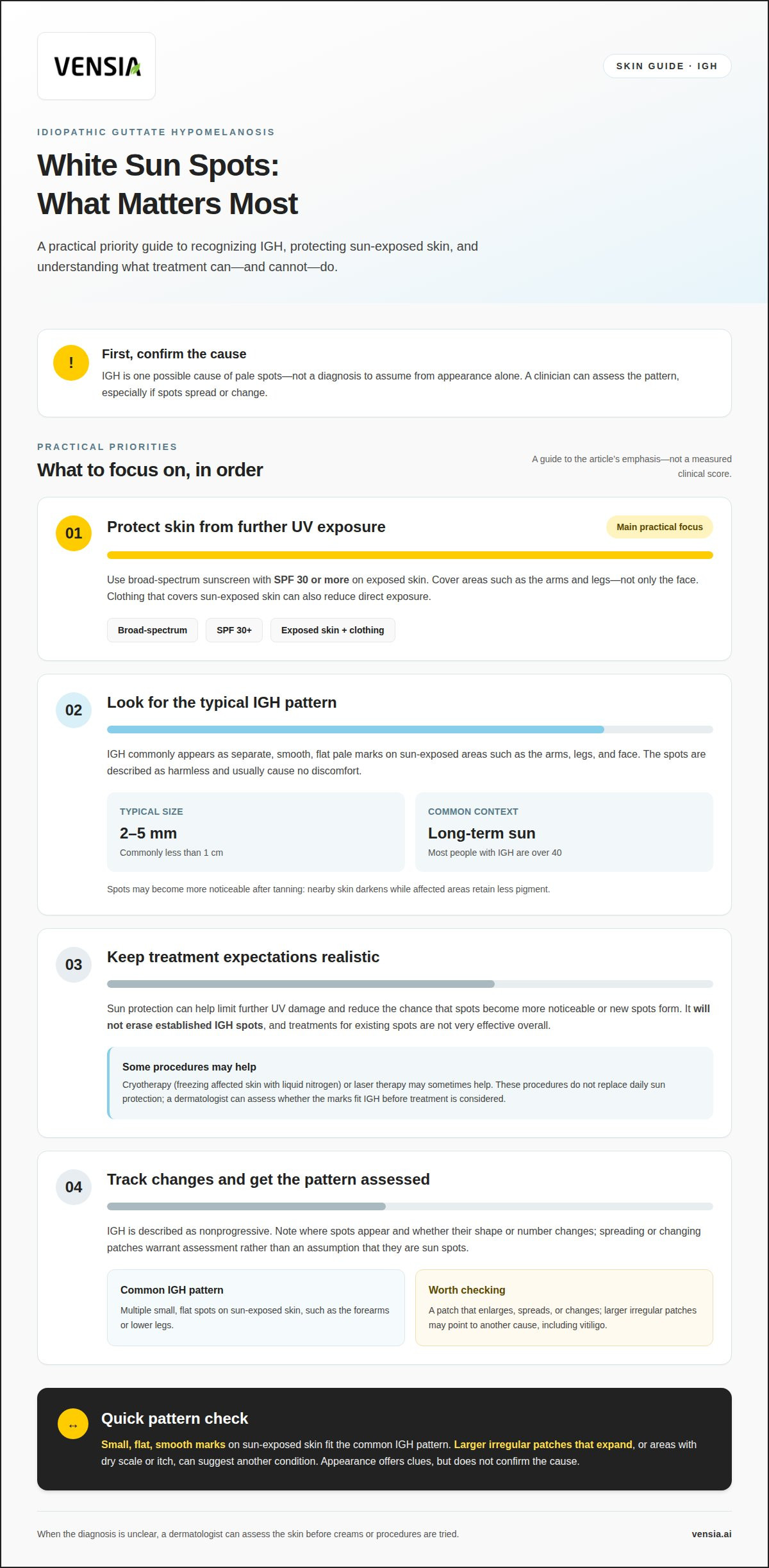
Idiopathic guttate hypomelanosis (IGH), also called guttate hypomelanosis or white sun spots, causes small, flat pale marks linked to prolonged ultraviolet exposure and reduced melanin. The spots are harmless and usually cause no discomfort. They commonly develop on sun-exposed areas, including the arms, legs, and face. Recognizing this pattern can help distinguish IGH from conditions that spread or have different surface changes.
IGH spots are usually 2 to 5 millimeters across and commonly measure less than a centimetre. They often appear as separate, smooth marks rather than large irregular patches. Most people with IGH are over 40 years old, and long-term sun exposure is associated with these pale areas. The spots may become more noticeable against surrounding skin, especially after tanning, because nearby skin darkens while the affected areas retain less pigment.
Sun protection is the practical focus after IGH has been identified. Use broad-spectrum sunscreen with SPF 30 or more on exposed skin. This can help protect against UV damage, reduce the chance that existing spots become more noticeable, and help prevent new spots from forming. Apply protection to exposed areas such as the arms and legs, not only the face. Clothing that covers sun-exposed skin can also reduce direct exposure.
Sun protection helps limit further damage, but it won’t erase established IGH spots. Treatments for spots that have already formed are not very effective overall. Cryotherapy, which freezes affected skin with liquid nitrogen, or laser therapy may sometimes help. These procedures differ from at-home creams and don’t replace daily sun protection. A dermatologist can assess whether pale marks fit IGH before considering treatment.
Consider the pattern as well as the color. Multiple small, flat spots on sun-exposed skin, such as the forearms or lower legs, fit the common IGH pattern. Larger, irregular patches that expand over time may point to another cause, including vitiligo. Dry scale or itch can also suggest a different skin condition. Tracking where spots appear and whether their shape or number changes gives a dermatologist useful details.
For example, note whether new marks appear on your arms after years of regular sun exposure, or whether a single patch is enlarging. IGH is described as nonprogressive, so spreading or changing patches warrant assessment rather than an assumption that they are sun spots. Discuss new treatments before trying creams or procedures, particularly if the diagnosis is unclear. Consistent sunscreen remains useful because ultraviolet exposure can make contrast more visible and contribute to further skin damage.
Tinea versicolor and antifungal treatment
Tinea versicolor, eczema, vitiligo, and skin injury call for different approaches. Matching treatment to the cause matters: an antifungal won’t treat pigment loss from vitiligo.
Tinea Versicolor Symptoms and Treatment
Tinea versicolor is a fungal infection that can cause small, dry, scaly patches on the chest, back, or arms. Patches may look lighter, pinker, or darker than nearby skin, and sometimes itch. Warm, humid conditions can encourage the fungus, and the condition is common in tropical climates. It isn’t harmful or contagious, but a professional can confirm the cause. A skin scraping or culture can help identify a fungal infection.
Antifungal creams, shampoos, or oral medication are used to treat tinea versicolor. A healthcare professional can recommend an option after assessing the patches and their location. Skin color may take several months to return after treatment begins, so fading discoloration doesn’t necessarily mean treatment has failed. Tinea versicolor often recurs, and a doctor may recommend maintenance treatment to help prevent another episode. Keeping skin clean and dry can help prevent fungal infections.
White patches after eczema or a skin injury have a different cause. Pityriasis alba, a mild form of eczema, can cause pale, sometimes itchy patches, particularly in children. Moisturizing helps manage dryness and itch; some patches improve on their own over time. After a rash, burn, or other inflammation, post-inflammatory hypopigmentation may leave lighter skin. These areas can be temporary or permanent, so avoid scratching or picking and use gentle, fragrance-free skin care.
Prescription Treatments and Patch Appearance
Prescription treatments depend on the diagnosis and aim to address inflammation or improve pigmentation. For vitiligo, options may include topical steroids, tacrolimus, or light treatments such as phototherapy, which can help repigment affected skin. Steroid creams may restore some pigment, but they don’t stop vitiligo from spreading. Treatments may improve appearance, though their effects don’t usually last. A clinician considers the cause and affected area when selecting care.
Topical creams and moisturizers serve different purposes. Moisturizer supports dry or irritated skin, including patches associated with pityriasis alba, but it doesn’t treat the fungus responsible for tinea versicolor. Antifungal products target that infection, while vitiligo care focuses on managing pigment loss. Choosing a cream based only on patch color may therefore overlook the underlying cause.
Treatment Risks and Side Effects
Treatment risks vary by product and duration of use. Long-term steroid cream use may thin the skin and cause additional color changes. Tretinoin can cause dryness or irritation, especially when treatment begins. These effects matter because irritation can add discomfort to already sensitive patches. Use prescription treatments as directed for the diagnosed condition, rather than applying them to every pale area.
Common causes of white skin patches
White spots can reflect pigment loss, inflammation, fungal growth, or another skin condition. Their texture, location, and history can help narrow down the cause.
How Pigment Loss Causes White Spots
Melanin gives skin its color, so reduced pigment can leave areas lighter than the surrounding skin. In vitiligo, an autoimmune process destroys melanocytes, the cells that produce pigment. In post-inflammatory hypopigmentation, a rash, burn, or injury can leave a pale mark after inflammation settles. These changes may look similar, but their causes and likely course differ.
For example, a patch that remains after a healed rash may be post-inflammatory, while vitiligo can form larger, irregular areas. Post-inflammatory spots may fade over time or remain. Pityriasis alba can also cause pale, round or oval patches, often on a child’s face, sometimes with dry or scaly skin. Identifying the pattern helps guide appropriate care.
Common and Less Common Causes
Common causes include pityriasis alba, tinea versicolor, vitiligo, sun exposure, and skin trauma. Tinea versicolor is a fungal condition that can cause scaly patches; pityriasis alba is associated with dry skin and commonly affects children ages 3 to 16. Sunburn, burns, or rashes can also lead to lighter areas. The same color change can therefore arise through different processes.
Some less common causes have distinct features. Milia are firm, raised, painless cysts containing trapped keratin, not flat areas of lost pigment. Lichen sclerosus often affects genital or anal skin and can cause itching, pain, bleeding, or blisters. It may scar and interfere with urination or sex, so patches in these areas need medical assessment.
Autoimmune Conditions and White Patches
Autoimmune conditions can affect skin pigment when the immune system targets the body’s own cells. In vitiligo, it attacks melanocytes, producing depigmented patches that may spread. Vitiligo may also be associated with thyroid disease and diabetes. This association doesn’t mean every person with white patches has either condition; it explains why a clinician may consider broader health context.
Other factors can contribute to pigment changes. Low vitamin B12, vitamin D, or calcium may play a role in pigment loss. A skin biopsy may help rule out autoimmune conditions such as vitiligo or lichen sclerosus when an examination leaves uncertainty. New, changing, or persistent white spots deserve attention, especially with itching, pain, bleeding, or spreading.
At-home skin care after diagnosis
Once a dermatologist identifies the cause, tailor daily care to that condition. A routine can protect exposed skin and ease dryness, but it won’t replace treatment for an active infection or immune-related pigment loss. For vitiligo, use sunscreen with a high sun protection factor to help prevent sunburn on affected areas. Daily sunscreen with SPF 50+ also helps protect the skin barrier from sun damage. Understanding how to get rid of white patches on skin starts with care suited to the diagnosis.
Choose gentle, fragrance-free products and avoid harsh skin care that can irritate or dry the skin. Moisturizer can help reduce dryness and irritation, especially with pityriasis alba. A niacinamide and marshmallow body lotion may support moisture and soothe rough, dry skin. Use it as skin care, not as a treatment for vitiligo or a fungal infection. It can support comfort, but it doesn’t restore lost pigment.
Protect your skin barrier by avoiding scratching or picking at pale patches. Repeated irritation can contribute to post-inflammatory hypopigmentation, leaving lighter areas after inflammation. If a patch becomes itchy, for example, use gentle care rather than scrubbing or exfoliating it. Keep skin clean and dry when managing tinea versicolor, and follow the antifungal plan recommended for that diagnosis. The infection may recur, so a clinician may recommend maintenance care.
Some options address appearance rather than the underlying cause. Skin camouflage cream can cover relatively small vitiligo patches. Retinoids may support skin-cell turnover, but tretinoin can cause dryness or irritation, especially when treatment starts. Consider the diagnosis and your skin’s response before adding active creams. Coconut oil and tea tree oil won’t restore pigment, even if they may improve overall skin condition.
Keep the routine simple: protect exposed areas from sun, moisturize dry skin, and avoid products that trigger irritation. If a prescribed topical treatment causes new dryness or discomfort, follow the instructions provided for that treatment. For pregnancy or breastfeeding, avoid hydroquinone, which can enter the bloodstream and may affect the baby. If you’re exploring how to get rid of white patches on skin, explore supportive daily skin care as part of a gentle moisturizing routine.
VENSIA: VENSIA Anti Vitiligo Cream
VENSIA Anti-Vitiligo Scar Removal Cream is a skincare option for people looking to care for vitiligo-affected skin as part of their personal routine. White patches can have different causes, so diagnosis matters before choosing a product. This cream is specifically formulated for vitiligo, while other pale patches may stem from fungal infection, eczema, sun exposure, or skin injury. It doesn’t replace a clinician’s diagnosis or treatment plan.
Keep care focused on the confirmed cause: follow medical advice for vitiligo and protect affected skin from sun exposure. If you’re considering adding a topical product to your routine, review the product information and how it fits your existing care. For more information about VENSIA Anti Vitiligo Cream, visit vensia.ai.
Choose a Skin-Care Plan That Fits Your Next Step
A thoughtful plan for how to get rid of white patches on skin starts with care that matches your diagnosis and priorities. Give your skin time to respond, keep your routine gentle, and note changes to discuss with a healthcare professional. These small, consistent choices can help you feel more confident about caring for your skin.
For targeted skincare, VENSIA offers VENSIA Anti Vitiligo Cream and VENSIA Anti Pigmentation Cream, which is positioned for dark spots, fine lines, wrinkles, ageing spots, and uneven skin tone. The VENSIA Niacinamide Marshmallow Body Lotion is described as moisturizing and soothing dry, rough skin. Choose products according to their stated purpose, and keep diagnosis-specific medical care separate from cosmetic skin care.
To explore VENSIA products or ask about your skincare options, contact VENSIA for personalized support. A clear next step can make your daily routine feel more manageable.
Frequently Asked Questions
Can I prevent white spots from appearing?
You can reduce some preventable contributors, but not every cause of white spots can be avoided. Protect exposed skin from ultraviolet light with broad-spectrum sunscreen, and avoid picking or scratching rashes, bites, or irritated areas. For example, covering your arms during prolonged outdoor exposure can limit sun damage. If spots appear despite these habits, focus on identifying their cause rather than adding more products to your routine.
Do white sunspots mean I have skin damage?
White sunspots can be associated with accumulated sun exposure, so they may signal past ultraviolet damage. Idiopathic guttate hypomelanosis is generally harmless, but appearance alone can’t establish that every pale mark is a sunspot. Consider where spots occur and whether their size or pattern changes. A clinician can assess uncertain marks, especially if a spot spreads, becomes itchy, or develops a different surface texture.
How do I know if my white spots are vitiligo?
You can’t reliably confirm vitiligo from a photograph or home observation alone. Note whether patches are smooth, irregular, or expanding, and record when you first saw them. A dermatologist may examine the skin with a Wood’s lamp to help distinguish vitiligo from other conditions. Bring a list of affected areas and changes you’ve noticed; that information can make the appointment more focused.
What causes vitiligo?
Vitiligo occurs when the immune system attacks melanocytes, the cells that make skin pigment. The exact reason this immune response begins isn’t established in the information available here. Vitiligo may be associated with thyroid disease or diabetes, but having white patches doesn’t by itself mean you have either condition. Mention relevant health history and any diagnosed autoimmune conditions during a medical assessment.
When to See a Dermatologist?
Arrange a dermatology assessment for patches that spread, persist, return, or change in appearance. Redness, itching, pain, or distress about the spots also makes professional advice worthwhile. Before your visit, note when the patches began and whether they followed a rash, burn, illness, or medication. A dated photo can help show how an area has changed without relying on memory.
What causes white patches on skin?
White patches can result from pigment loss, fungal infection, eczema, sun exposure, or inflammation after an injury. The same-looking mark may have a different cause depending on its texture, location, and history. For instance, a pale area after a healed rash differs from a scaly patch on the torso. Tracking these details helps a clinician choose an appropriate examination or test.
How can you tell vitiligo from tinea versicolor or eczema?
Vitiligo often forms smooth, irregular areas of lost pigment; tinea versicolor can appear scaly, sometimes on the chest or back. Pityriasis alba, an eczema-related condition, often creates dry or mildly itchy pale areas, particularly on a child’s face. These clues can guide an assessment but can’t confirm a diagnosis. A Wood’s lamp or skin scraping may help distinguish possible causes.
When should white patches on skin be evaluated by a doctor?
Have a doctor assess spots that are new, changing, spreading, or accompanied by pain or persistent itching. Seek an assessment for pale patches that don’t improve with basic skin care or appear after an illness or medication. Also pay attention to patches around the genital or anal area, especially if they cause discomfort, bleeding, or blisters. Note symptoms and timing so you can describe the changes clearly.


