

2026 Guide: Anti-Pigmentation Cream for All Skin Types
A cream labelled “for all skin types” may not be the right fit for your skin. If you’re searching for an anti pigmentation cream all skin types, that label can be reassuring, but it doesn’t explain how your skin may respond or whether the product matches the concern you want to address.
It’s sensible to check ingredient and usage information before adding a cream to your routine, especially if your skin is sensitive or prone to irritation. Pigmentation can have different causes, including post-inflammatory marks, melasma, and sunspots. A cosmetic product’s claims don’t automatically mean it suits every concern.
This guide explains how to assess product details, compare claims with realistic expectations, and introduce a cream cautiously. We’ll also look at VENSIA Anti Pigmentation Cream as an option to evaluate. Its listing identifies dark spots, fine lines, wrinkles, ageing spots, and uneven tone as concerns, but check the current product page for the full ingredients, directions, and warnings. You’ll also learn when it may be sensible to seek professional assessment rather than relying on a cosmetic cream alone.
Key Takeaways
- Understand what an anti-pigmentation cream may address cosmetically, and why a change in skin colour may need closer assessment.
- Learn why “all skin types” is only a starting point, and how to consider sensitivity as well as skin type.
- Compare the information that matters, including ingredients, directions, warnings, and package size.
- Introduce a cream cautiously and monitor how your skin responds.
- Assess whether VENSIA fits your concern and routine by checking current product details and treating listing claims as claims, not proven results.
Anti-pigmentation cream for all skin types: what should it help you assess?
An anti-pigmentation cream is cosmetic skincare marketed to improve the appearance of uneven skin tone. That stated purpose is not the same as diagnosing why an area of skin looks darker or medically treating its cause. The distinction matters: a product description can help you decide whether the cream’s intended use matches your concern, but it can’t identify the cause of that concern.
For background on what is hyperpigmentation, you can explore how the term covers different forms of increased skin pigmentation. Dark areas that look alike can have different causes. If a change in colour is new, changing, or worrying you, consider seeking professional assessment instead of relying on a cosmetic product description to explain it.
A cosmetic appearance claim describes what a product is intended to improve visually. It does not diagnose a skin change or establish medical treatment.
Which pigmentation concerns might a cream’s product description mention?
Product descriptions may mention dark spots, age-related spots, or uneven tone. These are appearance concerns, not diagnoses, and marks that look similar can have different causes. Check whether the product wording matches what you want to address, while remembering that a label alone can’t establish whether the product is appropriate for a particular skin change.
VENSIA’s listing identifies dark spots, fine lines, wrinkles, ageing spots, and uneven tone as concerns. Treat this as the product’s stated focus, not proof of guaranteed results. If your concern doesn’t match the description, or you’re unsure what a mark is, seek appropriate professional assessment before choosing a cosmetic cream.
What does all skin types mean when choosing skincare?
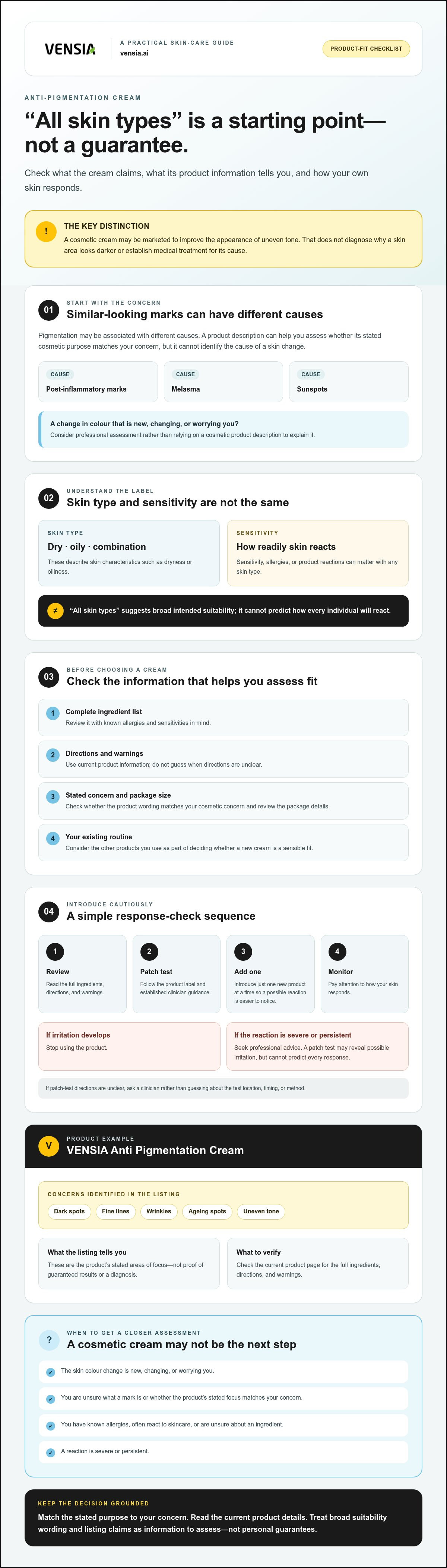
“All skin types” is broad suitability wording, not a promise that every person will tolerate a formula. Skin type and sensitivity are different considerations: someone may describe their skin as oily or dry and still experience sensitivity, allergies, or reactions to particular products.
Before buying, check the complete ingredient list, directions, and warnings in the current product information. Consider known allergies and the other products in your routine, since both can affect whether a new cream is a sensible fit. Treat the anti pigmentation cream all skin types label as one detail to assess, then weigh it against your own skin’s needs and tolerance.
Does an anti-pigmentation cream really suit all skin types?
Not necessarily. An “all skin types” label offers a general indication of intended suitability, but it can’t predict how every individual will react. Skin type describes characteristics such as dryness or oiliness; sensitivity describes how readily skin reacts to products or other factors. They can overlap, but they aren’t the same. Someone with oily skin, for example, may still have known ingredient allergies or a history of sensitivity.
Treat the phrase anti pigmentation cream all skin types as a starting point for checking fit, not as a personal guarantee. Review the full ingredient list and directions, and consider whether the product’s stated purpose fits your existing needs and routine. The American Academy of Dermatology explains dermatologist-recommended treatments for dark spots, including ingredients and care considerations. If you’re unsure about an ingredient, have known allergies, or often react to skincare, ask a clinician for advice before trying a new product.
How should different skin types assess a product?
Whether your skin is dry, oily, combination, or sensitive, compare the product’s directions and ingredients with what you already know about your skin. Don’t assume a cream is suitable just because its label uses broad wording. Also check that the available product information addresses the appearance concern you have in mind.
If your skin is sensitive or reactive, review the ingredients carefully and introduce just one new product at a time. That makes it easier to notice a possible reaction. Stop using the product if irritation develops. Seek professional advice if the reaction is severe or persistent, or if you’re unsure what to do next.
What can a patch test tell you?
A patch test may help you notice signs of irritation before adding a product to regular use, but it can’t predict every response. Follow the product label and established clinician guidance for how to patch test. If the directions aren’t clear, ask a clinician rather than guessing about the test location, timing, or method.
A patch test can reveal a possible irritation risk, but it can’t guarantee that you’ll tolerate a product in the future. Skin responses can vary, so keep paying attention to how your skin feels if you decide to use the product as directed. To assess VENSIA against your own concerns and tolerance, you can review VENSIA anti-pigmentation cream details and check the current ingredients and directions.
How to compare anti-pigmentation creams before you buy
Start with information you can verify, not the boldest promise on the label. Check the current product page and packaging for each cream, then compare the same details side by side. This helps you see whether a product’s stated purpose, directions, and warnings fit your needs, and identify information that’s missing.
| What to compare | What to check |
|---|---|
| Intended concern | Does the description mention the appearance concern you want to address? |
| Complete ingredients | Is the full ingredient list available, including details relevant to known sensitivities or allergies? |
| Directions | Are the instructions clear, and do they make sense for your routine? |
| Warnings | Are precautions or reasons to avoid use stated clearly? |
| Package size | Can you confirm the amount from current packaging or the product page? |
Which label details matter most?
Start with the complete ingredient list, directions, warnings, and available seller or manufacturer information. If a key detail isn’t provided, don’t fill the gap with assumptions. Confirm the package size and other listing details against current product information, since listings can change.
VENSIA’s anti-pigmentation cream is listed as 30 gm. Its product description names dark spots, fine lines, wrinkles, ageing spots, and uneven tone. These are useful details to compare with your concern, but they don’t independently verify results. For a broader look at product comparison factors, see this pigmentation removal cream comparison guide.
How can you assess claims without assuming results?
Separate verifiable details, such as package size or a published ingredient list, from claims about what a cream will achieve. Phrases like “improves the appearance of uneven tone” describe a cosmetic aim. Claims about clinical testing, specific performance, or guaranteed outcomes need supporting evidence. Don’t assume that a higher concentration or a familiar ingredient means a product will work better for you. Compare current labels and look for clear evidence behind quantified or clinical claims.
For general ingredient context, Northwestern Medicine’s overview of top dermatologist-recommended ingredients discusses skincare ingredients used for different concerns. It can help you understand terms on a label, but it doesn’t establish that a particular cream contains an ingredient or will deliver a certain result. When comparing an anti pigmentation cream all skin types, weigh available product facts against your own needs. Treat unclear claims as questions to verify, not promises.
How to introduce an anti-pigmentation cream into your routine
A careful start can help you decide whether a cream belongs in your routine. Follow the product’s own directions rather than relying on generic advice: application frequency, amount, and compatibility with other products can vary by formula. Even with an anti pigmentation cream all skin types, the suitability wording doesn’t replace checking how your own skin responds.
What should you check before first use?
Before applying a cream, read the full ingredient list, directions, and warnings. Check the ingredients against any known allergies or sensitivities. If the label doesn’t provide enough information for you to use the product confidently, pause and seek clarification instead of guessing.
Follow the label’s patch-testing guidance, or ask a qualified professional how to proceed if the instructions aren’t clear. Introduce one new product at a time so it’s easier to notice a reaction. If you’re pregnant, receiving treatment, or uncertain about suitability, ask a qualified professional before use. Avoid adding other new products at the same time until you have a clearer sense of your skin’s tolerance.
How can you build a cautious routine?
Use a simple sequence:
- Read: Review the complete ingredients, directions, and warnings.
- Patch test: Follow the product label or established clinician guidance. A test can’t guarantee future tolerance.
- Introduce: Use the product only as directed, without adding several new products at once.
- Monitor: Pay attention to your skin’s response and stop if significant irritation or an unexpected reaction develops.
Sun protection also matters in a routine addressing visible discoloration. Consistent use of broad-spectrum sunscreen with at least SPF 30 is an important part of managing the appearance of spots and helping prevent new ones. Choose protection that fits your needs and follow its label directions.
Responsible skincare means following product directions consistently and pairing a discoloration-focused routine with sun protection. If you’re considering VENSIA, review the VENSIA anti-pigmentation cream details and check its current directions and warnings before deciding whether it fits your routine.
When should you pause use or seek professional advice?
Stop using the cream if significant irritation or an unexpected reaction occurs. Seek professional assessment for discoloration that’s changing, persistent, painful, or unexplained. A cosmetic cream’s description can’t determine the cause of a skin change. If something concerns you, getting appropriate guidance is a sensible next step.
Is VENSIA anti-pigmentation cream the right fit for your needs?
VENSIA’s product listing describes an anti-pigmentation cream in a 30 gm size, for women and men, and suitable for all skin types. It names dark spots, fine lines, wrinkles, ageing spots, and uneven tone as concerns the product is intended for. These are listing details, not independently verified evidence that the cream will deliver a particular result.
Who may want to consider this product?
The cream may be worth evaluating if you’re looking for a cosmetic product whose stated concerns align with yours. Check whether the product information addresses the appearance concern you want to focus on, and consider how the cream fits your routine. Broad suitability wording can’t establish that one formula will address every concern or suit every individual.
If your skin is sensitive, you have known allergies, or you already use other skincare products, review the current ingredient list and directions before deciding. Don’t rely on a product title alone to determine whether it’s appropriate for your skin.
What should you verify on the product page before ordering?
Check the current product page and packaging for the full ingredient list, directions for use, precautions, and package size. The listing identifies the size as 30 gm, but confirm current details before purchase. Look for support behind any claims about performance, testing, or suitability for all skin types. If important information is unclear or missing, consider seeking clarification before ordering.
Base your decision on three things: whether the stated concerns match your needs, whether the verified directions suit your routine, and whether the available product information gives you enough confidence to try it. If you can’t confirm the ingredients or understand the precautions, wait until you can. A product label can help guide your choice, but it can’t guarantee personal tolerance or a particular cosmetic outcome.
After completing those checks, you can explore VENSIA skincare and review the current listing for the anti-pigmentation cream. Treat its claims as product information to assess, then decide based on your needs and the details you’ve verified.
Choose your next skincare step with confidence
The label “all skin types” can help you shortlist a cream, but your decision should also reflect your skin’s tolerance, the concern you want to address, and the product’s verified ingredients and directions. That’s a practical way to assess an anti pigmentation cream all skin types without treating marketing language as a personal guarantee.
VENSIA’s listing describes a 30 gm anti-pigmentation cream for women and men, suitable for all skin types. It names dark spots, fine lines, wrinkles, ageing spots, and uneven tone as product concerns. These are listing details, not proof of a specific result. Before ordering, check the current product page for the full ingredient list, directions, precautions, and support for performance or suitability claims.
Start thoughtfully: follow the label, introduce the cream cautiously, and pay attention to your skin’s response. If a skin change is unexplained or concerning, seek professional assessment rather than relying on a cosmetic cream alone. To assess whether the product fits your routine, review VENSIA Anti Pigmentation Cream and its current product information.
Frequently Asked Questions
Is an anti-pigmentation cream suitable for all skin types?
Not automatically. An “all skin types” label is a starting point, not a guarantee that everyone will tolerate a formula. Skin sensitivity, known allergies, and products already in your routine can affect individual fit. Before choosing an anti pigmentation cream all skin types, check its complete ingredient list and directions, then introduce it cautiously. If you have a skin condition or remain unsure, ask a qualified healthcare professional before use.
Can anti-pigmentation cream remove dark spots completely?
No, don’t assume a cream will remove every dark spot completely. Outcomes may depend on the cause of the discoloration, the product’s verified formulation, use as directed, and your individual skin response. Treat product descriptions as claims to assess, not guaranteed outcomes. If a spot changes, persists, or concerns you, seek professional assessment rather than relying on cosmetic skincare alone.
How do I choose an anti-pigmentation cream for my face?
Start by identifying the appearance concern you want to address, then review the cream’s full ingredient list, directions, warnings, and intended use. Consider your skin’s sensitivity and the products already in your routine before adding something new. Don’t choose based only on broad suitability claims or a promised timeline. If facial discoloration is unexplained or changing, consult a qualified healthcare professional.
Should I patch test an anti-pigmentation cream before using it?
A patch test may help reveal irritation on a small area, but it can’t guarantee that a product won’t cause a reaction later. Follow the product label or ask a qualified professional for guidance rather than guessing at a testing method. Check the ingredient list for known sensitivities, introduce new products cautiously, and stop using the cream if a significant or unexpected reaction develops.
Can I use anti-pigmentation cream without sunscreen?
Sun protection is an important consideration when caring for visible discoloration, since sun exposure can affect the appearance of uneven tone. Follow the cream’s directions and choose sun protection that suits your routine and skin. Don’t assume an anti-pigmentation cream replaces sunscreen. If discoloration persists or you need advice tailored to your skin, ask a qualified healthcare professional.
How long does anti-pigmentation cream take to work?
There’s no reliable timeline that applies to every cream or every person. Results may depend on the concern’s cause, the product’s verified formulation, how it’s used, and individual skin response. Be cautious of guaranteed or unusually rapid promises. Check what the product information can substantiate, follow its directions, and seek professional advice if discoloration changes or remains concerning.
What should I check before buying VENSIA Anti Pigmentation Cream?
Check the current product page for the complete ingredients, directions, warnings, package size, and support for its suitability claims. The available listing describes a 30 gm cream for women and men and says it’s suitable for all skin types. It also names several appearance concerns, but these listing details don’t guarantee results. Consider your sensitivities and routine before deciding whether to try it.


