

Topical Creams for Vitiligo: A 2026 Comparison of Treatment Options
The strongest prescription isn't always the smartest choice for your skin's long term health. While many assume that heavy steroids are the only path to recovery, the reality of skin thinning often creates more anxiety than healing. You want a solution that works without compromising your skin's integrity. Finding the right topical creams for vitiligo requires looking beyond the immediate fix to understand how different formulations interact with your biology.
It’s common to feel overwhelmed by the choice between medical grade treatments and cosmetic cover ups. You deserve a routine that offers visible repigmentation and halts the spread of white patches without a complex or invasive process. This comparison clarifies the 2026 landscape of vitiligo care, weighing the risks of traditional prescriptions against the benefits of restorative creams. We'll examine how to build a daily regimen that stabilizes your skin and restores your confidence through evidence-based results.
Key Takeaways
- Learn to distinguish between prescription medications that suppress the immune system and restorative creams that focus on long-term skin health.
- Understand the biological mechanisms of melanocyte activation and how to achieve repigmentation without the risks of skin thinning.
- Identify the best treatment strategy based on whether your vitiligo is currently active or stable across different areas of the body.
- Discover how to integrate topical creams for vitiligo into a daily, non-invasive routine that maximizes absorption and visible results.
- Gain a clear roadmap for halting the spread of white patches and restoring a more even, radiant skin tone.
Understanding Topical Creams for Vitiligo: Prescription vs. Restorative
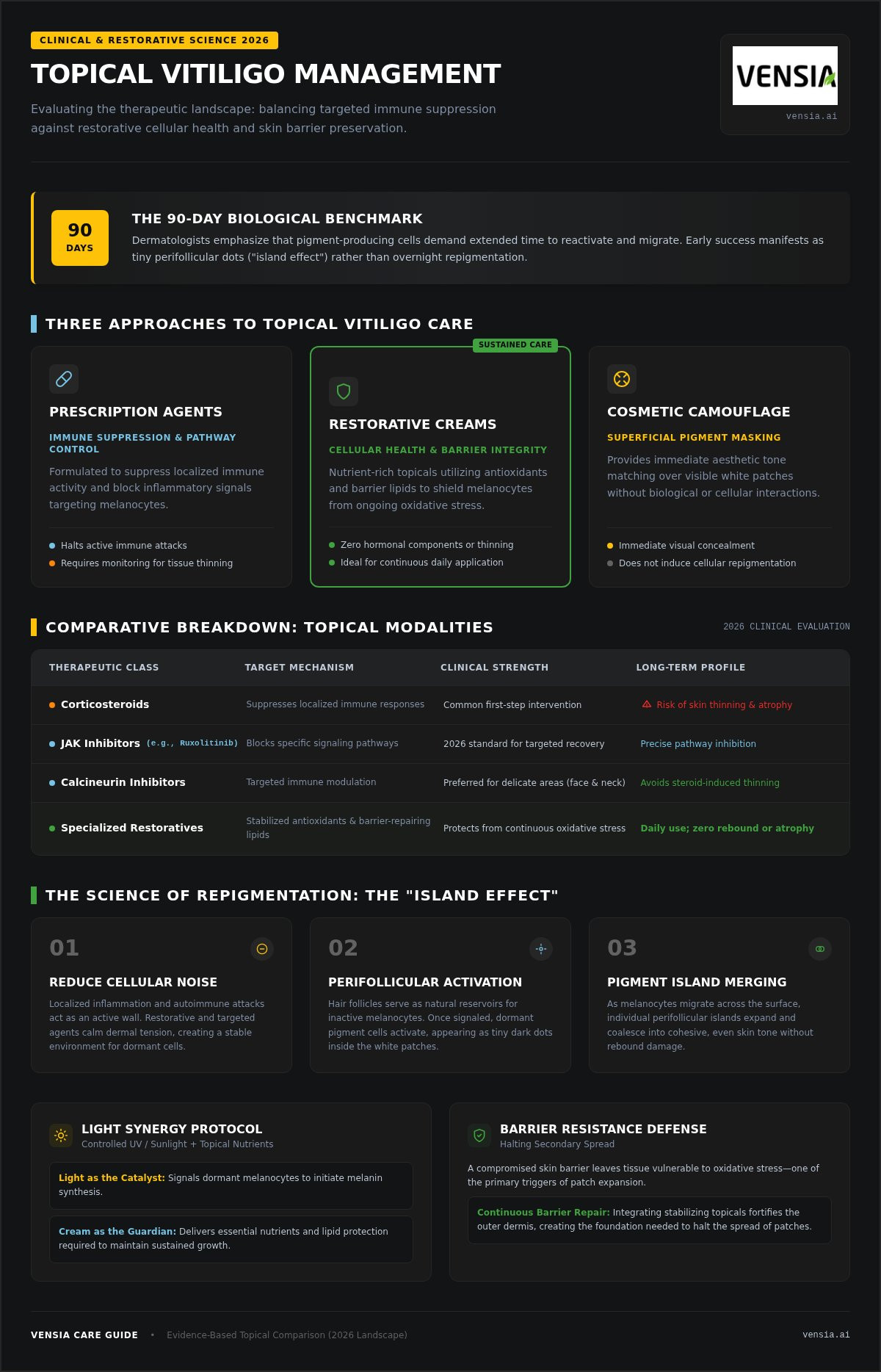
Localized treatment serves as the primary gateway for managing pigment loss. Since vitiligo often presents as isolated patches, applying targeted formulations allows for a concentrated approach without affecting the entire body. The market for topical creams for vitiligo generally falls into three categories: prescription medications that alter immune activity, restorative creams that support cellular health, and cosmetic camouflage that provides immediate coverage. Understanding the pathophysiology of vitiligo is essential to choosing the right path; the condition involves an autoimmune response where the body's immune system attacks its own melanocytes.
Success in this journey requires patience. Dermatologists often cite the 90-Day Rule because pigment producing cells require significant time to reactivate and migrate. You shouldn't expect overnight changes. Real success usually looks like perifollicular repigmentation, which appears as tiny, dark dots within the white patches, eventually spreading to fill the void. This slow but steady progress indicates that the melanocytes are returning to the skin's surface.
The Clinical Powerhouses: Prescription Options
Prescription options are designed to halt the active destruction of pigment. Corticosteroids remain a common first step to suppress localized immune responses, though long term use carries the risk of skin thinning or atrophy. By 2026, JAK inhibitors like ruxolitinib have become a standard for targeted recovery because they block the specific signaling pathways that lead to pigment loss. For sensitive areas like the face or neck, calcineurin inhibitors are frequently preferred. They offer immune modulation without the harsh side effects associated with traditional steroids, making them a safer choice for delicate skin.
The Rise of Specialized Restorative Creams
Restorative options represent a shift toward long term skin health and maintenance. These topical creams for vitiligo bridge the gap for users who want to avoid the cycles of high potency prescriptions. They focus on creating an optimal environment for melanocyte survival. Key ingredients in 2026 formulations include stabilized antioxidants and barrier repairing lipids that protect the skin from oxidative stress. Because these products lack the aggressive hormonal components of steroids, they are ideal for continuous daily use. They provide a sustainable way to maintain results and support the skin's natural recovery processes without the fear of rebound effects or skin damage.
How Vitiligo Creams Work: The Science of Repigmentation
Effective topical creams for vitiligo do more than just hydrate the surface. They address the underlying autoimmune conflict within the dermis to create a restorative environment. Repigmentation is the migration of melanocytes from the hair follicle to the skin surface. This process requires both the cessation of the immune attack and the stimulation of dormant pigment cells. When the immune system mistakenly targets melanocytes, localized white patches appear. Modern formulations work by calming this inflammation, allowing the skin to begin its natural recovery cycle.
A resilient skin barrier is your first line of defense against patch expansion. If the barrier is compromised, the skin becomes more vulnerable to oxidative stress, which can trigger further pigment loss. Understanding how to stop vitiligo from spreading through consistent barrier support is a critical component of any recovery plan. Recent breakthroughs in FDA-approved topical treatments for vitiligo demonstrate that targeting specific signaling pathways can successfully halt this cellular destruction and encourage color to return.
The Biological Mechanism of Recovery
Recovery often begins with the "island effect," where small spots of pigment emerge within a white patch. These dots usually appear around hair follicles because these areas contain a reservoir of inactive melanocytes. As these cells receive the right biological signals, they activate and begin to merge, eventually forming cohesive areas of natural skin tone. High levels of localized inflammation act as a barrier to this movement. By reducing this "cellular noise," restorative topicals clear the path for melanocyte migration and stabilization.
Synergy with Other Treatments
Combining topicals with controlled sunlight or UV therapy often accelerates results. The light acts as a catalyst, signaling the melanocytes to produce melanin, while the cream provides the necessary protection and nutrients to sustain that growth. You must balance this intensity carefully to avoid over-treating the skin. Excessive use of high-potency synthetic options can lead to skin thinning and irritation, which ultimately hinders the repigmentation process. A balanced approach with VENSIA Anti Vitiligo Cream offers a way to support this synergy while prioritizing long-term skin integrity and health.
Comparing the Top 3 Topical Strategies for 2026
Choosing among topical creams for vitiligo involves balancing the speed of repigmentation against the risk of long term skin damage. In 2026, the focus has shifted from aggressive clinical interventions to sustainable home based routines. Patients now prioritize options that integrate into their daily lives without requiring constant medical supervision. This transition recognizes that vitiligo management is a marathon, not a sprint, where safety and consistency are just as vital as efficacy.
Steroid-Based Creams: Pros and Cons
These remain a common defense for sudden, new patches. They work by halting the immune attack quickly to prevent further spread. However, the risk of skin atrophy or thinning is a major concern for long term users. Following American Academy of Dermatology treatment guidelines, physicians usually recommend "cycling" these medications. This involves using the cream for a set period, such as two weeks, followed by a rest period to allow the skin to recover. By 2026, there's a strong consensus that steroids should be used sparingly on children and sensitive facial areas to avoid permanent structural damage.
JAK Inhibitors and Modern Biologicals
JAK inhibitors represent a breakthrough in targeted therapy, specifically for nonsegmental vitiligo. Unlike broad spectrum steroids, these biologicals block specific pathways that cause pigment loss. While they show high efficacy in clinical trials, they often come with boxed warnings regarding systemic absorption. For many, the primary barrier isn't efficacy but accessibility. High costs and the need for ongoing medical prescriptions make them difficult to maintain as a lifelong solution for a chronic condition.
VENSIA Anti Vitiligo Cream: The Restorative Advantage
VENSIA Anti Vitiligo Cream offers a specialized alternative to harsh chemical cycles. It focuses on gentle recovery by supporting the skin's natural ability to restore its own tone. Because it lacks the aggressive side effects of steroids or biologicals, it's safe for all skin types and long term daily use. This restorative approach prioritizes a healthy skin barrier and steady melanocyte support. It's designed for those who want a reliable, non invasive routine that works in harmony with their skin's biology. By focusing on restoration rather than suppression, it provides a sustainable path for maintaining radiant, even skin without the anxiety of side effects.
Selection Guide: Choosing a Cream Based on Your Needs
Assessing the activity of your condition is the first step in selecting the right approach. Active vitiligo, characterized by rapidly expanding patches or the appearance of new white spots, requires immediate intervention to stabilize the skin. Stable vitiligo, where patches haven't changed for several months, allows for a more focused repigmentation strategy. Choosing topical creams for vitiligo based on these phases ensures you aren't just treating the symptoms but addressing the current state of your skin's immune activity. You must also consider your skin's specific sensitivity to avoid secondary irritation that could worsen the condition.
Treatment by Location
Different areas of the body react uniquely to topical treatments. Facial skin is thinner and more vascular, requiring milder topical concentrations than the hands or feet. For the face and neck, you should prioritize non-steroidal, restorative formulas that offer gentle repigmentation without risking long-term thinning or irritation. Conversely, the hands, feet, and joints are often considered stubborn areas. These regions have fewer hair follicles, which act as the primary reservoir for pigment-producing cells. Success here requires a potent, consistent application and a high degree of patience.
Your vitiligo type also influences your choice. Segmental vitiligo typically appears on one side of the body and often stabilizes quickly, while nonsegmental vitiligo is more common and can fluctuate over time. Tailoring your cream choice to these specific patterns helps you manage expectations and achieve more predictable results. Regardless of the type, the goal remains to create a stable environment where melanocytes can thrive.
The Role of Complementary Skincare
A successful regimen extends beyond a single recovery cream. Hydration is non-negotiable during vitiligo treatment because a dry skin barrier is more prone to the inflammation that triggers patch expansion. Using ingredients like niacinamide can significantly improve overall skin texture and resilience. Our VENSIA Niacinamide Marshmallow Body Lotion provides the soothing moisture and organic Vitamin C needed to support the skin's recovery process and improve dryness.
Sun protection remains the most essential partner to every vitiligo cream. Since depigmented patches lack melanin, they're highly susceptible to burning, which can lead to the Koebner phenomenon. This occurs when skin trauma, like a sunburn, causes new vitiligo patches to form in that area. Always apply a broad-spectrum sunscreen over your treatment cream to protect your progress and prevent secondary damage. By combining targeted recovery with robust barrier support, you create the best possible environment for lasting repigmentation.
The VENSIA Routine: Maximizing Your Repigmentation Results
Establishing a structured routine transforms the search for effective topical creams for vitiligo from a trial and error process into a predictable path toward recovery. The VENSIA Anti Vitiligo Cream serves as your daily recovery anchor, specifically formulated to stimulate melanocytes without the harsh cycles of clinical steroids. Before application, you must prep the skin through gentle cleansing and light exfoliation. Removing dead skin cells ensures the active ingredients penetrate deeper into the dermis rather than sitting on the surface. This simple preparation step significantly increases the efficacy of your treatment.
Consistency defines your success. You should establish a morning and evening application ritual to keep the restorative signals constant throughout the day. For those managing unevenness in the skin surrounding the white patches, integrating VENSIA Anti Pigmentation Cream helps create a more uniform appearance. This dual approach addresses both the depigmented areas and the hyperpigmentation that sometimes borders them, resulting in a balanced, radiant complexion. By treating the skin as a whole system, you achieve more natural looking results that blend seamlessly.
Step-by-Step Application for Best Results
Apply VENSIA Anti Vitiligo Cream directly to clean, dry patches twice daily. Once the cream is absorbed, layer it with VENSIA Niacinamide Marshmallow Body Lotion to provide essential barrier support and lock in moisture. This combination prevents the dryness often associated with intensive skin treatments. Monitoring your progress is vital for long term motivation. Take monthly photos under the same lighting conditions to track the appearance of new pigment islands. This data driven approach helps you see the subtle changes that occur over weeks of consistent care. For a deeper dive into these techniques, consult the VENSIA Anti Vitiligo Cream: 2026 Repigmentation Guide.
Beyond the Cream: A Holistic Approach
Recovery is most effective when you support skin health from within. Managing stress levels and maintaining a diet rich in antioxidants helps reduce the oxidative stress that can trigger new patches. VENSIA represents a modern, compassionate solution for those who want professional results without the clinical coldness of traditional pharmaceuticals. We believe in transparency and the strength of evidence based restoration. By choosing a routine that respects your skin's biology, you aren't just treating a condition; you're investing in your long term self assurance and skin health. Our approach provides exactly what is needed to address your concerns with quiet efficiency and proven results.
Empowering Your Skin’s Transformation
Choosing among the various topical creams for vitiligo requires a shift in perspective from immediate suppression to long term restoration. You've learned that success depends on understanding your skin's activity and tailoring your approach to specific body areas. Whether you're managing stable patches or halting a recent spread, the goal remains the same: creating a healthy environment where your melanocytes can thrive. Consistency and patience are your most valuable assets on this journey toward recovery.
VENSIA represents a new standard in dermatologically focused innovation. Our formulations prioritize skin health without the risks associated with harsh chemical cycles. By choosing an expert led path that is suitable for all skin types, you're investing in a future of balanced, radiant skin. It's time to move past the confusion of medical versus cosmetic options and embrace a compassionate solution that works in harmony with your biology.
Restore your skin's natural radiance with VENSIA Anti Vitiligo Cream. Your path to even skin tone is a steady process, and we're here to guide you every step of the way.
Frequently Asked Questions
What is the most effective topical cream for vitiligo in 2026?
The most effective choice depends on your specific goals and skin sensitivity. While prescription options offer rapid results for new patches, restorative topical creams for vitiligo like VENSIA Anti Vitiligo Cream provide a sustainable path for long term recovery. These formulations prioritize melanocyte activation without the harsh chemical cycles that often lead to skin thinning. By focusing on cellular health, you can achieve visible repigmentation while maintaining your skin's natural resilience and integrity.
Can vitiligo be cured with topical creams alone?
While a permanent cure for vitiligo doesn't exist yet, high quality topicals can successfully halt the spread and trigger significant repigmentation. Success often looks like the gradual return of your natural skin tone through the migration of pigment producing cells. Achieving these results requires a dedicated routine and realistic expectations. By combining targeted creams with protective barrier care, you can manage the condition effectively and maintain a more even, radiant complexion.
Are there any side effects to using vitiligo treatment creams long-term?
Long term side effects vary significantly between different product categories. Traditional prescription steroids are known to cause skin atrophy, thinning, and visible blood vessels if used without breaks. In contrast, restorative topical creams for vitiligo are formulated for continuous daily use. These options avoid aggressive hormonal components, making them ideal for those who need a reliable maintenance routine without the anxiety of permanent skin damage or rebound effects after treatment.
How long does it take to see results from a vitiligo repigmentation cream?
Patience is your greatest ally when starting a new regimen. Most users begin to see small islands of pigment around the hair follicles within the first 90 days of consistent use. Significant repigmentation usually takes between six and twelve months of dedicated morning and evening application. Because the biological process of melanocyte migration is slow, you shouldn't judge a product's efficacy before completing a full three month cycle of treatment.
Can I use vitiligo cream on my face and around my eyes?
You can use gentle, non-steroidal creams on the face and neck quite safely. Facial skin is thinner and more vascular than the rest of the body, so it absorbs products more quickly. This sensitivity makes it essential to choose restorative formulas that don't contain harsh synthetic acids or potent steroids. VENSIA's approach is designed to be mild enough for these delicate areas while still providing the necessary stimulation for pigment recovery.
Do I need a prescription for vitiligo topical treatments?
You don't require a prescription for restorative or cosmetic solutions. While clinical JAK inhibitors and high potency corticosteroids must be managed by a dermatologist, restorative creams are accessible for home based care. This accessibility allows you to start your recovery journey immediately without the need for clinical consultations. These over the counter options provide a professional grade alternative for those seeking a non-invasive, simple routine that fits into their daily life.
What happens if I stop using the cream once my pigment returns?
Pigment loss can sometimes recur if you stop your routine entirely once results appear. Vitiligo is a chronic condition, so maintaining a stable skin environment is critical to keeping your results. We suggest transitioning to a maintenance phase rather than stopping all care. Using a nourishing barrier support product like our Niacinamide Marshmallow Body Lotion helps keep the skin resilient and may prevent the immune system from re attacking the newly restored melanocytes.
Can children use topical creams for vitiligo safely?
Many restorative creams are safe for children because they avoid the systemic risks associated with high potency prescriptions. Children's skin is more permeable than adult skin, so it's vital to avoid aggressive steroids that can interfere with natural development. Always look for gentle, expert backed formulations that focus on restoration rather than suppression. These milder options provide an empathetic way to manage childhood vitiligo while prioritizing the long term health of their developing skin.


