

Vitiligo cream for sensitive skin: choosing a treatment
The gentlest-feeling cream isn’t always the right choice for vitiligo. Choosing a vitiligo cream for sensitive skin depends on the affected area and the treatment’s purpose. For sensitive areas such as the eyelids, lips, and genitals, a healthcare professional may prescribe topical calcineurin inhibitors when corticosteroids are ineffective or unsuitable.
It’s understandable to want treatment that supports repigmentation without adding irritation or worry, especially when patches are near the eyes or you’re pregnant. The right approach also depends on how vitiligo responds over time: visible changes can take months with some treatments.
This guide explains how treatment options differ, what to know about possible side effects, and why pregnancy and application around the eyes call for particular care. You’ll also learn what can influence repigmentation, so you can better understand your options and discuss a suitable plan with a qualified healthcare professional.
Key Takeaways
- Match treatment to the affected areas, the extent of vitiligo, and your personal circumstances; repigmentation can take time.
- Learn which reactions may occur with topical treatments and what changes to watch for as you use them.
- Pregnancy and breastfeeding are important considerations when weighing treatment choices and application.
- Take extra care with products used near the eyes, and follow appropriate application restrictions for sensitive skin.
- Use a cautious patch-testing approach before wider application, and explore VENSIA Anti Vitiligo Cream as a product option.
Choosing treatment based on disease and personal circumstances
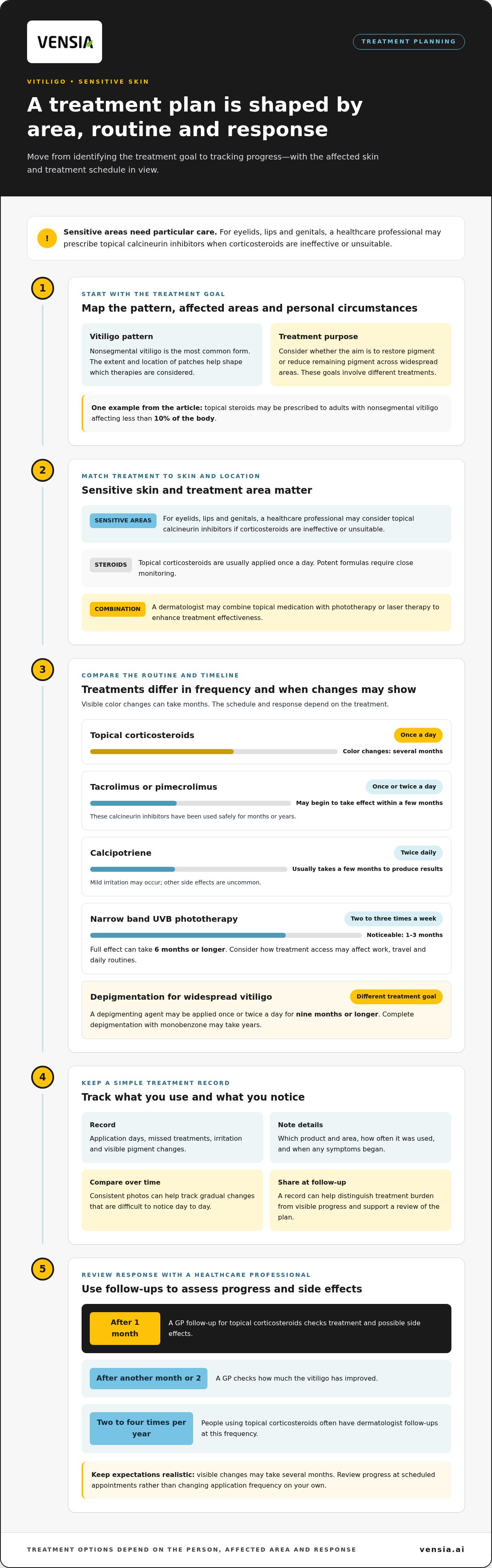
Start by identifying the vitiligo pattern, affected areas, and treatment goal. Nonsegmental vitiligo is the most common form, and vitiligo involves an immune response that appears to attack pigment-producing melanocytes. Topical steroids may be prescribed to adults with nonsegmental vitiligo affecting less than 10% of their body. The extent of patches and their location help shape which therapies are considered.
Treatment also depends on skin sensitivity and the area being treated. A potent topical corticosteroid requires close monitoring. Topical steroids are usually applied once a day, and color changes can take several months to appear. A GP follow-up appointment is scheduled after 1 month to assess treatment and check for side effects. After another month or 2, a GP checks how much vitiligo has improved. People using topical corticosteroids often have dermatologist follow-ups two to four times per year.
Other topical treatments have different schedules and timelines. Tacrolimus or pimecrolimus, both calcineurin inhibitors, are applied to affected skin once or twice a day. They may begin to take effect within a few months and have been used safely for months or years. Calcipotriene is applied twice daily and usually takes a few months to produce results. A dermatologist considers the treatment area, disease pattern, and tolerability when weighing these options.
Phototherapy can be combined with topical medication in some treatment plans. Narrow band ultraviolet B therapy is generally given two to three times a week. Changes may become noticeable after 1 to 3 months, while its full effect can take 6 months or longer. That schedule can affect work, travel, and daily routines, so include treatment access and personal priorities in the decision.
Keeping a simple record can help you judge whether a treatment plan fits your routine. Note application days, irritation, visible pigment changes, and missed treatments. For example, record whether a sensitive facial area feels uncomfortable after applying a cream, then share that observation at follow-up. Consistent photos can help track gradual changes that are difficult to notice day to day. Your record can also help distinguish treatment burden from visible progress.
Set expectations around duration. Topical corticosteroids may show results after a few months, while phototherapy can require 6 months or longer for its full effect. Early treatment can promote repigmentation, but the pace depends on the chosen therapy and affected skin. Review progress at scheduled appointments rather than changing application frequency on your own.
Treatment choices may depend on whether the goal is to restore pigment or reduce remaining pigment across widespread areas. A dermatologist may recommend combining topical medication with phototherapy or laser therapy to enhance treatment effectiveness. Consider the expected commitment: topical calcineurin inhibitors may be used safely for months or years, while complete depigmentation with monobenzone may take years. A depigmenting agent for widespread vitiligo may be applied once or twice a day for nine months or longer, so discuss the routine and likely duration before choosing it.
Common adverse reactions
Some topical vitiligo treatments can irritate the skin, but reactions vary by medicine. Topical calcipotriene may cause mild irritation; other side effects are uncommon. Note when discomfort begins, where it appears, and whether it settles or worsens. These details help a dermatologist review the treatment and affected skin.
Monobenzone, which is used for depigmentation, can cause irritation and redness. It works differently from creams intended to restore pigment in white patches, so the treatment goal matters. Record where you apply it and any change in redness, especially if it spreads beyond the treated skin. Don’t apply more product to irritated areas to try to speed up results.
Topical calcineurin inhibitors have a separate safety consideration. The FDA has warned of a possible link between these medicines and lymphoma and skin cancer. This is a warning about a possible link, not a statement that every user will develop either condition. Follow the prescribed application instructions and treatment duration, and discuss concerns about the warning with the dermatologist overseeing your care.
Topical corticosteroids require close monitoring because treatment uses a potent formula. A GP follow-up appointment is scheduled after 1 month to assess treatment and check for side effects. People using topical corticosteroids often have dermatologist follow-ups two to four times per year. Keep these appointments even if the treated area looks unchanged; color changes can take several months to appear.
Not every change near a vitiligo patch is a reaction to cream. Vitiligo is considered an autoimmune disorder in which the immune system appears to attack pigment-producing melanocytes. A new or enlarging white patch may reflect the condition itself, while redness or irritation after applying a product may indicate a skin response. Note the timing and location rather than guessing at the cause.
A brief treatment log can make a review more useful. Include the product name, application area, frequency of use, and the date symptoms began. For example, record whether mild irritation followed calcipotriene use and whether it eased after you stopped applying it. Bring these details to your next appointment so the dermatologist can assess the reaction alongside your treatment plan.
Stop using the cream and contact a dermatologist if you develop painful or persistent irritation, spreading redness, swelling, or blisters. Seek prompt medical advice for a severe or rapidly worsening reaction instead of applying another product to cover it.
Serious infections, mortality, malignancy, major adverse cardiovascular events, and thrombosis have been observed in patients treated with JAK inhibitors for inflammatory conditions. If you’re treated with one of these medicines, discuss these potential risks with the clinician managing your care and raise any concerns so your treatment plan can be reviewed in light of your circumstances.
Pregnancy and breastfeeding information
Pregnancy, trying to conceive, and breastfeeding are important details when reviewing vitiligo treatment. Before starting or continuing a cream, write down its exact name, active ingredients, application area, and frequency of use. Include whether you apply it near the face, chest, or another area that may have close contact with a baby. Share those details with the healthcare professional managing your care rather than relying on the product category alone.
Different creams can contain different active ingredients, so the phrase “vitiligo cream” isn’t enough to judge suitability. Bring the packaging or ingredient list for each product, including nonprescription creams and moisturizers. If you use more than one product, note the order and application sites. For example, distinguish a cream applied to white patches from a moisturizer used across dry skin. This gives the reviewer a clear picture of your full routine.
Prescription treatment also needs to be considered by its exact medicine and purpose. The FDA approved topical ruxolitinib to help restore skin color in people with vitiligo who are 12 years and older. That age approval alone does not answer whether it suits a person during pregnancy or breastfeeding. Share any ruxolitinib use with the clinician overseeing your pregnancy or infant care, and ask for guidance specific to its use and your circumstances.
Keep a short record while your treatment plan is being reviewed. Note when you started each product, how often you apply it, and whether you notice redness, discomfort, or changes in patches. If you’re breastfeeding, identify the treated areas and how they relate to feeding or skin contact. Don’t assume that a product used safely before pregnancy remains the right choice now; consider your current health circumstances with a healthcare professional.
Also mention supplements and sun exposure. People with vitiligo who aren’t exposed to the sun should consider a daily vitamin D supplement containing 10 micrograms. If you’re pregnant or breastfeeding, include that supplement in the same review as topical products. Give the clinician the supplement name and amount, rather than treating it as unrelated to your skincare plan.
For a practical review, prepare three items: the product packaging, a list of application areas, and your current pregnancy or breastfeeding status. Add a note about treatment changes or new redness since your last appointment. These details help the clinician weigh the treatment goal, affected patches, and your circumstances before recommending whether to start, continue, or change a cream.
Use around the eyes and restrictions on application
For daily care alongside vitiligo cream, choose a mild cleanser and a simple, fragrance-free moisturizer. Keep skincare products separate from medicated cream unless its directions or your doctor say otherwise, and avoid layering additional active treatments over the same area.
Eyelid skin is delicate, so both the medicine and application site matter. A healthcare professional may prescribe topical calcineurin inhibitors for vitiligo affecting sensitive areas, including the eyelids, lips, and genitals, when corticosteroids are ineffective or unsuitable. A doctor weighs the area, treatment goal, and previous response before choosing an option. Follow the exact directions for the prescribed medicine.
Keep cream out of the eye itself. Apply it only to the affected skin specified in the treatment instructions, using clean hands and a careful, controlled amount. If cream gets into your eye, rinse it with clean water. Don’t extend application from an eyelid patch onto surrounding skin unless directed. These steps help limit unintended exposure and make it easier to identify where side effects begin.
Topical corticosteroids need close monitoring, particularly when a potent formula is used for vitiligo. Applying them near the eyes calls for extra care because eyelid skin is thin and sensitive. Don’t increase the amount or frequency to speed repigmentation. If the area becomes irritated, or you notice a new change after application, pause and contact the doctor overseeing your treatment for guidance.
Topical calcineurin inhibitors have a separate safety consideration. The FDA has warned of a possible link between these medicines and lymphoma and skin cancer. Keep this warning in context when discussing prolonged use or treatment on sensitive areas, and follow the prescribed plan rather than applying the medicine more widely. Record the product, application area, and any side effects to support a focused review.
Sun protection also matters around exposed facial patches. People with vitiligo should use sunscreen with an SPF of 50 or above to help protect skin from sunburn and long-term damage. Apply it as directed, taking care not to get sunscreen in the eyes. For depigmented skin outdoors, broad-spectrum sunscreen with SPF 30 or higher is advised; reapply every two hours, or more often when swimming or sweating.
Before adding a new cleanser, moisturizer, or sunscreen, introduce one product at a time. This makes it easier to notice which product coincides with redness or discomfort. Keep the cream’s instructions available, avoid applying it inside the eye or beyond its directed area, and discuss persistent irritation or uncertainty about eyelid use with your doctor.
How should someone patch test and gradually apply a vitiligo cream to sensitive skin?
A patch test can help you notice a local reaction before applying a new, nonprescription cream more widely. It can’t establish that a product is suitable for every area or prevent every reaction. For prescription treatment, follow the prescriber’s directions rather than changing the application schedule to test tolerance.
For a product whose label permits a small-area test, use this cautious sequence:
- Read the label. Check the ingredients, intended application sites, warnings, and directions. Don’t test a product on broken, irritated, or infected skin.
- Choose a small area. Use a discreet patch of intact skin, away from the eyes, lips, and genitals. Apply only the small amount directed by the label.
- Observe the site. Follow the label’s instructions for when to assess the area. Look for new redness, itching, burning, swelling, or a rash, and note when it began.
- Stop if a reaction develops. Don’t apply more product to the test area or spread it elsewhere. Seek medical advice for a severe or worsening reaction.
Keep a record of the product name, test location, application time, and any skin changes. For example, noting redness after applying a cream gives a dermatologist clearer information than relying on memory alone. If symptoms persist or worsen, stop using the product and contact a healthcare professional.
A patch test that causes no reaction isn’t permission to increase the dose or use cream on sensitive sites. Introduce a product only as its label or prescriber directs, and avoid adding several new skincare products at once. This makes it easier to identify which product may be linked to a reaction.
Prescription schedules differ by medicine. Topical corticosteroids for vitiligo are usually applied once a day; tacrolimus or pimecrolimus is applied once or twice a day, and calcipotriene twice daily. These schedules aren’t interchangeable. Don’t gradually increase use beyond the prescribed frequency, and ask the prescriber how to proceed if the directed amount causes discomfort.
Keep cream away from the eye itself, and take extra care with eyelids and other sensitive areas. Topical calcineurin inhibitors may be prescribed for eyelid vitiligo when corticosteroids are unsuitable or ineffective. This treatment choice requires clear directions for the specific site, not a self-directed patch-test routine.
For a product option to review alongside these careful application steps, explore vitiligo cream options. Follow its label, and don’t treat a patch test as proof that a cream will suit every area of sensitive skin.
VENSIA: VENSIA Anti Vitiligo Cream
VENSIA Anti Vitiligo Cream is an option to explore if you’re looking for a topical product for vitiligo care. Sensitive skin needs careful product selection, so review the packaging directions and ingredients before use, and follow the application instructions. A patch test can help you observe how a small area responds, but it can’t establish suitability for every application site or replace medical advice. If you’re considering treatment for eyelids, during pregnancy or breastfeeding, or alongside prescribed medication, discuss the product with a healthcare professional first. VENSIA Anti Vitiligo Cream is a skincare offering, not a substitute for a clinician-directed treatment plan. Visit vensia.ai to explore the cream.
Choose a next step that feels considered
Your next step can be simple: decide what matters most in your care routine, such as comfort, ease of application, or a product focused on vitiligo. If you’re exploring a vitiligo cream for sensitive skin, keep your priorities and questions about ingredients or use close at hand. This can help you make a thoughtful choice and explain what you’re looking for when seeking product support.
VENSIA offers VENSIA Anti Vitiligo Cream for people considering a topical skincare option for vitiligo. A product choice is only one part of care, so keep following any treatment plan provided by your healthcare professional. For questions about VENSIA’s offering, contact VENSIA for support.
Take the time you need to make an informed decision. Clear priorities and appropriate guidance can help you take your next step with greater confidence.
Frequently Asked Questions
What ingredients in vitiligo creams can irritate sensitive skin or cause allergic reactions?
Reactions depend on the formula and your skin, so check the full ingredient list rather than assuming all creams behave alike. If you’re choosing a vitiligo cream for sensitive skin, a patch test on a small area can help reveal a local reaction before wider use. Topical calcipotriene may cause mild irritation, and monobenzone can cause irritation and redness. Stop applying a product if a new rash or discomfort develops.
Can topical corticosteroids or tacrolimus treat vitiligo on sensitive areas such as the face or skin folds?
Tacrolimus, a topical calcineurin inhibitor, may be prescribed for sensitive sites such as the eyelids, lips, and genitals when corticosteroids are ineffective or unsuitable. That doesn’t mean every sensitive area should be treated the same way. Topical corticosteroids require close monitoring because potent formulas are used. For a patch in a facial crease or skin fold, use only the medicine and application directions specified for that site.
How long does vitiligo cream take to show results, and how long should treatment continue?
Visible changes can take a few months with topical treatments, and corticosteroid-related color changes may take several months to appear. The course depends on the medicine and your response, so don’t stop or extend treatment based only on a short period without visible change. For example, record applications and changes at each review. Topical corticosteroid treatment includes follow-up to assess improvement and side effects.
What precautions apply to vitiligo creams during pregnancy, breastfeeding, or treatment of children?
Tell the healthcare professional overseeing care about pregnancy or breastfeeding before starting or continuing a vitiligo cream. For a vitiligo cream for sensitive skin, share the product name, ingredient list, and application sites, since the specific formula and circumstances matter. For children, age matters: according to the FDA, topical ruxolitinib is approved to help restore skin color in people with vitiligo who are 12 years and older. Don’t assume another cream has the same age guidance.


