

Post-Acne Dark Spots Cream: How to Choose and Use One
What if the mark left by a healed pimple isn’t a scar at all? Flat brown, gray, or red discoloration can linger after acne, while a true scar usually changes the skin’s texture. That distinction matters when choosing a post acne dark spots cream: a topical product may help improve the appearance of uneven tone, but it won’t correct indented or raised scars.
It’s frustrating when blemishes clear but their traces remain, especially when product claims make it hard to know what may suit your skin. Start by identifying whether the mark is flat or changes the skin’s surface. Then compare products by their stated purpose, ingredient list, directions, and fit with your existing routine. Introduce a new formula carefully so you can notice how your skin responds.
This guide explains how post-acne dark spots differ from scars, what to consider when comparing creams, and how to use a product while watching for irritation. VENSIA Anti Pigmentation Cream is formulated for concerns including dark spots and uneven skin tone. Daily broad-spectrum sunscreen with SPF 30 or higher is also an important part of caring for discoloration.
Key Takeaways
- Check whether a lingering mark is flat discoloration or a change in skin texture. Creams for dark spots aren’t designed to address raised or indented scars.
- Compare a post acne dark spots cream by its stated purpose, ingredient transparency, directions, fragrance information, and fit with your routine.
- Learn how ingredients such as niacinamide, vitamin C, azelaic acid, and exfoliating acids are used in skincare without assuming every formula will suit every skin type.
- Introduce a new product carefully: patch test, use one product at a time, follow its label, and avoid applying it to broken or irritated skin.
- Include daily broad-spectrum sunscreen in your routine, and review how VENSIA Anti Pigmentation Cream fits your needs for flat discoloration.
What Post-Acne Dark Spots Are, and How They Differ from Acne Scars
A blemish can heal while leaving a visible reminder behind. If the area is flat but looks darker or redder than the surrounding skin, it may be a post-inflammatory mark. Post-inflammatory hyperpigmentation (PIH) refers specifically to excess pigment that remains after inflammation, including acne. The Post-inflammatory hyperpigmentation overview explains the connection between skin inflammation and changes in pigmentation.
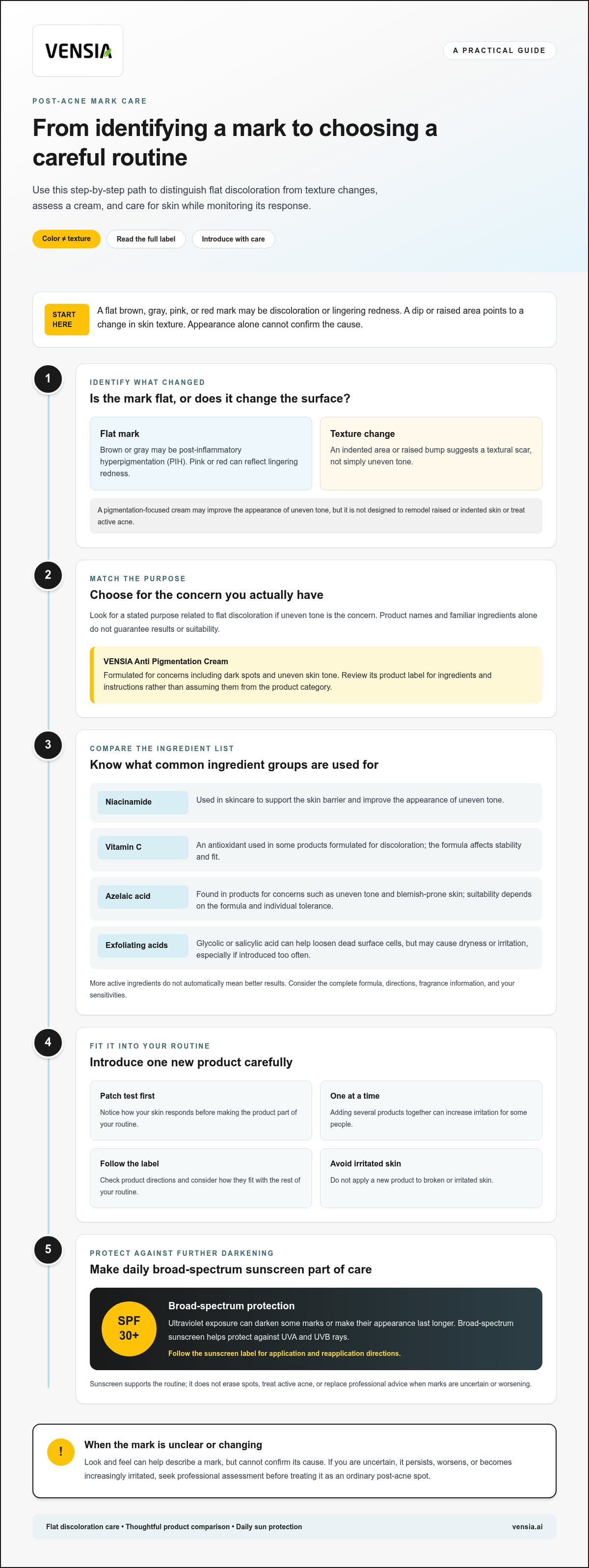
Texture is a useful clue. Flat brown or gray marks may be PIH, while flat pink or red areas can reflect lingering redness rather than excess pigment. Indented areas or raised bumps suggest a textural scar, which is different from discoloration. A pigmentation-focused cream may help improve the appearance of uneven tone, but it won’t treat active acne or remodel raised or indented skin. Before choosing a post acne dark spots cream, identify whether your concern is color, texture, or both.
Is it a dark spot or an acne scar?
Look and feel can help you describe a mark, but they can’t confirm its cause. A flat mark has no noticeable dip or bump; a scar changes the skin’s surface, either inward or outward. Color alone isn’t definitive, since redness and pigmentation can look similar and other skin changes may resemble both. If you’re uncertain, the mark persists, or it worsens, seek a professional assessment before treating it as an ordinary post-acne spot.
Why can marks remain after acne clears?
Acne triggers inflammation in the skin. As that inflammation settles, pigment production or distribution may remain altered in the affected area, leaving a mark after the blemish itself has healed. The mark’s appearance and fading pattern vary from person to person, so there’s no universal timeline. Picking or squeezing can add irritation and prolong visible changes. Let blemishes heal without manipulating them, and don’t assume that a lingering spot means acne is still active.
It also helps to separate two goals: preventing new breakouts and improving the look of marks that remain. A cosmetic cream intended for pigmentation is not a substitute for care directed at active acne, and it should not be expected to correct scar texture. If new blemishes continue or the area becomes increasingly irritated, pause before adding more products and get guidance on the underlying concern. Set realistic expectations: fading varies, and no cream can guarantee a particular result.
How Cream Ingredients and Sun Protection Fit into Post-Ane Mark Care
Choosing a formula means looking beyond a familiar ingredient on the label. The full formulation, directions, frequency of use, and your skin’s tolerance all affect whether a product fits your routine. An ingredient may be used in skincare for uneven tone, but that doesn’t guarantee a particular product will fade marks or suit every person. The American Academy of Dermatology offers guidance on ingredients that may help fade dark spots, including spots left by acne.
Which ingredients are commonly considered for dark marks?
These ingredient categories are used in different ways, and none is a guaranteed solution:
- Niacinamide is used in skincare formulas to support the skin barrier and improve the appearance of uneven tone.
- Vitamin C is an antioxidant used in some products formulated for discoloration. The formula can affect its stability and how well it fits your skin.
- Azelaic acid is found in products for concerns such as uneven tone and blemish-prone skin. Suitability depends on the specific formula and individual tolerance.
- Exfoliating acids, such as glycolic or salicylic acid, help loosen dead surface cells. They can also cause dryness or irritation, particularly if introduced too often.
More active ingredients don’t automatically mean better results. Combining several products at once can increase irritation for some people, making skin concerns harder to manage. Research ingredients through reputable dermatology sources, then compare what you learn with a product’s ingredient list, directions, and your own sensitivities. For VENSIA Anti Pigmentation Cream, review the product label for its ingredients and instructions rather than assuming them from the product category.
Why daily sun protection belongs in the routine
Ultraviolet exposure can darken some marks or make their appearance last longer. Broad-spectrum sunscreen helps protect skin from UVA and UVB rays, limiting an avoidable source of further darkening while you care for existing marks. The American Academy of Dermatology recommends broad-spectrum sunscreen with SPF 30 or higher for managing uneven skin tone. Follow the sunscreen label for application and reapplication directions.
Sunscreen supports a consistent skincare routine, but it doesn’t erase spots, treat active acne, or replace professional advice when marks are uncertain or worsening. If you’re considering a pigmentation-focused product for flat discoloration, review the VENSIA Anti Pigmentation Cream label and consider how its directions fit alongside sunscreen and the rest of your routine.
How to Compare a Post-Acne Dark Spots Cream
Start with the mark you want to address. Look for a product whose stated purpose relates to flat discoloration, not raised or indented scar texture. Then assess the details on the label rather than treating a product name or broad marketing claim as proof of performance. The American Academy of Dermatology’s guidance on dermatologist-recommended treatments for dark spots is a helpful reference for understanding treatment options.
What should a product label tell you?
Before adding a post acne dark spots cream, review its full ingredient list, directions, warnings, and intended area of use. Clear instructions help you understand how the product is meant to fit into your routine. A name that mentions pigmentation or dark spots doesn’t tell you an ingredient’s concentration, how the formula performs, or whether it suits your skin.
| What to compare | What to look for |
|---|---|
| Ingredient transparency | A complete ingredient list you can review for known sensitivities and overlap with other products. |
| Directions and warnings | Specific use instructions, precautions, and guidance about the intended application area. |
| Texture | A feel you can comfortably use as directed; texture alone doesn’t indicate effectiveness. |
| Fragrance information | Clear labeling so you can consider fragrance if it has bothered your skin before. |
| Routine compatibility | A practical fit with your existing skincare, without unnecessary duplication of active ingredients. |
Compare details you can check, such as the ingredient list and directions, with promotional language about what a product may do. Claims can describe intended concerns, but they don’t guarantee results or show that a cream can change scar texture. If a product causes a concerning reaction, stop using it and seek appropriate guidance.
How do you judge whether a cream fits your routine?
Check your current products before introducing another formula. If several already contain active ingredients, adding more may create avoidable overlap and irritation. Choose a texture you’re comfortable applying consistently, but don’t mistake a pleasant feel for proof that it works. Follow the product’s directions and consider how it fits alongside moisturizer and daytime sunscreen.
VENSIA Anti Pigmentation Cream is formulated for concerns including dark spots and uneven tone. Compare its label with your needs by reviewing the ingredients, directions, and how it fits with the products you already use. For additional product context, read about VENSIA anti-pigmentation cream for all skin types.
How to Use a Post-Acne Dark Spots Cream Carefully
A careful routine makes it easier to notice how your skin responds. Introduce one new product at a time, follow its label rather than guessing at an amount or schedule, and don’t apply cream to broken or actively irritated skin. If the product causes significant irritation, stop using it. Seek professional advice if the reaction is severe, persistent, or concerning.
How should you introduce a new cream?
Start with the product’s own instructions. Patch test on a small area as directed, including the label’s timing guidance, and watch for an uncomfortable reaction. Don’t begin several new active products during the same period. Changing one routine element at a time makes it easier to identify what your skin tolerates.
Use this simple sequence:
- Cleanse gently. Wash with a mild cleanser and avoid scrubbing or harsh friction.
- Patch test. Follow the product label for where and how to test, and how long to wait before broader use.
- Introduce one product. Apply the cream only as directed. Don’t increase use beyond the label to try to speed results.
- Moisturize. Use a moisturizer that suits your routine to help keep skin comfortable.
- Protect skin during the day. Apply broad-spectrum sunscreen according to its label directions.
Keep the rest of your routine familiar while you assess tolerance. Pause the cream if you develop a significant reaction, and seek professional advice if irritation doesn’t settle or keeps returning. Avoid applying it to open blemishes, cuts, or skin that is already inflamed or sore.
What if acne is still active?
A pigmentation-focused cream isn’t automatically an acne treatment. If breakouts are continuing, keep care gentle and avoid picking or squeezing blemishes, which can add irritation. Ongoing, painful, severe, or scarring acne is a reason to seek professional advice about appropriate care, rather than relying on a dark-mark product alone.
For flat discoloration after blemishes heal, VENSIA Anti Pigmentation Cream is an option formulated for dark spots and uneven tone. Read the product label for ingredients, directions, and warnings before use. Explore VENSIA Anti Pigmentation Cream as you consider your next step.
Choosing Your Next Step: A Considered VENSIA Anti-Pigmentation Cream Option
If the mark left after acne is flat and your concern is uneven tone, a pigmentation-focused cream may be worth considering. VENSIA Anti Pigmentation Cream is formulated for concerns including dark spots and uneven skin tone. That focus may be relevant if you’re looking for a post acne dark spots cream, but it doesn’t establish that a mark is post-inflammatory hyperpigmentation or guarantee a particular result.
When is a targeted pigmentation cream a reasonable option?
Start with the type of change you’re addressing. A cosmetic cream intended for pigmentation may fit a routine focused on the appearance of flat discoloration. It isn’t a substitute for care addressing active acne, and it shouldn’t be expected to treat raised or indented scar texture. If you’re unsure what the mark is, or it changes or worsens, seek professional advice before choosing a product. For broader context, compare the different approaches discussed in a guide to uneven skin tone treatment options.
Progress depends on the product, how consistently it’s used as directed, individual skin tolerance, and routine factors such as sun protection. Fading and timing differ, so avoid judging a formula by an assumed deadline or expecting a guaranteed outcome.
What should you do before beginning?
Read the product label before first use. Review its full ingredient list, intended area of use, directions, and warnings. Don’t infer ingredients, strength, or application frequency from the product name. Keep the rest of your routine simple while introducing it, and continue daily sun protection according to your sunscreen’s directions. If the cream causes a concerning reaction, stop use and seek appropriate guidance.
A careful choice starts with matching the product’s stated purpose to your concern, then checking that its directions fit your routine. If you’re considering a pigmentation-focused option, explore VENSIA skincare options and review the product label before deciding whether it fits your next step.
Build a Routine That Moves You Forward
Choosing a post acne dark spots cream starts with identifying the concern: flat discoloration and changes in skin texture call for different expectations. Compare the product’s stated purpose, ingredients, and directions, then introduce it carefully and keep daily sun protection in your routine. Consistency can support your skincare goals, but fading and timing vary from person to person.
VENSIA Anti Pigmentation Cream is formulated for dark spots and uneven skin tone, and is listed as suitable for women and men. Review the product label to decide whether it fits your needs and routine. Explore VENSIA skincare options and take your next step with care. Steady, informed choices can help you feel more confident in your approach.
Frequently Asked Questions
What is the difference between post-acne dark spots and acne scars?
Post-acne dark spots are usually flat areas of discoloration left after a blemish heals, while acne scars change the skin’s texture. Indented areas or raised bumps may indicate scarring, which a pigmentation cream isn’t designed to correct. Flat marks can appear brown, gray, pink, or red, but color alone can’t confirm the cause. Seek professional assessment if you’re unsure, the change persists, or it worsens.
Can a cream fade post-acne dark spots?
Some creams may help improve the appearance of flat post-acne discoloration, but results depend on the formula, how it’s used, and individual skin tolerance. A post acne dark spots cream won’t necessarily treat active acne or alter indented or raised scars. Check the product’s ingredients and directions, introduce it carefully, and don’t expect a guaranteed result. VENSIA Anti Pigmentation Cream is formulated for concerns including dark spots and uneven skin tone.
How long does it take for post-acne dark spots to fade?
There’s no single timeline for fading. It can vary with the mark’s characteristics, individual skin, sun exposure, and the products used. A topical product may require consistent use over time, and some marks can take longer to improve than others. Follow the product label and use sun protection daily. If a spot persists, changes, or worsens, seek professional advice rather than simply extending or intensifying use.
Which ingredients are commonly used in creams for post-acne marks?
Commonly researched ingredients include niacinamide, vitamin C, azelaic acid, and exfoliating acids such as glycolic or salicylic acid. They differ in how they’re used and how skin may respond, so no ingredient is right for everyone. Check the full formula and label directions, not just the product name. Combining several active products can increase irritation for some people, so introduce one new formula at a time.
Do I need sunscreen when using a cream for post-acne dark spots?
Daily sun protection is a helpful part of caring for uneven skin tone. Ultraviolet exposure can darken some marks, while broad-spectrum sunscreen helps protect against UVA and UVB rays. The American Academy of Dermatology recommends broad-spectrum SPF 30 or higher for managing uneven skin tone. Follow the sunscreen label for application and reapplication. Sunscreen supports your routine, but it doesn’t guarantee spots will fade or replace professional advice.
Can I use a dark spot cream while I still have acne?
Possibly, but a cream intended for pigmentation isn’t automatically an acne treatment. Check the label, avoid applying it to broken or actively irritated skin, and keep your routine gentle. Don’t pick or squeeze blemishes, since added irritation can leave more visible marks. If acne is ongoing, painful, severe, or causing scars, seek professional advice about acne care rather than relying on a dark spot cream alone.
How do I patch test a new post-acne dark spots cream?
Patch test on a small area of skin and follow the product label for where to apply it, how long to leave it on, and when to check for a reaction. Don’t introduce several new active products at once, so you can better identify what your skin tolerates. Stop using the cream if a concerning reaction develops. For significant or persistent irritation, seek professional guidance before trying it again.


