

Pigmentation Removal Cream: A Comprehensive 2026 Comparison Guide
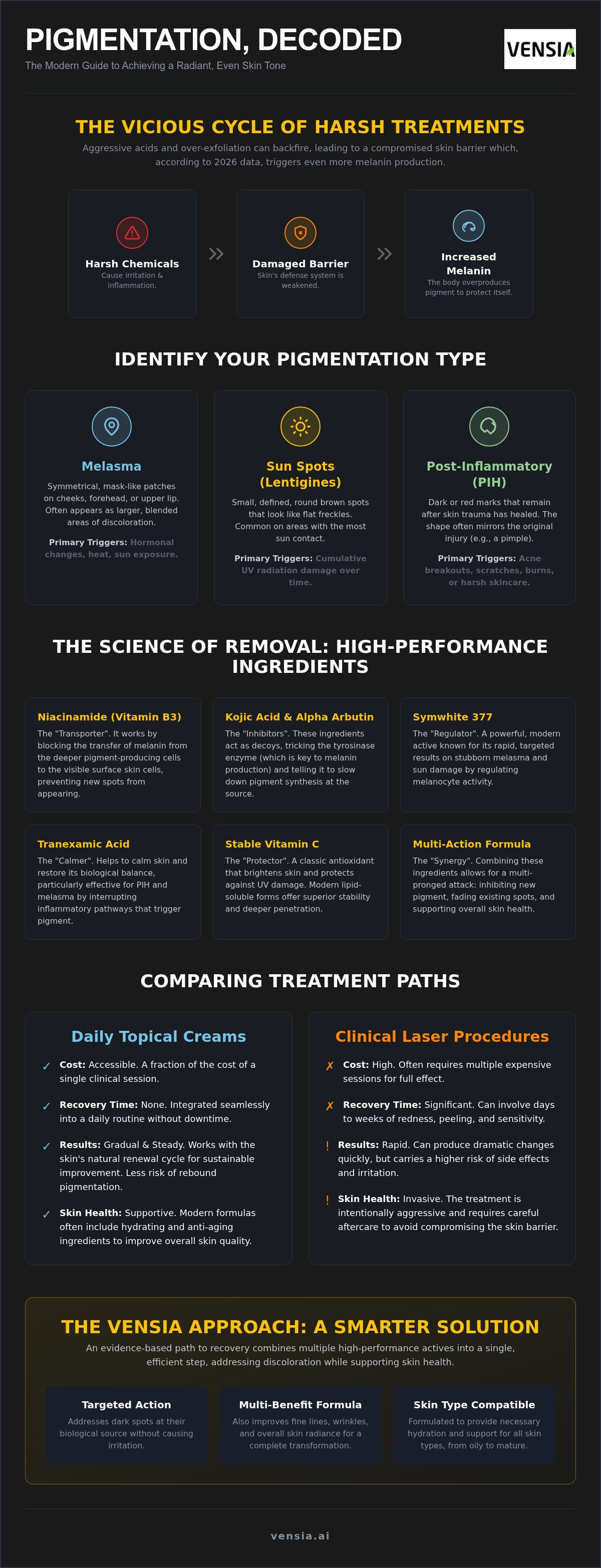
The most aggressive treatment for dark spots is often the one that sets your progress back the furthest. Many people believe that higher acid percentages lead to faster results, but 2026 dermatological data suggests that a compromised skin barrier actually triggers more melanin production. If you've felt the frustration of slow results or the fear of irritation from harsh chemicals, you're not alone. It's exhausting to navigate a market filled with confusing labels and empty promises.
This guide simplifies your search for clarity. You'll learn how to choose a high-performance pigmentation removal cream by comparing clinical results, ingredient stability, and skin-type compatibility. We'll examine why modern ingredients like Symwhite 377 and Tranexamic Acid are now the gold standard for restoring biological balance. We also look at how the VENSIA Anti Pigmentation Cream offers an evidence-based path to recovery for both men and women. By the end of this guide, you'll know exactly how to achieve an even skin tone and improved radiance without compromising your skin's health.
Key Takeaways
- Learn to distinguish between melasma, sun spots, and PIH to ensure you're treating the specific biological cause of your discoloration.
- Identify high-performance ingredients like Niacinamide and Kojic Acid that allow a pigmentation removal cream to work effectively without causing irritation.
- Compare the high expenses and recovery times of clinical laser procedures with the accessibility and steady results of daily topical treatments.
- Understand how to match product textures to your skin type, ensuring oily skin stays clear while mature skin receives necessary hydration and support.
- Discover the benefits of multi-action formulas that address dark spots, fine lines, and wrinkles in a single step for a more efficient routine.
Understanding Pigmentation: Why One Cream Does Not Fit All
Hyperpigmentation occurs when the skin produces an excess of melanin in concentrated patches. It's a common condition that affects people of all skin tones, though the underlying causes vary significantly. When searching for an effective pigmentation removal cream, it's vital to realize that surface-level exfoliation is only half the battle. Many generic products rely on harsh acids to peel away the top layer of skin. While this provides a temporary glow, it doesn't stop the internal production of pigment. True restoration requires melanocyte regulation. This process addresses the cells responsible for pigment production, calming them down rather than just scrubbing away the dark spots on the surface.
The Role of Melanin in Skin Discoloration
Melanin acts as your skin's natural defense mechanism. When your skin detects UV radiation or localized inflammation, it triggers melanocytes to produce pigment to protect deeper layers. However, skin cells often possess a biological "memory." Once a pathway for pigment production is established, those same spots often reappear after sun exposure or hormonal shifts. This is why many people see their spots return every summer even after they seem to have faded. While hyperpigmentation involves the overproduction of color, it's distinct from depigmentation conditions like vitiligo, where the skin loses its natural pigment entirely. Effective treatment focuses on returning these overactive cells to a balanced state without damaging the surrounding healthy tissue.
Identifying Your Specific Pigmentation Type
Selecting the right pigmentation removal cream depends heavily on the depth and cause of your discoloration. Epidermal pigmentation sits near the surface and typically responds faster to topical treatments. Dermal pigmentation lies deeper and requires more stable, encapsulated delivery systems to reach the source. Use this checklist to identify your primary concern:
- Melasma: Look for symmetrical, mask-like patches on the cheeks or forehead. These are often triggered by hormonal changes or heat.
- Sun Spots (Lentigines): These appear as small, defined brown spots on areas with high UV exposure, like the face and hands.
- Post-Inflammatory Hyperpigmentation (PIH): Identify these as dark or red marks that remain after skin trauma, such as acne or a scratch.
PIH is specifically the result of the skin's inflammatory response to injury or irritation. Because the triggers for melasma are often internal, a cream designed solely for sun spots might fail to address the hormonal signaling that keeps melasma active. Identifying the shape, color, and trigger of your spots is the first step toward a targeted solution that actually lasts. Understanding these nuances ensures you choose a formula that targets the specific biological pathway causing your frustration.
The Science of Removal: Key Ingredients to Look For in 2026
Effective skin brightening has evolved beyond simple surface exfoliation. In 2026, the focus has shifted toward tyrosinase inhibitors. These compounds target the enzyme responsible for melanin production at its source. Ingredients like Kojic Acid and Alpha Arbutin act as "decoy" molecules that trick melanocytes into slowing down pigment synthesis. Vitamin C remains a cornerstone of this process, but modern formulations now prioritize lipid-soluble versions that remain stable for longer periods. According to Harvard Health on hyperpigmentation causes, addressing these biological triggers is essential for managing persistent discoloration.
Niacinamide, or Vitamin B3, plays a unique role by blocking the transfer of pigment from the deeper layers to the visible skin cells. It doesn't just fade existing spots; it prevents new ones from appearing on the surface. When combined with mild exfoliating acids, these inhibitors can penetrate more deeply, creating a synergistic effect that speeds up the visible reduction of dark spots. Choosing a balanced pigmentation removal cream ensures that you are treating the pigment from multiple angles simultaneously.
Clinical Actives vs. Botanical Brighteners
Clinical actives like Symwhite 377 offer rapid results for stubborn melasma and sun damage. However, relying solely on high-potency chemicals can lead to sensitivity. Botanical brighteners provide a safer, long-term alternative that supports the skin's natural recovery. VENSIA utilizes a hybrid approach, merging the precision of clinical research with the gentle nature of plant-based extracts. This ensures that the VENSIA Anti Pigmentation Cream delivers visible transformation without the harshness often associated with traditional lightening agents. You can explore targeted solutions that bridge the gap between clinical efficacy and daily comfort.
Why Barrier Health Determines Your Results
A damaged skin barrier is the primary cause of "rebound" pigmentation. When your skin is irritated or inflamed, it produces melanin as a protective defense mechanism. If your pigmentation removal cream is too aggressive, it can actually trigger more dark spots. This makes barrier-supporting ingredients like Marshmallow extract and Ceramides non-negotiable. These emollients keep the skin hydrated and the melanocytes "calm."
- Marshmallow Extract: Provides a soothing, mucilaginous layer that reduces redness and inflammation.
- Ceramides: Rebuild the lipid barrier to prevent moisture loss and environmental irritation.
- Niacinamide: Acts as a dual-action hero by building keratin and stimulating ceramide production while brightening the skin.
By maintaining a healthy barrier, you allow the brightening agents to work in a stable environment. This prevents the cycle of irritation and repigmentation that plagues many generic treatments. A well-formulated cream should feel like a restorative treatment rather than a harsh chemical peel. This balance is what creates the lasting radiance and even texture that modern skincare consumers expect.
Comparing Treatment Paths: Topical Creams vs. Clinical Procedures
Choosing between a clinical procedure and a daily cream often feels like a trade-off between speed and safety. While lasers offer high-intensity intervention, they aren't always the superior choice for every skin type or budget. In 2026, many dermatologists recommend a "topical first" approach, especially for those prone to sensitivity or hormonal melasma. The belief that "stronger is always better" often leads to damaged barriers and post-inflammatory hyperpigmentation (PIH). This is particularly true for darker skin tones, where certain heat-based lasers can actually trigger a trauma response, resulting in more melanin production than before the treatment started.
Even if you choose to undergo a professional procedure, a high-quality pigmentation removal cream remains an absolute necessity for the "maintenance phase." Think of a laser as a biological reset and a daily cream as the regulator. Without consistent tyrosinase inhibitors to manage your melanocytes, the dark spots will likely return once the initial healing period ends. Success lies in the steady, daily management of pigment production rather than a single aggressive event.
The Case for Topical Solutions
At-home routines provide a level of convenience and control that clinical visits cannot match. A topical solution allows for a "slow and steady" biological adjustment, which is far more supportive of the skin's natural recovery processes. This gradual approach is significantly safer for sensitive skin types, as it avoids the high-heat inflammation associated with clinical equipment. By using a consistent daily application, you maintain a stable environment for your skin cells, reducing the risk of rebound darkening or unexpected irritation.
Cost-Benefit Analysis of Home Care
Financial accessibility is a major differentiator when comparing these two paths. A single Pico laser session in 2026 can cost anywhere from $150 to over $1,200 depending on the treatment area. Most clinical protocols require multiple sessions to see results, quickly pushing costs into the thousands. In contrast, a 30g specialized pigmentation removal cream, such as the VENSIA Anti Pigmentation Cream, provides months of targeted treatment for a fraction of a single session's price.
To see genuine transformation, we advise following the "90-day rule." Because skin cell turnover and pigment stabilization take time, you must apply your chosen formula consistently for at least three months. This period allows the active ingredients to regulate the deeper layers of the epidermis. This long-term preventative strategy often delivers more sustainable radiance and better overall value than a one-off clinical intervention.
How to Evaluate a Pigmentation Removal Cream for Your Skin Type
A universal formula is a myth in dermatology. Because your skin's lipid levels and thickness vary, the vehicle that delivers the active ingredients must match your specific biology. If you have oily or acne-prone skin, a heavy, oil-based pigmentation removal cream can clog pores, leading to new breakouts and subsequent PIH. Instead, look for non-comedogenic, lightweight textures that absorb quickly without leaving a greasy residue. This ensures that you aren't trading one skin concern for another.
Dry and mature skin requires a different strategy. As we age, the skin barrier thins and loses moisture, making it more susceptible to environmental damage. These skin types benefit from added emollients that provide fine-line support while the brightening agents work. For those with sensitive skin, the goal is to avoid high-percentage acids that cause redness. Soothing complexes, such as marshmallow extract, allow the skin to tolerate treatment without triggering a defensive melanin response. Regarding gender, men often have thicker skin and larger pores, but the biological mechanism of melanin production remains the same. The VENSIA Anti Pigmentation Cream is engineered for versatility, making it effective for both men and women across all skin types.
Texture and Absorption Matters
The consistency of your cream determines how effectively it reaches the melanocytes. A targeted 30g applicator is ideal for precise spot treatment, ensuring that high-potency ingredients are concentrated where they're needed most. When layering, always apply your treatment cream after cleansing but before heavier moisturizers or sunscreens. This ensures the active inhibitors aren't blocked by physical barriers. Proper absorption is the key to seeing the visible reduction in dark spots that we discussed in previous sections.
Safety and Suitability Checklist
Before committing to a full-face application, verify that the product is dermatologically tested. High-quality labels should clearly state suitability for "All Skin Types" to ensure the formulation is balanced. Be cautious of ingredients that cause extreme thinning or photosensitivity without proper barrier support. You should always prioritize products that aim for restoration rather than just temporary bleaching.
- Check for "non-comedogenic" on the label if you're prone to acne.
- Perform a 24-hour patch test on your jawline or inner arm.
- Monitor for any signs of excessive peeling, heat, or persistent stinging.
- Ensure the formula addresses multiple concerns, such as dark spots and fine lines, for maximum efficiency.
Choosing a formula that respects your skin's unique needs is the only way to ensure long-term success without irritation. You can order the VENSIA Anti Pigmentation Cream to begin your journey toward a clearer, more radiant complexion today.
The VENSIA Approach: Targeted Restoration for Radiant Skin
The VENSIA Anti Pigmentation Cream represents a shift from aggressive stripping to biological restoration. While many products focus solely on fading color, this formula addresses the structural integrity of your skin. It targets dark spots, fine lines, and wrinkles in a single, streamlined step. This multi-action approach is essential because hyperpigmentation rarely exists in isolation; it's often accompanied by texture changes and signs of oxidative stress. By choosing a comprehensive pigmentation removal cream, you simplify your routine without sacrificing clinical results.
VENSIA is committed to providing evidence-based paths forward for both men and women. The 30g targeted applicator allows for precise use on stubborn areas, ensuring the active inhibitors reach the deepest layers of the epidermis. This isn't a temporary fix. It's a steady, guided return to your skin's natural balance. We believe that a professional-grade routine shouldn't be complicated or painful to be effective.
Advanced Formulation for Even Skin Tone
The efficacy of the VENSIA Anti Pigmentation Cream lies in its ability to adapt to various skin needs. Whether you're dealing with aging spots or environmental damage from UV exposure, the formula works to regulate melanocyte activity. It bridges the gap between clinical research and daily comfort, providing a solution that is as gentle as it is effective. By choosing this pigmentation removal cream, you address multiple signs of aging while restoring a uniform complexion. If you are managing white patches rather than dark spots, you may find our specialized resources helpful. Read more in VENSIA Anti Vitiligo Cream: Your Repigmentation Guide for insights into repigmentation strategies.
Achieving Full-Body Radiance
True skin health extends beyond the face. Pigmentation on the neck, chest, and hands often reveals environmental damage that face-focused routines miss. To address this, the VENSIA Niacinamide Marshmallow Body Lotion provides a 200ml solution for full-body restoration. Niacinamide helps improve the appearance of uneven tone while marshmallow extract provides a soothing, mucilaginous layer that heals rough and dry skin. This dual-action approach ensures that your skin barrier remains resilient while you work toward a brighter tone.
This combination ensures your entire body reflects a consistent radiance. The lotion's gentle exfoliating properties work in tandem with deep hydration to improve texture and clarity simultaneously. A simple, effective daily routine is the most reliable way to achieve lasting transformation. You can explore the VENSIA collection for healthier-looking, radiant skin and discover products designed to respect your skin's biology while delivering visible results.
Start Your Journey Toward Skin Restoration
Achieving a clear and uniform complexion is a process of biological regulation rather than aggressive intervention. You've learned that the most effective pigmentation removal cream doesn't just peel the surface; it calms overactive melanocytes while rebuilding the skin's natural barrier. By focusing on high-performance ingredients like Niacinamide and Kojic Acid, you can manage discoloration without the high costs or downtime of clinical procedures. Consistency remains the most important factor for visible transformation.
The VENSIA Anti Pigmentation Cream offers a specialized, multi-action solution that addresses dark spots, fine lines, and wrinkles simultaneously. It's formulated for all skin types and meets high dermatological standards to ensure your safety and comfort. We provide national delivery to bring these targeted solutions directly to your door, helping you maintain a simple yet powerful daily routine. It's time to move past the frustration of generic products and embrace a path grounded in clinical results and empathetic care.
Shop VENSIA Anti Pigmentation Cream for Radiant, Even-Toned Skin
Your skin has the capacity for recovery and balance. With the right guidance and a commitment to your daily routine, radiant results are well within reach.
Frequently Asked Questions
How long does it take for a pigmentation removal cream to show results?
Visible changes typically begin within 90 days of consistent daily application. Because skin cells regenerate in cycles, the active ingredients require this time to regulate melanin production in the deeper epidermal layers. You might notice improved radiance and texture sooner, but stubborn dark spots require the full three-month period to fade significantly. Patience is essential for achieving a stable, even skin tone without triggering rebound pigmentation.
Can I use pigmentation removal cream on sensitive skin?
Yes, you can use these creams on sensitive skin if the formula includes soothing agents like marshmallow extract or niacinamide. The VENSIA Anti Pigmentation Cream is specifically designed for all skin types, focusing on restoration rather than harsh stripping. We recommend performing a 24-hour patch test on a small area like your inner arm before full application. This ensures your skin barrier remains calm while the brightening inhibitors work effectively.
Will dark spots return after I stop using the cream?
Dark spots can return if the underlying triggers, such as UV exposure or hormonal shifts, aren't managed. A pigmentation removal cream regulates overactive melanocytes, but it doesn't change your skin's biological tendency to protect itself with melanin. To maintain your results, you must continue using a high-SPF sunscreen daily and consider a maintenance routine with barrier-supporting ingredients. Consistent protection prevents the biological memory of your skin from re-darkening treated areas.
Is VENSIA Anti Pigmentation Cream suitable for men?
This formula is highly effective for both men and women. While men often have thicker skin and larger pores, the mechanism of melanin overproduction is identical across genders. The VENSIA Anti Pigmentation Cream addresses dark spots, fine lines, and wrinkles without leaving a heavy or greasy residue. Its lightweight texture makes it easy to integrate into a simple daily routine, providing professional-grade results for anyone seeking a more even and radiant complexion.
What is the difference between a brightening cream and a pigmentation removal cream?
A brightening cream typically focuses on increasing overall skin radiance and surface glow through light-reflecting particles or mild exfoliants. In contrast, a pigmentation removal cream contains specific tyrosinase inhibitors that stop the overproduction of melanin at the source. While brightening products provide a temporary aesthetic improvement, removal creams work to physically reduce the appearance of sun spots, melasma, and PIH by regulating the skin's internal pigment production pathways.
Can I use these creams during the day, or only at night?
You can use most modern pigmentation treatments during the day as long as they are followed by a broad-spectrum sunscreen. Daytime application helps block the pigment-triggering effects of UV rays and environmental pollutants. However, some people prefer nighttime use to allow the active ingredients to work undisturbed during the skin's natural repair cycle. If your routine includes other active serums, layering the cream as the final treatment step before your moisturizer is most effective.
Do I still need to wear sunscreen while using a pigmentation cream?
Sunscreen is the most critical part of any pigmentation treatment plan. UV radiation is the primary trigger for melanin production, and many active ingredients can make your skin more sensitive to the sun. Without daily SPF 30 or higher, the work done by your treatment cream will be quickly reversed. Applying a physical or chemical barrier every morning ensures that your melanocytes stay in a regulated, calm state while you achieve your desired results.
What ingredients should I avoid when treating dark spots?
Avoid high-percentage bleaching agents that don't include barrier-supporting nutrients, as these can cause permanent skin thinning or sensitivity. Stay away from products containing mercury, which is banned and toxic, or unregulated hydroquinone concentrations available without a prescription. Instead, prioritize stable inhibitors like Alpha Arbutin or Kojic Acid. Formulas that lack hydrating emollients often lead to irritation, which can ironically trigger post-inflammatory hyperpigmentation and make your original dark spots appear even darker over time.


