

Treating Hyperpigmentation on Inner Thighs: A Gentle, Practical Guide
The quickest way to make inner-thigh darkening harder to improve may be to reach for stronger products. If you’re treating hyperpigmentation on inner thighs, it’s understandable to want a fast solution, but skin in this area can be sensitive. Irritation may leave it more uncomfortable and can contribute to further discoloration.
Dark patches can be linked to friction and chafing, irritation after a rash or infection, or hormonal changes. Appearance alone can’t confirm the cause, so there’s no need to blame yourself or jump to conclusions. A gentler approach starts with reducing possible sources of irritation and choosing care your skin can tolerate.
This guide explains common triggers without self-diagnosis, compares practical at-home care options, and outlines a simple routine for sensitive skin. You’ll also learn why harsh scrubs and aggressive brightening steps can backfire, and when persistent, changing, or otherwise concerning discoloration deserves professional assessment. The goal is steady, informed care, not a quick fix at the expense of your skin barrier.
Key Takeaways
- Inner-thigh darkening is common, but appearance alone can’t identify its cause. Learn which clues may point to friction, irritation, or another skin concern.
- Treating hyperpigmentation on inner thighs starts with addressing possible triggers, not automatically reaching for stronger brightening products.
- Explore gentle steps to reduce rubbing, cleanse and dry the area carefully, and support skin with moisturization.
- Compare at-home skincare with clinician-guided options, including cautions that matter for sensitive skin.
- See where VENSIA Anti Pigmentation Cream may fit for dark spots and uneven skin tone, and when persistent or changing skin needs professional assessment.
Treating Hyperpigmentation on Inner Thighs: What the Darkening Can Mean
Darkening on the inner thighs is common. It isn’t a reflection of poor hygiene or anything you’ve done wrong. Possible causes vary, though, so patches that look alike can have different explanations. Hyperpigmentation describes an area of skin that appears darker because of increased pigment. It describes an appearance, not a diagnosis of what caused it.
Skin folds may be exposed to rubbing from skin or clothing, warmth, moisture, and repeated irritation. These conditions can make the area more vulnerable to chafing or inflammation, but they don’t explain every case. The general overview of Hyperpigmentation describes several forms and possible causes, reinforcing why color alone can’t identify the reason for a change.
When treating hyperpigmentation on inner thighs, it helps to distinguish a possible trigger from a confirmed cause. Timing can offer clues: discoloration that appears after repeated chafing or a rash, for example, may be related to that irritation. Still, a visual description or online guide can’t establish what’s happening in an individual case.
How friction and irritation can leave darker marks
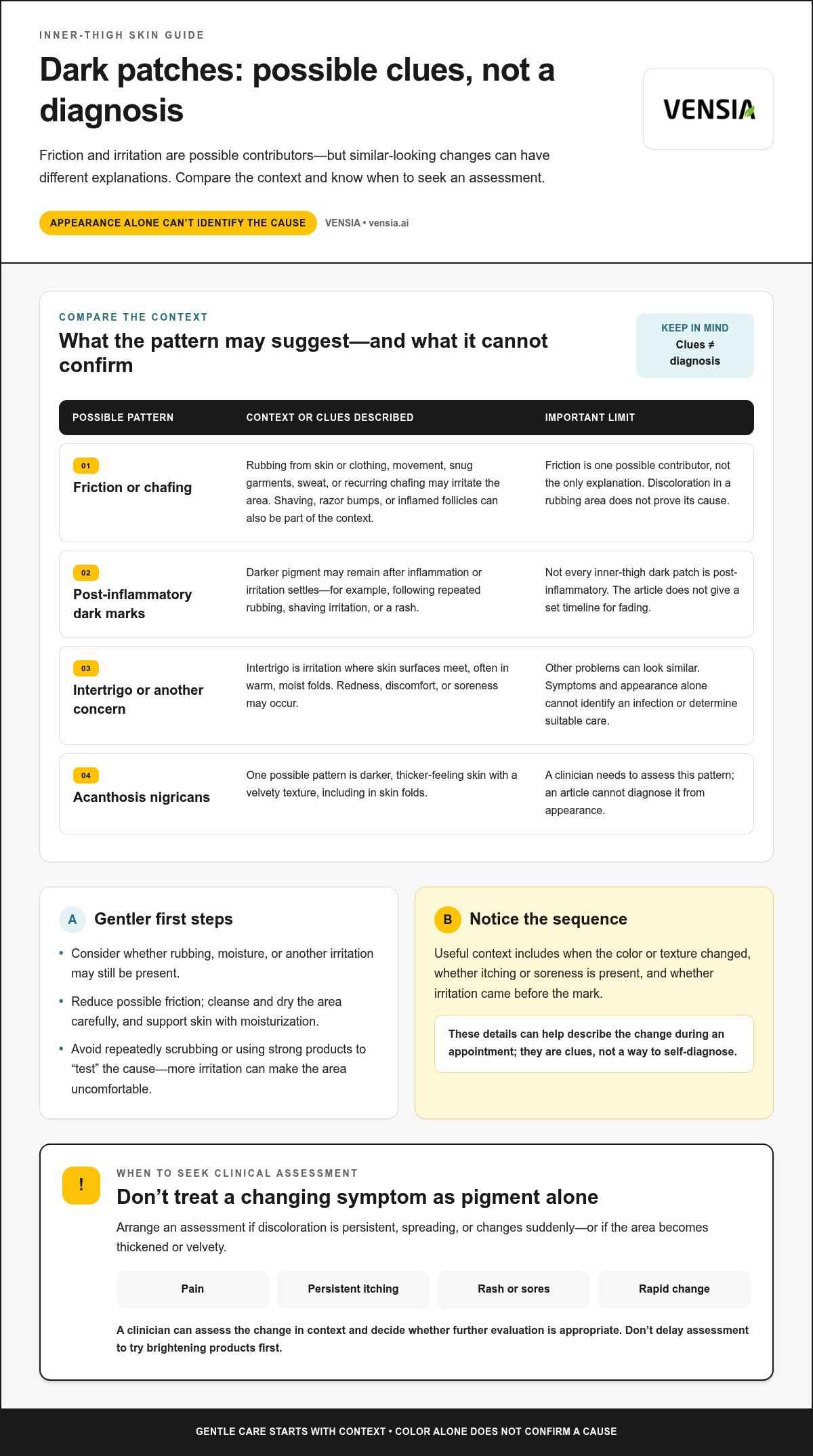
Repeated rubbing can irritate the skin, whether it comes from skin-on-skin contact, snug clothing, or chafing during movement. Shaving may also irritate the area, particularly if it causes razor bumps or inflamed follicles. After inflammation settles, a darker mark may remain. This can happen across skin tones, though its appearance may vary. Friction is one possible contributor, not the only explanation.
Post-inflammatory hyperpigmentation is darker pigment that remains after inflammation or skin irritation has settled. It can follow a range of triggers, but not every inner-thigh dark patch is post-inflammatory. Avoid repeatedly scrubbing or using strong products to “test” this explanation, since further irritation may make the area more uncomfortable.
When darkening may need a closer look
Arrange a clinical assessment if skin becomes thickened or velvety, spreads, or changes suddenly. Acanthosis nigricans is one possible pattern that can involve darker, thicker-feeling skin, including in folds, but an article can’t diagnose it from appearance. A clinician can assess the change in context and decide whether further evaluation is appropriate.
Seek care as well if the area is painful, persistently itchy, has a rash or sores, or changes rapidly. These symptoms may point to irritation or another skin concern that needs attention, rather than a pigment issue alone. Don’t assume every change is caused by friction, and don’t delay assessment to try brightening products first.
Noting when the color or texture changed, whether symptoms are present, and whether irritation came before the mark can help you describe it during an appointment. These details are useful clues, not a way to self-diagnose. Once the likely trigger is clearer, you can choose care more thoughtfully and avoid treating the color while overlooking a skin concern that needs assessment.
Why Inner-Thigh Hyperpigmentation Develops: Common Triggers and Clues
Several different processes can leave the inner thighs looking darker. Friction, inflammation, moisture-related irritation, and other skin conditions may overlap, so a patch’s color or location alone can’t confirm its cause. Noticing what happened before the change, and whether the area is itchy, sore, or textured, can provide useful context for a clinician without replacing an assessment.
Post-inflammatory hyperpigmentation is pigment that remains in the skin after inflammation or irritation has settled. It can follow repeated rubbing, shaving irritation, or a rash, but it isn’t the explanation for every dark patch. The color may persist after the original discomfort improves, so don’t assume it will fade on a particular schedule.
Friction, sweat, and repeated irritation
Movement can cause skin surfaces or clothing to rub together. Close-fitting garments may increase friction for some people, while dampness from sweat can leave skin folds more prone to irritation. Shaving, razor bumps, and recurring chafing can also inflame the skin and contribute to lingering marks. These are common possibilities, not signs of poor hygiene or a personal failing.
Clues may include discoloration in areas that rub, or marks that appeared after repeated irritation. But similar-looking patches can have different causes, and friction can coexist with another skin concern. When treating hyperpigmentation on inner thighs, a useful first step is to consider whether irritation is ongoing rather than treating appearance as proof of a specific cause.
Other causes to discuss with a clinician
Intertrigo is irritation that can develop where skin surfaces meet, often in warm, moist folds. It may cause redness, discomfort, or soreness, and other problems can look similar. Infection is one possibility a clinician may consider, but symptoms and appearance alone aren’t enough to identify it or select appropriate care.
Acanthosis nigricans is another possible cause of darker, thicker-feeling skin, often with a velvety texture. It requires assessment rather than self-diagnosis. Seek clinical advice if discoloration is persistent or spreading, comes with ongoing itching, pain, a rash or sores, or is accompanied by a noticeable texture change. Sudden changes also deserve attention.
Keep track of useful details: when the change began, whether it followed irritation, whether it is spreading, and any symptoms or texture differences. These observations can help guide a clinical conversation. Treatment choice depends on identifying and reducing the underlying trigger, not just trying to lighten the visible area. If there’s no active rash or unexplained symptom and you’re exploring care for uneven tone, VENSIA’s targeted skincare for dark spots may be one option to consider as part of a broader, gentle approach.
Comparing Options for Treating Dark Inner Thighs: What Helps and What Can Irritate
Care depends on what’s contributing to the discoloration. Reducing repeated rubbing may help address an ongoing trigger, while moisturization can support dry or rough-feeling skin. A topical product marketed for pigmentation may be an option for uneven tone, but it won’t address friction, an infection, or another underlying skin condition. If symptoms or texture changes are present, seek professional assessment before starting brightening care.
Stronger isn’t automatically better in a skin fold. Scrubbing, harsh home remedies, and irritating formulas can inflame sensitive skin, potentially leaving it more uncomfortable and complicating discoloration. Avoid applying lemon juice, baking soda, or unverified bleaching mixtures. Prescription-strength treatments need guidance from an appropriate clinician, who can consider the cause and the skin’s needs.
| Option | Purpose and potential role | Cautions | When professional advice is appropriate |
|---|---|---|---|
| Trigger reduction | Reducing rubbing or repeated irritation may help limit an ongoing source of skin stress. | It won’t identify or treat every possible cause of darkening. | Seek assessment if the area remains irritated, spreads, or changes in texture. |
| Gentle moisturization | May support skin that feels dry or rough as part of a simple care routine. | Stop using a product that causes discomfort or irritation. | Ask a clinician about ongoing symptoms rather than relying on moisturizer alone. |
| Targeted topical skincare | A product intended for dark spots or uneven tone may fit a broader skincare approach. | It may not address an underlying trigger. Follow the product label, and don’t apply it to broken or irritated skin. | Get advice if the cause is unclear or the area is symptomatic. |
| Clinician-guided treatment | Assessment can help distinguish pigmentation from other skin concerns and guide suitable care. | Prescription treatments aren’t interchangeable with over-the-counter skincare. | Consider an assessment for persistent, spreading, sudden, or symptomatic changes. |
Gentle care versus aggressive lightening approaches
Repeated scrubbing can create more irritation instead of removing pigment. The same concern applies to harsh home remedies and formulas that sting or burn. A stronger product may be poorly suited to a sensitive fold, so stop using any topical that causes a concerning reaction. Don’t try to bleach the area with household ingredients or unverified mixtures.
Choosing a topical product for a sensitive fold
Read and follow the label, and avoid applying skincare to broken or irritated skin. VENSIA Anti Pigmentation Cream is a targeted skincare option for dark spots and uneven skin tone. That focus doesn’t diagnose the cause of inner-thigh discoloration or guarantee a result. For a broader look at pigmentation products, explore this 2026 pigmentation removal cream comparison guide. Treating hyperpigmentation on inner thighs is best approached with care that suits both the skin and its likely trigger.
A Gentle Routine for Inner-Thigh Discoloration: Reduce Friction and Support Skin
A steady routine can help reduce repeated irritation and make it easier to notice how your skin responds. Keep the steps simple. These habits may support skin comfort, but they can’t confirm why discoloration developed or guarantee that existing marks will fade.
- Reduce rubbing. Choose comfortable clothing that allows movement without unnecessary friction. Breathable fabrics may feel more comfortable for some people. If an activity repeatedly rubs the area, consider whether a different fit or a brief change in routine could reduce contact.
- Cleanse gently. Use a mild approach and avoid vigorous scrubbing, rough cloths, or repeated washing in an attempt to remove darker pigment. Cleansing should leave the skin comfortable, not tight or stinging.
- Dry the fold carefully. Pat the area dry with a clean towel rather than rubbing. When practical, change out of damp clothing after sweating or swimming so moisture doesn’t linger against the skin.
- Moisturize if the skin feels dry or rough. Apply a suitable moisturizer according to its label. If it stings or causes irritation, stop using it. A moisturizer supports skin comfort; it isn’t a treatment for every cause of discoloration.
- Monitor the area. Notice whether irritation, color, or texture changes over time. If you introduce a new topical product, keep the rest of your routine stable so it’s easier to spot a reaction.
Daily habits that may reduce ongoing irritation
Small adjustments are often more practical than overhauling your routine. For example, if fitted clothing rubs during a walk, a more comfortable option may reduce friction. If sweat leaves the fold damp, changing clothes when you can may help limit prolonged moisture. These steps address possible sources of irritation, but they don’t guarantee that existing pigmentation will fade.
How to introduce topical care thoughtfully
Read and follow the product label, and avoid applying topical skincare to broken, sore, or actively irritated skin. Don’t layer several strong or exfoliating products in the fold. Start with a simple routine, introduce only one new product at a time, and stop if marked irritation develops. This makes it easier to identify what your skin tolerates.
Gentle skincare can support the skin gradually, but persistent or changing symptoms call for medical assessment. If the cause is uncertain, or the area remains painful, itchy, rashy, or different in texture, seek professional advice rather than adding more brightening products. Treating hyperpigmentation on inner thighs isn’t just about the visible color; a comfortable, uncomplicated routine helps you care for the skin while staying alert to changes.
If you’re exploring targeted skincare for dark spots and uneven tone, explore VENSIA skincare options as one part of a broader, gentle routine.
VENSIA Anti Pigmentation Cream and Your Next Steps for Inner-Thigh Care
A targeted skincare product may be worth considering when the skin is comfortable and your concern is the appearance of dark spots or uneven tone. Discoloration can have different causes, however. If the area has an active rash, sores, persistent itching or pain, or a sudden change in texture or color, pause brightening care and seek professional assessment first. A cream intended for uneven tone isn’t a substitute for identifying an underlying skin concern.
How to weigh a targeted pigmentation cream
VENSIA Anti Pigmentation Cream is a targeted skincare option for dark spots and uneven skin tone. That describes its skincare focus; it doesn’t establish why inner-thigh skin has darkened or mean the cream is suitable for every concern in a skin fold. Read the label and use the product only as directed. Don’t infer a specific inner-thigh application method, and avoid applying it to broken or actively irritated skin.
Keep expectations measured. Response to skincare can vary, and no cream can be promised to remove every cause of pigmentation. A product marketed for dark spots may not address friction, infection, or another condition that needs different care. For additional context on topical skincare for discoloration, see this dermatological skincare guide for dark spots.
A clear next step without overpromising
Before choosing a brightening product, consider whether the skin looks and feels settled or whether symptoms are still present. Persistent, spreading, sudden, or texture-changing discoloration deserves professional assessment. The same applies if the area is painful, persistently itchy, or has a rash or sores. An assessment can help clarify whether the priority is pigment care or another skin concern.
If the skin is comfortable and you decide to try a topical product, keep the rest of your routine gentle and consistent. Follow its label, introduce it cautiously, and stop if marked irritation develops. Avoid adding several new products at once; a simpler routine makes it easier to notice sensitivity and prevent unnecessary irritation. Steady care may support your skincare goals, but progress isn’t guaranteed, and a product shouldn’t be expected to correct an unknown cause.
Treating hyperpigmentation on inner thighs starts with choosing care that respects the skin and recognizing when a product isn’t the right first step. VENSIA Anti Pigmentation Cream is a targeted option for dark spots and uneven tone. Explore VENSIA Anti Pigmentation Cream as part of a thoughtful routine, and seek professional assessment for symptoms or changes that need a closer look.
Choose a Skin-First Next Step
Let comfort guide your next move. Instead of judging progress only by color, notice whether the skin feels calm and whether new irritation is developing. A simple routine gives you a clearer sense of what your skin tolerates. If the change remains unexplained or continues to concern you, getting it assessed is a constructive step, not a setback.
Treating hyperpigmentation on inner thighs doesn’t need to mean using the strongest product you can find. VENSIA offers targeted skincare for dark spots and uneven skin tone, alongside moisturizing body care for dryness and rough texture. These are skincare options, not a diagnosis or a promise to resolve every cause of discoloration. Follow product labels and keep expectations realistic.
If you’re ready to explore a targeted option, Explore VENSIA Anti Pigmentation Cream. A thoughtful, gentle approach can help you make your next choice with more confidence.
Frequently Asked Questions
Can inner-thigh hyperpigmentation go away on its own?
It may become less noticeable if the trigger settles, but fading isn’t guaranteed and can take time. For example, marks may persist if rubbing or inflammation continues. Avoid scrubbing or trying harsh home remedies while monitoring the area. If the discoloration spreads, develops a different texture, or comes with discomfort, seek an assessment rather than relying on cosmetic care alone.
How long does it take for dark inner thighs to lighten?
There’s no reliable timeline that applies to everyone. The cause, depth of discoloration, skin sensitivity, and ongoing irritation can all affect how the area responds. Reducing friction may help limit further irritation, but it can’t guarantee existing marks will fade. If the skin is worsening or you’re unsure what’s driving the change, a clinician can assess it and discuss appropriate options.
Is dark skin between the thighs always caused by friction?
No. Friction is one possible cause, but inflammation, moisture-related irritation, and other skin conditions can also change skin color or texture. A darker patch accompanied by persistent itching or a rash, for example, needs more than a visual guess. Sudden or spreading changes, thickened skin, pain, or ongoing symptoms warrant professional assessment, particularly before you start using a product intended to improve pigmentation.
Can I use the same pigmentation cream on my inner thighs as on my face?
Not necessarily. A product that suits your face may not be suitable for a skin fold, where rubbing and irritation can be concerns. When treating hyperpigmentation on inner thighs, follow the product label and don’t apply it to broken, inflamed, or irritated skin. If the label doesn’t address your intended use, or you have a recurring rash, ask a healthcare professional for guidance before applying it there.
Does shaving make inner-thigh discoloration worse?
Shaving doesn’t affect everyone in the same way, but irritation, razor bumps, or inflamed follicles can leave post-inflammatory marks for some people. Avoid shaving over irritated skin, and don’t scrub afterward to try to remove discoloration. If bumps or itching keep returning, or a rash persists, a clinician can assess what may be causing the symptoms and advise on suitable care.
Can lemon juice or baking soda lighten dark inner thighs?
No. Lemon juice and baking soda aren’t reliable treatments for pigmentation and may irritate sensitive skin. An acidic or abrasive mixture, for example, can leave the area uncomfortable and contribute to further irritation. Avoid applying household mixtures or unverified bleaching remedies. Keep care gentle, follow product labels, and seek professional advice if the skin is inflamed, changing, or persistently symptomatic.


