

Skin Repigmentation Cream: A 2026 Guide to Options and Expectations
Can a skin repigmentation cream help restore color to pale patches, or is it meant to fade dark spots? The answer depends on what’s causing the change in your skin. Products marketed for uneven pigmentation and options discussed for vitiligo have different purposes, so similar wording on a label doesn’t mean they have the same evidence or expected results.
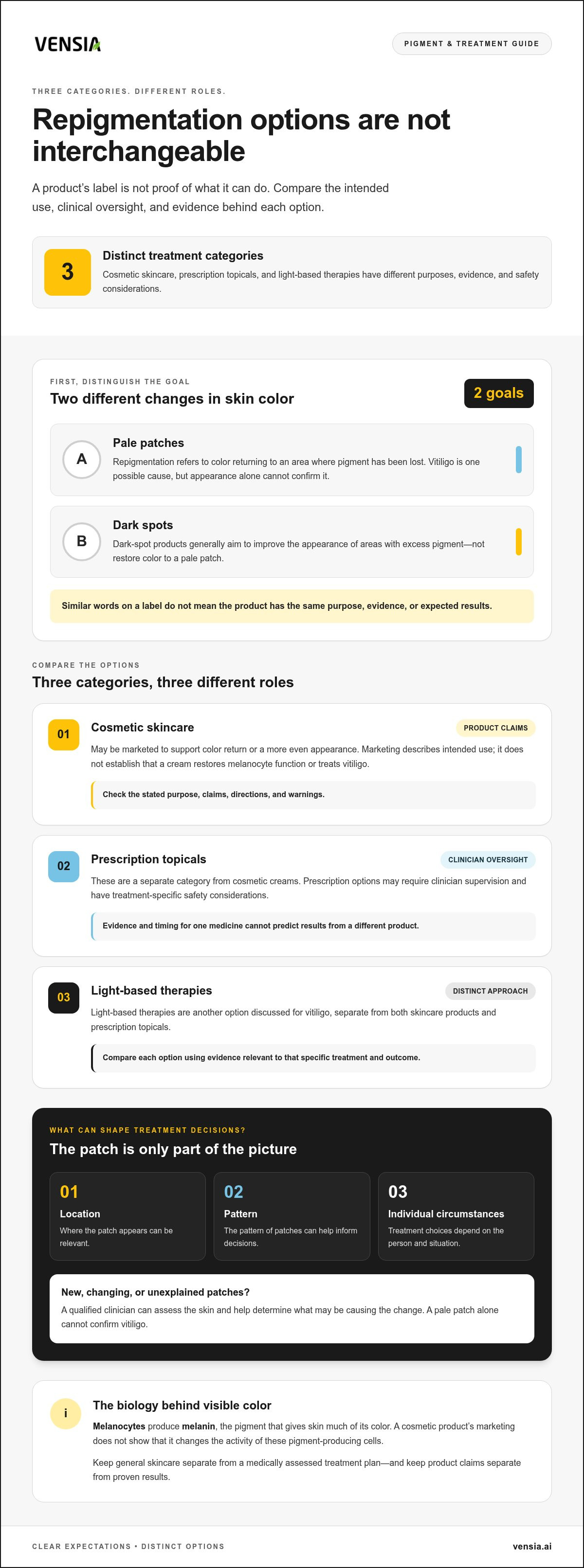
Repigmentation means color returning to an area where pigment has been lost. Dark-spot products generally aim to improve the appearance of areas with excess pigment. Those are different goals, and the word “repigmentation” on a product does not by itself show that the product can restore color or treat a medical condition.
This guide explains how cosmetic creams differ from clinician-directed vitiligo treatments, what to check before choosing a product, and why results and timelines vary. It also covers VENSIA Anti Vitiligo Cream as a skincare option, without presenting it as a proven medical treatment or promising results. The aim is clear expectations, not a quick fix.
Key Takeaways
- Repigmentation describes a goal, not a guaranteed result. The term alone doesn’t establish what a cream can do.
- A skin repigmentation cream marketed for vitiligo is not the same as a product intended to address dark spots or uneven tone.
- Cosmetic skincare, prescription topicals, and light-based treatments have different purposes, oversight, and evidence.
- Review a product’s stated purpose, claims, directions, and warnings before using it, especially if your skin is sensitive.
- VENSIA Anti Vitiligo Cream is a skincare option to consider with realistic expectations, not a substitute for medical assessment or treatment.
What Is a Skin Repigmentation Cream, and What Does the Term Mean?
A skin repigmentation cream is a product marketed to support the return of skin color or create a more even appearance. The term describes an intended purpose or marketing claim, not proof that the product restores pigment. What may be appropriate depends on the cause of the color change, and a label alone can’t identify that cause.
A product category is not a diagnosis or treatment recommendation. Lighter patches and darker spots reflect different changes in skin color. A product marketed for dark spots should not be assumed to address pigment loss. Likewise, a vitiligo-focused product should not be treated as a confirmed medical treatment because of its name or claims.
What does repigmentation mean in skin care?
Melanin is the pigment that gives skin much of its color, and it is produced by cells called melanocytes. Repigmentation generally means color returning to an area that has become lighter, or an effort to make skin tone look more even. In skincare, however, the word may describe a goal rather than a demonstrated effect.
Pale patches can have different causes. Vitiligo is one possibility, but appearance alone cannot confirm it. A qualified clinician can assess new, changing, or unexplained patches and help determine what may be causing them. That assessment is a more useful starting point than choosing a product based only on how a patch looks.
Repigmentation cream versus dark-spot cream
The intended concerns differ. Vitiligo involves areas of pigment loss, while dark spots are areas that appear more pigmented than the surrounding skin. A product marketed for dark spots may aim to improve the appearance of uneven tone. That is not the same goal as restoring color to a pale patch.
Marketing language can blur the distinction. Terms such as “even tone,” “pigmentation,” or “restore” appear across product categories, but shared wording does not mean the products have the same purpose, evidence, or role. Check the specific concern named on the packaging, the directions, and what evidence is offered for the claimed result. If you’re learning about vitiligo, Vitiligo on Wikipedia provides an overview of the condition, including its causes, symptoms, and treatments.
For more context on products in this category, read the VENSIA anti-vitiligo cream repigmentation guide. VENSIA Anti Vitiligo Cream is a skincare option to consider thoughtfully, not a guarantee of repigmentation or a way to identify the cause of a skin change.
How Repigmentation Treatments Relate to Melanocytes and Vitiligo
Melanocytes produce melanin, the pigment that contributes to skin color. When pigment is reduced or absent in an area, that patch may look lighter than the surrounding skin. Vitiligo is one condition associated with pigment loss, but a pale patch alone cannot confirm the cause. Clinical assessment is important, particularly if a patch is new, changing, or unexplained.
This distinction helps put product claims in context. A cosmetic cream’s marketing can describe its intended use, but it cannot establish that the product restores melanocyte function or treats vitiligo. Prescription medicines, cosmetic skincare, and light-based therapies are separate categories with different purposes, evidence, and safety considerations. They are not interchangeable simply because each may be discussed in relation to repigmentation.
How pigment-producing cells relate to visible patches
In vitiligo, pigment is lost in affected areas, creating visible patches that may vary in location and pattern. A clinician can assess the skin and consider whether vitiligo or another cause may explain the change. That matters because choosing a skin repigmentation cream based only on a patch’s appearance may not address the reason it appeared.
Cosmetic skincare can be part of general skin care, but don’t assume it changes the activity of pigment-producing cells. Keep a product’s stated purpose separate from a medically assessed treatment plan.
Why treatments and outcomes vary
For vitiligo, treatment decisions can depend on factors such as patch location, pattern, and individual circumstances. Prescription options may require clinician supervision and have treatment-specific safety considerations. Light-based therapies are another distinct category. A product label or another person’s experience cannot tell you which approach is right for you or how long a response may take.
A timeline reported for one medicine cannot predict the results or timing of a different product. Progress examples for a particular prescription treatment apply to that treatment and its studied use, not to cosmetic creams as a group. Look for evidence relevant to the specific option and outcome you are considering.
Supportive skin care can still be part of a thoughtful routine, though it does not replace diagnosis or treatment. For practical routine context, explore this vitiligo skincare routine guide. It can help you consider everyday care separately from treatment claims.
If you’re exploring skincare products as one part of your routine, view VENSIA skincare options and consider each product’s stated purpose and directions.
Repigmentation Creams Compared with Prescription and Light-Based Options
Products that appear together in search results can belong to very different categories. A cosmetic cream, a prescription topical medicine, and phototherapy have distinct purposes and evidence bases. Comparing them by intended use, oversight, and supporting evidence helps clarify what each option is designed to do.
Product category alone doesn’t establish evidence or suitability for an individual. A skin repigmentation cream’s label can describe its intended use, but it does not show whether the product has been studied for a particular condition or fits your circumstances.
Cosmetic skincare
Intended concern: Often marketed for skin appearance, such as uneven tone or discoloration.
Category and oversight: Cosmetic product; requirements vary by jurisdiction and by the claims made.
Evidence question: Is there reliable evidence for this specific product and the result it claims?
Prescription topical medicine
Intended concern: A defined medical condition and use described in its prescribing information.
Category and oversight: Medicine prescribed and used with appropriate clinical guidance.
Evidence question: What does the evidence show for its prescribed use, and what safety information applies?
Phototherapy
Intended concern: A clinician-directed light-based approach that may be considered for vitiligo.
Category and oversight: Medical treatment, not a cream or an ingredient in a cream.
Evidence question: Is it appropriate for the person’s diagnosis, affected areas, and treatment plan?
Cosmetic creams and prescription topicals are not interchangeable
Prescription medicines have defined uses and safety information that guide how they are selected and monitored. Medical guidance for vitiligo may discuss topical medication categories such as corticosteroids, calcineurin inhibitors, and calcipotriene. These are medical options, not evidence that a cosmetic product with similar-sounding claims works in the same way. Don’t treat a prescription medicine as a substitute for professional advice, or assume cosmetic skincare can replace it.
For any product, look for evidence tied to that exact product, its intended concern, and the outcome being claimed. Evidence about one medicine or ingredient cannot automatically be applied to another cream.
Where phototherapy fits into a treatment conversation
Phototherapy uses light under clinical direction. Narrowband UVB is one light-based approach used in vitiligo care, separate from creams sold for home skincare. A clinician may consider combining approaches in selected circumstances, based on the person’s diagnosis and needs. That does not mean a cream enhances, replaces, or matches phototherapy.
Consider what each option is intended to address, what evidence applies to it, and what safety considerations matter. A qualified clinician can help interpret those questions and determine whether a particular approach is suitable.
How to Assess a Skin Repigmentation Cream Safely
Before choosing a skin repigmentation cream, identify the concern you want to address. A pale patch, a dark spot, and an area of irritation call for different considerations. If you’re unsure what you’re seeing, don’t rely on a product description to identify the cause. A qualified clinician can assess patches that are new, spreading, symptomatic, or unexplained.
Use this checklist to review a product before applying it:
- Identify the concern. Is the product marketed for pigment loss, dark spots, or general uneven tone? These phrases do not describe the same goal.
- Read the claims carefully. Separate cosmetic language about appearance from claims about clinical outcomes or treating a medical condition.
- Check the product’s own label. Review ingredient information, directions, and warnings. Follow the directions exactly, and don’t use the product on areas or in ways the label doesn’t state.
- Consider your skin sensitivity. If you’ve had reactions to skincare, or your skin is already irritated, be cautious about adding a new product. Seek professional guidance if you’re uncertain.
Questions to ask when reading product claims
Ask what a claim actually promises. “Even-looking tone” describes appearance; a claim to treat vitiligo or produce a clinical change is different and should be assessed against relevant evidence. Ingredient details and directions help you understand the product, but they do not prove effectiveness for a particular condition.
Before-and-after images also need context. They show examples associated with a product or treatment, not a prediction of your own results. Differences in diagnosis, skin, and product use can affect outcomes. Don’t use an image alone to decide whether a product is suitable for you.
When to pause skincare and seek medical advice
Arrange prompt assessment if a patch is changing quickly, spreading, uncomfortable, or accompanied by irritation. Pause a skincare product if it appears to be causing irritation, and seek appropriate medical advice, especially if symptoms persist or worsen. If the cause of a patch is uncertain, assessment is more useful than trying several products in succession.
Some situations need individual guidance. Ask a qualified health professional about product use during pregnancy, use on a child, or combining skincare with prescription treatment. Don’t stop or change a prescribed medicine without consulting the person who prescribed it. These precautions keep product decisions grounded in your circumstances rather than broad marketing claims.
For a skincare option in this category, explore VENSIA skincare options and review the product information before deciding whether it fits your routine.
VENSIA Anti Vitiligo Cream: A Skincare Option to Consider Thoughtfully
VENSIA Anti Vitiligo Cream is a skincare option for readers exploring products marketed around vitiligo. Its name identifies the concern it is marketed for, but a product name alone cannot establish a diagnosis, demonstrate a clinical effect, or predict an individual result. Keep product exploration separate from medical assessment.
A cream and a clinical treatment plan are not the same thing. If a clinician has diagnosed vitiligo, their guidance can help you understand which care options are appropriate for your situation. A skincare product should not be treated as a way to confirm the condition, cure it, or replace prescribed care. You can consider a product while keeping its role distinct from medical treatment.
How to approach a vitiligo-focused skincare product
Start with the product’s label. Review its stated purpose, ingredient information, directions, and warnings, then follow the directions as written. Don’t apply it in a way or to an area beyond what the label specifies. If you’re unsure how the product fits your needs, pause rather than guessing.
Keep expectations measured. Claims about appearance or intended use are not a promise of a particular result, and a cream cannot tell you whether a pale patch is vitiligo. If you’re managing a diagnosed condition, discuss skincare product use with a qualified clinician, especially if you’re also following a treatment plan. They can help you consider the product alongside your circumstances without confusing skincare with medical care.
Choose a next step that fits your concern
If a patch is new, changing, spreading, symptomatic, or of uncertain cause, prioritize professional assessment instead of relying on cosmetic claims. If you’re already managing diagnosed vitiligo, keep your clinician informed about products you’re considering and don’t change prescribed treatment without consulting its prescriber.
If your goal is to explore skincare, review the product information for VENSIA Anti Vitiligo Cream and decide whether it aligns with your needs. Check what the product says for itself, follow its label, and keep expectations realistic. There’s no need to rush your decision.
Explore VENSIA Anti Vitiligo Cream as a skincare option, and take the next step that fits your skin concern.
Take Your Next Step With Care
Choosing a skin repigmentation cream is one part of making a thoughtful decision about a change in your skin. First clarify what you want to address and what information would help you decide. If a patch is unexplained or changing, prioritize getting it assessed. If you’re exploring skincare, read the product information and consider whether it fits your needs.
VENSIA Anti Vitiligo Cream is a skincare option to explore, not a diagnosis or a guaranteed medical outcome. A measured approach can help you stay informed and make choices that feel right for you.
Explore VENSIA Anti Vitiligo Cream and review the product information at your own pace. Make your next step with care and realistic expectations.
Frequently Asked Questions
Is a skin repigmentation cream the same as a prescription vitiligo treatment?
No. “Skin repigmentation cream” is a broad consumer term, while a prescription treatment is a medicine with specific uses and safety information. Similar wording does not mean the products are interchangeable. If you have diagnosed vitiligo, discuss adding a cosmetic cream with the clinician managing your care. For unexplained patches, seek an assessment rather than using a product label to decide what condition you have.
Can children use skin repigmentation cream?
It depends on the specific product and the child’s circumstances. A cream marketed for adults or for repigmentation isn’t automatically appropriate for a child. Before applying one, a parent or caregiver can show the product label to a qualified healthcare professional and ask whether its stated use is suitable. This is especially important if the child’s patches are new or changing, or if they’re using other skin products or medicines.
Can I use a repigmentation cream during pregnancy?
Ask a healthcare professional about the specific product before using it during pregnancy. Products differ, and the general term “repigmentation cream” doesn’t reveal whether a formula is suitable for you. Keep the package or ingredient information available so it can be reviewed alongside your circumstances. Don’t rely only on broad online claims or assume a product is appropriate simply because it’s sold as skincare.
What should I do if white patches spread while I am using a cream?
Arrange an assessment with a qualified healthcare professional, particularly if the patches are spreading, changing, or unexplained. Don’t apply more cream or alter another treatment on your own. Bring the packaging or ingredient information, and note when you started using the product and where you applied it. Those details can help explain what you’ve tried. If you’re receiving prescribed care, contact its prescriber before making changes.
Can a repigmentation cream cause irritation?
Yes, a skincare product may irritate some people, though reactions depend on the formula and the individual. Follow the product’s labelled directions and stop using it if you experience a concerning reaction. Seek medical advice if symptoms are severe or don’t settle. Avoid applying it to sensitive areas or beyond its stated use unless the label or a healthcare professional specifically advises that use.
How can I tell whether a repigmentation cream is approved for medical use?
Check the product’s official information and the relevant regulator’s resources for the country where it’s sold. Approval and classification can differ by location, and the phrase “repigmentation cream” doesn’t establish medical approval or clinical effectiveness. Marketplace descriptions alone aren’t proof. If you can’t tell what a product is intended to do or what status applies, consult a qualified healthcare professional or the relevant regulator’s official information.
Should I stop my prescribed vitiligo treatment when trying a cream?
Don’t stop, replace, or combine prescribed treatment without first discussing the change with the clinician managing your care. A cosmetic cream may not serve the same purpose as your medicine, and each prescription has its own directions and safety considerations. Share the exact product name and its ingredient information with your clinician. If you’re considering a change because of a reaction or concern, raise that promptly with the prescriber.


