

Even skin tone cream for vitiligo: applying it and tracking color development
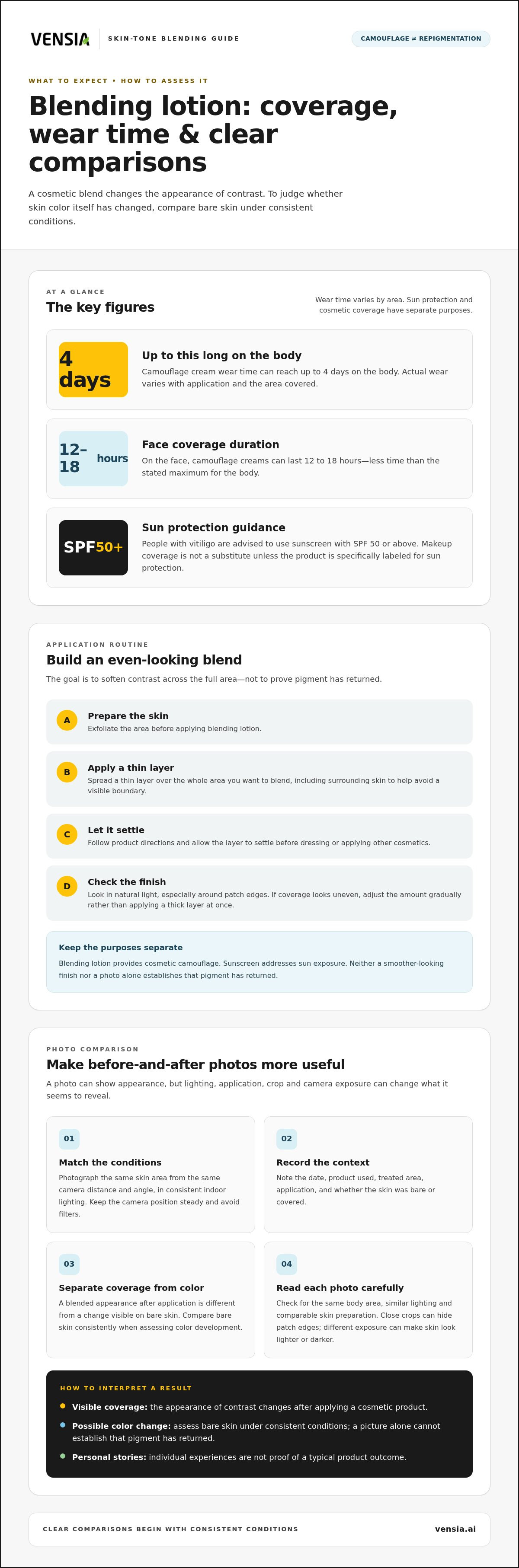
Blending depends on even application: exfoliate first, then spread a thin layer of lotion over the whole area you want to blend. An even skin tone cream for vitiligo may be intended to camouflage contrast or address pigmentation, so understand the product’s purpose before tracking changes. A blended appearance and a change in skin color are not the same thing.
It’s understandable to look at before-and-after photos to get a sense of what to expect. They can show how coverage appears on someone, but lighting, application and the area shown all affect what a photo reveals. A picture alone can’t establish that pigment has returned.
This guide explains how to apply blending lotion, what customer before-and-after photos can and can’t tell you, and how to record color changes consistently. You’ll also learn how camouflage differs from creams intended for pigmentation concerns, so you can choose an approach that matches your goal and assess visible changes more clearly.
Key Takeaways
- Separate temporary camouflage from treatments intended to address pigmentation, then track each goal in its own way.
- Compare before-and-after photos taken in consistent lighting and conditions; appearance in a photo alone can’t show whether pigment has returned.
- For a blended look, exfoliate first and apply a thin layer of lotion across the full area you want to even out.
- Understand how coverage can vary by body area: camouflage creams may last up to 4 days on the body and 12 to 18 hours on the face.
- Topical steroids are a different approach from cosmetic blending; a follow-up after 1 month helps assess their effects and side effects.
2. Customer before-and-after results
Before-and-after photos can show how patches and surrounding skin look at different times, but they don’t automatically reveal what caused a change. A photo may document cosmetic coverage, natural pigment changes or differences in lighting. Judge each result by what it actually shows, rather than treating every smoother-looking image as evidence of pigment restoration.
Erika Page developed vitiligo at seven years old and lost 100% of her skin’s pigment over 25 years. Her experience illustrates how extensive and personal vitiligo progression can be. It isn’t evidence of a cream’s effect, and it shouldn’t be presented as a product testimonial. Keep personal accounts separate from results that document a specific product and application process.
For a useful comparison, take a baseline photo before applying camouflage or a topical product. Retake it under similar conditions, showing the same area from the same camera distance. Use consistent indoor lighting, avoid filters and keep the camera angle steady. If a patch is on your hand, for example, photograph the same hand in the same position each time.
Record the date and product used beside each image. Note whether the skin was bare or covered, which area you treated, and whether its color looked different after application. This simple record helps distinguish temporary blending from a change visible on bare skin. It also makes customer photos easier to assess when captions explain the product and routine.
Look for context in every customer before-and-after example. Check whether both photos show the same body area, similar lighting and comparable skin preparation. A close crop can hide the size or edges of patches. Different camera exposure can also make skin appear lighter or darker, even when the underlying pigmentation hasn’t changed.
Sun protection matters when assessing visible skin changes. People with vitiligo are advised to use sunscreen with SPF 50 or above to protect against sunburn and long-term damage. Keep sun exposure and protection habits consistent in your photo record. Otherwise, a comparison may reflect different conditions rather than the effect of the cream or lotion being evaluated.
Use this practical checklist when reviewing results:
- Compare the same skin area, angle, and lighting.
- Record the product, application, and photo date.
- Separate visible coverage from changes on bare skin.
- Read personal stories as individual experiences, not proof of a typical outcome.
These steps make customer photos more useful. They help you judge whether a result shows blending, a visible pigmentation change or simply a difference in how the photograph was taken.
3. Vitiligo skin-tone blending lotion
A blending lotion changes the appearance of contrast between lighter patches and surrounding skin. It provides camouflage, not proof that pigment has returned. Choose it when your immediate goal is a more even-looking finish, such as for an event or everyday wear. Keep cosmetic blending separate from products intended to affect pigmentation, because they serve different purposes.
See a dermatologist before using a cream if you’re unsure about the diagnosis, patches are changing quickly or you’re considering a product intended to alter pigment. A dermatologist can assess the skin changes and help distinguish cosmetic camouflage from treatment for vitiligo.
To apply blending lotion, exfoliate the area first, then spread a thin layer over the whole area you’re blending. Covering the surrounding skin helps avoid a visible boundary between treated and untreated areas. For example, when blending a patch on your forearm, apply lotion across the surrounding area rather than stopping at the patch’s edge. Follow the product directions, and let the layer settle before dressing or applying other cosmetics.
Coverage duration depends on the body area. Vitiligo camouflage creams can last up to 4 days on the body and 12 to 18 hours on the face. These creams are waterproof, but wear can still vary with application and the area covered. Check the finish in natural light after application, especially around patch edges, where uneven coverage may be easiest to notice.
Sun protection remains essential alongside camouflage. People with vitiligo are advised to use sunscreen with SPF 50 or above to protect against sunburn and long-term damage. Makeup can add visible coverage over lighter patches, while sunscreen addresses sun exposure. Use the two for their separate purposes, and avoid treating makeup coverage as sun protection unless the product is specifically labeled for that use.
Build a repeatable routine using a small amount of lotion and consistent preparation. Record which area you blended and how the finish looked once it settled. If the shade or coverage looks uneven, adjust the amount gradually instead of applying a thick layer all at once. The key is a thin, even application across the full area.
- Exfoliate before applying the lotion.
- Use a thin layer over the entire area you want to blend.
- Allow for different wear times on the face and body.
- Pair cosmetic coverage with SPF 50 or above for sun protection.
3. Can creams restore pigment in vitiligo, and how effective are they?
First, distinguish pigment change from cosmetic coverage. A blending product changes how skin looks after application; it doesn’t demonstrate that pigment has returned. Repigmentation means color becomes visible again in an area previously affected by vitiligo. Compare bare skin under consistent conditions to assess color development, not just the finish immediately after applying a product.
Some prescribed creams are used as treatment rather than camouflage. UK treatment guidance describes topical steroids as a possible prescription for adults with non-segmental vitiligo affecting less than 10% of their body. This identifies an option for a specific group. It doesn’t mean every cream marketed for even skin tone is a topical steroid or serves the same purpose.
The treatment question is therefore not simply whether a cream can make a patch look less noticeable. It’s whether the product is intended to treat vitiligo, what type of vitiligo is present, and how much skin is affected. For example, an adult with non-segmental vitiligo affecting less than 10% of the body fits the group described in that guidance. Cosmetic coverage addresses appearance instead.
Track treatment separately from coverage. Before starting a routine, take a clear photo of the affected area without camouflage. Record the product and application dates, then compare the same area in similar lighting. Look for color changes in the patch itself, not just a smoother border or a more uniform appearance after makeup or blending lotion.
Review is part of assessing a prescribed topical steroid. A GP may review improvement after another 1 or 2 months of topical steroid treatment. Bring your notes and photographs to that review. A dated record can help show whether the patch’s appearance changed during treatment, rather than after a separate cosmetic application.
- Identify the goal: distinguish treatment intended for vitiligo from temporary coverage.
- Record a baseline: photograph bare skin and note the product and date.
- Compare consistently: use the same area and similar lighting.
- Review progress: use the described GP review period for topical steroid treatment.
These steps make claims about cream effectiveness easier to interpret. A before-and-after image showing camouflage can illustrate coverage, while a comparison of bare skin can help track visible color development. Keep the two records distinct, especially when assessing an even skin tone cream for vitiligo alongside a prescribed treatment.
4. Can skin-lightening creams even out skin tone in people with vitiligo?
Skin-lightening products and vitiligo treatments have different aims. A lightening product targets darker areas; it doesn’t restore pigment in white patches. For example, lightening surrounding skin to reduce contrast is not the same as repigmenting a patch. Identify whether your goal is camouflage, a pigmentation change or treatment before choosing a cream.
That distinction matters because a product’s purpose shapes how you assess its result. If darker areas look lighter after use, that alone doesn’t show that vitiligo has improved. Compare the affected patch and surrounding skin separately, and record what you applied. Keep photos of bare skin apart from images taken after cosmetics, so coverage isn’t mistaken for color returning.
Medical depigmentation is also different from using a cosmetic lightener. It may be recommended for adults whose vitiligo affects more than 50% of their bodies. That threshold describes a specific treatment consideration, not a general instruction to lighten skin at home. A broad change in skin color calls for a different decision than blending a small patch for a particular occasion.
Use a clear decision process. First, note whether the contrast comes from a lighter patch, darker surrounding skin or both. Next, define the result you want, such as temporary coverage or a change in pigmentation. Then read the product’s stated purpose and directions. If you’re considering a treatment that changes pigment, discuss your goal and the affected areas with a dermatologist.
For example, someone with a pale patch on their hand may want a closer-looking match for an event. A blending product can change the appearance while it’s worn, while a skin-lightening product targets darker skin. These approaches aren’t interchangeable. Don’t judge either by a photo alone: compare bare skin under similar lighting and note whether a product was applied.
- For temporary coverage: assess the finish after applying a camouflage product.
- For pigment change: distinguish lightening surrounding skin from restoring pigment within patches.
- For widespread vitiligo: understand that depigmentation may be considered for adults affected over more than 50% of their bodies.
- For tracking: record the product, area, and appearance of bare skin separately from makeup coverage.
The phrase “even skin tone” can describe several outcomes. A cream may aim to address darker spots, while blending lotion can disguise contrast. Neither phrase alone establishes that a product restores pigment in vitiligo. Match your choice to the specific area and result you want, then keep that goal in mind when assessing changes.
If you’re evaluating an approach intended to change pigment, distinguish its goal from temporary coverage and track bare skin separately. People using topical steroids for vitiligo may need to take a break from treatment every few weeks if their condition has improved slightly. Ask a dermatologist whether a break applies to your treatment, rather than inferring it from a cosmetic result. Record the treatment and any changes you notice, and talk with a clinician before changing your plan.
5. What are the risks and side effects of using creams for vitiligo?
The first safety step is identifying what kind of cream you’re using. A cosmetic product for blending or pigmentation isn’t the same as a prescribed topical steroid. Their purposes differ, so don’t judge them by the same result or assume they have the same directions. Temporary coverage changes appearance, while a prescribed treatment is monitored for its effects and side effects.
Follow the directions for the specific product and apply it only as instructed. Avoid combining products on the same area unless the product instructions or a health professional support that routine. If you use a cosmetic cream on one patch and a prescribed treatment elsewhere, record each product and application area. Clear notes help distinguish a product’s effect from other changes in your routine.
Topical steroids need follow-up. A GP follow-up appointment is recommended after 1 month of topical steroid treatment to assess its effects and side effects. Bring the product details and a record of when and where you applied it. This gives the appointment a practical focus: what changed, where it changed, and whether you noticed an unwanted effect.
Keep a simple treatment log from your first application. Write down the product name, date, area and any change you notice. For example, note whether a cream was used on a patch, nearby skin or both. If you also use makeup or blending lotion, record that separately. Otherwise, cosmetic coverage may make it harder to tell which product coincided with a visible change.
Sun protection is another part of a safer routine. People with vitiligo are advised to use sunscreen with SPF 50 or above to protect their skin from sunburn and long-term damage. Record sunscreen use alongside topical products, especially when comparing skin appearance over time. That context makes photographs and observations more useful than an image without any details about the routine.
Keep each product’s purpose clear. A skin-lightening cream, a camouflage product and a prescribed steroid aren’t interchangeable. If a product’s directions don’t match the intended area or use, don’t improvise by applying more or combining it with another cream. Follow the label instructions, and direct questions about prescribed care to the clinician overseeing it.
- Record each product and the area where you apply it.
- Keep cosmetic coverage separate from prescribed treatment notes.
- Attend the recommended 1-month GP follow-up for topical steroids.
- Include SPF 50 or above sunscreen in your skin-protection routine.
For a skincare option focused on vitiligo, explore targeted cream options and compare the product’s stated purpose with your own goal.
VENSIA: VENSIA Anti Vitiligo Cream
VENSIA Anti Vitiligo Cream is an option to consider if you’re looking for a cream specifically named for vitiligo. Keep your goal clear: cosmetic blending changes how patches look temporarily, while pigment development is a separate outcome to track on bare skin. Review the product information and directions to understand its intended use, then record your application and observe the treated area consistently.
If your main concern is dark spots or uneven pigmentation, VENSIA Anti-Pigmentation Cream has a different stated focus. Choose based on the concern you want to address, and keep expectations aligned with the product’s stated purpose rather than assuming it provides camouflage or restores pigment.
For more information about VENSIA Anti Vitiligo Cream, visit vensia.ai.
Choose a skincare step that fits your goal
Your next step is to define what you want from your routine: a product focused on vitiligo, help with dark spots or everyday moisture. That distinction makes it easier to select an option for your concern and follow its directions consistently. Choosing an even skin tone cream for vitiligo starts with understanding the product’s stated purpose, not relying on its name alone.
VENSIA offers VENSIA Anti Vitiligo Cream, VENSIA Anti Pigmentation Cream for concerns such as dark spots, and VENSIA Niacinamide Marshmallow Body Lotion for moisturizing and dryness. Consider which concern matters most to you, then review the product details as you decide what belongs in your skincare routine.
Contact VENSIA for product advice and take a considered next step toward a routine that feels right for you.
Frequently Asked Questions
How should vitiligo creams be applied, and how long do they take to work?
Apply each cream according to its directions. For VENSIA Anti-Vitiligo Scar Removal Cream, cleanse the skin, apply a small amount, massage gently in upward circular motions, and use twice daily for best results. It’s for external use only, so avoid broken skin, eyes, and mucous membranes; patch-test first if you have known sensitivities. There’s no single timeline for all creams. A GP may review improvement after another 1 or 2 months of topical steroid treatment.


