

Marshmallow Root Extract in Skincare Products and What It Does
A soothing skincare ingredient doesn’t have to work alone. Marshmallow root extract comes from Althaea officinalis, and its mucilage may help skin retain moisture while forming a light protective layer. Its potential skin benefits also include compatibility with other ingredients: it can be layered with skincare products without hindering the efficacy of sunscreen or benzoyl peroxide.
If you’re cautious about adding something new to your routine, that compatibility matters. Marshmallow root extract may complement other products without requiring you to rebuild your regimen. Its effects still depend on the product’s full formula and how your skin responds.
Here, you’ll learn what marshmallow root extract is, how its mucilage may support hydration, and where it appears in skincare and body-care products. You’ll also learn how it can pair with other ingredients and what to consider when choosing a formula, so you can decide where it might fit in your routine.
Key Takeaways
- Learn how marshmallow root’s mucilage may help skin retain moisture and feel smoother.
- Find out which leave-on skincare and body-care products may contain the extract.
- Understand why the ingredient may fit alongside other skincare products, including sunscreen and benzoyl peroxide.
- See what to consider when choosing a formula and introducing it to your routine.
- Explore how a marshmallow body lotion may suit skin that feels dry or rough.
What is marshmallow root extract?
Marshmallow root extract comes from Althaea officinalis, a flowering plant native to parts of Africa, Europe, and Asia. Its root contains mucilage, a gel-like substance that can form a light layer on skin. In skincare, the extract is described as lightly emollient and soothing. These properties may help skin feel smoother when dryness or mild irritation affects its surface.
Mucilage helps explain the ingredient’s role. It can form a layer between skin and potential external irritants, which may help soothe the feeling of irritation and visible redness. This is a surface-level skincare effect, not a treatment for an underlying condition. For sensitive skin, the full product formula matters as much as the botanical ingredient.
Compared with aloe vera or calendula, marshmallow root is known for mucilage and its layer-forming action. That difference doesn’t establish that one botanical soothes skin better than another. A product’s formula and intended use, along with your skin’s response, all affect how ingredients work the same way in every routine.
Readers considering marshmallow root extract skin benefits may be interested in comfort, a smoother feel, and support against moisture loss. Evidence includes a study in which an ointment containing 20% marshmallow root extract reduced skin irritation. That finding relates to the ointment studied; it doesn’t show that every product or concentration produces the same result.
Traditional use offers context, too. Marshmallow root was historically used in poultices for skin irritation, including insect bites. This history helps explain its longstanding association with soothing skin, but it isn’t the same as modern clinical evidence. A plant-derived ingredient doesn’t guarantee a particular response from every person or formula.
For the marshmallow root extract skin benefits relevant to topical use, it’s important to distinguish skin research from other findings. In an animal study, liquid marshmallow flower extract taken for 1 month had a positive effect on HDL cholesterol levels, according to the researchers who conducted the study. This involved animals and flower extract, so it doesn’t demonstrate a skin effect from applying root extract.
Topical marshmallow root may cause irritation, and sensitivity or allergic reactions are possible. If you have sensitive skin, patch test a product before broader use and stop if irritation develops. A patch test can help reveal an individual reaction, though it can’t guarantee that a product will suit every area or use.
Marshmallow root may not be safe during pregnancy or breastfeeding. Consult a healthcare provider before using it in these circumstances or if you have a health problem. In topical skincare, its role is as a soothing ingredient, not a replacement for a doctor-prescribed treatment plan.
Skincare products containing marshmallow root extract
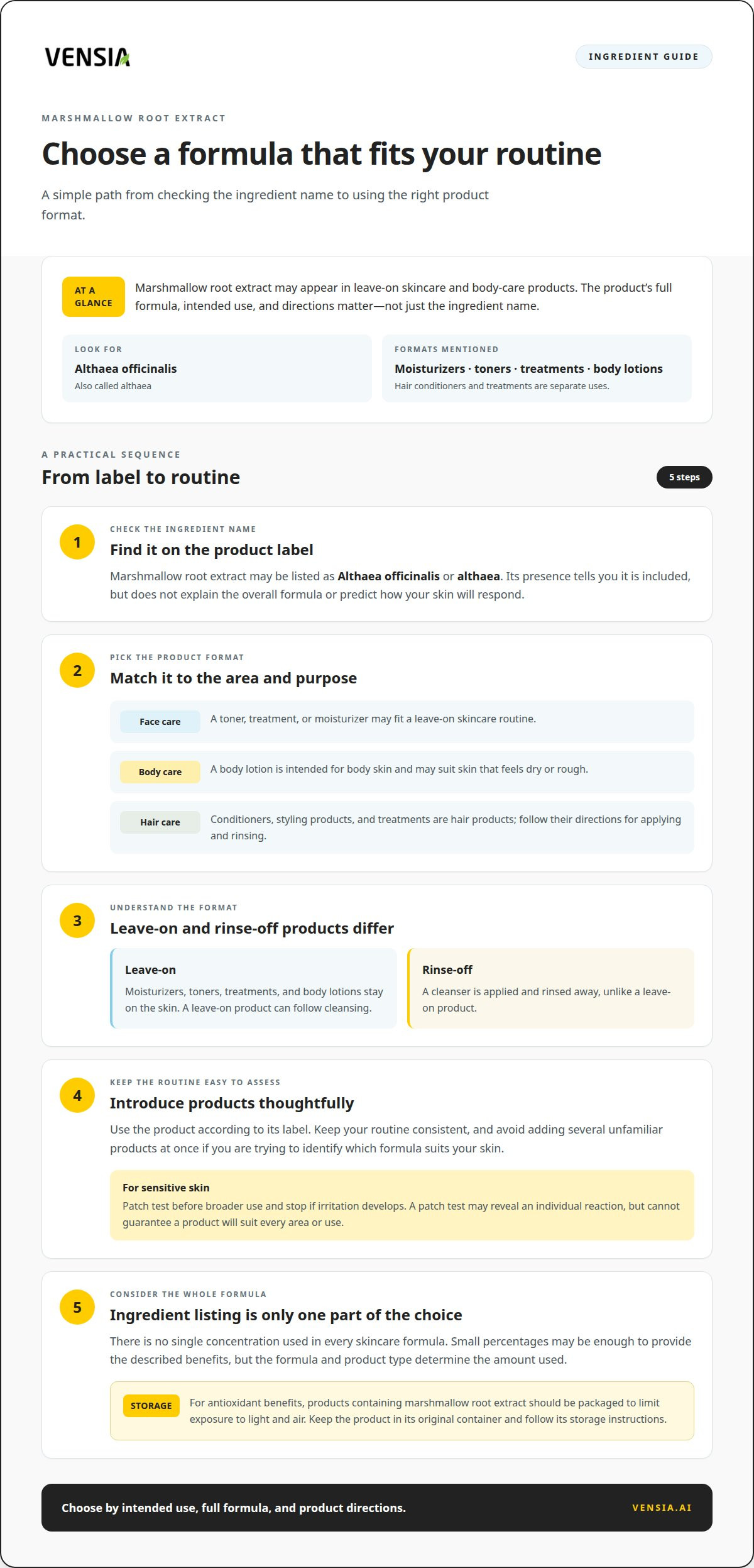
Marshmallow root extract appears in skincare and cosmetics under the name Althaea officinalis, also called althaea. The plant grows across parts of Africa, Europe, and Asia, and its extract can be incorporated into different product formats. Look for it in moisturizers, toners, treatments, and body lotions. These leave-on products stay on the skin, unlike cleansers that are rinsed away.
There isn’t one concentration used in every skincare formula. Small percentages may be enough to provide the described benefits, while the formula and product type determine the amount used. A label listing marshmallow root extract tells you it is included, but doesn’t by itself explain the overall formula or how your skin will respond.
For sensitive skin, a leave-on product such as a toner, treatment, or moisturizer is a practical format to consider. Since it remains on the skin, it provides ongoing contact with the formula rather than being washed off like a cleanser. Choose a format that suits your routine: a toner or treatment may fit before moisturizer, while a body lotion is intended for body care.
Use a marshmallow-root product according to its label. A leave-on product can follow cleansing, while a cleanser is applied and rinsed away. Keep your routine consistent, and avoid adding several unfamiliar products at once if you’re trying to identify which formula suits your skin.
Marshmallow root also appears in hair conditioners, styling products, and treatments, mainly for hydration. A deep-conditioning treatment is a different use from a face or body lotion, so follow the product directions for applying and rinsing it. Follow the product’s directions, since a hair formula is designed for hair rather than as a facial moisturizer.
Packaging and use matter, too. For antioxidant benefits, skincare products containing marshmallow root extract should be packaged to limit exposure to light and air. Keep the product in its original container and follow its storage instructions. A leave-on lotion may suit dry-feeling body skin, while a hair conditioner serves a different purpose.
If you’re considering body care, a marshmallow-root body lotion offers a leave-on format for moisturizing and soothing rough, dry-feeling skin. Choose products by their intended use and formula, rather than assuming that every item containing Althaea will work the same way.
work the same way in every routine. Marshmallow root extract is used in skin care and cosmetics, and only small percentages are needed to produce the described benefits. That does not make the ingredient a substitute for considering the full product: the item’s intended use and directions remain relevant when choosing among a face product, body lotion, or hair treatment. A restrained approach is to select a formula for the area and routine where you plan to use it, then follow its label rather than treating the ingredient name as a complete guide.
Skin hydration and moisture retention
Marshmallow root extract supports a hydration-focused skincare routine by helping skin prevent water loss. When skin retains moisture, it can feel smoother, softer, and more supple. This may help when dryness leaves the surface feeling tight or rough. The extract is a moisturizing ingredient, not a replacement for every part of a beauty routine. A moisturizer’s overall formula also shapes how it feels and performs.
Moisture retention matters because hydration isn’t only about applying water to the skin. A product containing marshmallow root extract can help skin hold on to moisture, supporting a hydrated appearance and a smoother feel. Its role is particularly relevant in leave-on products, which remain on the skin after application. For example, a moisturizer can follow cleansing in a simple routine for dry-feeling skin.
The extract is also described as helping protect the skin’s natural hyaluronic acid from enzymes that break it down. Hyaluronic acid is associated with skin hydration, so preserving it supports the skin’s moisture balance. This mechanism complements the extract’s role in helping reduce water loss. Together, these effects explain why marshmallow root is used in hydrating skincare, without implying that it treats inflammatory conditions or every cause of redness.
For sensitive skin, hydration can be one part of a comfortable routine. Choose a moisturizer intended for the area you’re caring for, then use it consistently according to its directions. Stop using a product if it causes irritation. A hydrating formula may improve the feel of dryness, but redness or discomfort can have different causes. Moisture support alone doesn’t identify or resolve them.
Marshmallow root also appears in hair conditioners and treatments for its hydrating properties. Hair products serve a different purpose from facial or body moisturizers: conditioners and styling formulas are made for hair, while skin lotions are applied to the body. A deep-conditioning treatment is rinsed out according to its directions. Keeping these uses distinct helps prevent confusing hair moisture retention with skin hydration.
Think of marshmallow root extract as one supportive ingredient in a broader routine. A moisturizer can help reduce water loss, while other products serve different needs, such as cleansing or sun protection. Skin that feels tight after cleansing, for example, may benefit from a suitable leave-on moisturizer. Don’t treat persistent redness or irritation as simple dryness based on hydration benefits alone.
Overall, the extract’s hydration role comes from supporting moisture retention and helping protect natural hyaluronic acid. That makes it relevant in products designed to leave skin feeling smooth and hydrated. For hair, its hydrating use belongs in conditioners or treatments rather than skin lotion. Match the product to the area and purpose, and follow its application directions.
Marshmallow root and mucilage
On skin, marshmallow root extract works mainly through mucilage, which can form a protective layer between skin and potential irritants. This surface-level action helps explain its role in soothing skincare.
Mucilage and Its Components
Mucilage is a gel-like plant material associated with polysaccharides, while flavonoids are another group of plant compounds. In skincare, the practical point is mucilage’s ability to create a light layer on the skin’s surface. Polysaccharides describe a class of molecules, not a guaranteed result from every formula. Ingredient presence alone also doesn’t establish a product’s strength or effect.
Polysaccharide-Rich Mucilage on Skin
Polysaccharide-rich mucilage can sit between the skin and potential external irritants. This surface layer helps explain why marshmallow root extract is used in products intended to soothe skin. It isn’t a permanent barrier or proof that a product treats inflammation. A lotion, toner, or treatment’s full formula influences how it feels on skin.
The distinction matters for sensitive skin. A soothing ingredient may support comfort, but it can’t identify why irritation or redness occurs. For example, dryness and a reaction to a product can both make skin feel uncomfortable, yet they don’t necessarily have the same cause. Mucilage describes one ingredient’s role, not a diagnosis or a complete treatment plan.
“Inflammatory properties” can also be misunderstood in product descriptions. Marshmallow root’s surface-soothing role doesn’t establish that it treats inflammatory skin conditions. A cosmetic product containing the extract should be understood by its intended use and complete ingredient formula. If a prescribed treatment is part of your routine, the extract shouldn’t replace that plan.
The word “herbal” describes a plant-derived ingredient, not a guarantee of gentleness. Marshmallow root extract may still irritate skin, so a patch test can help you notice a possible reaction before broader application. Stop using a product if it causes discomfort. The ingredient’s mucilage doesn’t prevent every sensitivity or reaction.
For a practical example, a leave-on moisturizer can deliver marshmallow root extract to the skin as part of a regular skincare routine. Its mucilage may form the described surface layer, while the rest of the formula contributes to the product’s overall feel. That’s why you should consider the ingredient’s role alongside the product format and intended use.
In short, mucilage explains the connection between marshmallow root and topical soothing: it forms a protective layer rather than acting as a cure. Understanding that mechanism helps set realistic expectations. The ingredient can support a skincare formula, but your skin’s response and the product’s other components remain relevant.
Compatibility with other skin care ingredients
Marshmallow root extract can be layered with other skincare ingredients. It doesn’t hinder the efficacy of sunscreen or benzoyl peroxide, so it can fit into a routine that includes either. Its potential benefits can complement those products without requiring you to rebuild your routine. Compatibility doesn’t mean every combination suits everyone, though. The product’s full formula and your skin’s response still matter.
For example, a routine may include a moisturizer with marshmallow root alongside sunscreen during the day. Sunscreen continues to serve its own role, and the extract doesn’t replace it. Benzoyl peroxide can also remain part of a skincare routine alongside marshmallow root extract. These examples show how marshmallow root extract skin benefits can complement other routine ingredients.
Use each product according to its intended purpose. A leave-on moisturizer or treatment stays on the skin, while a cleanser is rinsed away. Follow the directions for each formula rather than assuming that layering changes how a product should be used. If you’re adding an unfamiliar product, introduce it separately so you can notice how your skin responds.
Ingredient origin doesn’t determine compatibility. Marshmallow is native to parts of Africa, Europe, and Asia, but a plant-derived ingredient still works within a finished formula. An extract in a moisturizer differs from a homemade mixture using marshmallow root powder. The extract, product format, and other ingredients all contribute to the finished product. Powder isn’t interchangeable with formulated skincare.
That distinction matters for sensitive or reactive skin. If your skin or scalp is sensitive or reactive, use caution with homemade treatments. A prepared product can also cause irritation, so patch testing before broader use can help identify a possible sensitivity. Stop applying a product if irritation develops. Natural origin doesn’t guarantee that every formula suits every person.
Marshmallow root extract may appear in routines used by people managing eczema, but that doesn’t establish it as an eczema treatment. Don’t use a cosmetic ingredient in place of a doctor-prescribed treatment plan. If you have a health problem or questions about adding a topical product to your care routine, discuss its use with a healthcare provider.
The practical takeaway is that marshmallow root extract can be layered with skincare ingredients, including sunscreen and benzoyl peroxide. Keep formulated products distinct from homemade powder, follow product directions, and consider your skin’s response. For a routine that includes marshmallow root extract skin benefits, choose products by their intended use. Explore marshmallow-root skincare options for a leave-on body-care format.
Topical marshmallow root extract is described as a lightly emollient ingredient that can soothe skin, calm redness, and help protect skin from external threats. These qualities describe its potential role in a routine, not a reason to change how other products are used.
Talk with a doctor before using marshmallow root. People who are pregnant or breastfeeding, and people with health problems, should consult a healthcare provider before using it. These precautions are relevant when considering a new topical ingredient, even when using familiar skincare products alongside it.
VENSIA: VENSIA Niacinamide Marshmallow Body Lotion 200 ML - Moisturizing, Improving Dryness, Rough Skin Soothing, Organic Vitamin C, Gentle Exfoliating, All Skin Types
VENSIA Niacinamide Marshmallow Body Lotion 200 ML is a body-care option for skin affected by dryness or roughness. It is described as moisturizing, soothing rough skin, gently exfoliating, and suitable for all skin types. The formula also includes niacinamide and organic vitamin C.
Consider this lotion if you want marshmallow root in a leave-on body product as part of your skincare routine. Its stated purpose is to moisturize the body and care for dry, rough-feeling skin. Follow the product’s directions and stop using it if irritation occurs.
For more information about this body lotion, contact VENSIA.
Choose a skincare step that fits your needs
Your next step can be simple: decide what you want a product to do, then choose a format that suits your routine. If you’re looking for body care focused on dryness and roughness, VENSIA Niacinamide Marshmallow Body Lotion 200 ML is one option. For concerns involving pigmentation or vitiligo, VENSIA also offers its Anti Pigmentation Cream and Anti Vitiligo Cream.
Understanding the skin benefits associated with marshmallow root extract can help you make a more considered choice, but ingredient names alone don’t determine whether a product fits your needs. Consider the product’s intended use and how it works within your existing care routine. If you’re managing a persistent skin concern or following a prescribed treatment plan, keep that guidance central as you choose cosmetic products.
Skin care is personal, and a thoughtful next step can begin with a clear conversation. Contact VENSIA about your skincare needs and explore the options that align with your routine.
Frequently Asked Questions
Is marshmallow root extract effective for dry, sensitive, or irritated skin?
Marshmallow root extract may support comfort for dry or irritated skin, but it won’t suit everyone. If your skin is sensitive, choose a product formulated for your intended use and patch test it before wider application. Try it on a small area first and watch for irritation. Stop using it if discomfort or redness develops, and don’t treat persistent symptoms as simple dryness.
How is marshmallow root extract used in skincare products?
Marshmallow root extract is incorporated into leave-on products such as moisturizers, toners, and treatments, as well as body lotions. Choose a product designed for the area you want to care for, then follow its label directions. For example, a body lotion is intended for body care, while a facial moisturizer is made for the face. Avoid homemade preparations if your skin is sensitive or reactive.


