

How to Get an Even Skin Tone on Your Body With Moisturizing
Moisturizing can make uneven body tone look more balanced by hydrating and smoothing the skin, though it doesn’t directly change pigmentation. If you’re wondering how to get an even skin tone on your body, a steady routine can help: moisturize regularly, exfoliate gently, and use broad-spectrum sunscreen with SPF 30 or higher each day to help prevent discoloration from worsening.
It’s understandable to want a moisturizer to do more than relieve dryness, especially when rough or blotchy areas make your skin look uneven. This guide explains common causes of uneven tone and how exfoliation, moisturizing, and antioxidant ingredients can support smoother-looking skin. Gentle care matters: over-exfoliation can irritate skin, while consistent hydration can soften the appearance of uneven areas. You’ll also find practical body-care steps and guidance on topical ingredients that may help create a more balanced-looking complexion.
Key Takeaways
- Recognize how sun exposure, irritation, and hormonal changes can contribute to uneven-looking body skin.
- Learn how glycolic, lactic, and salicylic acids support the removal of dead skin cells, and why over-exfoliating can work against your goals.
- Understand how hydration supports the skin barrier and can make rough or blotchy areas appear smoother.
- Explore how niacinamide and other antioxidants may support a more even-looking complexion by addressing processes involved in visible pigmentation.
1. Understanding Uneven Skin Tone: What is Uneven Skin Tone?
Uneven skin tone describes areas that look lighter, darker, or redder than the surrounding skin. Dark spots and blotchy patches may appear after inflammation, irritation, or sun exposure. Hyperpigmentation is a common term for darker areas caused by excess pigment in the skin. A patch’s pattern, location, and recent changes can offer clues about what may be contributing.
Sun exposure can contribute to sun damage, dark spots, and discoloration, including on skin usually covered by clothing. Daily broad-spectrum sunscreen with SPF 30 or higher helps protect exposed skin and prevent existing discoloration from worsening. Sunscreen helps limit further sun-related changes, but it doesn’t directly even pigmentation. Protective clothing and shade provide additional ways to reduce exposure.
A practical daily routine has three steps: cleanse gently, moisturize, and apply broad-spectrum SPF 30 or higher to exposed skin. Reapply sunscreen every two hours, especially when sweating or taking part in water activities, according to the American Academy of Dermatology. Keep the routine consistent, and avoid adding several strong products at once. This makes irritation easier to notice and helps you identify which step suits your skin.
Friction from tight clothing, repeated shaving, and ingrown hairs can irritate skin and contribute to post-inflammatory dark patches. Reduce rubbing by choosing comfortable clothing, shave gently, and avoid picking at ingrown hairs. If shaving repeatedly triggers irritation, pause until the skin settles and review your technique. Darker or sensitive skin may be more prone to post-inflammatory hyperpigmentation and blotchy patches.
Skin-lightening creams need careful use, particularly products containing hydroquinone or steroids. The available facts don’t establish specific risks for those ingredients, so avoid assuming every formula has the same effects or suitability. Use products only as directed on their label, and seek qualified medical advice before using a treatment-strength cream, combining actives, or applying it to irritated skin. Stop if you develop a concerning reaction.
Arrange a medical evaluation if discoloration persists despite a consistent routine or a patch changes noticeably. If home care hasn’t helped after one month, consider making an appointment with a healthcare provider or skin care specialist. A clinician can assess the pattern and possible causes, which matters because sun-related spots, irritation, and other pigment changes may need different approaches.
One biological detail helps distinguish ingredient claims from skin-tone advice: according to the National Institutes of Health, more than 400 enzymes require NAD to catalyze reactions in the body, more than for any other vitamin-derived coenzyme. This enzyme fact concerns NAD; it doesn’t mean that niacinamide has the same role or directly corrects uneven tone. Focus first on daily sun protection and reducing repeated irritation.
2. Exfoliation to remove dead skin cells
Exfoliation loosens or lifts dead skin cells from the skin’s surface, which can make rough texture and uneven tone look smoother. It may support a more even appearance over time, but aggressive scrubbing can irritate skin and make discoloration more noticeable. If you’re learning how to get an even skin tone on your body, exfoliate gently rather than trying to force dark marks to fade quickly.
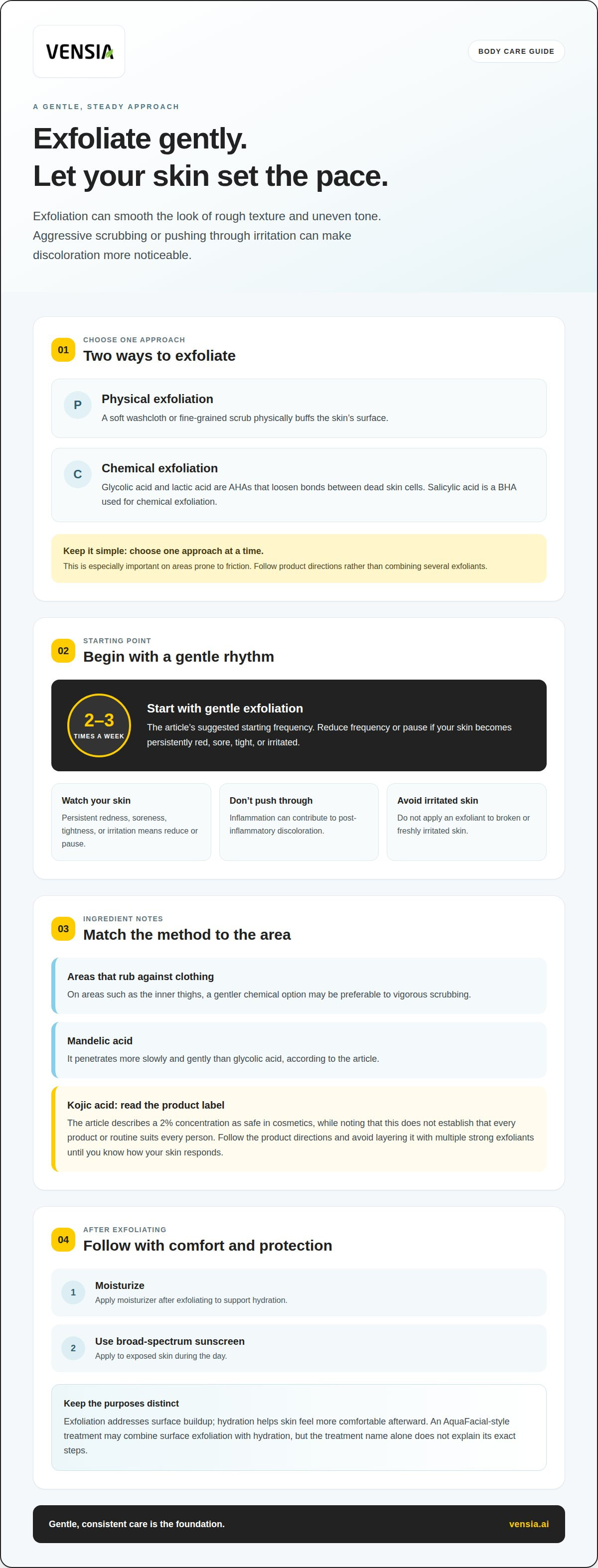
Physical and chemical exfoliants work differently. A soft washcloth or fine-grained scrub physically buffs the surface; glycolic acid and lactic acid are alpha hydroxy acids (AHAs) that loosen bonds between dead skin cells. Salicylic acid is a beta hydroxy acid used for chemical exfoliation. Choose one approach at a time, especially on areas prone to friction, and follow product directions rather than combining several exfoliants.
Start with gentle exfoliation two to three times a week. Reduce frequency or pause if skin becomes persistently red, sore, tight, or irritated. Inflammation can contribute to post-inflammatory discoloration, so pushing through irritation can undermine your routine. After exfoliating, apply moisturizer to support hydration, and use broad-spectrum sunscreen on exposed skin during the day.
On areas that rub against clothing, such as the inner thighs, a gentler chemical option may be preferable to vigorous scrubbing. Mandelic acid penetrates more slowly and gently than glycolic acid. Introduce an exfoliant on a small area first, and avoid applying it to broken or freshly irritated skin. Shaving-related sensitivity is another reason to exfoliate mildly.
Kojic acid is another ingredient used in cosmetic products for pigmentation concerns. A 2% concentration is described as safe in cosmetics, but that doesn’t establish that every product or routine suits every person. Check the ingredient label, follow its directions, and avoid layering kojic acid with multiple strong exfoliants until you know how your skin responds.
An AquaFacial-style treatment may combine surface exfoliation with hydration, but these steps serve different purposes. Exfoliation addresses surface buildup; hydration helps skin feel more comfortable afterward. The treatment name alone doesn’t explain its exact steps, so focus on the ingredients and how your skin responds. Knowing how to get an even skin tone on your body means using each step for its intended purpose.
Keep daily habits simple: avoid repeated friction, don’t pick at bumps, and maintain sunscreen use after exfoliation. For routine body care, a gentle exfoliating body lotion can combine moisture with mild exfoliation. Pause exfoliating products if they trigger irritation, since calm, consistent care is a better foundation for improving the look of uneven skin tone.
3. How Does Moisturizing Help Even Body Skin Tone on Body?
Hydrated skin often looks smoother because moisture softens dry, rough texture. Water and lipids help maintain the skin barrier. When the surface feels dry, flaky patches can make surrounding discoloration look more pronounced. Moisturizing supports comfort and a more even-looking finish, but it doesn’t remove pigment or change its underlying cause.
The skin barrier is the outer protective layer that helps limit moisture loss and shield skin from irritants. Regular moisturizing replenishes surface hydration and supports that barrier. For example, applying lotion after washing helps address dryness that can follow cleansing. If a product stings or leaves your skin irritated, stop using it; ongoing irritation can undermine comfortable barrier care.
Hydration can also affect how light reflects across the skin. A smooth, moisturized surface reflects light more evenly than dry, flaky patches, so blotchiness may appear less prominent. This is a visible effect, not pigment removal. A dark spot caused by sun exposure, for instance, may remain even when surrounding skin feels softer and looks less rough.
Make moisturizing a simple, repeatable step. After bathing, gently pat your skin dry and spread moisturizer over areas that feel tight or rough. Follow a consistent routine rather than applying a thick layer only when dryness becomes uncomfortable. Pay attention to elbows, knees, and lower legs, where dryness can make texture differences especially noticeable. Let the product settle before dressing.
Ingredient choice shapes how a moisturizer supports hydration. Glycerin and hyaluronic acid are humectants that attract and hold water in the skin, helping it look plump and dewy. A cream or lotion can also contain emollient ingredients that soften rough-feeling areas. Read the label and choose a texture comfortable enough for regular body use.
Some moisturizers include vitamin C, an antioxidant ingredient also used in products targeting uneven pigmentation. Antioxidants and moisturizers play different roles: hydration smooths the surface, while antioxidant ingredients address other skin-care goals. Neither replaces sun protection. Pair moisturizer with broad-spectrum sunscreen on exposed skin, since sun exposure can contribute to discoloration and sun damage. This layered routine supports skin comfort while helping limit further visible changes.
4. Antioxidants and pigment formation
Melanin gives skin its color, and changes in pigment production or distribution can create visible patches. Niacinamide can reduce the appearance of dark spots by limiting the transfer of pigment-containing melanosomes from melanocytes to surface skin cells. This process targets visible pigmentation; it doesn’t make every cause of uneven tone the same. A smooth, radiant appearance starts with understanding what may be contributing to each area.
Antioxidants support a different part of skin care. Vitamin C is an antioxidant used in products for uneven pigmentation, while pomegranate extract may suppress tyrosinase, an enzyme involved in pigment formation. These ingredients have distinct roles, so don’t assume every antioxidant works through the same mechanism. Check product labels, introduce one new active ingredient at a time, and keep your routine gentle if skin becomes irritated.
Hormonal shifts can also influence pigmentation. Pregnancy and hormonal medications can trigger melasma or uneven pigmentation on the body. Notice where patches appear and whether their pattern changes alongside a life event or medication change. That context can help distinguish a gradual pigment concern from a mark that followed irritation. Don’t change prescribed medication on your own; instead, discuss relevant changes with the clinician who manages it.
Pollution is often raised in conversations about skin health, but a patch’s appearance alone can’t identify its cause. Keep your routine focused on steps with a clear purpose: cleanse gently, moisturize, and protect exposed skin from sunlight. If an area repeatedly becomes irritated after outdoor exposure or contact with a product, note the timing and location. That practical record is more useful than assuming pollution caused the discoloration.
For persistent or severe uneven tone that doesn’t improve with at-home care, a dermatologist may recommend laser treatments, professional chemical peels, or microdermabrasion. Laser resurfacing is one approach used to target discoloration, but treatment choice depends on the visible concern and the skin being treated. These are distinct procedures, not interchangeable versions of a topical antioxidant. Professional assessment helps match the approach to the pigmentation pattern.
Supportive daily care still matters alongside targeted treatments. Use antioxidant products as directed, moisturize to keep skin comfortable, and apply sunscreen to exposed areas. Sun protection helps prevent existing discoloration from worsening, while topical ingredients address separate concerns. If a product causes inflammation, stop using it rather than adding more active ingredients. A steady, simple routine supports healthy-looking skin without confusing irritation with a new pigment problem.
5. Moisturizing body care
A useful body-care routine is simple enough to repeat: cleanse gently, apply moisturizer, and protect exposed skin during the day. After bathing, pat your skin rather than rubbing it dry, then spread lotion over areas that feel tight or rough. This helps address post-wash dryness. Regular care can soften flaky texture, so dark spots and uneven patches may look less prominent against smoother skin.
Choose skincare products for your skin’s condition, not just the promise on the front label. A lightweight lotion may feel comfortable over a broad area, while a richer cream may suit especially dry elbows or knees. Check the ingredients and introduce one new product at a time. That makes it easier to notice whether a formula leaves your skin comfortable or causes irritation.
For a more even-looking complexion, separate moisture care from pigment-focused care. A moisturizer supports hydration and the skin barrier; it doesn’t erase dark spots or reveal why they appeared. If your routine includes exfoliating or antioxidant ingredients, follow each product’s directions and avoid adding several new active ingredients together. Irritation can make skin uncomfortable and complicate efforts to understand a changing patch.
Daily habits can also affect how comfortable your body-care routine feels. After a shower, use a clean towel and apply lotion without vigorous rubbing. Choose clothing that doesn’t repeatedly chafe areas prone to dryness, such as the inner thighs. If a product stings on freshly shaved skin, pause its use there until irritation settles. Small adjustments can keep barrier care practical and comfortable.
Consistency matters more than applying a heavy layer occasionally. Keep moisturizer near where you get dressed, and use it on body areas that regularly feel dry. Pair daytime body care with broad-spectrum sunscreen on exposed skin, since sun exposure can worsen existing discoloration. A moisturizer may improve surface smoothness, while sunscreen helps limit further sun-related changes. Neither step replaces the other.
If you’re comparing skincare products, match the formula to the routine you can maintain. VENSIA Niacinamide Marshmallow Body Lotion is described as moisturizing, soothing rough skin, improving dryness, and offering gentle exfoliation. Use its label directions, and avoid layering it with multiple exfoliating products until you know how your skin responds. For a moisture-focused step in your body-care routine, explore moisturizing body care.
VENSIA: VENSIA Anti Pigmentation Cream | Removes Dark spots , Fine Lines, Wrinkles & Ageing Spots Suitable for Women/Men - All Skin Types - 30 gm| Even Skin Tone - Pigmentation removal
VENSIA Anti Pigmentation Cream | Removes Dark spots , Fine Lines, Wrinkles & Ageing Spots Suitable for Women/Men - All Skin Types - 30 gm| Even Skin Tone - Pigmentation removal is intended for people addressing visible dark spots and uneven-looking tone. It may be a relevant next step when a consistent routine of gentle cleansing, moisturizing, and sun protection needs a targeted cream for pigmentation concerns. Use the product according to its label directions, and avoid applying it to irritated skin.
For dryness and rough texture, VENSIA Niacinamide Marshmallow Body Lotion provides moisturizing, soothing, and gentle exfoliating care. A lotion supports everyday body care, while a targeted cream addresses a different concern. Neither replaces sunscreen or assessment of a changing skin patch.
For product information suited to your skin-care routine, contact VENSIA.
Build a Routine You Can Maintain
Think of how to get an even skin tone on your body as a steady-care goal, not a quick fix. Choose a manageable routine, introduce skincare changes one at a time, and notice how your skin responds. This makes it easier to identify what feels comfortable and what may be irritating. Let consistency guide your next adjustment instead of adding several products at once.
Your goals may also shift as your skin changes. If you’re unsure which VENSIA skincare option fits your body-care needs, reach out for product information before choosing your next step. For a changing or persistent skin concern, a dermatologist can help assess possible causes and suitable care. Contact VENSIA for skincare support and take the next step with a routine that feels right for you. Small, thoughtful choices can help you care for your skin with greater confidence.
Frequently Asked Questions
2. How Does Moisturizing Help Even Body Skin Tone on Body?
Moisturizer can improve the look of uneven areas by softening dry texture, not by removing pigment. For instance, flaky skin around the knees may look more contrasting than hydrated skin nearby. Choose a formula that feels comfortable on the areas you want to care for, and apply it consistently. If your skin reacts with persistent stinging or redness, stop using that product and simplify your routine.
3. How Long Does It Take to See Results?
Visible improvement in uneven body skin tone generally takes 2-9 weeks, according to the topic’s available findings. The timing depends on the cause of discoloration, the ingredients used, and whether irritation or sun exposure continues. Moisturizer may make dry texture look smoother sooner, but pigment changes are a separate concern. Track the affected area under similar lighting rather than judging progress from different photos or conditions.
4. How does niacinamide work with your skin?
Niacinamide can help reduce visible dark spots by limiting the transfer of pigment-containing melanosomes from melanocytes to surface skin cells. In practical terms, it targets one step involved in how pigment becomes visible at the skin’s surface. It can appear in lotions as well as targeted skincare formulas. Introduce a new niacinamide product on its own so you can tell how your skin responds before combining it with other active ingredients.
5. What causes overproduction of melanin?
Melanin production can increase in response to triggers such as inflammation after irritation or injury, sun exposure, and hormonal changes. Pregnancy and hormonal medications can also contribute to melasma or uneven pigmentation. A dark mark left after an inflamed bump is one example of a change following irritation. The trigger matters: addressing ongoing irritation or protecting exposed skin can help avoid repeatedly aggravating the same concern.
6. What causes uneven skin tone on the body?
Uneven body tone can follow sun exposure, inflammation, friction, shaving irritation, or hormonal changes. A dark mark after an ingrown hair differs from scattered spots on sun-exposed arms, even though both can appear as discoloration. Skin may also show lighter patches, not only darker ones. Consider when a patch appeared, where it is, and whether it changes. Those details help guide sensible next steps.
7. Which ingredients help fade body dark spots and hyperpigmentation?
Niacinamide, vitamin C, retinoids, and hydroquinone are ingredients used to address uneven tone and pigmentation. Glycolic and lactic acids exfoliate the surface, while salicylic acid is another chemical exfoliant. These ingredients do different jobs, so don’t layer several strong active ingredients without considering irritation. For persistent pigmentation, a dermatologist can assess whether a topical approach is appropriate and which ingredient suits the concern.
8. How does sunscreen prevent uneven skin tone on exposed body areas?
Broad-spectrum sunscreen with SPF 30 or higher helps shield exposed skin and prevent existing discoloration from worsening. It doesn’t directly even pigmentation, so think of it as protection against further sun-related changes. Cover areas such as the shoulders and forearms when they’re exposed. Reapply every two hours, especially when sweating or taking part in water activities, according to the American Academy of Dermatology.


