

Cream for Age Spots and Pigmentation: What to Know in 2026
Before choosing a cream for age spots and pigmentation, consider what may be causing the discoloration. A brown spot that looks like an age spot can have another cause, and the right product depends on the concern. A cream may improve the appearance of some uneven tone, but results vary, and irritation can make discoloration more noticeable.
It’s understandable to feel cautious when product claims promise fast results or you’re unsure how your skin will respond. Sun exposure commonly contributes to age spots, while hormonal changes, acne, and other factors can lead to different patterns of pigmentation. Treating every dark mark the same way may waste time or irritate your skin. Check the product’s label and full ingredient list, not just its headline claims.
This guide covers common forms and causes of pigmentation, what topical skincare may realistically improve, and how to build a measured routine. You’ll also learn why sun protection matters, how to introduce products cautiously, and when a changing or uncertain spot deserves professional assessment. The goal isn’t an overnight fix. It’s a safer, better-informed approach to a more even-looking complexion.
Key Takeaways
- Age spots commonly relate to cumulative sun exposure, but other forms of pigmentation can look similar and may need a different approach.
- A cream for age spots and pigmentation may improve the appearance of uneven tone, but results depend on the cause and the formula.
- Compare the full ingredient list, directions, cautions, and evidence instead of choosing by a headline ingredient alone.
- Introduce skincare cautiously and make daily broad-spectrum sun protection central to your routine.
- Consider VENSIA Anti Pigmentation Cream in light of your needs, and verify its current label and product claims before choosing.
What causes age spots and other types of pigmentation?
Pigmentation is visible variation in skin colour. Darker patches or individual spots can appear when melanin, the pigment that gives skin its colour, becomes more concentrated in an area. Several concerns can create similar-looking marks, even though their triggers and care may differ. Understanding the possibilities is a sensible first step before choosing a cream for age spots and pigmentation.
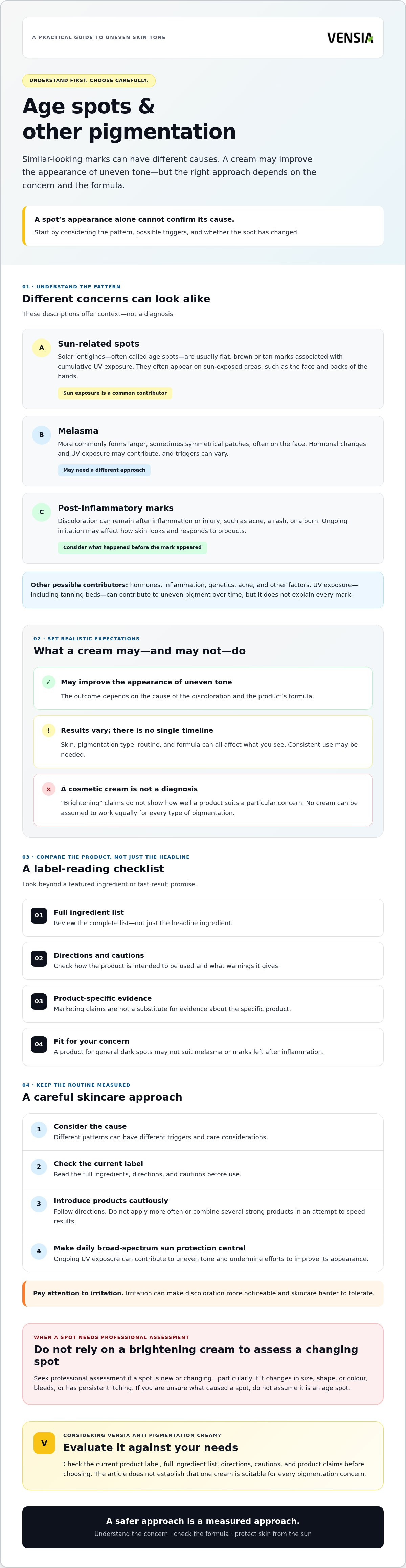
Age spots commonly refer to solar lentigines: flat, usually brown or tan marks associated with cumulative ultraviolet (UV) exposure. They often appear on sun-exposed areas, such as the face and backs of the hands. The broader topic of Hyperpigmentation includes several forms of excess skin darkening, not just age spots. A spot’s appearance alone cannot confirm its cause.
How are age spots different from melasma or post-inflammatory marks?
Solar lentigines often appear as distinct marks on areas that have received years of sun exposure. Melasma more commonly forms larger, sometimes symmetrical patches, often on the face. Hormonal changes and UV exposure may contribute, and triggers can vary. Post-inflammatory hyperpigmentation is discoloration that remains after inflammation or injury, such as acne, a rash, or a burn. These patterns can overlap, so appearance is a clue, not a diagnosis.
Melasma can have different triggers and may need tailored care, so a product intended for general dark spots may not suit every concern. The same applies to marks left after irritation: ongoing inflammation can affect how skin looks and responds to products. If you’re unsure what caused a spot, don’t assume it is an age spot simply because it is flat or brown.
Why can sun exposure contribute to visible spots?
UV radiation can stimulate melanocytes, the skin cells that produce melanin. This pigment gives skin some natural protection, but repeated exposure can contribute to uneven pigment over time. Solar lentigines are linked to cumulative exposure, including exposure from tanning beds. Sun is a common contributor, but it doesn’t explain every mark. Hormones, inflammation, genetics, and other factors may also play a role.
Use a new or changing spot as a reason to seek professional assessment, rather than trying to identify it from an article or cover it with a brightening product. Changes in size, shape, or colour, as well as bleeding or persistent itching, deserve particular attention. Once you have a clearer understanding of the concern, you can assess whether topical skincare is a reasonable next step.
How can a cream for age spots and pigmentation help?
A topical product may improve the appearance of uneven tone, but what it can reasonably do depends on the cause of the discoloration and the formula. Some skincare ingredients are intended to affect visible pigmentation; others support the skin’s overall appearance. The word “brightening” on a label, by itself, doesn’t show how well a product works for a particular concern.
The National Cancer Institute’s Definition of hyperpigmentation describes a general change in skin colour, not a diagnosis of its cause. A cosmetic cream may target the appearance of uneven tone, but that is different from identifying or treating a medical condition. No cream can be assumed to work equally for every pigmentation concern.
What should readers expect from a topical pigmentation product?
Keep expectations measured. If a product makes a visible difference, it may take consistent use, and there’s no single timeline that applies to every product or person. Results can vary with the type of pigmentation, individual skin, the rest of the routine, and the formula. Marketing claims aren’t a substitute for product-specific evidence.
Before using a cream, check the current label for the full ingredient list, directions, and cautions. Follow those directions rather than applying it more often or combining several strong products in the hope of speeding results. Irritation can make skincare harder to tolerate. Daily broad-spectrum sun protection also matters: ongoing UV exposure can contribute to uneven tone and undermine efforts to improve its appearance.
Why does the type of pigmentation matter when choosing a cream?
A cream marketed for general dark spots may not address every underlying cause. Melasma, marks that follow inflammation, and sun-related spots can call for different considerations. Choosing a cream for age spots and pigmentation starts with understanding the concern, not just selecting the most persuasive claim. For a broader look at product-selection factors, read this pigmentation removal cream comparison guide.
If a spot is new, changing, symptomatic, or uncertain, seek professional assessment before treating it as ordinary pigmentation. Once you have a clearer sense of the concern, compare products using their verified labels and choose a cautious routine. If you’re considering VENSIA, review the available VENSIA pigmentation-care information alongside its current product label, and assess the claims against your needs.
How do you compare creams for age spots and pigmentation?
Start by comparing the whole product, not just one ingredient highlighted on the package. Check whether the stated purpose matches your concern and whether the label gives you enough information to use the product thoughtfully. The American Academy of Dermatology’s guidance on how to fade dark spots offers additional context for evaluating care options.
| What to compare | What to check |
|---|---|
| Concern addressed | Does the label clearly describe the uneven-tone concern the product is intended for? |
| Ingredient transparency | Is the complete ingredient list available, rather than just a featured ingredient? |
| Directions | Are application instructions clear, including how often and where to use the product? |
| Cautions | Are warnings, potential irritation concerns, and suitability information provided? |
| Evidence | Are product-specific claims supported by information you can verify? |
This checklist helps you compare a cream for age spots and pigmentation without treating marketing language as proof. Be cautious about promises of guaranteed removal, permanent results, instant changes, or fixed timelines, especially if the label doesn’t explain how those claims were established. Testimonials describe individual experiences, not what you should expect.
Which label details deserve a closer look?
Read the full ingredient list, directions, warnings, and manufacturer information before deciding. Look for a clear intended use. Don’t assume that a broad “all skin types” statement guarantees a formula will suit everyone or won’t irritate your skin. For VENSIA Anti Pigmentation Cream, verify the current label, full formula, directions, cautions, suitability wording, and any product-specific testing before relying on those details.
How can you judge claims without relying on promises?
Separate what a product is marketed to address from what its evidence demonstrates. Look for clear information about the claim and the product it applies to. General research about an ingredient, if cited, doesn’t prove that a finished cream delivers the same result. If important safety directions or evidence are missing, pause and seek clarification rather than guessing.
If you’re considering VENSIA Anti Pigmentation Cream, assess its verified label against your needs using the same checklist. You can review VENSIA product information as part of that evaluation.
How should you use pigmentation cream in a careful skincare routine?
A careful routine makes it easier to notice how your skin responds. Before applying a cream for age spots and pigmentation, consider whether the concern is suitable for cosmetic care, then check the product’s current label for directions, warnings, and ingredients. If you’re unsure about a spot, seek professional assessment rather than treating it based on appearance alone.
What routine steps support more even-looking skin?
Keep the routine simple. Add one new product at a time so you can better identify what may be causing a reaction. If appropriate, patch test according to the product label, then introduce the cream gradually and use it only as directed. Don’t apply it more often or combine it with other products unless the instructions support that use.
Make sun protection part of the routine, not an optional extra. Use a broad-spectrum sunscreen and follow its label for application and reapplication. Protective clothing, shade, and limiting direct exposure can also help reduce further UV-related discoloration. These steps support prevention; they won’t erase existing spots instantly.
If significant irritation develops, stop using the product and seek professional guidance before restarting or adding another active skincare product. For further category context, see this 2026 guide to anti-pigmentation cream for all skin types.
When should a dark spot be assessed by a professional?
Arrange an assessment if a spot changes, bleeds, itches, looks unusual, or causes concern. Persistent discoloration that doesn’t respond as expected is also a reason to ask a qualified healthcare professional for guidance. Don’t rely on a skincare article or cosmetic cream to identify a lesion. These can offer general care information, but they can’t diagnose what a spot is.
Once you know what you’re addressing, evaluate a product’s verified label and use it as directed. If you’re considering VENSIA Anti Pigmentation Cream, review its current ingredients, directions, and cautions before deciding. Review VENSIA pigmentation cream information as part of that check.
Is VENSIA Anti Pigmentation Cream a suitable option to consider?
VENSIA Anti Pigmentation Cream is described as intended for concerns including dark spots, fine lines, wrinkles, and ageing spots, for women and men across skin types. That description can help you decide whether to look more closely, but it doesn’t establish how well the cream works or whether it’s right for your skin. Treat it as an option to assess, not a guaranteed solution or a substitute for identifying the cause of a spot.
What information about the VENSIA cream should you verify?
Before choosing this or any cream for age spots and pigmentation, review the current product label. Confirm:
- The complete ingredient list and stated intended use.
- Application directions and any warnings or cautions.
- The exact wording of claims about dark spots, fine lines, wrinkles, ageing spots, and skin-type suitability.
- Whether product-specific testing or evidence supports any performance claims.
The available product description doesn’t specify the cream’s ingredients, directions, clinical evidence, or expected results. Don’t assume details based on a headline claim. Avoid relying on clinical studies, timelines, or outcome statistics unless they can be verified for the product itself.
What is a sensible next step before choosing a cream?
Match the verified intended use to your concern and the rest of your routine. Check whether the directions and cautions make sense for you, and introduce the product cautiously if you decide to try it. Broad suitability wording doesn’t guarantee that every person will tolerate a formula, and a cosmetic cream shouldn’t be assumed to treat a diagnosed condition.
If a spot is changing, uncertain, or potentially medical, seek assessment from a qualified healthcare professional before treating it as routine pigmentation. After reviewing the label and considering whether the product fits your needs, you can make an informed choice without pressure. Explore VENSIA skincare and review the product information for yourself.
Choose your next skincare step with confidence
Start by considering what may be causing a dark spot. Age spots, melasma, and post-inflammatory marks can look alike but may need different care. A cream for age spots and pigmentation may support the appearance of uneven tone, but results depend on the concern and the product. Check the full label, follow directions, and keep sun protection central to your routine.
VENSIA Anti Pigmentation Cream is described as targeting dark spots and ageing spots, with suitability stated for women and men across skin types. Verify that wording against the current label, along with the ingredients, directions, cautions, and any product-specific evidence. If a spot is changing, unusual, or uncertain, seek professional assessment rather than relying on a cosmetic cream to identify it.
Take a measured approach and choose only what fits your needs and routine. Explore VENSIA skincare and review the product information at your own pace. An informed choice is a positive step toward caring for your skin with greater confidence.
Frequently Asked Questions
Can a cream remove age spots and pigmentation completely?
Not necessarily. A topical cream may improve the appearance of some uneven tone, but complete removal isn’t guaranteed. Results depend on the cause, the formula, and individual skin. Some spots may need a different approach or assessment. A cream for age spots and pigmentation is a cosmetic option, not a way to diagnose a mark. Be cautious of products promising permanent removal or the same result for everyone.
What is the difference between age spots, melasma, and post-inflammatory hyperpigmentation?
Age spots, often called solar lentigines, are commonly linked to cumulative ultraviolet exposure and may appear as distinct flat marks on sun-exposed skin. Melasma often appears as broader patches and can have hormonal and other triggers. Post-inflammatory hyperpigmentation is discoloration that follows inflammation or injury, such as acne or a rash. These patterns can overlap, so appearance alone can’t confirm which type you have.
How long can a cream for age spots take to show visible results?
There’s no reliable timeline that applies to every cream or person. If a product improves the appearance of a spot, visible change may take consistent use over time. The response can depend on the pigmentation concern, formula, skin, and routine. Follow the product’s verified directions rather than applying it more often to speed results. If the label doesn’t provide a substantiated timeframe, treat fixed promises with caution.
Can sunscreen help prevent age spots from becoming more noticeable?
Yes. Daily broad-spectrum sunscreen, used according to its label, helps limit further ultraviolet exposure that can contribute to discoloration or make uneven tone more noticeable. Shade and protective clothing can also reduce sun exposure. Sun protection supports prevention, but it won’t erase existing spots instantly. Consistency matters, especially if you’re using a product intended to improve the appearance of pigmentation.
Are pigmentation creams suitable for every skin type?
No product is guaranteed to suit everyone. Skin can respond differently to the same formula, and a broad “all skin types” statement doesn’t ensure universal tolerance. Check the full ingredient list, directions, and warnings, and patch test when appropriate. Introduce the product gradually and avoid starting several new skincare products at once. Stop use and seek professional guidance if significant irritation develops.
When should I ask a dermatologist about a dark spot?
Ask a dermatologist or another qualified healthcare professional if a spot is new, changing, bleeding, itchy, unusual in appearance, or causing concern. Professional assessment is also sensible if you’re unsure what the mark is or it persists despite routine care. Skincare articles and cosmetic creams can’t diagnose a lesion, so don’t assume a changing or unfamiliar spot is an age spot.
Can I use a pigmentation cream with other skincare products?
Possibly, but check the cream’s directions and cautions before combining it with other products. Keep your routine simple, introduce one new product at a time, and avoid layering several unfamiliar or potentially irritating formulas together. This makes it easier to notice a reaction and adjust your routine. If significant irritation occurs, stop using the product and seek professional guidance before trying the combination again.


