

Targeted Skincare for Skin Discoloration: How to Choose the Right Approach
What if the best brightening product for a dark spot is the wrong choice for a pale patch? Skin discoloration can look similar at first glance, but its appearance and possible cause matter. That’s why targeted skincare for skin discoloration starts with understanding what you’re seeing, rather than reaching for a universal brightening cream.
It’s understandable to feel caught between conflicting advice about ingredients and routines, especially when irritation could make uneven tone more noticeable. A practical approach is to match care to the concern, introduce products thoughtfully, and keep your routine consistent.
In this guide, you’ll learn how dark spots, lighter patches, and redness can call for different next steps, what topical skincare can realistically do, and why daily sun protection matters for many forms of dark discoloration. You’ll also find ways to keep a routine gentle and recognize when a changing or unexplained mark deserves professional assessment. For dark spots and uneven tone, VENSIA Anti Pigmentation Cream is one cosmetic option. VENSIA also offers Anti Vitiligo Cream, but a product name alone cannot identify the cause of a pale patch or determine what care is appropriate.
Key Takeaways
- Use a mark’s appearance and context to guide your next step, not assumptions about its cause.
- Choose targeted skincare for skin discoloration based on the concern it is intended for. One product won’t suit every type of mark.
- Keep care gentle and consistent, and follow product directions to help avoid unnecessary irritation.
- VENSIA Anti Pigmentation Cream is a cosmetic option for dark spots and uneven tone. VENSIA Anti Vitiligo Cream is another targeted product, but neither product is a diagnosis or a solution for every kind of discoloration.
- Seek professional assessment for marks that change quickly, spread, remain unexplained, or come with persistent irritation.
Targeted skincare for skin discoloration: why the type of mark matters
Uneven tone can be frustrating, especially when advice makes it seem as if one brightening routine should work for every spot or patch. Start by describing what you see and how it has changed, then choose skincare with realistic expectations. The phrase targeted skincare for skin discoloration describes care selected for a visible concern, not a way to diagnose its cause.
Quote-ready definition: Skin discoloration is a visible difference in skin tone; it describes an appearance, not a medical diagnosis.
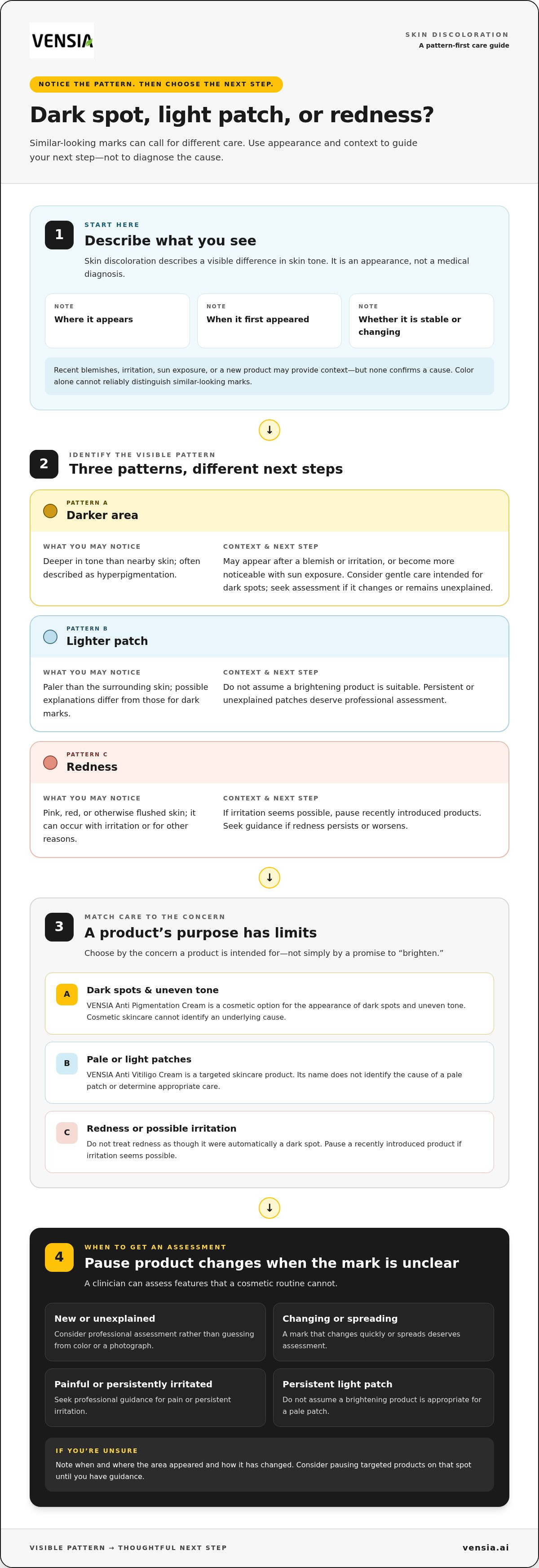
Color is one clue, not a conclusion. Note the mark’s location, when it first appeared, whether it followed irritation or another skin change, and whether it is stable or changing. These details can help shape the next question, but they can’t confirm what’s happening. Cosmetic skincare may support the appearance of some areas of uneven tone; it can’t identify an underlying cause.
What people may mean by skin discoloration
Dark marks appear deeper in tone than nearby skin and are often described as hyperpigmentation. For a general overview of the term and its forms, see Hyperpigmentation on Wikipedia. Lighter patches look paler than the surrounding skin, while redness appears pink, red, or otherwise flushed. These are different visible patterns, not interchangeable skincare concerns.
Several unrelated causes can produce marks that look similar. A photograph or color alone can’t reliably distinguish them, so avoid self-diagnosing from images or choosing a product based only on a shade.
When an unfamiliar mark deserves more than a skincare change
Consider professional assessment if an area is new, changing, spreading, painful, or unexplained. Persistent light patches also deserve attention rather than an assumption that a brightening product is appropriate. This doesn’t mean every unfamiliar mark signals a serious problem. It means a clinician can assess features that a cosmetic routine cannot.
Before changing your routine, note when you first noticed the area, where it appears, and how it has changed. If you’re unsure what the pattern means, pause targeted products on that spot until you’ve received guidance. This can help you avoid treating the wrong concern and make your next decision more informed.
Dark spots, light patches, and redness: understand the difference
A dark spot, pale patch, and red area can all look like “uneven tone,” but they don’t point to the same skincare approach. Describe the pattern rather than guessing its cause. Targeted skincare for skin discoloration should match the concern it is intended for, and a cosmetic product can’t identify why a mark appeared.
| Visible pattern | Common context to note | Sensible next step |
|---|---|---|
| Darker area | May appear after a blemish or irritation, or become more noticeable with sun exposure. | Record when it appeared and consider gentle care intended for dark spots. Seek assessment if it changes or remains unexplained. |
| Lighter patch | May have different possible explanations from dark marks; color alone can’t identify them. | Don’t assume a brightening product is suitable. Have persistent or unexplained patches assessed. |
| Redness | Can occur with irritation or for other reasons. | Pause recently introduced products if irritation seems possible, and seek guidance if redness persists or worsens. |
How dark marks differ from lighter patches
Hyperpigmentation describes areas that appear darker than nearby skin because of increased visible pigment. That description doesn’t establish the cause. Blemishes, irritation, and sun exposure can be useful context, but they aren’t proof of what caused a particular mark. For more detail, read this dermatological skincare guide for dark spots.
Lighter areas, sometimes described as hypopigmented or depigmented, look different and may have different explanations. A product intended for dark spots isn’t automatically appropriate for lighter patches, because those concerns differ in appearance and may call for different assessment. VENSIA offers Anti Vitiligo Cream as a targeted skincare product, but a persistent or unexplained light patch still warrants professional assessment.
Why the surrounding context matters
Note when a mark appeared and whether it’s stable, spreading, or changing. Recent blemishes, skin irritation, sun exposure, or a new product may provide context, but none confirms a diagnosis. Redness also deserves separate consideration rather than being treated as a dark spot.
Don’t rely on an over-the-counter cosmetic to resolve unexplained discoloration. If you’re exploring cosmetic care for dark spots or uneven tone, VENSIA’s targeted skincare options include Anti Pigmentation Cream. Product selection isn’t a substitute for assessment when a patch is persistent or unclear.
Choosing targeted skincare: one cream can't do it all
Choose a product by its stated purpose, not just by a promise to “brighten.” To compare options, consider what each is meant to do and where its role ends.
| Option | Main purpose | Limit |
|---|---|---|
| Targeted cosmetic product | Supports the appearance of a specific concern, such as dark spots or uneven tone. | Doesn’t diagnose why discoloration appeared or guarantee a particular result. |
| Basic moisturizer | Helps care for dry or uncomfortable skin as part of a simple routine. | Moisturizing alone isn’t a tailored approach to every visible mark. |
| Professional assessment | Helps evaluate unexplained, persistent, or changing areas and consider possible causes. | It serves a different purpose from cosmetic skincare and may be needed before choosing what to apply. |
Match product purpose to the visible concern
For dark spots or uneven tone, VENSIA Anti Pigmentation Cream is a cosmetic option to explore as one part of a considered routine. It isn’t a diagnosis or medical treatment, and it shouldn’t be assumed suitable for vitiligo or other light patches. Read the current packaging before use, and follow its instructions rather than applying a product more often or differently in pursuit of faster change.
VENSIA also offers Anti Vitiligo Cream as a separate targeted product. A product’s name does not establish the cause of a patch, so seek professional assessment for persistent or unexplained changes. For broader context on comparing product types, see the pigmentation removal cream comparison guide.
Check tolerance and claims before building a routine
Read the ingredient list, directions, and warnings, especially if your skin is sensitive or you’re already using other products. Add one new product at a time. That makes it easier to notice whether irritation follows a particular change. If discomfort develops, stop using the new product and reassess rather than layering on more treatments.
“Targeted” describes a concern-focused approach, not a guaranteed outcome. Cosmetic products may support the appearance of some dark marks, but visible changes vary, and unexplained discoloration may need professional assessment. Keep the routine straightforward: a targeted product has a specific role, while a moisturizer supports basic skin care. Neither replaces assessment when a mark is changing or its cause is unclear.
Build a gentle routine for areas of uneven skin tone
A steady routine can help you care for skin without piling on products or adding avoidable irritation. Keep the basics simple, introduce targeted skincare for skin discoloration carefully, and remember that a routine can support skin care without guaranteeing spot removal.
Start with consistent basics
Build around four practical steps. In the morning, broad-spectrum sunscreen helps limit additional sun-related darkening. Choose a sunscreen labeled SPF 30 or higher, and follow its directions for application and reapplication.
- Cleanse gently. Use a cleanser that leaves your skin comfortable, not tight or scrubbed.
- Moisturize. Choose a moisturizer that suits your skin’s needs and helps it feel comfortable.
- Apply targeted care. Use a product intended for your visible concern, following its label directions.
- Protect your skin. In the daytime, use broad-spectrum sunscreen as directed. Sun protection helps limit further sun-related darkening, but it doesn’t promise that existing marks will disappear.
Consistency matters more than frequently changing products. There’s no single timeline that applies to everyone, so avoid judging a routine by an invented deadline or using more product than directed in hopes of speeding up changes.
Introduce targeted care carefully
Before adding a product, read its directions and warnings. Patch test as directed, and don’t apply it to irritated skin. Introduce one new product at a time rather than layering several unfamiliar active products together. If you notice a reaction, it’s easier to identify which change may have contributed.
Skip rough scrubs and stop using a product that causes persistent irritation. Seek appropriate advice if irritation continues, worsens, or concerns you. A simple routine is easier to adjust than one with several new products competing for attention.
If you’re exploring VENSIA Anti Pigmentation Cream for dark spots or uneven tone, use it only according to its current label. The product is a cosmetic option, not a medical treatment, and it isn’t a general solution for every type of discoloration. Explore VENSIA Anti Pigmentation Cream as one possible part of a gentle routine.
For a separate discussion of timing expectations, see the vitiligo cream first 90 days guide. It addresses a distinct concern, so its discussion shouldn’t be taken as a timeline for dark spots or other uneven tone.
When to seek professional guidance and how VENSIA fits into cosmetic care
Cosmetic skincare can support the appearance of some dark spots, but it can’t determine why a mark is there. A clinician can assess features that a routine cannot, including changes in a mark’s appearance and unexplained patches. Knowing when to seek assessment helps keep targeted skincare for skin discoloration in its proper role.
Know when skincare alone is not the next step
Arrange professional assessment for an area that is new, changing quickly, spreading, painful, or unexplained. A persistent light patch also deserves assessment rather than an assumption that a brightening product is the right choice. Persistent irritation is another reason to pause and seek appropriate advice.
- New or rapidly changing: Don’t try to manage an unfamiliar change with a cosmetic product alone.
- Spreading or unexplained: A clinician can assess the pattern and consider possible causes.
- Persistent light patches: These differ from dark spots and may need a separate assessment.
- Ongoing irritation or pain: Stop using a product that appears to worsen irritation and get appropriate guidance.
Routine cosmetic concerns and medical evaluation serve different purposes. If you’re already following prescribed care, don’t stop or replace it with skincare without discussing that change with the clinician who advised you.
Explore targeted cosmetic care with realistic expectations
For readers exploring cosmetic care for dark spots or uneven tone, VENSIA Anti Pigmentation Cream is one product option. Its role is cosmetic; it doesn’t diagnose, cure, or medically treat a condition, and it shouldn’t be assumed suitable for light patches or every cause of discoloration. Follow the product’s current label, including its directions and warnings.
Let the visible concern, your skin’s tolerance, and the product instructions guide your choices. Introduce products thoughtfully and keep expectations measured: results can vary, and a cosmetic product can’t guarantee a change in appearance. If a mark is changing or unexplained, seek assessment instead of relying on a cream to identify or resolve its cause.
If you’re considering cosmetic care for dark spots, you can explore VENSIA skincare and review the product information as one step in a gentle, considered routine.
Choose a thoughtful next step for your skin
The right care begins with the kind of mark you’re seeing. Dark spots, lighter patches, and redness can have different explanations, so a product for one concern may not suit another. Targeted skincare for skin discoloration works best as a considered cosmetic approach, not a substitute for understanding an unexplained change.
Keep your routine gentle and consistent: follow product directions, introduce new care thoughtfully, and protect your skin from further sun-related darkening. If a mark changes quickly, spreads, remains unexplained, or causes persistent irritation, seek professional assessment. A clinician can evaluate concerns that skincare alone can’t identify.
For dark spots and uneven tone, VENSIA Anti Pigmentation Cream is a cosmetic option to explore as part of a routine. VENSIA Anti Vitiligo Cream is a separate targeted skincare product. Neither product is a diagnosis or a guaranteed result, and neither should be assumed to suit every kind of discoloration. Explore VENSIA targeted skincare and review the product information to choose a cosmetic option that fits your concern.
With a clear understanding of your concern and a gentle approach, you can make your next skincare choice with greater confidence.
Frequently Asked Questions
Is targeted skincare suitable for every type of skin discoloration?
No. “Discoloration” describes different visible patterns, including dark marks, lighter patches, and redness. A cosmetic product intended for uneven tone may not suit every concern or cause. Check that a product’s stated purpose matches your concern, and follow its directions and warnings. Seek professional assessment for a new, changing, spreading, or unexplained area. Skincare can support cosmetic care, but it can’t diagnose or medically treat the underlying cause.
Can one cream treat both dark spots and white patches?
No single cosmetic cream should be assumed suitable for both. Dark spots and lighter patches are different visible concerns and may have different underlying causes. A pigmentation-focused cosmetic cream, such as VENSIA Anti Pigmentation Cream, should not be presented as treatment for vitiligo or other light patches. VENSIA also offers Anti Vitiligo Cream as a separate targeted product, but a persistent or unexplained patch still warrants professional assessment. Choose cosmetic products according to their stated purpose and label directions, rather than applying one product to every kind of mark.
How do I choose skincare for uneven skin tone?
Start by describing the visible pattern, when it appeared, whether it’s changing, and whether the skin feels irritated. Choose products whose stated cosmetic purpose matches that concern, then review the directions and warnings. Introduce one new product at a time so you can notice possible irritation. This is a practical way to approach targeted skincare for skin discoloration, but changing or unexplained marks need professional assessment, not trial-and-error product use.
What should I include in a routine for dark spots?
A simple routine can include gentle cleansing, a moisturizer that feels comfortable, daytime sun protection, and one targeted cosmetic product used as directed. Consistency and avoiding irritation are more useful than layering several new products at once. No routine can promise to remove spots, and results don’t follow one fixed timeline. If a product causes persistent irritation, stop using it and seek appropriate advice before adding something else.
Can skincare make skin discoloration worse?
Yes, unsuitable or overused products can irritate skin, making it uncomfortable and complicating the appearance of uneven tone. Follow product labels, introduce new products gradually, and avoid aggressive scrubbing or starting several active products at once. If a product causes persistent irritation, stop using it. Seek professional guidance if symptoms continue, worsen, or accompany a changing mark. A gentle routine helps reduce avoidable irritation, but it can’t identify the cause of discoloration.
When should I see a dermatologist about skin discoloration?
Consider professional assessment if a mark is new, changing, spreading, unexplained, or accompanied by persistent irritation or other concerning symptoms. A visual description alone can’t establish a diagnosis, and cosmetic skincare can’t assess underlying causes. This doesn’t mean every area of discoloration is urgent. It means a dermatologist can evaluate features that a product or home routine can’t. Note when you first noticed the mark and how it has changed.
Does sunscreen help with uneven skin tone?
Sun protection can help limit additional sun-related darkening, but it doesn’t diagnose discoloration or necessarily remove existing marks. Use a broad-spectrum sunscreen according to its label, alongside other sun-protective habits. Keep expectations realistic: sunscreen is one part of a thoughtful routine, not a guaranteed spot-removal solution. If a mark is persistent, changing, or unexplained, seek professional assessment rather than relying on sunscreen or cosmetic products alone.


