

Natural Ways to Even Skin Tone: A Dermatologist's Guide
Can you fade stubborn dark spots naturally without irritating your skin? If you’ve tried waiting for spots to fade or feel wary of strong exfoliating acids, it’s understandable to wonder which ingredients are worth considering. The answer to how to even out skin tone naturally isn’t a kitchen remedy or a quick fix. It’s a consistent routine built around suitable skincare and daily sun protection.
Natural doesn’t automatically mean gentle or effective. Uneven pigmentation can have different triggers, including sun exposure and past inflammation, so the right approach depends on what may be causing the discoloration. This guide explains how to choose skincare thoughtfully, introduce new products carefully, and why broad-spectrum sunscreen with at least SPF 30 helps prevent spots from darkening further.
You’ll also learn how to keep your routine simple, support your skin barrier, and set realistic expectations for gradual change. A steady approach helps you make informed choices without relying on harsh treatments or guessing which ingredients belong in your routine.
Key Takeaways
- Learn how UV exposure, post-inflammatory hyperpigmentation, and hormonal shifts can contribute to uneven tone, so you can make more informed skincare choices.
- See how niacinamide and marshmallow root extract may support a more balanced-looking complexion and smoother-feeling skin.
- Understand why familiar kitchen remedies such as lemon juice can irritate skin, and why a carefully formulated product may be a more measured option.
- Follow a simple routine for how to even out skin tone naturally, with gentle cleansing, targeted care, and consistent sun protection.
- See how VENSIA Anti Pigmentation Cream and VENSIA Niacinamide Marshmallow Body Lotion fit into a focused approach to dark spots and rough skin texture.
Understanding the Causes of Uneven Skin Tone
Uneven skin tone describes areas that look lighter or darker than the surrounding skin, often because melanin, the pigment that gives skin its color, is produced or distributed unevenly. Changes in pigmentation can follow sun exposure, inflammation, or hormonal shifts. Understanding the likely trigger can help you choose a suitable approach instead of treating every mark the same way. For a foundational overview, see Understanding hyperpigmentation.
The Role of Melanin and Hyperpigmentation
Melanocytes produce melanin and may increase pigment production in response to stress, including UV exposure and skin inflammation. The resulting marks can have different causes. Sunspots develop in areas with accumulated sun exposure. Melasma often appears as larger, symmetrical patches and may be influenced by hormonal changes. Post-inflammatory hyperpigmentation (PIH) follows irritation or injury, such as acne. PIH is discoloration, not necessarily a textural scar.
Vitiligo involves loss of pigment in patches, so its care differs from care for excess pigment in dark spots. A vitiligo skincare routine should account for areas of reduced pigmentation rather than assuming that standard spot-fading steps are appropriate.
Environmental Triggers You Can Control
UV radiation can prompt melanocytes to make more pigment, darkening existing spots and contributing to new ones. Daily broad-spectrum sunscreen with at least SPF 30 is a key preventive step, alongside shade and protective clothing. Sunscreen doesn’t erase existing pigmentation, but it helps limit repeated UV exposure that can undermine your routine.
Air pollution can contribute to oxidative stress, which may affect the skin’s barrier and appearance. Visible light can also worsen pigmentation for some people, particularly those with darker skin tones. However, ordinary screen exposure shouldn’t be treated as equivalent to sunlight. Prioritize outdoor sun protection rather than worrying that everyday device use is the main cause of discoloration.
Why a Gentle, Whole-Skin Approach Matters
A natural approach to how to even out skin tone naturally isn’t about applying the harshest plant-based remedy. It focuses on reducing avoidable irritation, protecting skin from UV exposure, and choosing ingredients that support a balanced-looking complexion. Scrubbing or inflaming a spot can prolong discoloration, especially when the mark follows acne or another irritation.
Diet and sleep support overall health and can influence how rested or radiant skin appears, but neither is a proven shortcut for fading established spots. Aim for balanced meals, adequate hydration, and consistent sleep while keeping skincare steady. If discoloration changes quickly, has no clear cause, or concerns you, seek guidance from a qualified healthcare professional.
Botanical Ingredients for Skin Tone Care
Effective tone care works with the skin’s needs. Some ingredients support the moisture barrier, while others may help reduce the appearance of discoloration or improve dull-looking texture. Botanical origin alone doesn’t guarantee safety or results. Choose well-formulated products and introduce active ingredients gradually.
Niacinamide: A Multi-Tasking Ingredient
Niacinamide, a form of vitamin B3, supports the skin barrier and may help reduce the appearance of uneven tone. It can also limit the transfer of melanosomes, pigment-containing structures, from melanocytes to surrounding skin cells. This targets one part of the pigmentation process without stripping the skin. Niacinamide may also make enlarged pores look less noticeable by supporting smoother-looking skin, though it won’t change pore size.
For body care, VENSIA Niacinamide Marshmallow Body Lotion brings niacinamide together with marshmallow extract in a moisturizing formula. Learn more about niacinamide body lotion and how it may fit into a texture-focused routine.
Marshmallow and Soothing Botanicals
Marshmallow root contains mucilage, a gel-like plant material associated with a soft, soothing feel. In skincare, it’s used to hydrate and comfort rough or dry-feeling skin. That can support a healthier-looking surface, but it shouldn’t be presented as a proven treatment for pigmentation on its own.
Calming irritation matters because inflamed skin can develop post-inflammatory hyperpigmentation. Gentle cleansing and moisturization help reduce unnecessary stress on the skin, while sunscreen helps prevent UV exposure from making discoloration more noticeable. Hydration supports the barrier, but it doesn’t guarantee that dark spots won’t form.
Vitamin C and Gentle Exfoliation
Vitamin C is an antioxidant that helps protect skin from oxidative stress and can support a brighter-looking complexion. Its effectiveness depends on the product’s formulation and stability, so a formulated product is generally more dependable than mixing ingredients at home. For persistent or concerning pigmentation, review professional treatment options from the American Society for Dermatologic Surgery.
Some fruit-derived enzymes, such as papain from papaya, gently loosen dead surface cells. They may help improve dull-looking texture, but “natural” exfoliants can still irritate skin. Start cautiously, avoid scrubbing, and stop if burning or persistent redness develops. Irritation can worsen discoloration, especially in skin prone to post-inflammatory marks.
A thoughtful approach to how to even out skin tone naturally pairs targeted ingredients with barrier care and sun protection. You can review VENSIA skincare options for products featuring niacinamide and marshmallow extract.
Home Remedies vs. Formulated Skincare
A kitchen ingredient can sound gentler simply because it’s familiar. But skin responds to an ingredient’s chemistry, concentration, and how it’s used, not whether it came from a pantry or a lab. For a safer approach to how to even out skin tone naturally, look for thoughtfully formulated products rather than assuming raw ingredients are harmless.
The Risks of Unregulated DIY Treatments
Lemon juice is a poor choice for dark spots. Its acidity can irritate skin, and citrus compounds left on the skin may react with sunlight, causing a phototoxic reaction that can include redness, blistering, or lingering discoloration. Irritation itself can trigger post-inflammatory hyperpigmentation, so a home remedy may leave a mark darker than the one it was meant to fade.
DIY mixtures also vary from batch to batch. The amount of an active ingredient, its freshness, and the mixture’s pH can all be unpredictable. Raw ingredients may not deliver useful components effectively through the skin barrier, while rubbing or repeated application can cause irritation. Take extra care if your skin is sensitive or has areas of reduced pigment from vitiligo. Those areas aren’t the same as ordinary dark spots, and spot-lightening remedies aren’t a substitute for condition-specific care.
Why Formulation Matters
A well-designed cream can control how ingredients are combined and delivered. “Bioavailable” means an ingredient is present in a form that can be accessed by the skin; its usefulness depends on more than the ingredient name alone. The vehicle, stability, concentration, and pH all influence how a formula feels and performs. A skin-friendly pH can help limit unnecessary disruption, but no single pH guarantees that a product will suit everyone.
Formulas may combine ingredients with complementary roles, such as supporting the skin barrier while addressing the appearance of uneven tone. Standardized extracts can also provide more consistency than a handful of fresh plant material, though they don’t eliminate the possibility of sensitivity. Patch-test new products and introduce them one at a time, especially if your skin reacts easily. For a closer look at product formulation, read this guide to pigmentation removal cream.
VENSIA Anti Pigmentation Cream is positioned for dark spots and fine lines, while VENSIA Niacinamide Marshmallow Body Lotion supports moisture and rough skin texture. Review VENSIA skincare options and check each product’s ingredients and directions before use. If a patch is changing, spreading, or unclear in cause, don’t try to diagnose it with a DIY treatment.
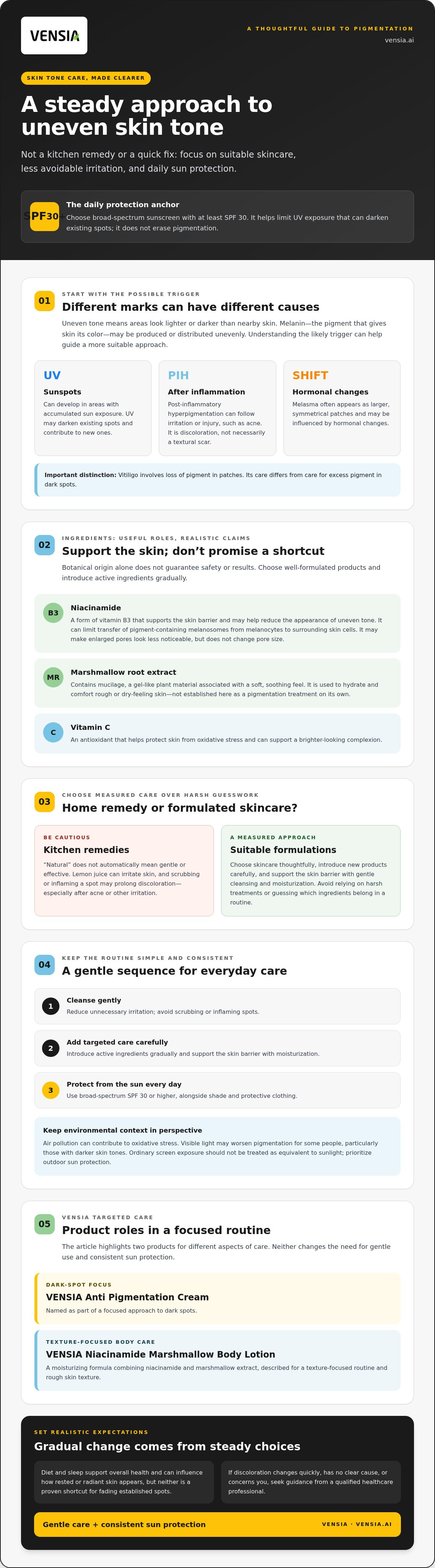
A Step-by-Step Routine for How to Even Out Skin Tone Naturally
A routine works best when each step has a clear purpose: cleanse without irritation, apply targeted care, maintain hydration, and protect skin from UV exposure. Keep the order simple, introduce new products one at a time, and follow each product’s directions. Consistency matters more than adding several strong ingredients at once.
Morning: Protect and Support a Brighter Look
Start with a gentle cleanser, or rinse with water if your skin doesn’t need a full cleanse. Avoid hot water and scrubbing, which can leave skin feeling dry or irritated. Apply a leave-on product containing niacinamide or vitamin C if it suits your skin, then use moisturizer as needed. These ingredients may support a brighter-looking complexion, but they don’t replace sun protection.
Finish with broad-spectrum sunscreen of at least SPF 30. Apply it to exposed skin as directed on the label, and reapply as needed, especially after swimming, sweating, or extended time outdoors. Sunscreen helps prevent UV exposure from darkening existing spots. A lightweight moisturizer can provide hydration without making the daytime routine feel heavy.
Evening: Cleanse, Treat, and Hydrate
In the evening, gently remove sunscreen, makeup, and the day’s buildup. Pat skin dry, then apply one targeted product according to its directions. Choose care based on the concern: VENSIA Anti Pigmentation Cream is intended for pigmentation concerns, while VENSIA Anti Vitiligo Cream is a separate product for vitiligo-related skincare. Vitiligo involves areas of reduced pigment, so don’t treat it as ordinary dark spots or assume the same routine suits both concerns. For more context, read this anti vitiligo cream guide.
Follow with moisturizer if your skin feels dry or tight. VENSIA Niacinamide Marshmallow Body Lotion 200 ML is a body-care option featuring niacinamide and marshmallow extract for moisturizing and rough-skin care. Use products only as directed, and patch-test before adding them to your routine. If a product causes persistent burning or redness, stop using it.
Keep the Routine Steady
Skin tone changes gradually, and no topical routine can promise a particular timeline. Give your routine time, avoid repeatedly switching products, and keep up daily sun protection. This steady approach is a practical foundation for how to even out skin tone naturally while limiting avoidable irritation.
Product details for VENSIA skincare for pigmentation and skin texture can help you compare options for your routine.
Achieving Balance with VENSIA Targeted Care
Targeted skincare can make a routine easier to follow when each product has a clear role. VENSIA offers skincare products for concerns including vitiligo, pigmentation, dark spots, and uneven skin tone, alongside body-care products featuring niacinamide and marshmallow extract. Its product information describes its skincare as suitable for women and men. Individual responses can vary, so check the ingredient list and directions, and patch-test a new product if your skin is sensitive.
Targeting Facial Pigmentation and Age Spots
VENSIA Anti Pigmentation Cream is presented for the appearance of dark spots, ageing spots, and fine lines. It may be an option to consider for visible discoloration, including marks left after blemishes, as part of a consistent routine. Review the product details to decide whether its ingredients and directions suit your needs.
Use it as directed and give your routine time to work, without expecting a guaranteed result by a fixed date. A 90-day timeline shouldn’t be treated as a promise of full restorative effects. Skin concerns have different causes, and visible changes vary. Keep using sun protection, since UV exposure can make spots more noticeable, and stop use if irritation persists.
Total Body Radiance and Texture
Tone and texture concerns can appear beyond the face. The neck, hands, arms, and other areas of the body also benefit from steady moisturizing and sun protection where exposed. VENSIA Niacinamide Marshmallow Body Lotion 200 ML is designed to moisturize, improve the feel of dryness and rough skin, and provide gentle exfoliation. Niacinamide and marshmallow extract offer a considered combination for body care, while hydration helps skin feel softer and smoother.
Apply the lotion according to its directions, paying attention to dry or rough areas. Don’t assume a body lotion should be used on facial skin unless its label says so. If an area is irritated, allow it to settle before adding exfoliating products, and seek medical advice for persistent or changing discoloration.
For how to even out skin tone naturally, pair targeted products with a routine you can maintain and realistic expectations. VENSIA offers separate skincare options for pigmentation, rough skin texture, and vitiligo-related care. These concerns aren’t interchangeable, so choose according to the product directions and your needs.
Review the VENSIA collection for skincare options.
Build a Steady Routine for More Balanced-Looking Skin
More even-looking skin starts with understanding what may be driving discoloration. UV exposure, hormonal changes, and past inflammation can affect pigment in different ways, so a thoughtful routine is more useful than a one-size-fits-all remedy. Choose well-formulated ingredients, avoid irritating DIY treatments, and make daily sun protection part of your care.
Consistency matters. Gentle cleansing and hydration help support the skin barrier, while targeted care can address specific concerns over time. If you’re learning how to even out skin tone naturally, focus on a simple routine you can maintain rather than expecting an overnight change.
VENSIA offers skincare products for pigmentation concerns and rough, dry skin texture, including options featuring niacinamide and marshmallow extract. Review product details to find an option that fits your needs.
Explore VENSIA skincare options for your routine. With informed choices and steady care, you can support healthier-looking skin one step at a time.
Frequently Asked Questions
How long does it take to naturally even out skin tone?
Visible changes usually take time, and there’s no reliable timeline that applies to everyone. The pace depends on the cause, depth, and duration of discoloration, as well as how consistently you use suitable skincare and sun protection. Some marks fade gradually after the original irritation settles, while persistent pigmentation may need professional assessment. Avoid increasing product use to speed results, since irritation can make discoloration more noticeable.
Can niacinamide help with both dark spots and vitiligo?
Niacinamide may support a more even-looking complexion, but dark spots and vitiligo are different concerns. Dark spots involve excess pigment in an area, while vitiligo causes patches of reduced pigment. A product intended for pigmentation shouldn’t be assumed to address vitiligo. VENSIA offers separate VENSIA Anti Pigmentation Cream and VENSIA Anti Vitiligo Cream. Follow each product’s directions and seek medical guidance about new or changing pale patches.
Is it possible to remove deep pigmentation without laser treatment?
Some pigmentation may improve with topical skincare and consistent sun protection, but results depend on the cause and how deep the pigment sits. No topical product can promise to remove every mark. A healthcare professional can help identify the type of discoloration and discuss suitable options, including non-laser approaches where appropriate. Don’t use harsh DIY treatments or combine strong products in an attempt to force faster fading, as irritation may worsen marks.
Does marshmallow root extract actually help with skin discoloration?
Marshmallow root extract is used in skincare for its soothing and moisturizing qualities, which may help rough or dry-feeling skin feel more comfortable. It isn’t established here as a direct dark-spot-fading ingredient. By supporting hydration, it can complement a routine focused on skin comfort, but it shouldn’t replace targeted care or sunscreen. VENSIA Niacinamide Marshmallow Body Lotion includes marshmallow extract for moisturizing and rough-skin care.
Should I use different products for my face and body to even out tone?
Often, yes, because facial and body products can differ in texture, formulation, and intended use. Follow the label rather than assuming a body lotion is suitable for your face. For example, VENSIA Niacinamide Marshmallow Body Lotion is a body-care product, while VENSIA Anti Pigmentation Cream is intended for pigmentation concerns. Patch-test unfamiliar products, especially if your skin is sensitive, and use sunscreen on exposed areas.
Can men use the same anti-pigmentation creams as women?
Skincare choices are generally better guided by the concern and the product’s directions than by gender. VENSIA’s product information describes its skincare as suitable for both men and women, including VENSIA Anti Pigmentation Cream. Skin type and sensitivity still matter, so check the ingredients and directions before use. If a product causes persistent irritation, stop using it and consider asking a healthcare professional for guidance.
What is the best natural ingredient for fading post-acne dark spots?
There isn’t one best ingredient for everyone. Niacinamide is an option to consider because it can support the skin barrier and help improve the appearance of uneven tone. Whatever ingredient you choose, avoid irritating active breakouts and protect the area from sun exposure, which can deepen the look of marks. Start with one product at a time and discontinue it if you develop persistent redness or discomfort.
Will my uneven skin tone return if I stop using natural treatments?
It can, particularly if the original trigger remains. Sun exposure may darken existing spots, and new inflammation or hormonal changes can contribute to further discoloration. Stopping a topical product may also mean you no longer receive its ongoing skincare benefits, but it doesn’t guarantee that marks will return. Keep up sun protection and gentle care, and seek advice if pigmentation repeatedly comes back or changes unexpectedly.


