

Recommended Body Lotions for Strawberry Legs and When They May Help
The best body lotion for strawberry legs isn’t necessarily the most aggressive exfoliator. Moisturizers with lactic acid or urea can gently exfoliate and help prevent ingrown hairs, while results may take a couple of weeks to appear. Hydration matters too: soothing the skin after exfoliation can help support its barrier.
If bumps or dark dots bother you, it’s understandable to look for a product that smooths skin without leaving it dry or irritated. The right approach depends partly on the cause: keratosis pilaris, folliculitis, shaving irritation, and ingrown hairs can look similar but may need different care.
This guide explains how long improvement may take, which moisturizing and exfoliating ingredients may help, and how common causes differ. You’ll also learn why gentle, consistent care can be a better starting point than scrubbing harder.
Key Takeaways
- Improvement may take a couple of weeks, so use gentle skin care consistently rather than relying on a quick fix.
- Moisturizers with lactic acid or urea can exfoliate while helping prevent ingrown hairs.
- Keratosis pilaris, folliculitis, shaving irritation, and ingrown hairs can look similar, but identifying the likely cause helps guide care.
- AHAs and salicylic acid can help loosen dead skin cells and unclog pores; follow exfoliation with a nourishing moisturizer or oil.
- Choose soothing hydration when skin feels dry or rough, and avoid making exfoliation harsher if irritation develops.
1. How long does it take for strawberry legs to disappear?
Strawberry legs may look better after a couple of weeks of consistent care, but the timeline depends on what causes the bumps and dark dots. Lotions with lactic acid or urea can gently exfoliate and moisturize. A lotion may improve skin’s appearance without addressing every cause, such as shaving irritation or folliculitis.
Exfoliating ingredients can loosen dead skin cells around hair follicles, which may contribute to a rough, dotted appearance. Lactic and glycolic acids are alpha hydroxy acids (AHAs); salicylic acid is a beta hydroxy acid (BHA). Urea can both moisturize and gently exfoliate, making it worth considering if your skin feels dry or rough.
Choose one exfoliating product at a time, such as an exfoliating body lotion or cream, and follow its label. A glycolic-acid exfoliating body stick offers a targeted format for areas such as the legs, but the stick format doesn’t make the acid automatically gentler. Apply it only as directed, and avoid layering it with another exfoliant in the same routine. If skin becomes uncomfortable, pause exfoliation and use a plain moisturizer.
Moisturizing helps support the skin barrier, which can become dry or irritated during exfoliation. After using an AHA, BHA, or urea product, apply a nourishing body lotion or oil as directed. If a lactic-acid lotion leaves your legs feeling dry, reduce exfoliation and prioritize hydration. Use sunscreen on exposed skin when your routine includes exfoliating ingredients.
For prevention, keep your routine gentle and consistent rather than scrubbing harder when bumps remain. Lactic acid or urea may help reduce dead-skin buildup, and shaving in the direction of hair growth can help minimize ingrown hairs. Avoid picking at bumps, which can further irritate skin. Aim for smoother texture and a calmer appearance, not immediate removal.
See a dermatologist if bumps persist despite gentle at-home care, become painful, or worsen. A dermatologist can assess whether the cause may be keratosis pilaris, folliculitis, or another concern. They may also discuss treatments such as an in-office chemical peel when appropriate.
2. Recommended moisturizers for strawberry skin
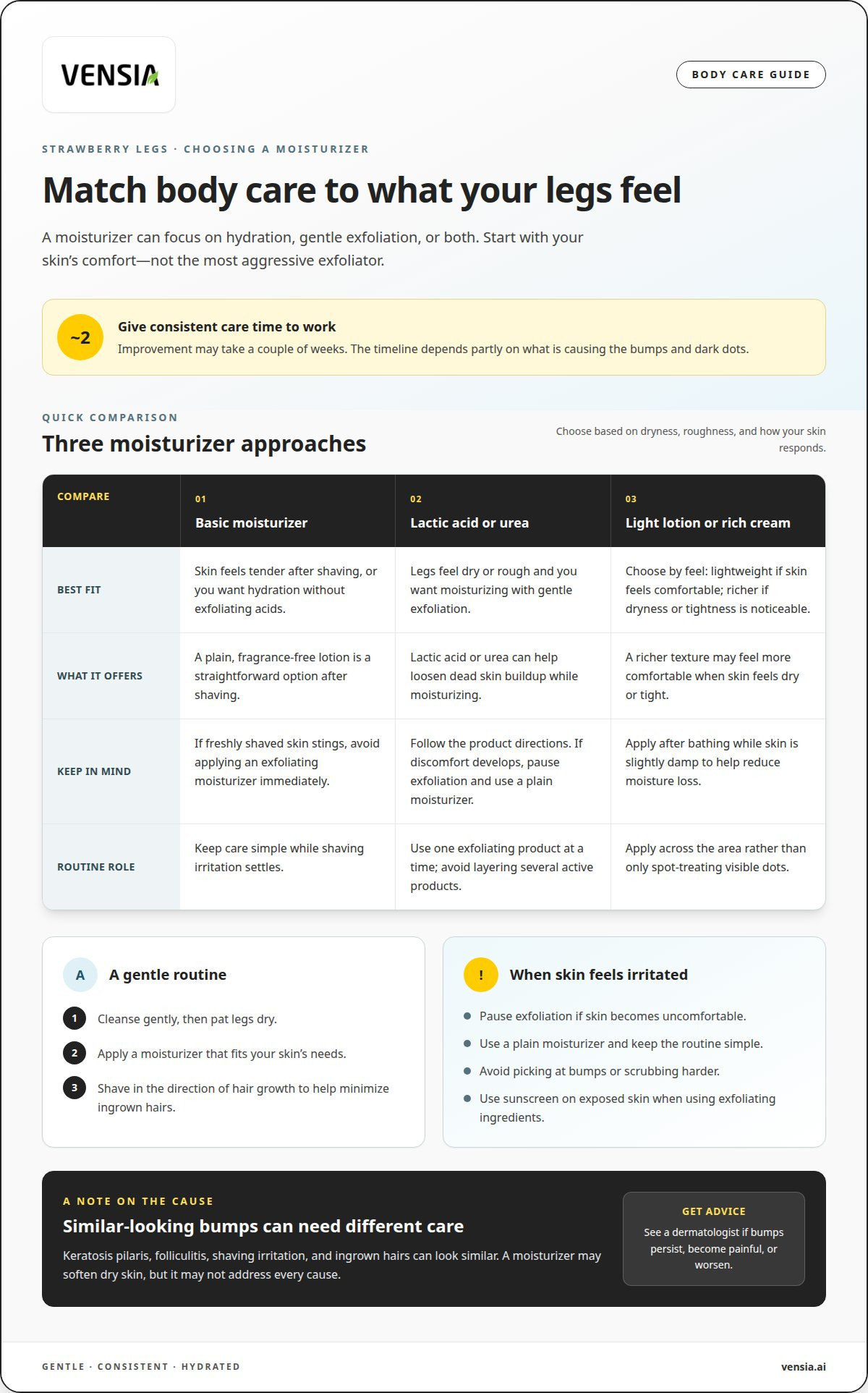
Choose a body moisturizer based on how your legs feel after bathing and shaving. A lightweight lotion may suit skin that feels comfortable but looks rough; a richer cream may feel better when dryness or tightness is noticeable. Check the ingredients and directions, then apply the moisturizer to clean, dry skin. The best body lotion for strawberry legs is one you can use comfortably and consistently, not necessarily the one with the longest ingredient list.
Shaving can leave skin tender, especially if a blade catches or passes repeatedly over one area. Shave in the direction of hair growth to help minimize ingrown hairs, and avoid applying an exfoliating moisturizer immediately if freshly shaved skin stings. A plain, fragrance-free lotion is a straightforward choice after shaving because it avoids adding exfoliating acids to irritated skin. If redness or discomfort appears, pause exfoliation and keep your routine simple.
For dry or rough texture, apply moisturizer after bathing while skin is slightly damp to help reduce moisture loss. Choose a product you’ll use across the whole area rather than spot-treating visible dots. A lotion containing urea or lactic acid can moisturize while gently exfoliating; a basic moisturizer focuses on dryness without exfoliating. Avoid layering several active products in one routine.
Uneven tone and bumpy texture don’t always have the same cause. A moisturizer can soften dry skin, but it won’t necessarily resolve irritation linked to shaving or folliculitis. If dark marks remain after bumps settle, treat hydration and tone as separate concerns. For sensitive skin, introduce one new product at a time on a small area, follow its label, and observe your skin’s response before applying it more broadly.
In the United States, calculate a body lotion’s per-ounce price by dividing the package price by the number of ounces in the container. Unit cost varies by product size and seller, so compare it rather than relying on package totals alone.
Acids and retinoids may cause dryness, redness, stinging, or irritation, especially when several exfoliating products are used together. Start with one active ingredient and follow its directions; stop using it if discomfort develops. Retinoids aren’t the same as moisturizing ingredients, so don’t add one simply because your skin looks bumpy.
For a practical routine, use a gentle cleanser, pat the legs dry, then apply moisturizer. Keep shaving tools from scraping repeatedly over the same patch, and let irritation settle before restarting exfoliation. If you want a gentle approach focused on dryness and rough-feeling skin, explore moisturizing body care as one option. Consistent hydration supports comfort, while the right product depends on whether dryness, shaving irritation, or uneven tone is your main concern.
3. Common causes: keratosis pilaris, folliculitis, shaving, and ingrown hairs
Strawberry legs describes dotted or bumpy-looking skin, not a specific diagnosis. Keratosis pilaris, folliculitis, shaving irritation, and ingrown hairs can all create visible bumps around hair follicles, but their causes differ. Dryness can make rough texture more noticeable, while a bump that appears after shaving may relate to a trapped hair or irritation. Consider when bumps appear and what they look like before choosing care.
Keratosis pilaris develops when keratin, a skin protein, builds up around hair follicles and forms small rough bumps. It often appears on the thighs or upper arms and can resemble persistent goosebumps. According to dermatologist Leonard Bernstein, keratosis pilaris affects 10-15% of the population. Gentle exfoliating moisturizers may help smooth rough texture, but scrubbing hard can irritate the skin. A consistent moisturizing routine can help address dryness alongside the bumpy feel.
Folliculitis involves inflamed hair follicles and may appear as clusters of red bumps or small spots centered around hairs. Shaving, friction, or other irritation can contribute to inflammation. Unlike the rough, skin-colored bumps often associated with keratosis pilaris, folliculitis may feel tender or look inflamed. Avoid picking or aggressively exfoliating affected areas. If bumps persist, spread, or become painful, a dermatologist can assess the cause.
Ingrown hairs occur when a hair curls back or grows into the surrounding skin, creating a bump after hair removal. A clogged follicle opening can make it harder for a hair to emerge normally. Razor bumps are closely related to shaving: a close cut can leave hair ends positioned to grow into nearby skin. Shave in the direction of hair growth to help minimize ingrown hairs, and avoid repeated passes over one area to reduce friction and irritation.
Blade condition matters, too. Dendy Engelman recommends replacing a razor every few weeks or when it becomes dull to help avoid irritation. A dull blade can tug at hair or scrape skin, increasing discomfort during shaving. If bumps reliably appear after shaving, pause hair removal over irritated areas and simplify your routine. If dots remain without shaving, or the bumps differ from your usual pattern, consider causes such as keratosis pilaris or folliculitis rather than assuming clogged pores are to blame.
4. Ingredients including AHAs, salicylic acid, lactic acid, and urea
Exfoliating ingredients can help address dead-skin buildup around follicles. Lactic and glycolic acids are alpha hydroxy acids, or AHAs; salicylic acid is a beta hydroxy acid, or BHA. Gentle exfoliation with these ingredients can help remove dead skin cells. The best fit depends on whether your skin feels rough, looks congested, or becomes dry easily.
Lactic acid can exfoliate while helping moisturize, so it may suit rough, dry-feeling legs. Glycolic acid is another AHA used in exfoliating lotions and creams. Start with one product and follow its label rather than combining several acids. This makes it easier to notice how your skin responds and adjust your routine if dryness or irritation appears.
A leave-on salicylic acid body lotion stays on the skin after application, making it a practical option for areas with clogged pores or follicle bumps. Apply it as directed, and don’t add a second exfoliating product to the same routine at first. If your legs feel tight after use, scale back exfoliation and choose a plain moisturizer. Stop using the product if discomfort persists.
A salicylic acid body wash is rinsed off, unlike a leave-on lotion. Use it according to its label, rinse thoroughly, and follow with a nourishing moisturizer. It may suit people who prefer an exfoliating cleanser to a leave-on acid. Don’t assume a body wash and lotion can be layered without irritation; introducing one product at a time helps identify what your skin tolerates.
Urea offers a different balance: it moisturizes and can gently exfoliate, making it useful for dry, rough skin. A urea lotion may be a suitable starting point when dryness is your main concern. For bumps linked to dead-skin buildup, an AHA or salicylic acid product may be more relevant. Check the ingredients and choose based on the concern you’re addressing.
Keep your routine simple. For example, use one exfoliating lotion after bathing, then monitor your skin before adding another active ingredient. Follow the product directions and avoid applying exfoliants to skin already irritated from shaving. Gentle exfoliation can support smoother texture, but aggressive scrubbing or layering acids may cause discomfort. If bumps persist or worsen despite careful care, a dermatologist can assess the cause.
5. Soothing and hydrating ingredients
Exfoliation can leave legs dry or uncomfortable, so follow it with a nourishing body lotion or oil. The key is balance: exfoliating ingredients address dead-skin buildup, while hydration helps support the skin barrier. Apply moisturizer after an exfoliating product rather than adding another active ingredient immediately. If skin feels tight, pause exfoliation and use a simple moisturizer until it feels comfortable.
Glycerin is a humectant used in moisturizers to help draw water into the outer skin. Ceramides are included in some formulas to support the skin barrier, while colloidal oatmeal can soothe dry-feeling skin. These ingredients have different roles, so consider the formula as a whole. A glycerin lotion may suit everyday hydration; a richer cream can feel more comfortable on particularly dry patches.
Application matters, too. After showering, gently pat your legs so they remain slightly damp, then smooth on body lotion or oil. Applying body oil at this point can help lock in moisture and support the skin barrier. Start with a light layer, especially if the product feels heavy. This simple step makes a hydrating routine easier to maintain without scrubbing or rubbing bumpy areas.
Dark spots can remain after irritation settles, and moisturizing alone may not change their appearance. Avoid treating every mark with stronger chemical exfoliation, since repeated irritation can make skin feel worse. Keep hydration separate from tone-focused care, and don’t layer an acid product over freshly shaved or uncomfortable skin. If a product stings or causes redness, stop using it and return to a gentle moisturizer.
For a practical routine, use a mild cleanser, pat your skin damp, and apply a nourishing lotion. On exfoliation days, follow with moisturizer rather than adding another exfoliant. Use sunscreen on exposed legs. This supports consistency while limiting irritation from too many active steps. Choose a texture you’ll comfortably apply across the whole area, and give your skin time to settle between changes.
Hydration is most useful when dryness and roughness accompany the dotted appearance; it doesn’t identify or treat every possible cause. If bumps are painful, spreading, or persistent, seek a dermatologist’s assessment instead of escalating exfoliation. Gentle cleansing and a nourishing moisturizer can give dry skin a calmer foundation while you address the cause of the bumps.
VENSIA: VENSIA Niacinamide Marshmallow Body Lotion 200 ML - Moisturizing, Improving Dryness, Rough Skin Soothing, Organic Vitamin C, Gentle Exfoliating, All Skin Types
VENSIA Niacinamide Marshmallow Body Lotion 200 ML is a moisturizing option for dry, rough-feeling skin. Its stated benefits include soothing roughness, improving dryness, and gentle exfoliation, with organic vitamin C and suitability for all skin types. It may fit a routine focused on hydration and smoother-feeling body skin, especially when dryness accompanies a bumpy appearance.
Use a body lotion as directed, and limit other exfoliating products while you see how your skin responds. A lotion can support moisture and gentle skin care, but it may not address every cause of strawberry legs, such as folliculitis or shaving-related ingrown hairs. If bumps are painful or persistent, seek advice from a dermatologist.
For questions about VENSIA Niacinamide Marshmallow Body Lotion 200 ML and your skin-care routine, contact VENSIA.
Choose a routine that fits your skin’s needs
Choose a body-care approach you can use comfortably and consistently. The best body lotion for strawberry legs depends on what you want to address, such as dryness or rough-feeling skin, and how your skin responds to exfoliating ingredients. Keep your routine simple enough to notice which products feel comfortable and which may cause irritation.
VENSIA Niacinamide Marshmallow Body Lotion is designed to moisturize and soothe dry, rough skin, with gentle exfoliation. Consider your main concern and the product’s stated uses when deciding whether it fits your routine. Strawberry-like bumps can have different causes, so a lotion isn’t a substitute for medical care when skin changes are painful or persistent.
For help considering your skin-care needs and VENSIA products, contact VENSIA for personalized help. A thoughtful, comfortable routine is a practical next step toward feeling more at ease in your skin.
Frequently Asked Questions
How long does it take for strawberry legs to disappear?
Visible improvement may take a couple of weeks, though the cause and routine affect how quickly skin changes. Track one area under similar lighting rather than judging it daily, since small changes can be hard to notice. If bumps remain, become painful, or worsen, reconsider the cause instead of increasing exfoliation. Persistent symptoms warrant assessment by a dermatologist.
What is strawberry skin?
“Strawberry skin” is a common description for visible dark dots or bumps around hair follicles, often on the legs. It describes an appearance rather than a diagnosis. For example, dots that appear after shaving may have a different cause from persistent rough bumps on the thighs. Noticing where they appear and what triggers them can help guide appropriate care.
What ingredients in body lotion help reduce strawberry legs, such as salicylic acid, lactic acid, and urea?
Salicylic acid, lactic acid, and urea are ingredients to consider when roughness or follicle buildup is the concern. Rather than combining them, choose one formula and follow its directions. For example, someone whose legs feel dry as well as rough may prefer a moisturizing formula with urea. Stop using an active product if it causes discomfort, and simplify care while your skin settles.
What are the best body lotions for strawberry legs according to dermatologists and customer reviews?
There isn’t one lotion that suits every cause or skin type, and a review alone can’t establish a dermatologist’s recommendation. Compare formulas by ingredients and intended use. A leave-on lotion with an exfoliating ingredient may suit rough, clogged-looking areas, while a basic moisturizer may be preferable when dryness is the main issue. Choose products with clear directions instead of relying only on popularity.
Which body lotions for strawberry legs are best for sensitive or eczema-prone skin?
For sensitive or eczema-prone skin, a simple, fragrance-free moisturizer without exfoliating acids is a cautious starting point, especially during a flare. Avoid applying acids to cracked, inflamed, or actively irritated areas. Introduce any new product to a small patch first, then watch for itching, burning, or redness. If eczema is active or recurring, ask a dermatologist how to adapt your body-care routine.
How do exfoliating lotions compare with moisturizing lotions for strawberry legs?
Exfoliating lotions target rough buildup with ingredients such as lactic or salicylic acid; moisturizing lotions focus on dryness and comfort. Some formulas do both, so check the ingredient list and directions. If an exfoliating lotion leaves your skin tight, alternate it with a plain moisturizer rather than adding another active product. Choose based on whether texture or dryness needs more attention.
How often should you apply lotion for strawberry legs, and how long until results appear?
Apply lotion according to its label, since exfoliating formulas may have different directions from basic moisturizers. When starting an active ingredient, avoid adding several products at once; a gradual routine makes irritation easier to identify. Improvement may become noticeable after a couple of weeks, but monitor comfort as well as appearance. Persistent or worsening bumps need a closer look at their cause.
Can body lotions prevent strawberry legs caused by shaving, keratosis pilaris, or ingrown hairs?
Body lotion can help with dryness and rough texture, but it can’t prevent every cause of strawberry legs. Shaving in the direction of hair growth can help minimize ingrown hairs, and avoiding repeated razor passes can reduce friction. Keratosis pilaris may need ongoing gentle skin care, while persistent inflamed bumps may require a dermatologist’s assessment. Match your routine to the likely trigger.


