

How hydration and barrier care support vitiligo-affected skin
A skin care routine for vitiligo can support the skin barrier, ease dryness, and help protect depigmented patches from sunburn, but it can’t promise to stop new patches from appearing. Keep care gentle: cleanse without stripping the skin, moisturise regularly, especially after bathing, and apply broad-spectrum sunscreen with SPF 50 or above each morning.
It makes sense to want a routine that helps prevent vitiligo from getting worse. Daily care can protect skin from irritation and UV exposure, while treatment expectations stay realistic: skincare supports comfort and protection, but it isn’t a substitute for vitiligo treatment. This guide explains how hydration and barrier care fit into a simple routine, which habits may irritate skin, and why consistent sun protection matters even when the weather is cloudy. You’ll also learn what to expect from treatment over time, so you can care for your skin with greater confidence and fewer unnecessary steps.
Key Takeaways
- Plan sun protection for cloudy days and places near water, sand, or snow, where reflected UV rays can still reach your skin.
- Set realistic expectations: repigmentation may take consistent care over weeks or months, and response can vary by body area.
- Choose gentle, fragrance-free cleansers and moisturisers, and avoid products that leave your skin feeling stripped or irritated.
- Reduce repeated friction and skin injury where possible, as irritation can precede new patches in some people.
- Build a simple barrier-care habit by moisturising regularly, especially after bathing, and notice how your skin responds.
1. Why is hydration essential for vitiligo-affected skin?
Hydration helps keep skin comfortable and supports its surface barrier, especially when affected areas feel tight or rough. Applying moisturiser after bathing is a straightforward part of a skin care routine for vitiligo. It does not restore pigment or prevent vitiligo from spreading. Moisturiser addresses dryness, while sun protection helps reduce the risk of sunburn on depigmented patches.
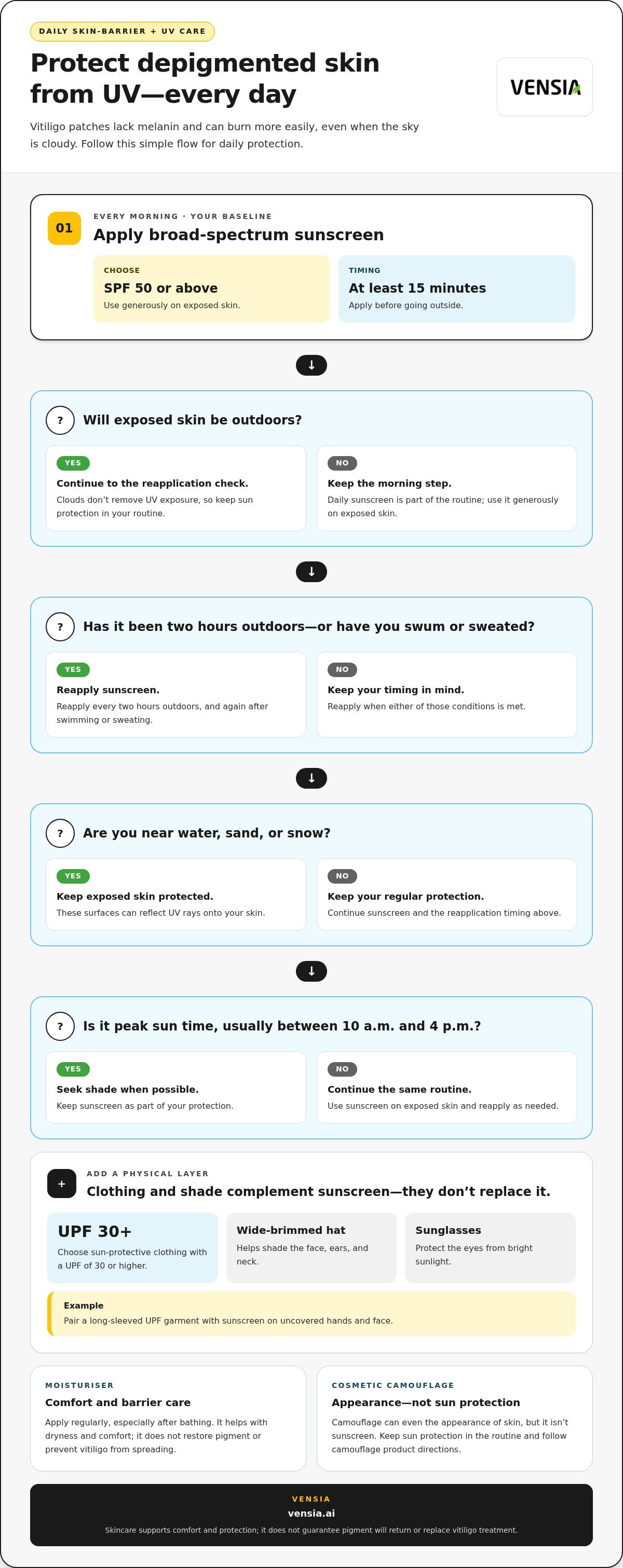
Those patches lack melanin, which normally helps protect skin from ultraviolet rays. As a result, they can burn more easily, even when the sky is cloudy. Apply broad-spectrum sunscreen with SPF 50 or above each morning, and use it generously on exposed skin. Put it on at least 15 minutes before going outside. Clouds don’t remove UV exposure, so keep sunscreen in your daily routine.
Water, sand, and snow can reflect UV rays onto exposed skin. That means a walk beside water, time at the beach, or a snowy outing still calls for protection. Reapply sunscreen every two hours when outdoors, and again after swimming or sweating. During peak sun hours, usually between 10 a.m. and 4 p.m., seek shade when possible. These steps matter even if you’ve moisturised or applied cosmetic camouflage.
Clothing can add a practical layer of protection. Choose garments with a UPF of 30 or higher, and cover exposed areas where comfortable. A wide-brimmed hat helps shade the face, ears, and neck; sunglasses protect the eyes from bright sunlight. Clothing and shade complement sunscreen rather than replace it. For example, pair a long-sleeved UPF garment with sunscreen on uncovered hands and face.
Cosmetic camouflage can help even the appearance of skin, but it isn’t sunscreen. Makeup may last one day, while self-tanners and skin dyes tend to last 3 to 5 days. Camouflage creams can last up to 4 days on the body and 12 to 18 hours on the face. Reapply sunscreen as needed, and follow the camouflage product’s directions so sun protection remains part of the routine.
Choose a moisturiser that feels comfortable and apply it regularly, particularly after bathing. If a product stings or irritates affected skin, stop using it and simplify your routine. Moisturiser supports comfort, while sunscreen, UPF clothing, hats, sunglasses, and shade help limit UV exposure. These habits protect skin, but they do not change the immune system or guarantee pigment will return.
2. Treatment timelines and realistic expectations
Apply broad-spectrum sunscreen every morning, then reapply every two hours outdoors, especially after swimming or sweating. Choose SPF 50 or above for exposed, depigmented skin. Sunscreen protects against UV exposure; it doesn’t treat the immune process behind vitiligo or guarantee that white patches will repigment. Keep sun protection consistent while following any treatment plan.
Repigmentation may begin after several weeks of consistent treatment, while more visible changes can take months. The timeline partly depends on the affected area: the face often responds better than the hands and feet. This difference matters when setting expectations. A change on facial patches may appear before a similar change on fingers or toes, even with consistent care.
For localized patches, dermatologists may prescribe topical corticosteroids for limited periods. These are usually applied once a day, with the amount matched to the treated area. One fingertip unit covers an area twice the size of an adult’s hand. Follow-up helps track response: a GP should arrange an appointment after one month of treatment, then check improvement after a further one or two months. Short courses matter because overuse can thin the skin.
Topical tacrolimus or pimecrolimus may be used on delicate areas, such as the face. Warmth or tingling can occur at first, and these medicines may take time to work. Note when treatment starts and record any changes in the patches. This gives you and your clinician a clearer way to assess progress than relying on memory.
For widespread vitiligo, or when topical treatment alone is not sufficient, narrowband UVB phototherapy may be considered. Treatment is typically scheduled over months and involves repeated visits or planning for a home unit. Light treatment has risks: phototherapy exposes skin to additional UVA rays and may increase skin-cancer risk. Home sunlamps are not recommended because they are less effective than hospital phototherapy and may not be safe.
A dermatologist may combine topical medication with phototherapy, then continue a maintenance routine after repigmentation improves. Keep applying prescribed treatment as directed rather than stopping when early colour returns. The pattern and location of white patches, response over time, and tolerance of treatment all shape the plan. For an additional topical skincare option, explore topical care for vitiligo as part of your broader routine, not as a substitute for prescribed treatment.
3. How to build a gentle daily skincare regimen?
A gentle routine limits avoidable irritation without trying to alter the immune process behind vitiligo. The American Academy of Dermatology recommends sun-protective clothing with a UPF of 30 or higher. It also advises reducing stress and eating a balanced, nutritious diet to support the immune system. For everyday cleansing and moisturising, choose fragrance-free or low-fragrance products if your skin is sensitive.
Start with a mild cleanser and lukewarm water. Use your fingertips rather than a rough cloth or abrasive scrub, then rinse thoroughly. Pat skin dry with a soft towel instead of rubbing, especially across depigmented patches. Harsh soaps, exfoliants, and products that strip natural oils can leave skin uncomfortable. Avoid them if they cause tightness, stinging, or visible irritation.
After washing, apply moisturiser while skin still feels slightly damp. This helps reduce dryness and supports a comfortable skin barrier. Choose a fragrance-free formula if scented products trigger itching or redness. You do not need to avoid every personal-care or household product; change a product if you notice irritation or discomfort after using it.
A simple routine can follow the same steps each day:
- Cleanse gently. Wash with a mild, fragrance-free cleanser and lukewarm water. In the morning, rinse with water if cleansing again feels drying.
- Moisturise. Smooth a comfortable, fragrance-free moisturiser over dry areas after cleansing or bathing. Include elbows, hands, and other patches that feel tight.
- Protect exposed skin. Apply broad-spectrum sunscreen in the morning, then reapply every two hours outdoors or after swimming or sweating.
- Keep the evening routine simple. Remove sunscreen and makeup with a gentle cleanser, then moisturise. Avoid adding several new products at once.
Introduce new products one at a time. Try a small area first and watch for burning, itching, or a rash before applying the product more widely. This practical patch test can help identify products that do not suit your skin. Test camouflage products cautiously too, particularly if fragrance or other ingredients have irritated your skin before.
Vitiligo does not require avoiding routine personal care, but comfort matters. Stop using a product that repeatedly causes irritation, and simplify your routine to cleansing and moisturising. Seek medical advice for persistent redness, itching, scaling, or discomfort on your skin or scalp. A gentle, consistent approach can help you notice which products support comfort and which aggravate symptoms.
4. Possible causes, autoimmune links, and skin injury triggers
Vitiligo involves loss of pigment in patches of skin, and immune-system activity is associated with the condition. Family history can also matter: around 20% of people with vitiligo have affected family members. Having a relative with vitiligo can indicate increased risk, but it doesn’t mean every family member will develop patches. These factors help explain why there may not be one single cause for every person.
Vitiligo can occur alongside other autoimmune conditions. A dermatologist may recommend laboratory tests when symptoms suggest another autoimmune condition; testing is not automatically needed for everyone. Note any new or persistent symptoms and share them during a medical appointment. A clear timeline, including when a patch first appeared, can help a dermatologist assess changes and decide whether further evaluation is appropriate.
Skin injury may precede new patches in some people. Repeated friction, cuts, or irritation can be followed by vitiligo patches, a pattern sometimes called the Koebner phenomenon. When a patch follows an injury, it may appear about 10 to 14 days later. For example, notice whether a new white patch develops where clothing rubs or a cut has healed, and record the location and timing.
This does not mean every scratch or pressure mark will cause vitiligo. Still, reducing repeated irritation is a practical step: choose clothing that does not constantly rub an affected area, avoid picking at healing skin, and handle skin gently when washing. These habits can limit avoidable skin injury, though they do not remove the underlying condition or guarantee that new patches will not appear.
Sunburn is another concern for depigmented skin because it lacks melanin’s usual protection against ultraviolet rays. If a patch becomes painful, blistered, or markedly red after sun exposure, protect it from further exposure and seek medical advice for significant or persistent symptoms. Note the affected area and what happened, such as spending a long time outdoors without adequate clothing or shade.
Vitiligo can affect emotional wellbeing as well as skin appearance. A visible patch on the face or hands, for example, may affect comfort in social settings or clothing choices. Those feelings deserve attention; they do not mean the condition is contagious or caused by personal choices. Track physical changes and emotional concerns, then discuss both with a dermatologist as part of care planning.
5. Hydration and skin-barrier care
Hydration supports the skin’s outer barrier, which helps limit moisture loss and protect against everyday irritants. Vitiligo changes pigment, not the need for comfortable, cared-for skin. Dryness can make patches feel tight or rough, so regular moisturising is a practical step. Apply moisturiser after bathing, while skin is still slightly damp, to help maintain surface hydration.
Keep the routine simple and consistent. After washing, pat skin gently instead of rubbing, then apply moisturiser to dry or tight areas. Choose a fragrance-free formula if scented products cause discomfort. Avoid harsh soaps and exfoliants that strip natural oils, as irritation can make skin feel drier. A short ingredient list may also make it easier to identify a product that does not suit you.
Look for moisturisers that help attract or retain water. Hyaluronic acid can hold up to 1,000 times its weight in water, making it a well-known hydrating ingredient. That figure describes the ingredient’s water-holding capacity, not a guaranteed result on skin. Apply a moisturiser according to its directions, and observe whether dryness, tightness, or flaking improves with regular use.
- After bathing: Pat skin dry and apply moisturiser while it remains slightly damp.
- During the day: Reapply moisturiser to areas that feel dry, especially after washing your hands.
- When trying a new product: Test it on a small area first and watch for irritation or discomfort.
- Alongside hydration: Keep sun protection in your routine, since moisturiser doesn’t shield skin from UV exposure.
Barrier care supports comfort, but it is not a vitiligo treatment. Moisturiser can ease dryness, but it does not replace treatment or restore pigment by itself. If redness, itching, scaling, or discomfort persists on your skin or scalp, seek medical advice. Note which areas are affected and when symptoms appear; those details can help guide a discussion about suitable care.
Stress and sun exposure can affect how manageable daily care feels, so make the routine realistic. Keep moisturiser where you’ll use it, such as beside the sink, and pair application with an existing habit. Hydration works best as a steady practice, not an occasional response to dryness. Explore hydration-focused skincare options to find a topical care step that fits your routine.
VENSIA: VENSIA Anti Vitiligo Cream
VENSIA Anti-Vitiligo Scar Removal Cream is a skincare option for people seeking care focused on vitiligo-affected skin. It can be used alongside gentle cleansing, regular moisturising, and daily sun protection, not instead of these basics. Keep expectations realistic: the product is intended to support even-looking skin and does not come with a guaranteed treatment timeline or promise of pigment restoration.
Use skincare products according to their directions, and pay attention to how your skin responds. If a product causes persistent irritation or discomfort, stop using it and seek medical advice. For new, spreading, or changing patches, a dermatologist can assess your skin and discuss suitable treatment options. A cream alone does not replace medical evaluation or prescribed care.
To learn more about VENSIA Anti Vitiligo Cream, visit VENSIA online.
Make your next skincare step a manageable one
Choose a routine you can maintain, then pay attention to how your skin responds over time. A brief note about dryness, irritation, or product changes can help you make thoughtful adjustments and explain your experience during medical care. Your skin care routine for vitiligo can support everyday comfort, while treatment decisions remain separate from cosmetic skincare.
If dryness is your main concern, VENSIA Niacinamide Marshmallow Body Lotion is formulated to moisturise, improve dryness, and soothe rough skin. Choose products that suit your skin’s needs, and stop using one if it causes persistent irritation. Skincare can be a practical part of caring for your skin, without replacing medical treatment.
Explore VENSIA’s skincare options and take the next step at your own pace: visit VENSIA online. Consistent, considered care can help you feel more prepared to support your skin day by day.
Frequently Asked Questions
How do I prevent vitiligo from getting worse?
No established skincare step stops vitiligo progression, but you can reduce avoidable skin stress. Protect depigmented areas from sunburn and limit repeated rubbing or injury from tight clothing, shaving, or picking at healing skin. Keep track of new patches and changes in existing ones. That record can help a dermatologist assess the pattern and discuss treatment options suited to your skin.
How to build a gentle daily skincare regimen?
Keep the steps simple: cleanse without scrubbing, moisturise dry areas, and protect exposed skin during the day. Introduce new products one at a time so you can spot irritation and identify its cause. For example, do not start a new cleanser and lotion on the same day. If redness or itching follows a product, stop using it and note when symptoms began.
What is vitiligo and how to manage it naturally?
Vitiligo causes areas of skin to lose pigment, creating lighter patches. Immune-system activity is associated with the condition, so food or natural skincare should not be presented as a cure. Support everyday skin comfort with gentle cleansing, moisturising, and sun protection. A balanced diet and stress reduction can support general wellbeing, but neither replaces assessment or treatment for changing patches.
What types of hydrating care should you prioritize?
Prioritise a moisturiser that feels comfortable, suits your skin, and does not trigger irritation. A fragrance-free or low-fragrance option can be useful if scented products cause sensitivity. Apply it to areas that feel dry after washing, bathing, or frequent handwashing. If a rich cream feels uncomfortable during the day, a lighter lotion may suit you better; consistency and tolerability matter more than adding several products.
When to see a dermatologist?
Arrange a dermatology assessment if new patches appear, existing areas change, or you are unsure whether a pale mark is vitiligo. Persistent redness, itching, scaling, or discomfort on the skin or scalp also warrants medical advice. A dermatologist can examine the skin and may use a Wood’s lamp to highlight depigmented areas. Lab tests are not required for everyone, though symptoms can guide whether further testing is useful.
Why is hydration essential for vitiligo-affected skin?
Hydration helps ease dryness and supports the skin’s outer barrier, making daily care more comfortable. It does not restore pigment or address the immune activity associated with vitiligo. For a practical check, notice whether skin feels tight after washing or rough under clothing. If so, apply moisturiser after washing and change products if one stings or causes persistent discomfort.
What should a daily skin care routine for vitiligo include?
A practical routine includes gentle cleansing, moisturising dry areas, and protecting exposed skin from the sun. In the evening, remove sunscreen or makeup gently rather than scrubbing. Keep prescribed treatments separate from cosmetic products, and follow their directions. If you use camouflage makeup, try it on a small area first, particularly if you have reacted to cosmetics or fragranced products before.
Which sunscreen SPF and broad-spectrum protection are recommended for vitiligo?
Choose broad-spectrum sunscreen that protects against both UVA and UVB, with SPF 50 or above. Apply it to exposed skin before going outdoors, including lighter patches, and reapply every two hours while outside. Reapply after swimming or sweating, too. Sunscreen works alongside shade and clothing; it doesn’t remove the need to protect exposed areas on cloudy days or near reflective surfaces.


