

Body Cream for Acne Scars and Dark Spots: Ingredients That Help
A dark mark left after acne isn’t always a scar. A body cream for acne scars and dark spots may support hydration and improve the appearance of uneven tone, but flat discoloration and changes in skin texture are different concerns and may respond differently.
It’s understandable to want marks to fade quickly, especially when they’re on visible areas of the body. Some post-acne marks take several months to fade, and consistent sun protection can help prevent discoloration from becoming darker.
This guide explains the difference between dark spots and raised or indented acne scars, then covers ingredients that may help care for uneven tone and dry skin. You’ll also learn how to use exfoliating and moisturizing products thoughtfully, what to expect as marks fade, and when a body cream may not address the type of scarring you have.
Key Takeaways
- Identify whether a mark is flat discoloration or a raised or indented scar, since creams are better suited to improving uneven tone than changing scar texture.
- Choose products with tone-correcting ingredients that suit your skin, and introduce them gently rather than layering several strong actives at once.
- Apply a thin layer of a new product and patch-test it on a small area before broader use.
- Protect exposed skin from the sun each day; if you use retinol, pair it with SPF 30 or higher during the day.
- Keep skin hydrated and give fading marks time, since visible improvement can take several months.
What Are Post-Acne Marks?
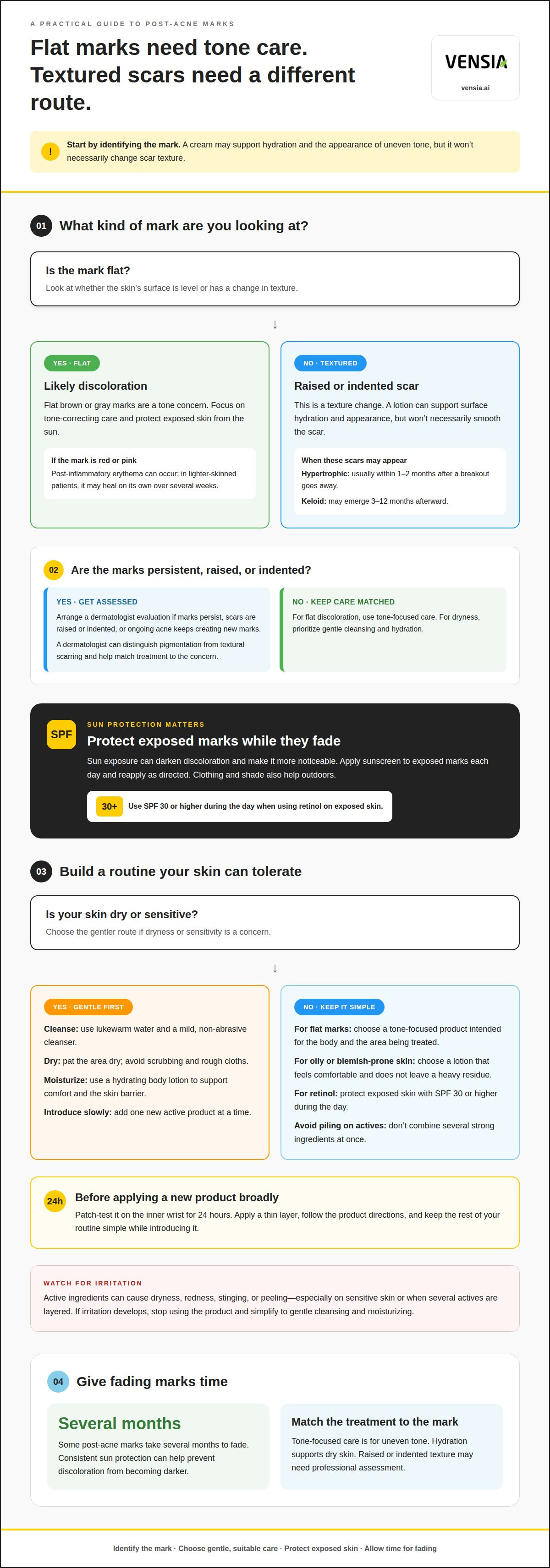
Post-acne marks are changes left behind after a blemish heals. A flat brown or gray spot is usually discoloration, while an indented or raised area reflects a change in skin texture. These concerns can occur together, but a lotion that supports hydration and uneven tone won’t necessarily smooth a textured scar.
Flat marks often develop as skin responds to inflammation. Their appearance can be more noticeable after sun exposure, so daily sunscreen matters while marks fade. Acne-related post-inflammatory erythema, which appears red or pink, can also occur; in lighter-skinned patients, it may heal on its own over several weeks. Raised scars differ: hypertrophic acne scars usually appear within one to two months after a breakout goes away, while keloid scars may emerge three to 12 months afterward.
Choose a body lotion according to your concern. A moisturizing formula can relieve dryness and support the skin barrier, while tone-focused ingredients target the appearance of discoloration. If your skin is sensitive, introduce one new product at a time and stop using it if irritation develops. Don’t treat an indented or raised scar as though it were only a dark spot.
Gentle cleansing is a useful first step for acne-prone skin. Wash with lukewarm water and a mild, non-abrasive cleanser, then pat the area dry rather than scrubbing. Rough cloths and harsh scrubs can irritate skin and make a blemish feel worse. Follow cleansing with a body lotion suited to your skin’s dryness and sensitivity.
Should you use sunscreen on body acne marks while treating them? Yes. Apply sunscreen to exposed marks each day and reapply as directed. Sun exposure can darken discoloration and make it more noticeable. Clothing and shade also help protect skin outdoors.
When should you see a dermatologist about acne scars or persistent dark spots? Arrange an evaluation if marks persist, scars are raised or indented, or ongoing acne keeps creating new marks. A dermatologist can distinguish pigmentation from textural scarring and help match treatment to the concern.
Use these distinctions to choose treatments for blemishes and uneven skin tone:
- Flat brown or gray mark: Focus on tone-correcting care and daily sun protection.
- Dry, sensitive skin: Prioritize gentle cleansing and a hydrating body lotion.
- Raised or indented scar: Seek professional assessment, since lotion mainly supports surface hydration and appearance.
Dermatologist-recommended products for acne scars
A useful acne-scar routine starts with matching products to the mark and your skin type. Flat discoloration calls for tone-focused care, while raised or indented texture needs a different approach. A cleanser removes sweat, oil, and product residue; a moisturizer helps relieve dryness and discomfort. Choose one new active product at a time so you can tell what your skin tolerates.
For uneven tone, look for a formula designed for the body and the area you want to treat. Retinol is one ingredient used in topical skincare, but it requires thoughtful sun protection: use SPF 30 or higher on exposed skin during the day when using retinol. Avoid applying several strong active ingredients together. A thin layer is enough for topical acne-scar products, and using more can increase irritation without making the routine more effective.
Before applying a new product broadly, patch-test it on the inner wrist for 24 hours. This can help reveal an immediate reaction before you use it on a larger area. Follow the product directions, and keep the rest of your routine simple during the introduction period. Pair an active product with a moisturizer if your skin feels dry, and avoid rough cleansing tools that can add friction.
What side effects and irritation risks can brightening body creams cause? Active ingredients can cause dryness, redness, stinging, or peeling, especially on sensitive skin or when several actives are layered. Stop using a product if irritation develops, and simplify your routine to gentle cleansing and moisturizing.
Choose a formula based on your skin’s needs, not only the word “brightening” on the label. For dry skin, prioritize a moisturizer that supports hydration alongside any tone-focused ingredient. For oily or blemish-prone skin, select a body lotion that feels comfortable and doesn’t leave a heavy residue. If your skin is sensitive, choose a gentle cleanser and introduce treatment slowly, rather than combining exfoliating ingredients with retinol from the start.
- For flat marks: Select a tone-focused product and protect exposed skin when using retinol.
- For dryness: Add moisturizer after cleansing to support skin comfort.
- For sensitive skin: Patch-test for 24 hours and introduce one new active at a time.
Use these steps to build a simple routine, then adjust it according to how your skin responds. For further guidance on body skincare, keep the focus on gentle cleansing, suitable hydration, and careful product use.
Tone-correcting ingredients
Ingredient labels can help you choose skincare for discoloration without confusing tone care with scar-texture treatments. Look for a formula suited to your skin type that addresses your main concern and fits a routine you can follow consistently.
Ingredients for Dark Spots
For a flat dark spot, compare products designed to target uneven skin tone, then review their ingredients and directions. Niacinamide and vitamin C are examples of ingredients found in skincare and body-care products. Their presence alone doesn’t show how a specific product will perform. Check the full ingredient list, intended use, and whether the formula also supports hydration, especially if dry skin feels uncomfortable.
Ingredients for Hyperpigmentation
Hyperpigmentation describes areas that look darker than surrounding skin, so tone-focused treatments aim at appearance rather than an indented or raised scar. Niacinamide and vitamin C may appear in brightening skincare, while retinol is another active used in topical products. Choose one treatment to start, follow its label, and avoid combining several strong actives at once. Retinol users should apply SPF 30 or higher to exposed skin during the day.
Choose ingredients according to the mark’s appearance and your skin’s tolerance. A flat brown mark calls for a different approach from a change in texture. If a product combines exfoliating ingredients with other actives, consider whether your routine already includes similar treatments. Adding several products at once makes it harder to identify what causes irritation or dryness.
For dry skin, pair a tone-focused product with a moisturizing formula rather than relying on exfoliation alone. Hydration supports comfort, while gentle exfoliation can help remove surface buildup. A body lotion with niacinamide and moisturizing, gentle exfoliating properties can suit a routine focused on dryness and rough skin. Follow the label, and don’t apply it to irritated or broken skin.
“More active ingredients” doesn’t mean better care. Introduce one new product, use it as directed, and watch for redness, stinging, peeling, or persistent tightness. If irritation develops, pause the active treatment and keep cleansing and moisturizing gentle. Sensitive skin may respond better to a simple formula than to several tone-focused products layered together.
- For a flat dark spot: Choose a formula designed for uneven tone and check its active ingredients.
- For dryness: Include a moisturizer or body lotion that supports hydration.
- For retinol use: Protect exposed skin with SPF 30 or higher during the day.
Keep your goal specific: tone-focused ingredients address the appearance of discoloration, while hydration helps dry skin feel more comfortable. Ingredient names and a “brightening” label alone can’t tell you whether a product suits your skin. The formula, directions, and your response all matter.
Expectations and patience when fading marks
Post-acne marks change at different rates because discoloration and scar texture are different concerns. Flat hyperpigmentation can gradually become less visible, while an indented or raised scar involves a textural change. A topical routine may support the appearance of flat marks, but it won’t necessarily change scar shape. Identifying the mark first helps you set a realistic goal.
Some acne marks may take four to six months to fade on their own. Other post-acne discoloration can take several months, depending on the mark and how your skin responds. Acne-related post-inflammatory erythema in lighter-skinned patients can heal on its own over several weeks. These are different patterns, not a fixed timeline for every mark.
Scar timing also varies by type. Hypertrophic acne scars usually appear within one to two months after a breakout goes away. Keloid acne scars can appear anywhere from three to 12 months after the initial breakout. These raised scars differ from flat dark spots, so track changes in height and texture as well as color.
Retinol may be part of a topical routine for post-acne marks, but introduce it carefully. Apply a thin layer and avoid combining several harsh active ingredients at once. Use SPF 30 or higher on exposed skin during the day when using retinol, since it can make skin more sun-sensitive. If sensitive skin becomes irritated, pause the active product and simplify the routine.
Track progress by noting a mark’s color, texture, and location when you start a product, then review those same features over time. A vitamin C product or a formula with a plant extract may be marketed for tone care, but the ingredient name alone can’t predict how quickly a mark will fade. Follow the label and avoid changing several products at once.
- Flat discoloration: Track color changes over several months, rather than expecting an immediate shift.
- Red or pink marks: Post-inflammatory erythema may heal over several weeks in lighter-skinned patients.
- Raised marks: Note when changes develop, since hypertrophic scars and keloids have different timelines.
Ongoing breakouts can leave new marks while older ones fade, making your overall appearance seem unchanged. Focus on the specific mark you’re tracking, use sun protection consistently, and assess color separately from texture. If a spot changes or a raised scar develops, a dermatologist can help identify the concern and guide your next step.
Body cream for brightening and hydration
A body cream can serve two distinct purposes: supporting moisture and improving the appearance of uneven tone. Hydration can leave dry skin feeling softer and looking smoother, while tone-focused ingredients target discoloration. Neither function changes the texture of an indented or raised scar. Choose a lightweight formula if rich creams feel uncomfortable, especially on areas prone to breakouts.
Start with your skin’s immediate need. If your elbows, shoulders, or thighs feel tight after bathing, apply moisturizer to clean skin while it’s slightly damp. For visible flat marks, choose a product formulated for uneven tone and follow its label. A hydrating cream can complement tone care, but moisture alone won’t remove a dark spot.
Hyaluronic acid is used in skincare to attract and retain moisture, making it an ingredient to look for in hydrating formulas. Niacinamide and vitamin C also appear in tone-focused products. Check whether a formula combines tone-focused and moisturizing ingredients instead of relying on a “smooth” or “glow” label. The ingredient list and directions tell you more than marketing language.
Which ingredients should you avoid combining in a body cream routine? Avoid layering several strong active ingredients at once, particularly multiple exfoliating treatments or an exfoliant with retinol. Introduce one active product at a time and follow its directions to limit irritation and make it easier to identify the source of a reaction.
For acne-prone areas, choose a lightweight body lotion that feels comfortable and doesn’t leave a heavy coating. A rich texture isn’t automatically unsuitable, but a greasy-feeling product may be unpleasant on the back or chest. Apply a small amount first and observe how your skin responds. Keep cleansing gentle: vigorous scrubbing adds friction rather than improving smoothness.
Follow a simple order: cleanse gently, apply a tone-focused treatment as directed, then moisturize areas that feel dry. During the day, protect exposed skin with sunscreen, especially when using retinol. Don’t apply active products to irritated or broken skin. If your routine causes persistent stinging, redness, or peeling, pause the active treatment and simplify your steps.
- For dryness: Choose a moisturizer with ingredients such as hyaluronic acid.
- For flat discoloration: Look for a tone-focused formula and follow its directions.
- For breakout-prone areas: Try a lightweight texture and observe your skin’s response.
Build a body-care routine around one clear goal: hydration, tone, or both. Explore body-care options for hydration and tone to find a routine that fits those needs.
VENSIA: VENSIA Anti Pigmentation Cream | Removes Dark spots , Fine Lines, Wrinkles & Ageing Spots Suitable for Women/Men - All Skin Types - 30 gm| Even Skin Tone - Pigmentation removal
VENSIA Anti Pigmentation Cream | Removes Dark spots , Fine Lines, Wrinkles & Ageing Spots Suitable for Women/Men - All Skin Types - 30 gm| Even Skin Tone - Pigmentation removal is intended for concerns such as dark spots and uneven-looking tone. It may be a relevant option when your main goal is addressing the appearance of pigmentation, rather than changing raised or indented acne-scar texture. Follow the product directions and keep sun protection and gentle skin care part of your routine.
For dryness or rough skin, VENSIA Niacinamide Marshmallow Body Lotion 200 ML is described as moisturizing, soothing rough skin, and offering gentle exfoliation. Choose according to your skin concern: tone-focused care for visible spots, or body lotion for moisture and roughness.
For questions about which option fits your skin concern, contact VENSIA.
Choose Your Next Step With Care
Make your next skincare choice with a clear goal in mind. A body cream for acne scars and dark spots should suit the concern you want to address, the area you plan to treat, and the rest of your routine. Before adding a product, decide whether you’re looking to care for the appearance of pigmentation, add moisture, or soothe rough-feeling skin. That distinction can keep your routine purposeful rather than crowded with products serving different goals.
If you’re unsure which direction fits your skin concern, share what you’re hoping to address and ask for guidance before deciding. Contact VENSIA for personalized advice and take the next step with a clearer sense of what your skin needs. A thoughtful routine can begin with one well-chosen decision.
Frequently Asked Questions
What ingredients in body creams help fade acne scars and dark spots?
For flat discoloration, look for tone-focused ingredients such as niacinamide or vitamin C, alongside moisturizing ingredients if your skin is dry. VENSIA’s body lotion contains niacinamide, vitamin C, and marshmallow root extract. Review the ingredient list and directions, since the overall formula matters too. A body cream can support the appearance of uneven tone, but ingredient names alone can’t predict how your skin will respond.
Can body cream fade post-acne dark marks, and does it work on raised or indented scars?
Body cream may improve the appearance of flat post-acne discoloration, but raised or indented scars involve changes in texture. For example, a flat brown mark on the shoulder differs from a pitted scar on the back. A body cream for acne scars and dark spots is best understood as surface skincare, not a way to rebuild indented skin or flatten raised tissue. Persistent or changing marks warrant professional assessment.
How do azelaic acid, niacinamide, retinol, and glycolic acid compare for body hyperpigmentation?
These ingredients aren’t interchangeable, and the full formula and directions affect how a product fits your routine. Compare labels for intended use and avoid starting azelaic acid, niacinamide, retinol, and glycolic acid together. Retinol can make skin more sun-sensitive, so use SPF 30 or higher on exposed skin during the day. If you’re choosing between products, start with one active ingredient rather than layering several treatments.
How long does body cream take to fade acne dark spots?
Acne marks may take four to six months to fade on their own, and some discoloration can take several months to fade. To assess change, note the mark’s color and location, then compare it periodically under similar lighting. New blemishes can leave new marks, so track an individual spot rather than judging progress by the overall appearance of an acne-prone area.
How should you use body cream for acne marks, and how often should you apply it?
Follow the product label for application amount and frequency, and apply it to clean, dry skin unless its directions say otherwise. Test a new product on the inner wrist for 24 hours before wider use. Introduce one treatment at a time, then keep the rest of your routine simple so you can notice irritation. For retinol, protect exposed skin with SPF 30 or higher during the day.
What are the best body creams for acne marks on the back, chest, and shoulders?
For flat dark marks on the back, chest, or shoulders, choose a body formula designed for uneven tone, such as one containing niacinamide or vitamin C, and use moisturizer to support dry skin. Introduce one product at a time, patch-test it, and protect exposed skin from the sun.


