

Uneven Skin Tone Treatment: Compare Your Options
The right uneven skin tone treatment isn’t always the most intensive one. Dark spots after sun exposure, marks left after acne or irritation, lighter patches, and persistent redness can look similar, but they may have different causes. Choosing a product by appearance alone can lead to irritation or little progress if it doesn’t match the concern.
If you’re deciding whether to start with skincare or seek professional care, first consider what changed, how long it has been there, and whether it is still changing. This guide compares daily skincare, prescription options, and in-office procedures, including how they differ in oversight and suitability. It also explains how to protect your skin, introduce products cautiously, and decide when a dermatologist’s assessment could help clarify the cause. Progress can take time, so a careful plan is more useful than repeatedly switching to stronger products.
Key Takeaways
- Uneven tone can appear as darker marks, lighter patches, or persistent redness. Appearance alone may not reveal the cause.
- Compare skincare, prescription care, and procedures by their setting, oversight, limitations, and suitability for your concern.
- A safer uneven skin tone treatment plan starts with observing changes, protecting skin, simplifying your routine, and introducing products cautiously.
- Note when discoloration began, where it appears, and any possible triggers to support more informed next steps.
- Visible changes take time and vary. Seek a dermatologist’s assessment when the cause is unclear or changes persist.
What Does Uneven Skin Tone Look Like, and Why Does the Cause Matter?
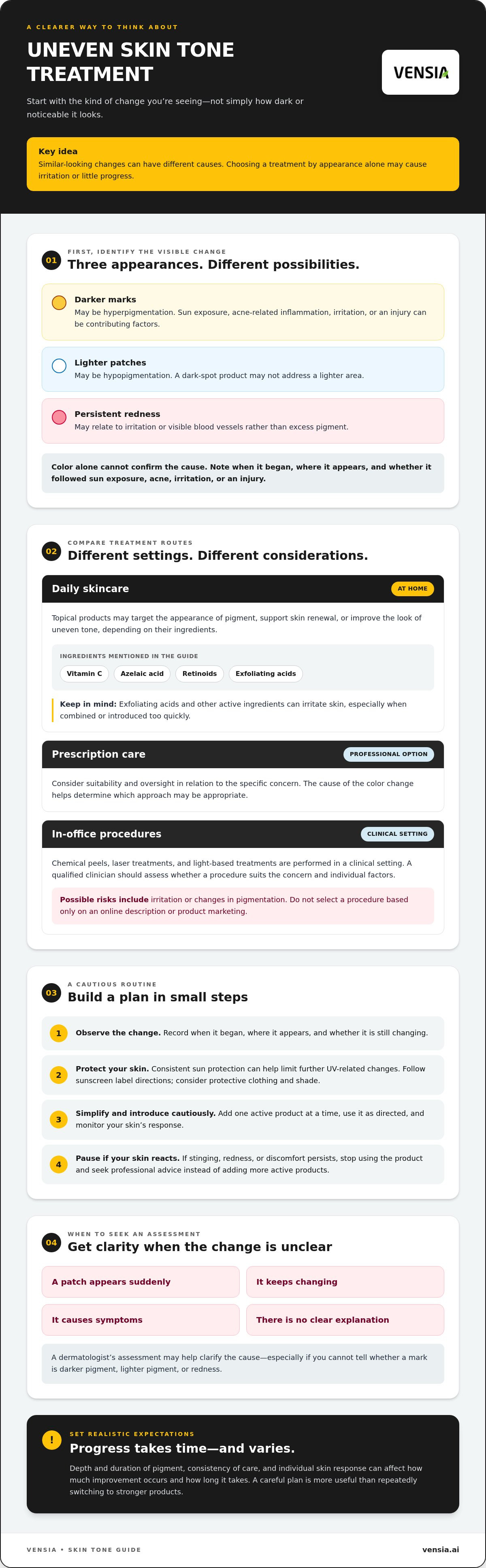
Uneven skin tone describes areas that visibly differ in color. It is a broad appearance concern, not a diagnosis. Darker marks, lighter patches, and persistent redness can have different causes, even when they look similar at first. That distinction matters: an uneven skin tone treatment aimed at excess pigment may not address redness or loss of pigment, and could irritate skin if it is not suited to the concern.
Make a note of where the change appears, when you first noticed it, and whether it followed sun exposure, acne, irritation, or an injury. These details can help you discuss next steps with a professional, but they cannot confirm the cause by themselves.
How do darker spots, lighter patches, and redness differ?
Hyperpigmentation describes areas that look darker than surrounding skin, while hypopigmentation describes lighter areas. Dark marks may reflect increased melanin, the pigment that gives skin its color. The Hyperpigmentation overview describes how pigment changes can be associated with factors such as sun exposure and inflammation.
Redness is different. It may relate to irritation or visible blood vessels rather than excess pigment. Color alone cannot reliably distinguish among causes, so avoid treating a new or unclear patch based only on how it looks.
What can contribute to uneven skin tone?
Sun exposure can contribute to darker spots. Inflammation from acne, irritation, or an injury may also leave a darker mark after the original concern settles. These post-inflammatory marks can persist, and further irritation may complicate the picture. Hormonal influences may play a role in melasma, which can appear as patches of discoloration. These are possible causes, not conclusions you can draw from appearance alone.
The likely cause helps determine whether the priority is limiting further discoloration, addressing a lingering mark, or getting another skin change assessed. The depth and duration of pigment, consistency of care, and individual skin response can all affect the amount of improvement and how long it takes. Results are not instant or identical for everyone.
Seek a clinician’s assessment for patches that appear suddenly, keep changing, cause symptoms, or have no clear explanation. Professional guidance is also sensible if you cannot tell whether a mark is darker pigment, lighter pigment, or redness. Identifying the concern first can help you avoid an unsuitable approach and choose a safer next step.
How Do Uneven Skin Tone Treatments Work?
Treatments work in different ways, and the right approach depends on what is causing the color change. Hyperpigmentation is darkening caused by excess pigment in the skin, but its cause helps determine which treatment may be suitable. A product marketed for dark spots may not address redness, irritation, or lighter patches. Choose an uneven skin tone treatment for the concern, not just its appearance.
What can topical skincare contribute?
Depending on their ingredients, topical products may target the appearance of pigment, support skin renewal, or help improve the look of uneven tone. Vitamin C is used in some brightening products; azelaic acid and retinoids may be included in routines for certain discoloration concerns. Exfoliating acids help shed surface skin cells, but can also irritate skin, particularly when combined with other active ingredients or introduced too quickly.
No ingredient suits every cause or every skin type. Check the product label for ingredients, directions, and warnings. Introduce one active product at a time and use it as directed so you can monitor your skin’s response. If stinging, redness, or discomfort persists, stop using it and seek professional advice rather than adding more active products.
Why do sun protection and professional treatments matter?
Ultraviolet exposure can contribute to some dark spots and make existing discoloration more noticeable. Consistent sun protection helps limit further UV-related changes. The American Academy of Dermatology also outlines practical steps to fade dark spots. Follow sunscreen label directions, and consider protective clothing and shade as part of your routine.
Daily topical care differs from clinician-selected procedures. Chemical peels, laser treatments, and light-based treatments are performed in a clinical setting, and their suitability depends on the skin concern and individual factors. They can carry risks, including irritation or changes in pigmentation, so a qualified clinician should assess whether a procedure is appropriate. Do not try to select a procedure based only on an online description or a product’s marketing.
For a cosmetic skincare option, review VENSIA anti-pigmentation skincare and check the product label for ingredients, directions, warnings, and suitability. Cosmetic products may support the appearance of skin, but they do not diagnose the reason for discoloration or replace medical care.
Uneven Skin Tone Treatment Options Compared: Skincare, Prescription Care, and Procedures
The main options differ in what they are intended to address, how they are used, and how much oversight they need. A suitable uneven skin tone treatment depends on the likely cause of discoloration, your skin history and sensitivity, and whether you need a clinician’s guidance. No category is best for everyone.
| Approach | Typical setting and oversight | Limitations and suitability |
|---|---|---|
| Supportive care, such as gentle cleansing, moisturizing, and sun protection | At home; follow product labels and sunscreen directions | Can support skin comfort and help limit further UV-related discoloration, but may not address the cause of an existing mark. A useful foundation for many routines. |
| Targeted cosmetic skincare, including products marketed for the appearance of dark spots | At home; check ingredients, directions, and warnings | Results vary, and products may irritate skin. Intended for cosmetic concerns, not diagnosis or a substitute for prescription care. |
| Prescription topicals | Used under direction of a qualified healthcare professional | Require assessment and instructions tailored to the concern. Suitability, monitoring, and potential side effects depend on the medication and individual. |
| Clinician-performed procedures, such as selected peels, laser, or light-based treatments | In a clinical setting, with professional assessment and care instructions | Not appropriate for every cause or skin type. Discuss possible irritation, recovery needs, and pigment-related risks before proceeding. |
How do at-home skincare options compare?
A simple routine can focus on gentle cleansing, moisturizer, and sun protection. Targeted cosmetic products add ingredients chosen for appearance concerns, while exfoliating actives aim to encourage surface skin renewal. More steps do not necessarily make a better plan. Consistency matters, but overusing products or layering several active ingredients can irritate skin and make it harder to tell what is helping.
Cosmetic skincare may suit someone looking to improve the appearance of a known, stable concern. It cannot identify what caused a patch or replace medical assessment when discoloration is unexplained or persistent.
When might prescription care or procedures be considered?
A clinician may consider prescription topicals or an in-office procedure after assessing the discoloration and relevant skin history. Procedures differ from daily home care: a professional selects them, and they may involve specific aftercare or recovery considerations. Ask about potential risks, care needs, and alternatives. Get an assessment before pursuing a procedure, particularly if the discoloration is uncertain, changing, or persistent.
How to Choose a Safer Treatment Plan for Your Skin
A thoughtful uneven skin tone treatment plan begins with observation, not a stronger product. Use this sequence to make your next step more deliberate and recognize when self-care may not be enough.
- Observe. Note when the change began, where it appears, whether it is spreading, and any possible triggers, such as sun exposure, acne, irritation, or a new product. A dated photo can help you track changes over time.
- Protect. Use a broad-spectrum sunscreen according to its label directions, and ask a healthcare professional for advice if you are unsure what is appropriate for your skin. Sun protection can help limit further UV-related discoloration.
- Simplify. Keep your routine gentle and avoid layering several new or strong active products. A simpler routine makes it easier to identify what your skin tolerates.
- Introduce cautiously. Before starting a product, review its ingredients, directions, warnings, and intended area of use. Add one new active product at a time and follow the label. Stop if significant irritation develops.
- Reassess. Track how your skin responds and whether the patch changes. Do not keep escalating products if the concern persists, worsens, or remains unexplained.
What should you check before starting a product?
Confirm that the product is intended for the area you plan to treat and that you understand its directions and warnings. Do not apply an unverified product to a changing, broken, or unexplained patch. If you have sensitive skin or a history of reactions, get medical advice before trying stronger active ingredients. Cosmetic products may address appearance concerns, but they cannot identify the cause of a skin change.
When should you consult a dermatologist?
Seek an assessment for sudden, spreading, persistent, symptomatic, or uncertain discoloration. A dermatologist can evaluate the pattern and your skin history, assess possible causes, and discuss appropriate options. Professional advice is especially helpful before using stronger active ingredients or considering procedures, and if your skin is sensitive or has reacted to products before.
If you are exploring cosmetic care for the appearance of dark spots, review VENSIA anti-pigmentation skincare options and check the current product label for ingredients, directions, warnings, and suitability. This is an appearance-focused skincare option, not a diagnosis or substitute for medical care.
What to Expect Next: Realistic Results and VENSIA Skincare
Choosing an approach is only part of the process. Visible change is usually gradual, and what you notice depends on the cause of discoloration, the approach used, how consistently you follow it, and how your skin responds. There is no single timeline or outcome for everyone. A careful plan gives you a clearer way to assess progress without expecting an instant change.
How can you set realistic expectations?
Give a chosen routine time to show how your skin tolerates it, but do not continue using a product that causes significant irritation. Rather than switching products repeatedly, follow directions and note changes consistently. You could record when you use a product and whether the area looks or feels different over time. This can help you spot patterns and discuss them with a clinician if needed.
Cosmetic care focuses on the appearance of skin. It cannot diagnose the reason for a patch or replace prescription care. Some discoloration needs professional assessment, particularly if it is unexplained, persistent, changing, or not responding as expected. A dermatologist can help determine whether a cosmetic routine is appropriate or clinician-directed care should be considered.
Where does VENSIA Anti Pigmentation Cream fit?
VENSIA Anti Pigmentation Cream is a cosmetic skincare option positioned for concerns such as dark spots and uneven-looking tone. It should not be considered a diagnosis or medical treatment, or assumed to address a specific condition such as melasma or vitiligo. Check the current product label for ingredients, directions, warnings, and suitability before use.
If you are unsure what is causing a patch, consult a healthcare professional before relying on a cosmetic product as your solution. If the product seems appropriate for your appearance-focused skincare needs, you can explore VENSIA skincare and review its labeling before deciding whether it fits your routine.
The most useful uneven skin tone treatment is one that matches the concern and your skin’s tolerance. Keep expectations measured, monitor your response, and seek professional guidance when the cause or next step is unclear.
Choose Your Next Step With Confidence
The right uneven skin tone treatment depends on what is causing the discoloration, your skin’s tolerance, and whether you need professional assessment. Dark marks, lighter patches, and redness can look alike but call for different considerations, so avoid choosing an approach based on appearance alone. A steady, gentle routine and sun protection can support your next steps, while sudden, changing, persistent, or unexplained patches deserve a clinician’s review.
Visible changes take time and vary from person to person. Track your skin’s response rather than repeatedly switching products, and remember that cosmetic skincare is not a diagnosis or a substitute for prescription or clinician-directed care.
VENSIA offers targeted anti-pigmentation skincare, including a cream positioned for dark spots and uneven-looking tone. Review product labeling for ingredients, directions, warnings, and suitability before deciding whether it fits your routine. Explore VENSIA skincare to learn more about its appearance-focused options.
With a thoughtful plan and realistic expectations, you can take a clearer, more confident next step for your skin.
Frequently Asked Questions
Is uneven skin tone treatable?
Uneven-looking tone can often be managed, but the right uneven skin tone treatment depends on what is causing the color change. Sun-related spots and post-inflammatory marks differ from redness or lighter patches, so one product may not suit every concern. Note when a patch began and whether it changes. Seek medical advice if it is unexplained, persistent, or changing rather than assuming it is a cosmetic issue.
What is the best treatment for uneven skin tone?
There is no single best treatment for everyone. The choice depends on whether the area is darker, lighter, or red, as well as its likely cause, depth, and your skin’s tolerance. Sun protection and suitable skincare may support some concerns, while prescription treatments or procedures require professional guidance. If you are unsure what you are seeing, a clinician can assess the area and discuss options for your situation.
Can creams improve uneven skin tone?
Some cosmetic creams are designed to improve the appearance of dark spots or uneven-looking tone, but results vary with the formula, cause, and individual skin response. Creams do not diagnose discoloration or replace prescription care when that is appropriate. Review the ingredient list, directions, and warnings before use, and introduce active products cautiously. Stop using a product and seek advice if significant irritation develops or the patch is unexplained.
How long does uneven skin tone treatment take to work?
There is no reliable timeline that applies to every concern or treatment. Progress can depend on the cause and depth of discoloration, the approach used, consistency, and your skin’s response. Be cautious of products promising rapid or guaranteed results. Follow product directions, use sun protection as directed, and track changes without frequently switching products. A dermatologist can advise how to monitor progress for your specific concern.
Does sunscreen help with uneven skin tone?
Sun protection can help limit additional UV-related discoloration and may be part of care for some pigment concerns. Sunscreen alone will not identify the cause or necessarily change every existing mark. Choose a broad-spectrum sunscreen and follow its label directions, along with professional advice if needed. If a patch is changing, symptomatic, or unexplained, seek clinical assessment rather than relying only on sunscreen or other cosmetic care.
When should I see a dermatologist about uneven skin tone?
Arrange an assessment if discoloration appears suddenly, spreads, persists, causes symptoms, or you are unsure what it is. A dermatologist can evaluate possible causes and discuss whether skincare, prescription treatment, or a procedure may be appropriate. Seek guidance before trying stronger active ingredients or in-office treatments, especially if your skin is sensitive. Do not treat an unexplained patch as a cosmetic concern without having it assessed.


