

How to Remove Dark Spots: Dermatological Guide 2026
The secret to a flawless complexion in 2026 isn't found in aggressive clinical peels or expensive laser sessions; it's hidden in the precision of your daily topical routine. You've likely spent hours in front of the mirror, feeling self-conscious about uneven patches that refuse to budge. It's frustrating to waste money on products that promise the world but fail to deliver. If you're searching for how to remove dark spots from face without the confusion, you need a path rooted in dermatological science rather than marketing hype.
We understand that your skin deserves a strategy as unique as its own biology. This guide provides the science-backed steps to safely fade facial hyperpigmentation and restore a radiant, even skin tone through targeted care. You'll discover how modern formulations, such as VENSIA Anti Pigmentation Cream, work to inhibit melanin overproduction while simultaneously addressing fine lines and restoration. We'll simplify your daily regimen, highlight the specific ingredients that actually work for your skin type, and help you regain the confidence that comes with visible, lasting results within a realistic four to twelve week timeframe.
Key Takeaways
- Understand how dark spots form through localized melanin production and why your skin requires a restorative approach to recover its natural balance.
- Identify the role of Tyrosinase inhibitors and why combining multiple active ingredients is more effective than relying on a single "hero" component.
- Master the "Cleanse, Treat, Protect" framework to learn how to remove dark spots from face with professional consistency.
- Discover the benefits of multi-action formulas, such as VENSIA Anti Pigmentation Cream, which target hyperpigmentation and fine lines simultaneously.
- Learn why extending your treatment routine to the neck and décolletage is essential for achieving a truly uniform and radiant skin tone.
Understanding Dark Spots: Why Facial Hyperpigmentation Occurs
Dark spots are more than just cosmetic blemishes; they are biological signals. Clinically known as hyperpigmentation, these localized areas of increased melanin production often feel like a permanent change to your appearance. Learning how to remove dark spots from face begins with understanding why your skin produces them in the first place. While these uneven patches can be frustrating, they are actually the result of a sophisticated biological defense mechanism. Your skin creates pigment to shield itself from damage, but sometimes this response goes into overdrive, leaving behind stubborn marks that don't fade on their own. This experience is common, but it's manageable with a disciplined, science-backed approach.
Identifying the root cause is the first critical step toward restoration. Whether your spots appeared after a summer at the beach or following a stubborn breakout, the path to recovery depends on the specific trigger. By narrowing down the source of the pigment, you can choose a targeted solution like VENSIA Anti Pigmentation Cream to restore your skin's natural balance and clarity.
The Role of Melanin in Skin Tone
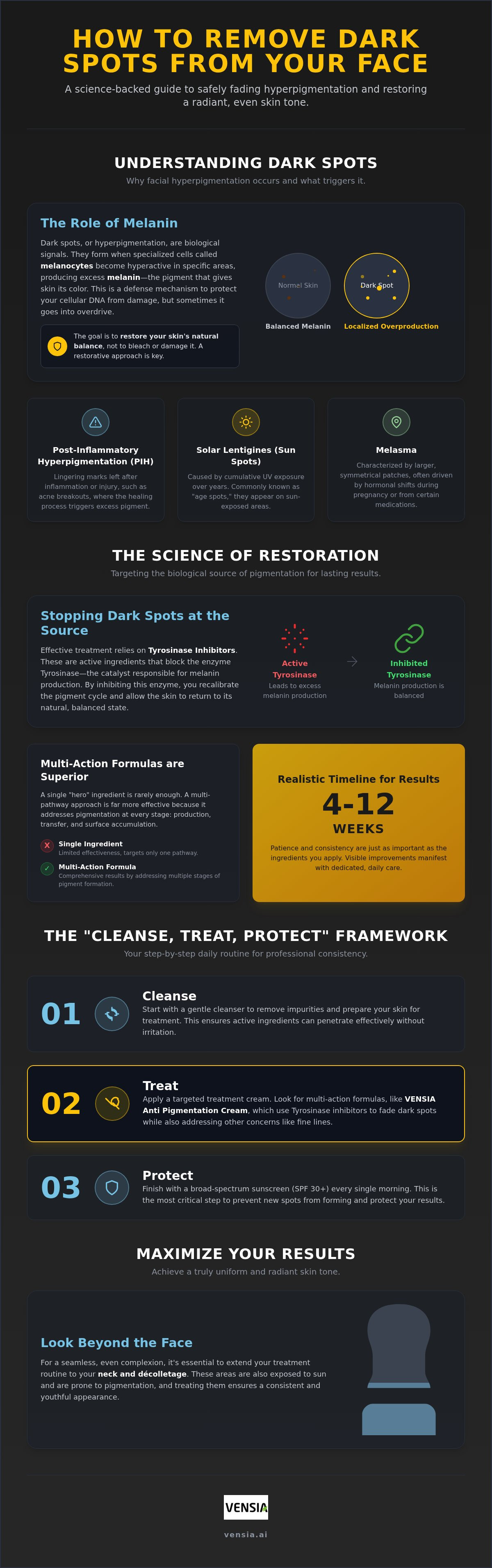
Melanocytes are specialized cells located in the base layer of your epidermis. Their primary job is to produce melanin, the pigment that gives your skin, hair, and eyes their color. When your skin is exposed to UV radiation or internal stress, these cells release pigment to absorb the energy and protect your cellular DNA. Understanding Hyperpigmentation involves recognizing that dark spots occur when these melanocytes become hyperactive in specific zones.
Distinguishing between temporary marks and deep-set pigmentation is vital for setting expectations. Surface-level spots may respond quickly to topical care, while deeper dermal pigment requires more time and consistency. For those wondering how to remove dark spots from face effectively, patience is just as important as the ingredients you apply. Results typically manifest within four to twelve weeks of consistent care.
Common Triggers for Facial Spots
Not all facial spots are created equal. Identifying which category your pigmentation falls into helps determine the best course of action:
- Post-Inflammatory Hyperpigmentation (PIH): These are the lingering marks left behind after an injury or inflammation, such as an acne breakout. They occur when the healing process triggers excess pigment production.
- Solar Lentigines: Often called "age spots" or "sun spots," these are the result of cumulative UV exposure over several years. They typically appear on areas most exposed to the sun.
- Melasma: Characterized by larger, symmetrical patches, melasma is often driven by hormonal shifts. It is particularly common during pregnancy or when using certain medications.
The Science of Restoration: Ingredients That Fade Pigmentation
Effective restoration requires a deep understanding of the enzymatic pathways within your skin. At the center of this process are Tyrosinase inhibitors, which are the primary tools used to stop dark spots at their biological source. These ingredients work by blocking the enzyme tyrosinase, the catalyst responsible for melanin production. When you're researching how to remove dark spots from face, you should focus on products that recalibrate this cycle rather than just masking the symptoms. By addressing the root cause, you allow your skin to return to its natural, balanced state.
A single "hero" ingredient is rarely enough to achieve lasting results. A multi-pathway approach is far more effective because it addresses the pigment journey at every stage: production, transfer, and surface accumulation. While you treat these spots, maintaining your skin’s moisture barrier is essential. If the barrier is compromised, inflammation can occur, which often leads to more pigmentation. This is the key difference between brightening and bleaching. Brightening restores your natural radiance through nourishment, whereas bleaching can be harsh and potentially damaging to your skin’s health. Remember that consistency is your greatest ally; most people see initial improvements within four to twelve weeks of dedicated application.
Knowing how to fade dark spots safely involves choosing ingredients that support the skin's natural recovery process. For a comprehensive solution, the VENSIA Anti Pigmentation Cream utilizes a balanced blend of actives to target spots without compromising skin integrity.
Niacinamide: The Multi-Tasking Brightener
Niacinamide, or Vitamin B3, is a versatile ingredient that excels at blocking the transfer of pigment to your skin cells. It doesn't just address tone; it also refines skin texture and minimizes the appearance of enlarged pores. Because it's inherently soothing, niacinamide is safe for all skin types. It's particularly beneficial for those with sensitive or acne-prone skin who need effective results without the risk of irritation or redness.
Vitamin C and Antioxidant Protection
Vitamin C acts as a first line of defense against environmental stressors. UV rays and pollution generate free radicals that trigger melanin production as a protective response. By neutralizing these free radicals, Vitamin C prevents new spots from forming while gradually fading existing ones. It also plays a vital role in collagen synthesis, which improves overall skin radiance and firmness. Using antioxidants daily ensures your skin remains resilient against future damage while correcting past issues.
How to Remove Dark Spots from Face: A Step-by-Step Daily Routine
When you master how to remove dark spots from face, you realize that occasional high-strength treatments are far less effective than a disciplined daily application. This is the Consistency Principle. Your skin requires a steady, predictable environment to heal and recalibrate its pigment production. The most effective framework for this restoration is the "Cleanse, Treat, Protect" model. By following this core structure every day, you provide your skin with the necessary tools to repair existing damage while preventing new spots from surfacing.
Patience is essential because results don't happen overnight. You should expect to see significant visible changes within 30 to 90 days of starting a new regimen. The 90-day rule recognizes that since your skin requires roughly 28 to 40 days to complete one full cycle of cellular turnover, you must maintain your routine through three complete cycles to witness the full restorative effect of your treatments. This methodical timeline ensures that the new, healthy skin cells reaching the surface are properly treated and protected.
The Morning Routine: Defense and Protection
Your morning objective is to shield your skin from the environmental triggers that worsen hyperpigmentation. Follow these three steps:
- Step 1: Gentle Cleansing. Use a mild cleanser to remove overnight oils without stripping your natural moisture barrier. A healthy barrier is your first line of defense.
- Step 2: Antioxidant Serum. Apply a Vitamin C or Niacinamide serum. These actives neutralize free radicals and provide a brightening boost that works throughout the day.
- Step 3: Broad-Spectrum SPF 30+. This is the most critical step. UV exposure is the primary cause of spot darkening. Without daily sun protection, your other treatments cannot succeed.
The Evening Routine: Repair and Treatment
Nighttime is when your skin shifts into repair mode, making it the ideal window for targeted actives. Your evening routine should be focused on correction:
- Step 1: Thorough Cleansing. Remove the day’s buildup of pollutants, dirt, and SPF. A clean canvas allows your treatment products to penetrate more effectively.
- Step 2: Pigmentation Treatment. Apply VENSIA Anti Pigmentation Cream to the face. This specialized formula targets dark spots and fine lines simultaneously, utilizing the skin's natural nighttime regenerative cycle.
- Step 3: Nourishing Moisture. Seal in your treatment with a moisturizer. Providing deep hydration helps the skin recover from daily stress and ensures the active ingredients stay locked in place for maximum efficacy.
Choosing the Right Cream for Dark Spots and Fine Lines
While many sources suggest expensive laser treatments or chemical peels as the only viable options, modern dermatological research supports a more accessible path. A specialized pigmentation removal cream provides a targeted, non-invasive alternative that respects your skin’s natural rhythm. When you're determining how to remove dark spots from face, the focus should be on restoration rather than harsh intervention. The Vensia approach combines biological research with skin-safe ingredients to deliver clinical results within the comfort of your home.
Formulations designed for all skin types are essential for ensuring consistency. If a product causes irritation, you'll likely stop using it before the results manifest. Vensia ensures long-term compliance by balancing potent actives with soothing agents that protect the skin barrier, allowing for a transformation that feels as good as it looks.
Addressing Pigmentation and Aging Simultaneously
Dark spots and fine lines aren't isolated issues; they often share the same root cause in oxidative stress. UV exposure and environmental pollutants trigger both melanin overproduction and the breakdown of collagen. Using a comprehensive restorer like VENSIA Anti Pigmentation Cream allows you to treat these concerns as a single biological challenge. This efficiency is vital for your daily routine. If you are searching for how to remove dark spots from face while also smoothing texture, look for formulas that combine spot-fading actives with anti-aging ingredients. This dual action simplifies your regimen and ensures that you're addressing the health of your skin holistically.
What to Avoid in a Pigmentation Cream
Safety is paramount when treating facial skin. You should avoid harsh bleaching agents, such as high-concentration hydroquinone without medical supervision, as these can lead to rebound hyperpigmentation or permanent discoloration. Mystery ingredients in unregulated products also pose a significant risk of irritation. We prioritize transparency and skin health, opting for ingredients that have a proven track record of safety and efficacy. Choosing brands that focus on biological restoration ensures you achieve a radiant tone without compromising your barrier.
To start your journey toward a more uniform and youthful complexion, explore the restorative benefits of VENSIA Anti Pigmentation Cream today.
Maximizing Your Results: Beyond the Face
Your skin is a single, continuous organ that functions as your body's primary protective barrier. While your immediate priority might be learning how to remove dark spots from face, your treatment strategy shouldn't stop at the jawline. The neck and décolletage are frequently exposed to the same UV triggers and environmental pollutants as your face, yet they are often neglected in daily skincare routines. This neglect leads to a visible disconnect in skin tone and texture as you age. By extending your restorative routine downward, you ensure a uniform, radiant appearance across all visible areas of your body.
For individuals managing more complex depigmentation needs that go beyond standard hyperpigmentation, specialized solutions are necessary. The VENSIA Anti Vitiligo Cream provides a research-driven path for those seeking repigmentation and biological balance. Whether you're dealing with sun damage or more intricate pigment loss, a comprehensive approach ensures that every inch of your skin receives the targeted care it requires to thrive.
Managing Body Pigmentation and Texture
Body skin often requires different molecular formulations for effective penetration, but the core restorative principles remain the same. Utilizing niacinamide-based lotions on the arms and legs helps improve overall texture and tone by blocking pigment transfer and strengthening the moisture barrier. Marshmallow extract is a powerful addition to these formulas; it excels at soothing rough, dry skin while providing a gentle brightening effect. VENSIA Niacinamide Marshmallow Body Lotion serves as a perfect companion to your facial care, ensuring your body reflects the same health and clarity you've worked to achieve on your complexion.
The Lifestyle Factor: Diet and Hydration
Topical care is highly effective, but it's only half of the restoration equation. Internal hydration supports your skin's natural ability to repair itself at a cellular level. When you're well-hydrated, nutrients reach the epidermis more efficiently, which accelerates the healing of damaged cells. Incorporating a diet rich in Vitamin C and E, found in citrus fruits, leafy greens, and nuts, boosts your topical efforts from the inside out by providing the building blocks for collagen and antioxidant defense.
You should also consider the impact of sleep and stress on your skin's clarity. High cortisol levels from chronic stress can trigger systemic inflammation, which often manifests as new patches of uneven tone. When you prioritize rest and emotional balance, you give your body the window it needs to complete the restorative processes discussed in this guide. Mastering how to remove dark spots from face is a holistic journey that rewards a balanced, healthy lifestyle.
Your Path to Lasting Skin Clarity
Restoring an even skin tone is a journey that requires patience and the right biological tools. You now understand that effective restoration isn't about harsh bleaching; it's about using targeted tyrosinase inhibitors and maintaining a consistent "Cleanse, Treat, Protect" framework. By respecting the 90-day rule for cellular turnover, you allow your skin the time it needs to reveal a fresher, more radiant surface. Mastering how to remove dark spots from face is entirely possible when you move away from trial and error and toward a research-driven daily regimen.
VENSIA is here to guide you with formulas that prioritize both efficacy and skin health. Our VENSIA Anti Pigmentation Cream targets dark spots, fine lines, and wrinkles in one sophisticated formula, making it a powerful addition to any routine. It's dermatologically focused and safe for all skin types, ensuring you can achieve your desired results without the risk of irritation. Restore your radiance with VENSIA Anti Pigmentation Cream today and take the first step toward the confident, glowing complexion you deserve. Your skin has the power to recover, and with the right care, that transformation is within reach.
Frequently Asked Questions
How long does it take to see results when removing dark spots from the face?
Visible results typically appear within 4 to 12 weeks of consistent daily application. This timeframe aligns with the natural skin cell turnover cycle, which requires roughly 30 to 90 days to reveal treated, healthy cells. While you might notice improved radiance sooner, significant fading of deep-set pigment requires patience and dedication. Consistency is the most important factor in how to remove dark spots from face effectively while achieving a lasting transformation.
Can dark spots be removed permanently?
Dark spots can be successfully faded, but maintaining your results requires ongoing protection. While topical treatments remove existing pigment, your melanocytes remain capable of producing new melanin if triggered by UV rays or hormonal shifts. Using a restorative formula like VENSIA Anti Pigmentation Cream helps clear current blemishes, but daily SPF 30+ is essential to prevent these spots from returning or new ones from forming as you continue your skincare journey.
Is it safe to use pigmentation removal cream every day?
Yes, using a research-driven pigmentation removal cream every day is both safe and necessary for optimal results. Most active ingredients work best when they maintain a steady presence in the skin to inhibit melanin production continuously. Vensia's formulas are specifically designed for daily application on all skin types. They balance potent fading agents with nourishing ingredients to ensure your skin remains healthy, hydrated, and resilient without the risk of irritation or long-term barrier damage.
What is the difference between dark spots and melasma?
Dark spots are typically localized areas of pigment caused by sun damage or past acne, while melasma appears as larger, symmetrical patches often triggered by hormonal changes. Melasma is a chronic condition that is managed rather than cured. Both respond well to tyrosinase inhibitors, but melasma often requires a more intensive maintenance phase. Identifying the cause helps you choose the right approach for how to remove dark spots from face safely and effectively.
Do I really need sunscreen if I'm using a dark spot remover?
Sunscreen is a non-negotiable part of any brightening routine. UV exposure is the primary trigger for melanin production; without protection, the sun will darken the very spots you are trying to fade. Even a few minutes of unprotected exposure can undo weeks of progress made with your treatment cream. Applying a broad-spectrum SPF 30+ every single day ensures your active ingredients can work effectively to restore your skin's natural, even, and radiant tone.
Can I use VENSIA Anti Pigmentation Cream on sensitive skin?
VENSIA Anti Pigmentation Cream is formulated to be safe and effective for all skin types, including sensitive skin. We prioritize skin health by combining dermatologically focused actives with soothing components that respect the skin's moisture barrier. This balanced approach allows individuals with reactive skin to address hyperpigmentation and fine lines without the redness or peeling often associated with harsher treatments. Always perform a patch test if you have specific concerns about introducing new products to your routine.
Will exfoliating help remove dark spots faster?
Gentle exfoliation supports your treatment by removing dead, pigmented cells from the surface, allowing active ingredients to penetrate more deeply. However, over-exfoliating can cause inflammation, which may trigger post-inflammatory hyperpigmentation and worsen the problem. We recommend using a mild exfoliant once or twice a week. This helps speed up the visible fading process while maintaining the integrity of your skin barrier for a healthier, more radiant glow throughout the year.
What happens if I stop using the treatment once the spots fade?
If you stop treatment entirely without a maintenance plan, your dark spots may eventually reappear, especially if you skip sun protection. Once you achieve your desired results, you can often transition to a maintenance phase. This involves using your treatment cream less frequently while continuing to prioritize daily hydration and SPF. Keeping a simple, effective routine ensures your skin stays balanced and prevents the hyperactive melanocytes from producing excess pigment in the future.


