

Vitiligo Repigmentation Signs: How to Recognize Returning Pigment
What if the first sign of returning pigment isn’t a clear patch of colour, but a few tiny dots? The earliest vitiligo repigmentation signs can be subtle. Small changes may be difficult to interpret, especially when a darker mark could have another cause.
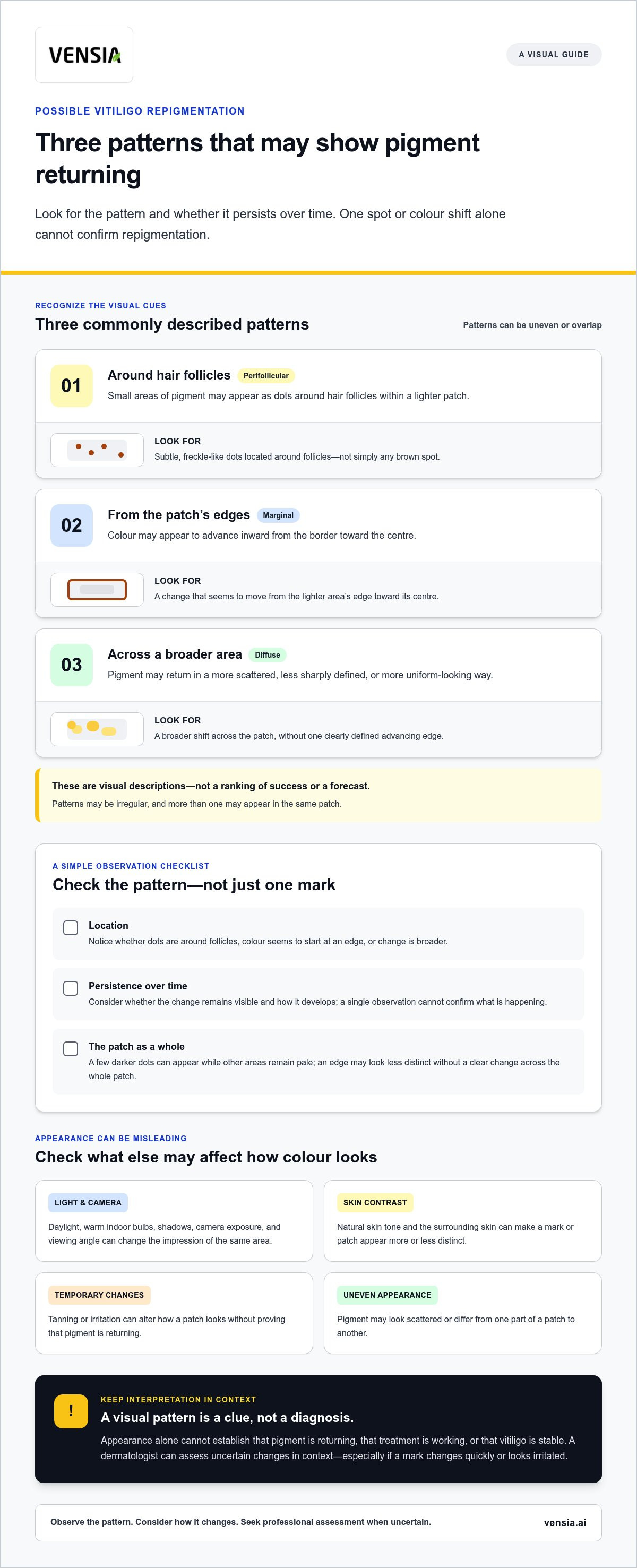
Repigmentation may appear as small brown dots around hair follicles, colour gradually returning from a patch’s edges, or a more diffuse shift in tone. One observation alone can’t confirm what’s happening, so look at the pattern and whether it persists over time.
This guide explains commonly described patterns, how to compare photos consistently, and when to discuss a change with a dermatologist. It also covers common sources of confusion, such as lighting, tanning, and irritation, so you can record what you see without self-diagnosing.
Key Takeaways
- Look for changes that persist over time. A single darker mark or photo can’t confirm returning pigment.
- Compare the affected area over time rather than judging one colour change in isolation.
- For useful photo comparisons, keep lighting, distance, camera settings, and nearby reference areas consistent.
- Tanning, irritation, and contrast with surrounding skin can change how a patch looks without proving repigmentation.
- Discuss uncertain changes and treatment questions with a qualified dermatologist, who can assess what you’re seeing.
What Are the Visible Signs of Vitiligo Repigmentation?
Vitiligo repigmentation is the return of pigment, or colour, to skin areas that previously lost colour because of vitiligo. It may appear as small pigmented spots, colour spreading inward from a patch’s edges, or a gradual, scattered change across the area.
These patterns can offer clues, but they aren’t a diagnosis. A single spot or colour shift can’t establish that pigment is returning, that treatment is working, or that vitiligo is stable. Skin can also look different depending on lighting, natural skin tone, and contrast between affected and unaffected areas. For a broader overview of the condition, see Vitiligo.
Recognizing possible vitiligo repigmentation signs means looking at the pattern and how it changes over time, rather than relying on one mark in isolation. A dermatologist can assess uncertain changes in context.
Small brown spots and pigment around hair follicles
One described pattern is perifollicular repigmentation, where small areas of pigment appear around hair follicles within a lighter patch. These dots may be subtle, and their visibility can differ across skin tones and body areas. Not every freckle-like mark or brown spot indicates returning pigment. Consider its location, whether it remains visible, and how it develops over time.
Colour returning from the edges or across a patch
With marginal repigmentation, colour appears to advance from the border of a patch toward its centre. With diffuse repigmentation, pigment returns more broadly in a less sharply defined, scattered, or uniform-looking way. These are different visual patterns, not a ranking of success or a reliable forecast of what will happen next.
Perifollicular repigmentation appears around hair follicles, marginal repigmentation moves inward from a patch’s edges, and diffuse repigmentation is a broader, less distinctly edged return of pigment.
In practice, patterns may be uneven or overlap. A patch might show a few darker dots while other areas remain pale, or its edge may look less distinct without an obvious change across the whole area. This variation can make visual interpretation difficult, especially when changes are gradual.
- Dots: Pigment may appear in small spots around follicles.
- Edges: Colour may extend from the border toward the centre.
- Broader change: Pigment may return in a more diffuse pattern across the patch.
Use these descriptions to understand the patterns clinicians may refer to, not to confirm repigmentation yourself. A professional assessment is especially useful if a mark changes quickly, looks irritated, or leaves you unsure whether the colour shift is meaningful.
Why Repigmentation Can Look Different Across Skin and Body Areas
Skin colour depends on pigment production, but pigment doesn’t necessarily return in a smooth, even layer. Possible vitiligo repigmentation signs can appear as scattered dots, areas of colour, or gradual changes that differ from one part of a patch to another. Understanding the role of pigment-producing cells helps explain why the visible picture can be uneven, without predicting what will happen for any one person.
How melanocytes relate to visible skin colour
Melanocytes are cells that produce melanin, the pigment that contributes to the colour of skin, hair, and eyes. They pass melanin to surrounding skin cells, influencing how skin appears. In vitiligo, areas lose colour when pigment-producing cells are absent or not functioning normally. Melanocytes are pigment-producing cells that make melanin, which contributes to visible skin colour.
This explains the general biology, not the cause of a particular change. A patch’s appearance alone can’t show what is happening to its melanocytes. VENSIA Anti Vitiligo Cream is a skincare option, and using it should not be taken as evidence that pigment is returning or as a substitute for a dermatologist’s guidance.
Why visible patterns vary between people
The same kind of change may look different depending on where it appears, a person’s natural skin tone, and the shape and distribution of the lighter areas. Skin around hair follicles can be one source of pigment-producing cells, so follicle distribution may be relevant to the pattern seen. This general context can’t tell you which body area will change first, how quickly it may change, or what result to expect.
Contrast matters, too. A small brown area may stand out clearly against a pale patch on one skin tone, yet appear subtler on another. A patch beside naturally darker skin may also look more sharply defined than the same patch beside lighter skin. These differences affect visibility, not necessarily the underlying process.
Light can alter the impression further. Warm indoor bulbs, daylight, shadows, camera exposure, and a change in viewing angle may make the same area look lighter or darker. That’s why a visual difference between two photographs taken under different conditions isn’t enough to establish a biological change. Compare like with like, and treat what you see as an observation rather than a conclusion.
Unevenness doesn’t automatically mean that change is absent or that a particular treatment is succeeding. Pigment may be distributed irregularly, and the visible appearance can vary across a patch and across the body. General biology helps explain those differences, but it can’t replace individual assessment.
If you’re considering skincare alongside professional guidance, you can explore VENSIA Anti Vitiligo Cream as a skincare option. For questions about changes in your skin or treatment, speak with a qualified dermatologist.
Is It Repigmentation or Just a Temporary Colour Change?
A patch that looks darker in one glance or photograph can be difficult to interpret. Possible vitiligo repigmentation signs are best considered alongside changes over time, but appearance alone can’t confirm the cause. Lighting, recent sun exposure, irritation, and contrast with nearby skin may all alter how a patch looks. Treat these as clues to record, not a self-diagnosis.
Changes that can make patches look darker or lighter
Warm indoor light, shadows, camera exposure, and viewing angle can change the apparent colour of skin. Recent sun exposure may darken surrounding skin, making a lighter patch look more prominent, or affect the patch’s appearance itself. Irritation can bring temporary redness or other colour changes. None of these observations alone identifies what caused the change. Don’t deliberately expose skin to sunlight to test for pigment return.
Observation
What it may reflect
What it can’t establish
Similar lighting and camera settings
A more reliable visual comparison between records.
Whether pigment has biologically returned.
Recent sun exposure
A change in the patch or contrast with surrounding skin.
That a darker appearance is repigmentation.
Redness or irritation
A change in the skin’s appearance that may have several explanations.
Its cause, or whether vitiligo is changing.
Colour that seems to persist across observations
A pattern worth documenting and discussing.
A diagnosis or treatment response without professional assessment.
Repigmentation signs versus signs that need assessment
Small areas of pigment or a gradual change in a patch’s appearance may be useful observations to track. They aren’t proof on their own. A new mark, a noticeably changing area, persistent irritation, or a change that concerns you deserves professional assessment. A pink or red border can occur with active vitiligo, so don’t assume redness means pigment is returning. Photos can document appearance, but they can’t diagnose the cause.
Use a consistent comparison rather than checking repeatedly under different conditions. If a patch looks different, note the date and any recent sun exposure or irritation, then compare it with earlier observations taken in similar light. This context can help you describe what you’ve noticed to a dermatologist. There’s no single visual rule that separates repigmentation from every temporary change, and different causes can sometimes look alike.
Seek guidance from a qualified dermatologist if you’re unsure what a change means, if it persists or progresses, or if the area becomes uncomfortable or inflamed. A clinician can assess the skin in context and discuss whether further evaluation is appropriate. Don’t use a photograph or a darker appearance as a reason to change treatment on your own.
How to Track Possible Vitiligo Repigmentation Consistently
Subtle skin changes are easier to assess when you can compare like with like. A simple record can help you notice how an area looks across observations and describe it clearly to a dermatologist. It won’t confirm repigmentation or replace a clinical assessment, but it can make the conversation more useful.
Taking comparable photos of vitiligo patches
Set up a repeatable photo routine that feels manageable. Use the same room and light source where practical, and keep the camera at a similar distance and angle each time. Avoid switching between flash and natural light, since differences in exposure can make skin appear lighter or darker. Include the same nearby comparison area, such as unaffected skin beside the patch.
Keep original images unedited. Filters, colour correction, and changes to brightness can distort subtle differences. Store photos somewhere private and secure, and use neutral descriptions such as “edge appears less distinct” rather than labelling a change as confirmed progress.
Keeping a useful observation record
Alongside each image, make a brief note. Record the date and body area, then describe what you observe without deciding what caused it. Include details that could affect the comparison, such as recent sun exposure, skin irritation, or a change in skincare products. This gives a dermatologist more context than a photo alone.
- Choose a reference setup: Use consistent lighting, camera settings, angle, distance, and a nearby comparison area.
- Take an unaltered photo: Capture the same area without filters or colour adjustments, and keep the image private.
- Write a neutral note: Add the date, body area, and visible details, along with relevant skincare or sun-exposure changes.
- Compare calmly: Review observations under similar conditions rather than checking repeatedly in changing light.
- Bring the record to an appointment: Share the images and notes with a dermatologist if you want help interpreting a change.
For example, instead of writing “pigment has returned,” note “small brown area visible near the patch edge in both recent photos.” That wording records what you see while leaving the interpretation open. If one image looks different but the conditions weren’t comparable, note that limitation rather than drawing a conclusion.
The goal isn’t to monitor every mark or create pressure to see change. A steady, low-effort record of possible vitiligo repigmentation signs can offer a clearer view than memory alone, while keeping the distinction between observation and diagnosis intact. If a change is uncertain or concerning, discuss it with a qualified dermatologist.
If you’re also looking for a skincare option, explore VENSIA Anti Vitiligo Cream. Use it as part of personal skincare, not as proof of repigmentation or a substitute for professional guidance.
What to Do When You Notice Possible Repigmentation
Noticing a possible change can bring hope and questions at the same time. Even if an area seems to be gaining colour, appearance alone can’t confirm repigmentation, show whether vitiligo is stable, or establish that a treatment is working. A qualified dermatologist can assess the skin in context and discuss what the change may mean for you.
Bring a concise record of what you’ve observed, including when you first noticed it, whether it has changed, and any relevant changes in skincare or sun exposure. Ask about changes that are unclear, new concerns, or questions about your current treatment. Photographs and online information can help you explain what you’ve seen, but neither can replace an individual assessment.
When professional guidance can help
Consider speaking with a dermatologist if you’re uncertain about a new or changing mark, notice persistent irritation, or want to understand your treatment options. A clinician can examine the area alongside your health history and other relevant details. This is more reliable than trying to identify a diagnosis from a photograph or comparing your skin with images online.
Approaching skincare expectations thoughtfully
Skincare can be part of personal care, but a cosmetic product shouldn’t be described as a proven vitiligo treatment without appropriate evidence. Don’t assume that a product’s name or intended use confirms it will restore pigment, change melanocyte function, or produce a particular result. Keep expectations grounded, and discuss treatment questions with your dermatologist.
VENSIA Anti Vitiligo Cream is a skincare product. Its use should not be taken as a claim that it treats vitiligo or causes repigmentation. The same distinction applies to any product: using it doesn’t establish why a patch looks different or whether pigment has returned. Follow the product’s directions and raise any concerns about your routine with a healthcare professional.
For more context, the VENSIA repigmentation guide discusses the product in relation to repigmentation, while this vitiligo skincare routine guide offers related routine information. These resources can support your reading, but they can’t confirm whether a specific skin change is repigmentation.
Ultimately, possible vitiligo repigmentation signs are observations to discuss, not proof of a cure or a reason to change a treatment plan on your own. If you’d like to explore the brand’s skincare range, explore VENSIA skincare, while keeping medical decisions between you and your dermatologist.
Take Your Next Step With Clarity
Skin changes can take time to understand, and you don’t need to reach a conclusion from one observation. Let your notes support a thoughtful conversation with a qualified dermatologist, and give yourself permission to move at a steady pace. The goal is informed care, not pressure to label every change as progress.
If you’re considering skincare as part of your personal routine, keep its role distinct from medical treatment. VENSIA offers Anti Vitiligo Cream within its skincare range. Using it shouldn’t be taken as proof that pigment will return or as a substitute for professional advice. Choose skincare that suits your needs, and bring treatment questions to your dermatologist.
Understanding vitiligo repigmentation signs can help you approach changes with greater confidence while staying realistic about what you can know on your own. Explore VENSIA Anti Vitiligo Cream as an option for your personal skincare routine. Keep recording what matters to you and take the next step with calm and confidence.
Frequently Asked Questions
What are the first signs of vitiligo repigmentation?
Early changes may appear as small areas of colour within a lighter patch or as a gradual shift along part of its border. The pattern can be subtle and uneven, and it may not appear across the whole patch at once. Note where you see a change and whether it remains visible in later observations. A single appearance can’t confirm pigment return, so discuss uncertainty with a dermatologist.
Can vitiligo repigmentation start as small brown spots?
Yes, small brown spots can be one described pattern, particularly when they appear near hair follicles within a lighter area. Their presence alone doesn’t prove repigmentation, since ordinary freckles or other marks can also look brown. Note each spot’s location and appearance, and mention it at your next dermatology appointment, especially if it changes or concerns you.
How can I tell repigmentation from tanning?
You can’t reliably confirm the difference by colour alone. Sun exposure may darken nearby skin and change the contrast with a vitiligo patch, while returning pigment may have a different pattern. For example, a patch may look more noticeable after surrounding skin tans, even if the patch itself hasn’t changed. Don’t use intentional sun exposure as a test. Compare observations under similar conditions and ask a dermatologist if you’re unsure.
Can vitiligo repigmentation happen without treatment?
Yes, spontaneous repigmentation can happen, but it’s considered uncommon. A colour change without treatment still doesn’t confirm its cause, and a darker appearance may have other explanations. Record what you observe and note whether you’ve changed your sun exposure or skincare routine. If the change persists or you want to understand what it means, a dermatologist can assess it in context.
Does repigmentation mean vitiligo has stopped spreading?
No. Colour returning in one area doesn’t by itself show that vitiligo has stopped spreading elsewhere. Different patches may look different at the same time, so keep track of new or changing areas as well as the patch where you noticed colour. Share those observations with your dermatologist, who can assess overall disease activity and discuss whether your care plan needs review.
How should I photograph vitiligo patches to track changes?
Use the same device and a consistent setup, and keep the original image rather than applying filters or colour edits. Include enough surrounding skin to show the patch’s location, but avoid cropping so tightly that you lose useful context. Store photos securely, especially if they show identifying features. Add the date and a brief neutral note, then share selected images with your dermatologist if you need help interpreting them.
When should I ask a dermatologist about a changing vitiligo patch?
Ask a dermatologist if you’re unsure whether colour is returning, notice a new or changing area, or have questions about treatment. Seek assessment for a patch that becomes persistently irritated or otherwise concerns you. Bring a short timeline and any relevant photos, but don’t rely on them to diagnose the change. A clinician can examine the skin and consider your wider history before advising you.


