

What Role Can Food Play in Vitiligo?
Food can support your overall health, but no specific diet is known to treat or cure vitiligo or stop it from progressing. Research also doesn’t show that food allergies cause vitiligo or that people with vitiligo are more likely to have them. A balanced approach to diet and lifestyle for vitiligo can support your wellbeing without relying on restrictive food rules.
It’s understandable to wonder whether something you eat is affecting your skin, especially when patches change over time. Focus on nourishing meals, notice any personal food-related symptoms, and avoid cutting out foods without a clear reason.
Here, you’ll learn what’s known about food allergies and vitiligo, how balanced eating can support overall health, and which popular diet claims deserve a closer look. You’ll also learn when professional guidance can help you make informed choices about supplements or major dietary changes.
Key Takeaways
- Food allergies aren’t known to cause vitiligo, so avoid eliminating foods without a clear personal reason.
- Build balanced meals with a variety of fruits and vegetables, including antioxidant-rich options such as leafy greens and berries.
- Diet may support general health, but no specific eating plan is known to cure vitiligo or stop it from progressing.
- Speak with a healthcare professional before taking supplements or making major dietary changes.
- A food journal can help you notice whether particular foods seem linked to symptoms or irritation.
1. Is there any link between vitiligo and food allergies?
Food allergies aren’t known to cause vitiligo, and people with vitiligo aren’t known to be more likely to have them. Vitiligo involves the loss of melanocytes, the cells that produce skin pigment. Oxidative stress also plays a role, but that doesn’t mean a particular food caused someone’s patches.
Rather than automatically removing foods, notice whether a specific food causes a personal reaction. An allergy can cause symptoms such as hives or swelling, which differ from changes in skin pigment. If you suspect an allergy, discuss your symptoms with a healthcare professional instead of starting a restrictive diet.
Antioxidant-rich choices can be part of balanced eating. Blueberries, spinach, kale, and green tea are examples. Oranges, strawberries, and bell peppers provide vitamin C. Salmon, walnuts, and flaxseeds contain omega-3 fatty acids. These foods can contribute useful nutrients, but they aren’t a vitiligo treatment and don’t promise repigmentation.
Some diet advice urges people with vitiligo to avoid citrus, fish, red meat, or milk products. It may also recommend limiting spicy or oily meals, sour foods, tinned or fermented foods, junk food, chocolate, coffee, and cocoa. These broad restrictions aren’t established as necessary for everyone with vitiligo. Avoiding whole food groups without a clear reason can make balanced eating harder. Choose varied meals unless a personal intolerance or professional advice calls for a change.
Sun protection matters because depigmented skin is more vulnerable to sunburn. Use broad-spectrum sunscreen with at least four-star UVA protection, reapply regularly, and add protective clothing and shade. Seek shade during the strongest sunlight, usually between 11am and 3pm; protect skin on cloudy days and near water, sand, or snow, which can reflect ultraviolet rays.
Stress management and sleep support general wellbeing, but they aren’t established ways to prevent vitiligo progression. Adults can aim for 7-9 hours of sleep per night, according to the National Sleep Foundation. Balanced meals and stress-reducing routines may support immune health.
To reduce avoidable skin injuries, shave gently, wear gloves for tasks that could scrape your skin, and choose clothing that limits repeated friction. Clean and protect cuts promptly. These practical steps help care for your skin without implying that every injury will cause a new patch.
2. What is Vitiligo Diet?
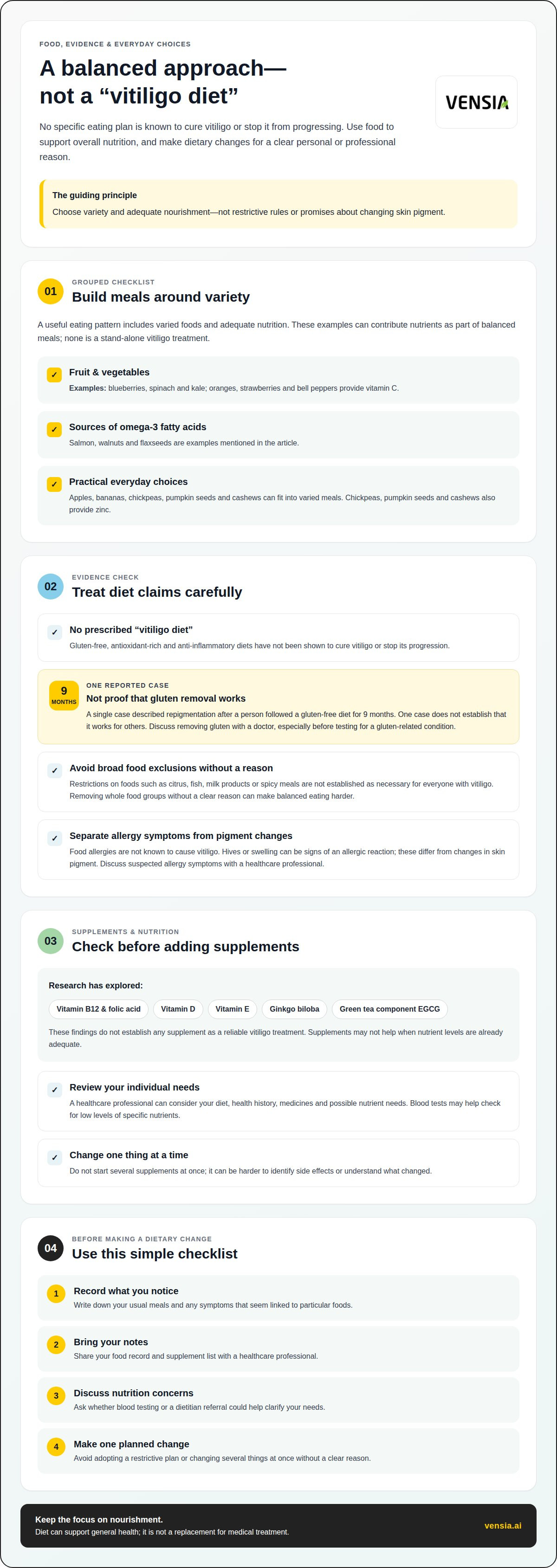
There isn’t one prescribed “vitiligo diet.” A useful eating pattern prioritizes varied foods and adequate nutrition, rather than promising changes to skin pigment. Apples, bananas, chickpeas, pumpkin seeds, and cashews are practical choices. Chickpeas, pumpkin seeds, and cashews also provide zinc. These foods can contribute to balanced meals, but none is a stand-alone treatment.
Gluten-free, antioxidant-rich, and anti-inflammatory diets haven’t been shown to cure vitiligo or stop its progression. One reported case described repigmentation after a person followed a gluten-free diet for 9 months. A single case doesn’t establish that gluten removal works for others. Don’t remove gluten without discussing the change with a doctor, especially before testing for a gluten-related condition.
Supplements need the same careful approach. Some research suggests vitamin B12 and folic acid, vitamin D, or vitamin E supplements may help improve symptoms. Studies have also explored ginkgo biloba and epigallocatechin-3-gallate, a green tea component. These findings don’t establish a supplement as a reliable treatment. A healthcare professional can consider your diet, health history, medicines, and possible nutrient needs before recommending one.
Vitamin supplements aren’t automatically helpful when your levels are already adequate. A doctor may order blood tests to check for low levels of specific nutrients. This can distinguish a documented deficiency from a general hope that extra vitamins will affect vitiligo. Don’t start several supplements at once, since it can be harder to identify side effects or understand what changed.
Use a simple process before changing your intake:
- Write down your usual meals and any symptoms you notice.
- Bring the record and your supplement list to a healthcare professional.
- Discuss blood testing or a dietitian referral if nutrition concerns arise.
- Make one planned change at a time, rather than adopting a restrictive plan.
Short periods of safe sun exposure, dietary sources, or supplements advised by a healthcare professional are usually enough for most people to meet vitamin D needs. Sun exposure should still fit with appropriate skin protection. A clinician can weigh dietary habits and individual health factors when considering vitamin D. For topical care alongside food choices, explore VENSIA Anti Vitiligo Cream; it isn’t a substitute for nutrition guidance.
People with vitiligo should speak with a doctor before taking dietary or herbal supplements. The page suggests a starting vitamin D supplement amount of 150% of the recommended daily intake.
3. Diet as support rather than a cure
No specific diet is recommended to treat vitiligo. Current evidence doesn’t show that a particular eating plan can cure it or stop patches from progressing. Food can still support overall nutrition, skin health, and immune function. Diet is one part of self-care, not a replacement for medical treatment.
Think of meals as a steady foundation. Include a range of vegetables, grains, protein foods, and other nourishing choices throughout the week. A practical starting point is filling half your plate with vegetables, as a general meal-planning approach. The aim is variety and adequate nourishment, not a rigid menu or a promise to restore pigment.
Because vitiligo involves immune-related changes, some people look for foods that might alter immune activity. A balanced diet may support general health, but it can’t control vitiligo progression. Don’t treat “anti-inflammatory” or restrictive plans as proven therapies. If a food change leaves you eating fewer kinds of foods, consider whether you’re still meeting your nutritional needs.
A doctor may refer you to a dietitian if you need help building a suitable eating plan. This can be useful if you have other dietary needs, have removed several foods, or aren’t sure how to maintain balanced nutrition. A dietitian can discuss your usual meals, preferences, and restrictions, then help shape realistic options. Bring a brief food record and a list of questions to make the discussion specific.
Self-help can also ease the daily emotional load. A vitiligo support group can offer a space to share practical experiences, such as handling questions about visible patches or choosing comfortable clothing. If a group feels overwhelming, try one-to-one support from someone you trust. You can also write down what feels difficult and identify one manageable action, such as planning a nourishing lunch or preparing for a social event.
Keep your goals measurable without turning meals into a test. For example, note whether you ate regular meals and included vegetables, rather than judging your skin each day. If a diet change is causing stress, revisit it with a healthcare professional. A useful plan supports nutrition, fits everyday life, and leaves room for established vitiligo care. Diet and self-help can support wellbeing while treatment decisions stay focused on the skin condition.
4. Food myths and professional guidance
Food rules can sound convincing without proving a cause. Current evidence doesn’t show that a specific food can cure vitiligo or stop it from progressing. Nor does it show that food allergies cause vitiligo. The distinction matters: an allergy may need medical attention, but avoiding foods without a reason doesn’t treat pigment loss.
Some people report that processed foods, excessive alcohol or caffeine, or gluten may trigger flare-ups or irritation. These reports don’t establish the same trigger for everyone. If you notice a pattern after a meal, record it before changing your diet. Note the food, portion, timing, symptoms, and other relevant details, such as stress or a change in routine.
A food journal is most useful when your entries are specific. For example, write “coffee with breakfast, skin felt irritated later” rather than “bad food.” Include fruits and other foods eaten that day, along with any symptoms and when they appeared. Look for a repeated pattern, not a single coincidence. Bring your record to a healthcare professional before removing a food group.
Suspected food allergies deserve a separate conversation from theories about a vitiligo diet. If a food seems to cause an allergic reaction, describe the food and symptoms to a medical professional. Don’t use a vitiligo food list to diagnose an allergy, and don’t assume avoiding citrus, dairy, or gluten will change patches. Any food restriction should have a clear reason and preserve balanced nutrition.
Lifestyle factors that may irritate or injure skin include sunburn, cuts, and repeated friction. Protect exposed skin and reduce avoidable rubbing or scraping during daily activities. Some people also report food-related irritation, but that doesn’t prove those foods trigger new vitiligo patches. These steps help protect skin; they aren’t a cure or a way to control progression.
Seek professional guidance before making a major dietary change, such as removing gluten, or starting dietary or herbal supplements. A doctor can consider your symptoms and may order blood tests to check for low nutrient levels. A dietitian can help plan meals if restrictions make it difficult to eat a varied diet. These conversations can be especially useful when a food journal suggests a pattern or you’ve excluded several foods.
- Track meals and symptoms before changing your intake.
- Separate suspected allergy symptoms from changes in skin pigment.
- Discuss restrictive diets and supplements with a healthcare professional.
5. Balanced eating and overall health
A balanced diet and lifestyle for vitiligo can support general wellbeing, but can’t promise changes to skin patches. Build meals from varied foods rather than relying on one “skin food.” For example, pair vegetables with a protein source and a grain or other filling staple. This gives meals structure without turning eating into a strict treatment plan.
A simple plate guide is to fill half the plate with vegetables. Choose different colors and forms, such as cooked carrots, leafy greens, tomatoes, or roasted peppers. Add foods such as beans, lentils, eggs, fish, or grains to suit your preferences. Aim for variety across meals, not a perfect plate every time.
Keep dietary changes practical. If you avoid a food because of preference, allergy, or another health need, choose an alternative that supports a varied diet. Removing gluten isn’t a general vitiligo treatment. Discuss gluten removal with a doctor first, especially if you have digestive symptoms or suspect a related condition.
Pay attention to symptoms, but remember that food and skin changes don’t always share a cause. If a meal seems linked to irritation, record what you ate and when symptoms appeared. Also note other changes, such as a new skincare product or friction from clothing. A dermatologist can assess skin changes and help distinguish vitiligo activity from irritation or another concern.
Make healthy routines manageable. Plan a few meals with familiar ingredients, keep fruit available for snacks, and include vegetables at lunch or dinner. If a food plan feels restrictive or difficult to maintain, review it with a dietitian. They can adapt meals to your preferences while considering your nutritional needs.
Stress can make daily self-care feel harder, so choose routines you can repeat. A regular meal pattern, a short walk, or time with a supportive friend can fit into everyday life. These habits support wellbeing, but aren’t proven to prevent new patches. Think of diet and lifestyle for vitiligo as support for daily health, not a way to control progression.
Track what matters without making food a source of pressure. Note whether meals include different food groups, whether you’re avoiding foods without a clear reason, and whether symptoms need professional attention. Bring those notes to a dermatologist or dietitian when discussing your care. Balanced eating complements appropriate medical guidance; it doesn’t replace assessment or treatment for vitiligo.
VENSIA: VENSIA Anti Vitiligo Cream
VENSIA Anti-Vitiligo Scar Removal Cream is a topical skincare option for people exploring care for skin affected by vitiligo. Food choices can support overall health, but they aren’t a substitute for skin-focused care. Consider how this topical product fits alongside your established routine, and discuss changes in your skin with a dermatologist. Don’t treat any cream as a guaranteed way to restore pigment or replace medical guidance.
Choose a skincare approach that feels manageable and suits your needs. If you’re considering VENSIA Anti Vitiligo Cream, read about the product and its intended use before deciding whether it fits your routine.
You’re welcome to visit vensia.ai to learn more about VENSIA Anti Vitiligo Cream.
Choose a steady next step for your skin
Your next step can be simple and intentional: choose one routine you can maintain, and make decisions about food and skincare based on your needs rather than chasing quick changes.
A practical approach to diet and lifestyle for vitiligo keeps nutrition in perspective while leaving room for appropriate skincare. If changes in patches or new symptoms concern you, share your observations with a dermatologist. Direct guidance can help you decide what deserves attention.
If you want to explore topical care, VENSIA Anti Vitiligo Cream is one option to consider within your skincare routine. Choose thoughtfully, follow product directions, and keep expectations grounded.
You can take the next step at your own pace. Contact VENSIA for support to learn more about its skincare options. A calm, consistent routine can make skin care feel more manageable, and each informed choice can help you move forward with confidence.
Frequently Asked Questions
Does diet make a difference?
Diet can support general health, but it isn’t a proven way to change vitiligo patches. Treat meals as part of wellbeing, not as a way to control pigment. If a meal seems linked to symptoms, record its ingredients, timing, and what you noticed. Look for a repeated pattern before changing your usual eating habits. A dermatologist can assess skin changes separately from food-related concerns.
How can a person boost their immune system for vitiligo?
There’s no established way to boost immunity to treat vitiligo. Focus instead on habits that support general health, such as varied meals, regular rest, and routines that help manage stress. Adults should aim for 7-9 hours of sleep per night, according to the National Sleep Foundation. Don’t use supplements to try to alter immune activity; discuss suspected nutrient deficiencies with a healthcare professional.
How soon does it take for diets to work?
There’s no established timetable for a diet to change vitiligo. Dietary changes may take about 4 to 8 months to show effects, but this isn’t a set timeline for pigment changes. If you’re adjusting meals for general health, choose a clear goal, such as eating more regularly, and review whether the routine feels sustainable. Don’t use day-to-day patch changes as a measure of dietary success.
Is there any link between vitiligo and food allergies?
Research doesn’t show that food allergies cause vitiligo or that people with vitiligo are more likely to have them. A suspected allergy is still worth discussing on its own. Note the food, what happened, and how soon symptoms appeared, then share those details with a healthcare professional. Don’t use changes in skin pigment alone to identify an allergy or decide which foods to remove.
What food groups are pro-inflammatory?
No specific food group is established as a vitiligo trigger for everyone. Some people report symptoms after processed foods, excessive alcohol or caffeine, or gluten, but those reports don’t prove a universal effect. “Pro-inflammatory” labels can oversimplify how an individual responds to food. If you notice a pattern, record what you ate and your symptoms before removing a whole food group.
What foods help with vitiligo?
No particular food is proven to restore pigment or treat vitiligo. Choose foods for their contribution to a varied, nourishing diet rather than relying on one “superfood.” Rotating choices throughout the week can make meals more varied and enjoyable. If allergies, preferences, or other health needs limit your options, a dietitian can help you find suitable alternatives without making meals unnecessarily restrictive.
What foods should I eat and avoid?
There’s no universal list of foods everyone with vitiligo must avoid. Keep foods you tolerate in your routine, and remove a food only for a clear reason, such as an allergy or professional advice. Before excluding a staple, plan what will replace its role in your meals. For example, if you stop eating a familiar food, identify another suitable option to keep your diet varied.
What is a vitiligo diet?
A vitiligo diet isn’t a prescribed eating plan. It means choosing a balanced pattern that fits your needs and supports general nutrition, without promising to cure vitiligo or halt its progression. Start with meals you can maintain, then adapt them for allergies, preferences, or other health requirements. If those changes become restrictive, ask a dietitian to help create a more workable plan.


