

How to Fade Dark Spots Fast: A Safe, Practical Checklist for 2026
The fastest sensible way to fade dark spots isn’t necessarily to reach for a stronger product. If you’re wondering how to fade dark spots fast after trying skincare without seeing much change, the first step is to stop factors that keep triggering discoloration, especially sun exposure and irritation.
It’s frustrating when marks linger, and it can be hard to tell whether they’re left by acne, caused by sun exposure, or linked to another concern. Using too many active ingredients at once may irritate skin and make discoloration more noticeable. A steady, gentle routine is often a better place to start, though fading takes time and varies with the spot’s cause and your skin.
This practical checklist will help you protect your skin from further darkening, build a simple routine, and understand what can influence fading time. You’ll also learn why acne marks, sun spots, and melasma may need different approaches, and when a dermatologist’s assessment can help you choose a safer next step.
Key Takeaways
- To understand how to fade dark spots fast, first consider what may have caused them, since acne marks, sun spots, and melasma can call for different approaches.
- Build a repeatable routine with gentle cleansing, moisturizer, and daytime sun protection before adding a targeted product.
- Choose one suitable treatment at a time, and check its label and directions to help avoid irritation from an overly complicated routine.
- Track changes with occasional photos taken in similar lighting, and give your skin time rather than expecting overnight results.
- Seek a dermatologist’s assessment for spots that are changing or unexplained, because skincare products can’t determine what a spot is.
How to fade dark spots fast starts with identifying what you are treating
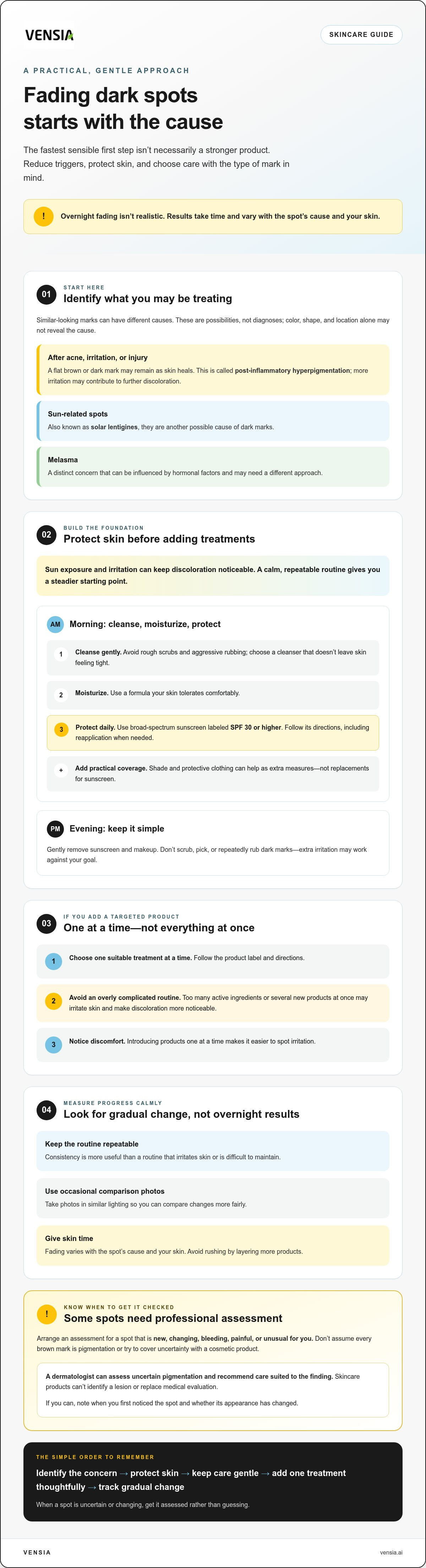
Wanting visible improvement quickly is understandable, especially when a mark stays long after a breakout has settled. But overnight fading isn’t realistic. Before choosing a treatment, work out what the spot might be and whether it’s appropriate to manage with skincare. Dark spots are areas of increased pigmentation, often called hyperpigmentation. The Hyperpigmentation overview explains how excess melanin can make skin look darker, but several different causes can produce similar-looking marks.
The cause of a dark spot influences which care is most appropriate, so identifying the concern comes before choosing a treatment. This is a useful first step in figuring out how to fade dark spots fast without relying on harsh or unsuitable products.
What can cause brown or dark marks on skin?
After acne, irritation, or an injury, the skin may leave a flat brown or dark mark as it heals. This is called post-inflammatory hyperpigmentation. It can linger after the original inflammation is gone, and further irritation may contribute to more discoloration.
Sun-related spots, also known as solar lentigines, are another possibility. Melasma is distinct and can be influenced by hormonal factors. These are possibilities, not diagnoses: color, shape, and location alone may not reveal a spot’s cause. A dark mark that resembles an old acne mark may need a different approach if it appeared without a clear trigger or is changing.
When should a dark spot be checked?
Arrange professional assessment for a spot that’s new, changing, bleeding, painful, or unusual for you. Don’t assume that every brown mark is pigmentation, or try to cover uncertainty with a cosmetic product. If you can, note when you first noticed it and whether its appearance has changed; those details can help you describe your concern.
A dermatologist can assess uncertain pigmentation and recommend care suited to the finding. Skincare products may be part of a routine for some visible discoloration, but they can’t identify a lesion or replace medical evaluation. If you’re unsure what you’re seeing, getting it checked is the safer next step before using a product specifically to fade it.
The dark-spot fading checklist: protect skin before adding treatments
If you’re working out how to fade dark spots fast, make sun protection and a calm routine your starting point. Ultraviolet exposure can contribute to visible pigmentation that persists or darkens, making it harder to judge whether other skincare steps are helping. Preventing new darkening gives your routine a steadier foundation while you assess gradual changes.
Build a gentle morning routine that limits new darkening
Keep mornings simple. Wash with a gentle cleanser that doesn’t leave your skin feeling tight, then apply a moisturizer suited to your skin. Finish with a broad-spectrum sunscreen labeled SPF 30 or higher. Apply it as directed on the label, including reapplication when needed. The American Academy of Dermatology also offers guidance on how to fade dark spots in darker skin tones, where irritation can be a particular concern.
- Cleanse gently: Avoid rough scrubs and aggressive rubbing.
- Moisturize: Choose a formula your skin tolerates comfortably.
- Protect daily: Apply broad-spectrum SPF 30 or higher and follow label directions for reapplication.
- Add practical coverage: Use shade and protective clothing as extra measures, not replacements for sunscreen.
Make these steps repeatable, even on days when you’re not using a targeted product. A routine you can follow consistently is more useful than one that irritates your skin or is difficult to maintain.
Keep the evening routine simple and consistent
In the evening, gently remove sunscreen and makeup. Don’t scrub, pick, or repeatedly rub dark marks, since extra irritation may work against your goal. If you want to try a targeted product, introduce one at a time and follow its label instructions. This makes it easier to notice discomfort and avoid layering several new products at once.
For broader ideas on tone-evening habits, see natural ways to even skin tone. If you’re considering a product, you can review the VENSIA Anti Pigmentation Cream as one option; check its current label, ingredients, directions, and suitability for your skin before adding it to your routine.
Track your routine and changes calmly. Take occasional photos in similar lighting rather than checking the spot repeatedly under different conditions. That gives you a fairer comparison over time and helps keep expectations realistic.
Which dark-spot treatments may help, and what should you avoid?
The best option depends on what may be causing the discoloration, how your skin tolerates products, and what’s already in your routine. An ingredient that suits one person may irritate another, and no cream can be promised to fade every type of spot quickly. The American Academy of Dermatology’s guide to fade dark spots also emphasizes choosing care thoughtfully and protecting skin from the sun.
Some ingredients are commonly used in routines for uneven tone. Think of these as categories to discuss or consider, not a guaranteed treatment plan:
| Treatment category | Intended role | Caution |
|---|---|---|
| Niacinamide | May support a more even-looking tone as part of a consistent routine. | Check the full formula and introduce it carefully, especially if your skin is sensitive. |
| Vitamin C | Often included in products designed to brighten the appearance of uneven tone. | Formulas vary; stop if irritation develops and follow label directions. |
| Azelaic acid | Can be used in skincare routines for concerns involving blemishes and uneven pigmentation. | Choose a product appropriate for your skin and avoid starting it alongside several new actives. |
| Retinoids or exfoliating acids | May support skin renewal in some routines. | They can irritate skin, so suitability and directions matter. Seek professional advice if unsure. |
Ingredient choice should reflect the likely cause of the mark, your skin’s tolerance, and your current routine. If the spot is unexplained or changing, get it assessed rather than treating it as ordinary discoloration. For many readers, learning how to fade dark spots fast starts with avoiding new irritation, not adding the strongest product available.
How to assess a dark-spot product before using it
Read the ingredient list, intended area of use, directions, and warnings before applying a product. Follow its patch-test guidance when provided, and stop using it if significant irritation develops. Add only one new active product at a time. That makes it easier to spot a reaction and decide whether the product belongs in your routine. A product labeled for all skin types may still not suit every individual.
Why harsh shortcuts can backfire
Aggressive scrubbing, picking, or unverified bleaching products can irritate or damage skin. Irritation can undermine progress, so treat new discomfort as a reason to pause and reassess your routine. Avoid trying to force a faster result by layering multiple strong products. If a reaction is persistent, severe, or uncertain, stop the suspected product and contact a qualified healthcare professional for guidance.
How to follow the checklist and judge progress without rushing
A repeatable routine gives you a clearer way to assess progress than adding products whenever a spot catches your attention. Keep the basics steady, use any targeted product only as directed, and give your skin time to respond. How to fade dark spots fast has no single timeline: changes depend on the spot’s cause, your skin’s response, ongoing sun exposure, and how consistently you follow suitable care.
For a fair comparison, take occasional photos in similar lighting, from a similar distance, without makeup or filters. Daily checks can make normal changes in lighting or skin appearance feel more meaningful than they are. Photos are a tracking tool, not a way to diagnose a spot.
A simple weekly routine review
Once a week, take a brief look at your routine rather than changing it day by day. Note whether you followed sunscreen directions, used products as labeled, noticed irritation, or saw new marks. Also record any routine changes, such as starting a new product. This helps you spot patterns without assuming every fluctuation has a clear cause.
- Keep sun protection and your basic cleansing and moisturizing steps consistent.
- Follow the label directions for any targeted product.
- Note discomfort, new marks, and product changes.
- Don’t increase use or combine products to force faster results.
If you’re comparing products, the guide to pigmentation removal cream comparisons offers a separate product-selection discussion. Use it as a starting point for questions, then check each product’s current ingredients, directions, warnings, and intended area of use.
When to adjust the plan or seek expert advice
Persistent discomfort or irritation is a reason to pause the suspected product and reassess your routine, not to push through or add another active ingredient. Follow the product’s directions, and seek guidance from a qualified healthcare professional if the reaction is severe, persistent, or unclear.
Get professional advice if a spot changes, remains unexplained, or causes concern. A dermatologist can assess uncertain pigmentation, help distinguish possible causes, and discuss suitable options. Skincare tracking can show how your routine is going, but it can’t establish what a spot is or replace an assessment.
If you’re considering a product for your routine, review VENSIA’s pigmentation product and check its current label and suitability before use.
Choose a dark-spot routine that fits your skin and next steps
A sensible plan follows a clear sequence: understand what the spot might be, protect your skin, choose one suitable product if appropriate, and track changes calmly. There isn’t one routine that fits every mark or skin type. If a spot is changing or unexplained, seek professional assessment rather than trying to manage it with a cosmetic cream. Skincare can support a routine, but it can’t identify a lesion.
For ordinary skincare decisions, focus on tolerance and consistency, not the promise of a quick fix. If you’re still asking how to fade dark spots fast, remember that pushing your skin harder isn’t a reliable shortcut. A gradual approach gives you room to notice what your skin tolerates and adjust if needed.
A practical checklist before adding a cream
Before adding any cream, read its current product information carefully. Confirm the listed ingredients, directions, warnings, and intended use, including where it should be applied. Consider any known sensitivities or products that already cause discomfort. Introduce one new product at a time so you can better identify a possible reaction.
- Check the label and follow its directions rather than increasing use to chase faster results.
- Consider whether the product is suitable for your skin and intended area of use.
- If you’re pregnant, managing a skin condition, or unsure whether an ingredient is appropriate for you, ask a qualified healthcare professional before use.
- Stop and reassess if the product causes significant irritation.
VENSIA Anti Pigmentation Cream is an optional skincare product described as targeting dark spots, fine lines, wrinkles, and age spots. Its ingredient details, clinical evidence, and result timelines aren’t provided here, so review the current product information and suitability before deciding whether it fits your routine. No cream should be treated as a guaranteed or rapid cure.
Continue with an informed, realistic routine
Keep gentle care and sun protection steady while you track changes without scrutinizing your skin every day. If you develop persistent discomfort, or a spot changes or remains unexplained, pause product experimentation and seek appropriate professional guidance. A dermatologist can assess uncertain pigmentation and discuss options suited to its likely cause.
Gradual, safe progress matters more than aggressive treatment. If you’d like to review the product information before making a choice, explore VENSIA Anti Pigmentation Cream and check its current label and directions.
Build a steady routine that supports your skin
The clearest path to how to fade dark spots fast is not a promise of overnight change. It’s making informed choices: understand what you’re treating, protect your skin from further darkening, and keep your routine simple enough to follow consistently. If a spot is changing or unexplained, seek professional assessment instead of relying on skincare to identify it.
If you’re considering a targeted cream, VENSIA lists an Anti Pigmentation Cream for women and men, and describes it as suitable for all skin types. Suitability can vary, so review the current ingredient list, directions, and warnings before use. No product should be treated as a guaranteed or rapid fix.
Review VENSIA Anti Pigmentation Cream and decide whether its product details fit your routine. With patient, gentle care and realistic expectations, you can move forward with greater confidence.
Frequently Asked Questions
Can dark spots fade overnight?
Usually, no. Skincare can’t reliably erase established pigmentation overnight, so be cautious of instant-result claims. A spot may look different because of lighting, makeup, or temporary irritation, but that isn’t the same as fading. If you’re wondering how to fade dark spots fast, focus on gentle, consistent care and sun protection instead of aggressive quick fixes. Ask a dermatologist to assess a spot that’s new, changing, or unexplained.
How long does it take for dark spots to fade?
There’s no single timeline for fading dark spots. The cause, how deep the pigmentation is, your skin’s response, and continued sun exposure can all affect progress. Follow product directions and protect your skin from the sun, then compare occasional photos taken in similar lighting rather than judging day-to-day changes. If you don’t see improvement or you’re unsure what caused the spot, a dermatologist can discuss appropriate next steps.
Does sunscreen help dark spots fade faster?
Sunscreen doesn’t instantly remove existing pigmentation, but protecting skin from ultraviolet exposure can help prevent further darkening and support a consistent care plan. Choose broad-spectrum sunscreen and follow its label directions, including reapplication guidance. Shade and protective clothing can provide additional sun protection. If you have a skin condition or need advice tailored to your skin, ask a dermatologist for guidance on choosing and using sunscreen.
Can I use vitamin C or other active ingredients on dark spots?
Some topical ingredients, including vitamin C, are used in skincare products for uneven tone, but suitability depends on the likely cause, formula, skin sensitivity, and other products you use. Check the label and introduce one new product at a time so you can notice how your skin responds. Stop if significant irritation develops. Don’t assume one ingredient will suit or help every type of spot, and seek professional advice about persistent reactions.
What should I avoid when trying to fade dark spots?
Avoid picking, harsh scrubbing, unverified bleaching products, and starting several unfamiliar active products together. These can irritate your skin and make it harder to tell what’s helping or causing discomfort. Keep your routine simple, follow product directions, and use sun protection consistently. Don’t try to treat a changing, bleeding, painful, or unusual spot with cosmetics alone. Get professional assessment instead, since a skincare product can’t determine what a spot is.
When should I see a dermatologist about a dark spot?
Seek professional assessment if a spot is new and unusual, changes in appearance, bleeds, hurts, or remains unexplained. A dermatologist can evaluate whether it may be pigmentation or another skin concern and discuss suitable care. Consider asking for guidance if products cause persistent irritation or the spots don’t respond as expected. Don’t rely on a cosmetic cream to diagnose a lesion, especially when you’re uncertain about its cause or appearance.
Can dark spots come back after they fade?
Yes, discoloration can become noticeable again, especially if its original trigger continues or the skin gets substantial sun exposure. Steady sun protection and care for the likely cause may support longer-term management, but outcomes differ from person to person. Continue using products only as directed, and avoid aggressive routines in an effort to maintain results. If the discoloration returns or changes, ask a dermatologist to reassess what may be causing it.


