

Vitiligo treatment without prescription: Which OTC options can help
Over-the-counter products may help conceal vitiligo, but they do not replace diagnosis or medical treatment. Vitiligo treatment without prescription generally focuses on managing appearance and protecting skin: cosmetics and self-tanners can disguise patches, while sunscreen helps protect affected areas.
It’s understandable to look for something you can use on your own, especially when patches are visible or new. The key is knowing what nonprescription products can and cannot do. Camouflage changes how patches look; it cannot confirm the cause of skin-color changes or provide a medical diagnosis.
This guide covers nonprescription options for concealing patches, using sun protection, and knowing when to seek diagnosis or treatment advice. It also explains why new or changing white patches deserve attention, and how to consider next steps without mistaking cosmetic coverage for treatment.
Key Takeaways
- OTC cosmetics and self-tanners may help conceal lighter patches, but they don’t diagnose vitiligo or restore pigment.
- Choose broad-spectrum, water-resistant sunscreen with an SPF of at least 30 and follow its reapplication directions, especially after swimming or sweating.
- Self-tanner color gradually fades over several days, so plan for upkeep if you use it to even the appearance of your skin.
- New or changing white patches deserve medical assessment, since confirming the cause helps guide appropriate care.
- Learn what VENSIA Anti Vitiligo Cream offers, and how skincare products differ from medical diagnosis and treatment.
Sun protection and sunscreen
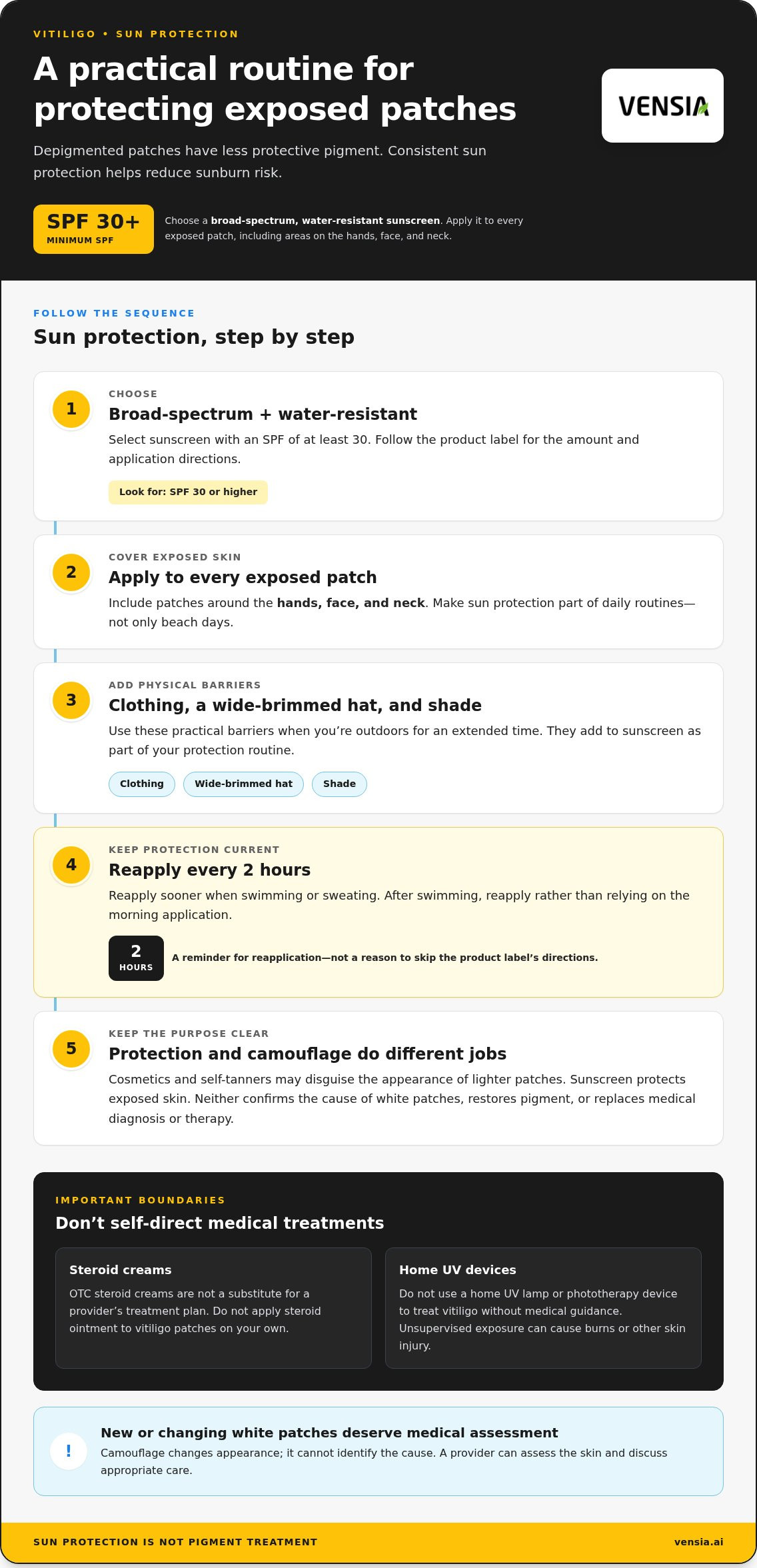
Depigmented patches have less protective pigment, so exposed skin needs consistent sun protection. Choose broad-spectrum, water-resistant sunscreen with an SPF of at least 30, as dermatological guidelines advise for people with vitiligo. Apply it to every exposed patch, including areas around the hands, face, and neck. Sunscreen protects skin; it doesn’t restore melanocytes or treat the immune system changes associated with vitiligo.
Reapplication matters as much as the label. Experts advise reapplying sunscreen every two hours, or more often when swimming or sweating. Follow the product label for the amount and application directions. For example, after swimming, reapply rather than relying on the morning application. Clothing, a wide-brimmed hat, and shade add practical barriers when you’re outdoors for an extended time.
In the US, the cost of OTC camouflage products and sunscreen varies by product, size, formulation, and retailer. Compare the amount and intended use: a cosmetic concealer covers appearance, while sunscreen protects exposed skin. Neither replaces a vitiligo diagnosis or medical therapy.
OTC steroid creams are not a substitute for a treatment plan from a provider. Using a steroid without guidance can mean choosing an inappropriate strength, application method, or duration, and topical steroids can have side effects. Do not apply steroid ointment to vitiligo patches on your own. A provider can assess your skin and decide whether prescription treatment is suitable.
Do not use a home UV lamp or phototherapy device to treat vitiligo without medical guidance. Light therapy is one treatment option, but unsupervised exposure can cause burns or other skin injury. A provider can determine whether therapy is suitable and how exposure should be managed. Sunscreen and home UV exposure serve different purposes, so do not replace sun protection with a lamp.
There is no single ingredient list that everyone with vitiligo must avoid. Check labels for ingredients that have irritated your skin before, and stop applying a product if it triggers redness, itching, or burning. For example, if a scented lotion irritates your skin, do not use it on affected patches. Ask a provider about persistent reactions or products intended to change skin color.
Build sun protection into daily routines, not only beach days. Apply broad-spectrum, water-resistant SPF 30 or higher to exposed patches, then reapply every two hours. Reapply sooner after swimming or sweating. Cover skin with clothing and seek shade during outdoor activities. These steps help reduce sunburn risk while cosmetic camouflage addresses appearance separately.
Application frequency and treated body-surface area
Application schedules depend on the treatment, not simply on the number of patches. Prescription creams for vitiligo have different directions from OTC camouflage cosmetics. A dermatologist considers the affected areas, their location, and treatment risks before setting a plan. Do not copy a prescription schedule for a cosmetic product or use prescription medicine without guidance.
For example, topical corticosteroids prescribed for vitiligo may be applied once a day. One fingertip unit can cover an area twice the size of an adult’s hand. This helps estimate the amount for a measured area, but it does not determine whether a steroid is suitable. Strength, location, and duration are also important factors in a dermatologist’s plan.
Other prescription treatments have different schedules. Topical calcineurin inhibitors may be applied to affected skin once or twice a day. Topical calcipotriene may be applied twice daily. These schedules apply to those treatments, not OTC creams, moisturizers, or camouflage products. Follow cosmetic product labels for their directions and intended use.
Light-based therapy follows a different timetable, too. Narrowband UVB is typically given two to three times a week. Excimer laser treatments are typically administered once or twice a week. These are clinical treatments, not home application routines. The treated area and patch location help shape how a clinician delivers therapy.
Some procedures or medicines address broader areas differently. Depigmentation treatment may be applied once or twice a day for nine months or longer. Monobenzone for depigmentation is applied to pigmented skin twice a day. These are not general-purpose OTC options and should not be treated as cosmetic spot coverage.
For OTC camouflage, distinguish product application from pigment treatment. Cosmetics can cover the appearance of patches, but they do not follow the prescription schedules above or restore pigment. Follow the label, apply the product only as intended, and assess coverage on the area you want to conceal. For example, a small patch on the hand needs less camouflage than a larger area.
When following a prescribed plan, keep a simple record of treated locations and application times. A body outline can help track which patches receive medication, while a written schedule can reduce missed or repeated applications. Note changes in appearance and any irritation. Share these observations with the dermatologist, especially if the treated area changes or the instructions become difficult to follow.
For consistent tracking, remember that one fingertip unit of topical steroid is enough to treat an area of skin twice the size of an adult’s hand.
Diagnosis and treatment resources
Vitiligo care starts by identifying the cause of white patches, then weighing treatment options and affected skin area. Diagnosis matters because camouflage can change appearance, but it cannot confirm vitiligo or guide medical therapy.
When to see a dermatologist
A dermatologist can assess new, changing, or spreading white patches and discuss whether they are consistent with vitiligo. This matters because other skin conditions can also cause lighter areas, and treatment depends on the diagnosis, location, and extent of the affected skin. OTC creams cannot establish the cause or determine whether repigmentation therapy is appropriate.
A GP may refer someone to a dermatologist when vitiligo affects more than 10% of the body. A dermatologist can discuss medicines, phototherapy, or surgery, which are among vitiligo treatments. For adults with non-segmental vitiligo affecting less than 10% of the body, the NHS describes consideration of prescribed topical steroids. That is a clinician-guided option, not an OTC instruction.
Seek assessment if patches continue to spread, affect sensitive areas, or raise concerns about diagnosis or treatment. Vitiligo involves pigment-producing cells and may relate to immune activity, so a cosmetic product cannot address the underlying process. A clinician can explain whether an approach aims for repigmentation or, in selected cases, depigmentation. The choice depends on the pattern and extent of skin changes.
Ask about the purpose and expected role of each treatment. Topical calcineurin inhibitors, including tacrolimus, have been used safely for more than a decade and may begin to take effect within a few months. Mayo Clinic advises speaking with a health care provider before trying nonprescription alternative medicine therapies for vitiligo. This helps distinguish care intended to address the condition from products that only cover patches.
Finding affordable vitiligo care
Affordable care means planning for both assessment and any treatment that follows. In the United States, start by reviewing your health plan’s dermatology benefits and in-network directory. Then ask the clinic’s billing office about expected visit charges, payment arrangements, or financial assistance. Availability and eligibility vary, so compare the actual terms before scheduling.
If specialist care feels financially difficult, ask a primary care office about referral options and whether an initial assessment can clarify the next step. Prepare questions about diagnosis, treatment choices, and follow-up needs. A written plan can help separate essential medical care from optional cosmetics, such as camouflage products that change appearance only.
Costs depend on the type of care, treatment, and coverage. Phototherapy, prescription medicine, and surgery involve different services from OTC sunscreen or camouflage. Ask what each recommended option is intended to do, how often visits may be needed, and whether a lower-cost alternative serves the same purpose. Do not choose a home UV device as a substitute for supervised phototherapy.
For any plan, record patch locations and changes before appointments. Clear notes and photographs can help describe spread and support a focused discussion. Bring product labels for creams or supplements you already use, especially if irritation has occurred. These details help the clinician assess your skin and prioritize safe, appropriate options.
Eligibility for adults and children
Eligibility for vitiligo treatment depends on the diagnosis, affected areas, and treatment being considered. OTC camouflage products may alter appearance, but medical treatments require a clinical assessment of your skin and needs.
For adults, the NHS describes consideration of prescribed topical steroids when non-segmental vitiligo affects less than 10% of the body. A GP may refer someone to a dermatologist if more than 10% is affected. These figures describe different care decisions: possible treatment consideration and referral, not permission to self-treat with OTC steroid creams.
Age alone does not determine whether a child should use an adult’s treatment. A child with new or changing pale patches needs an assessment to establish the cause before a treatment plan is chosen. The clinician considers the diagnosis, patch location, and extent of affected skin. An OTC cosmetic may cover a patch’s appearance, but it cannot confirm vitiligo or determine whether prescription therapy is appropriate.
Prescription options have distinct purposes and schedules. Topical steroids may be prescribed for vitiligo, while topical calcineurin inhibitors may be applied to affected skin once or twice a day. These are treatment instructions, not general guidance for nonprescription products. Children and adults should follow the directions for their own prescription, rather than adapting someone else’s medication or schedule.
Follow-up is part of safe treatment. The NHS describes a GP appointment one month after starting topical steroid treatment, allowing the response and any concerns to be assessed. During longer-term topical corticosteroid treatment, NYU Langone dermatologists may recommend follow-up appointments two to four times per year. Age, treatment duration, and the areas treated help shape monitoring.
Topical calcineurin inhibitors may begin to take effect within a few months. That does not mean everyone will respond in the same way; it helps explain why a clinician may review progress over time. Parents or caregivers can note where a child’s patches appear and whether they change, then share those observations during assessment.
Ask the clinician to explain the goal of each option. Repigmentation aims to restore color in affected areas, while depigmentation is a separate approach for selected cases. Neither is the same as cosmetic coverage. Sunscreen, concealer, or self-tanner can help manage appearance, but cannot establish a diagnosis or determine eligibility for clinical treatment.
Adults and children alike should seek assessment when pale patches are new, changing, or spreading. Bring a list of products already applied, including creams that caused redness or irritation. This gives the clinician useful context and helps distinguish a cosmetic reaction from a change that needs medical attention.
Can sunscreen or self-tanner help manage the appearance of vitiligo?
Yes, cosmetics and self-tanners can help disguise vitiligo patches by changing their visible contrast. They work differently from medical treatment: camouflage covers skin, while self-tanner adds temporary color. Neither restores pigment or confirms that pale patches are vitiligo. Sunscreen serves another purpose, helping protect exposed skin rather than concealing a patch.
Self-tanner color gradually fades over several days, so the blended appearance needs upkeep. Vitiligo camouflage products may last up to 12 to 18 hours on the face and up to 4 days on the body. These are different wear times, not guarantees for every product or person. Skin location, washing, and the product’s directions affect how long coverage lasts.
For example, when choosing a cosmetic for a facial patch, consider its stated wear time and intended use. A body camouflage product may last longer, but its directions still determine where and how to apply it. Read the label, use the product as directed, and remember that cosmetic coverage changes appearance only.
Sunscreen can complement camouflage, but it doesn’t create a matching skin tone. Mayo Clinic advises broad-spectrum, water-resistant sunscreen with an SPF of at least 30 for people with vitiligo. It also advises reapplying every two hours, or more often when swimming or sweating. Apply sunscreen according to its label, even when using makeup or self-tanner.
Separate your goals before choosing a product. Use sunscreen to protect exposed skin, and consider cosmetics or self-tanner for visual blending. Stop applying a product to the affected area if it irritates your skin. New or changing pale patches still need assessment; covering them will not identify their cause.
Consider the setting, too. Facial camouflage may suit a short outing, while body coverage may be useful when clothing leaves patches visible. Self-tanner fades over several days, so its color is not permanent. Choose based on the area you want to cover, how long you need the effect, and the product’s directions.
Keep expectations clear: concealment isn’t repigmentation, and sunscreen isn’t camouflage. If you’re considering skincare alongside cosmetic coverage, explore targeted skincare options and distinguish their role from products used to mask patches.
People with vitiligo are advised to use sunscreen with an SPF of 50 or above to protect their skin from sunburn and long-term damage. Cellular suspension transplant repigmentation results may begin to appear within four weeks. Skin damage from a tattoo may cause a new vitiligo patch to appear within two weeks, so consider this possibility before choosing a tattoo.
VENSIA: VENSIA Anti Vitiligo Cream
VENSIA Anti-Vitiligo Scar Removal Cream is a skincare option for readers exploring products related to vitiligo. Consider it separately from cosmetic camouflage, sunscreen, and clinician-directed treatments, as each serves a different purpose. A product name alone does not establish that it can diagnose vitiligo, restore pigment, or replace medical care.
If you are considering a topical product, read its label and use it as directed. Stop using it if you experience irritation, and seek medical assessment for new or changing patches. A dermatologist can help distinguish skincare choices from treatments intended to address vitiligo.
For product information, visit vensia.ai.
Choose a thoughtful next step for your skin
Choosing vitiligo treatment without prescription starts with clarity about your goal. Decide whether you want cosmetic coverage, everyday skincare, or guidance about changing patches. Keep those aims separate: skincare products do not replace diagnosis or clinician-directed treatment.
VENSIA offers VENSIA Anti Vitiligo Cream, alongside VENSIA Anti Pigmentation Cream for dark spots, fine lines, wrinkles, ageing spots, and even skin tone. Its Niacinamide Marshmallow Body Lotion is described for moisturizing, dryness, rough skin soothing, gentle exfoliating, and all skin types. Consider each product according to its stated purpose, and follow its label directions.
If you want to explore VENSIA’s skincare options, contact VENSIA for support. For new or changing patches, make medical assessment part of your next step. You can approach your skin care with care and make informed choices at your own pace.
Frequently Asked Questions
Are there any vitiligo creams that are sold over-the-counter (OTC)?
Yes, some creams marketed for vitiligo are sold without a prescription, including VENSIA Anti Vitiligo Cream. Options for vitiligo treatment without prescription may support skincare or help conceal patches, but their purpose differs from medically directed treatment. A cosmetic can change how a patch looks; it can’t confirm the cause of color loss. If patches are new or changing, seek assessment rather than relying on a cream for diagnosis.
What is vitiligo?
Vitiligo causes white patches when areas of skin lose their color. It can also affect the eyes, mouth, and nose, and may cause hair to gray early. Color loss inside the mouth may be more noticeable in people with dark skin. Vitiligo is more common among people with autoimmune diseases and may run in families.
What over-the-counter treatments may help vitiligo repigmentation?
OTC products may conceal patches, but camouflage and self-tanner do not restore pigment. Sunscreen helps protect exposed skin, while cosmetics alter appearance. Repigmentation treatments are different and can include prescription medicines or phototherapy. For people exploring vitiligo treatment without prescription, concealer may visually blend a patch for an event, but it does not encourage pigment-producing cells to return. A dermatologist can discuss treatment options after assessment.
Are OTC creams, supplements, or vitamins proven to treat vitiligo?
Do not assume an OTC cream, supplement, or vitamin can repigment vitiligo. Cosmetic coverage changes visible appearance, not the condition itself. Before trying an alternative medicine therapy, discuss it with a health care provider. If you are considering a supplement, share its name and ingredients, especially if you take other medicines or have an ongoing health condition. This supports a safe, practical conversation about your care.
What ingredients should people with vitiligo avoid in nonprescription skin products?
Avoid ingredients that have irritated your skin before. Stop using a product if it triggers redness, itching, or burning.


