

Best Cream for Vitiligo Repigmentation: A Buyer’s Guide
The boldest promise on a vitiligo cream label isn’t necessarily backed by the strongest evidence. If you’re searching for the best cream for vitiligo repigmentation, it can be difficult to distinguish cosmetic skincare from medical treatment or judge whether a claim about restoring pigment is realistic.
It’s reasonable to want a clear answer and a product that feels right for your skin. But repigmentation results vary, and creams differ in their ingredients, intended use, and supporting evidence. Some medical treatments require a dermatologist’s guidance. A skincare product shouldn’t be assumed to treat vitiligo unless evidence supports that specific use.
This guide explains how to assess repigmentation claims, compare medical options with skincare products, and set realistic expectations about results. It also covers what to check on a label, including when considering VENSIA Anti Vitiligo Cream, and when a dermatologist can help you choose a safe next step. The aim isn’t to promise a quick fix. It’s to help you make an informed decision about what a cream may or may not do.
Key Takeaways
- Understand what repigmentation means and why results can differ from person to person.
- Learn how cosmetic creams differ from treatments guided by a clinician.
- Use a practical checklist to assess the best cream for vitiligo repigmentation, including its intended use, evidence, label, and warnings.
- Follow a safer decision process: confirm the skin concern, review product information, seek appropriate guidance, and monitor changes.
- Before considering VENSIA Anti Vitiligo Cream, check its current label and don’t assume it has proven repigmentation benefits.
Best Cream for Vitiligo Repigmentation: What Can a Cream Realistically Do?
If you’re looking for the best cream for vitiligo repigmentation, you likely want a clear answer and visible change. But no single cream can be assumed to work for everyone. Outcomes vary, and a product’s label or marketing claim alone can’t guarantee that pigment will return.
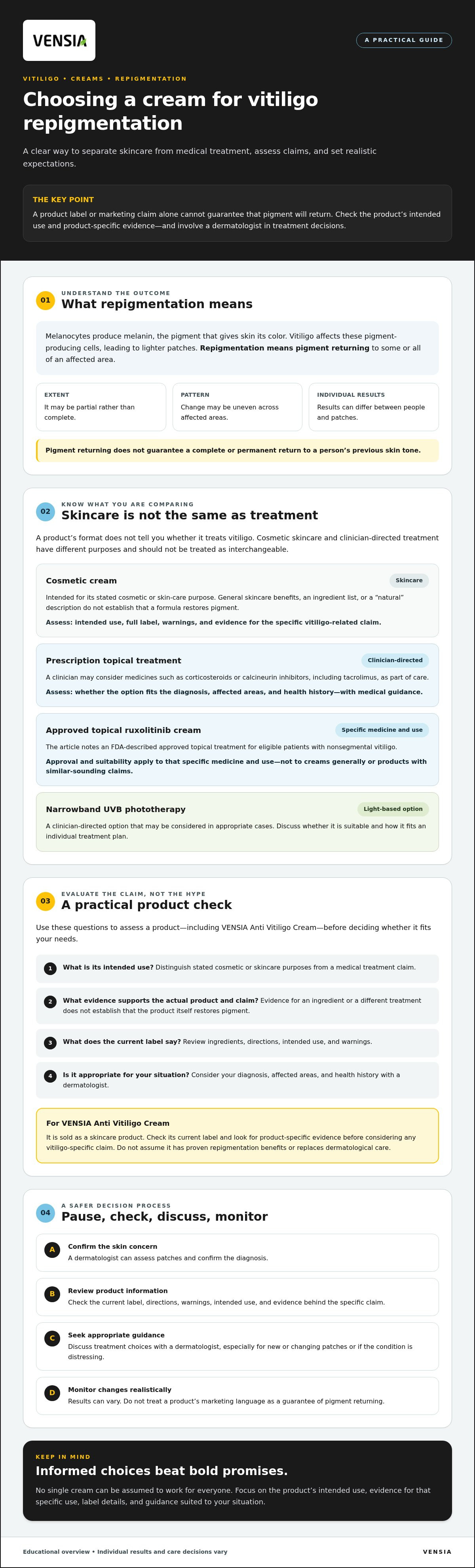
Repigmentation means pigment returning to areas affected by vitiligo. It may be partial or uneven, and the result can differ between people and patches. To assess a product, check what it is intended to do, what evidence supports that use, and whether it is appropriate for your situation.
What does repigmentation mean in vitiligo?
Melanocytes are cells that produce melanin, the pigment that gives skin its color. Vitiligo affects these pigment-producing cells, leading to lighter patches. Repigmentation describes pigment returning to some or all of an affected area. It doesn’t guarantee a complete or permanent return to a person’s previous skin tone.
The extent and pattern of change may vary by person and affected area. For broader background on vitiligo, including its causes, diagnosis, and treatment approaches, see this overview of vitiligo.
Can an over-the-counter cream restore skin pigment?
A cosmetic cream shouldn’t be presented as a proven vitiligo treatment without product-specific evidence for that use. An ingredient list, a “natural” description, or general skincare benefits don’t establish that a formula can restore pigment. Assess evidence for the actual product and claim, not just an ingredient or a different treatment.
Cosmetic skincare and clinician-directed treatment aren’t interchangeable. A dermatologist can assess the patches, confirm the diagnosis, and discuss options suited to the affected areas and your health history. Seek guidance about new or changing patches, or if the condition is distressing. Don’t base a treatment decision on marketing language alone.
VENSIA Anti Vitiligo Cream is a skincare product. Before deciding whether it fits your needs, review its current label, including its ingredients, directions, and warnings, and look for evidence that supports any vitiligo-specific claim. Discuss treatment choices with a dermatologist. For more context on evaluating repigmentation claims, see the VENSIA Anti Vitiligo Cream repigmentation guide.
How Vitiligo Creams and Repigmentation Treatments Differ
A product’s format doesn’t tell you whether it treats vitiligo. A cosmetic cream may support general skincare, while medical treatments are selected to manage vitiligo based on the diagnosis, affected areas, health history, and a clinician’s guidance. That distinction matters when assessing any claim about the best cream for vitiligo repigmentation.
For example, the U.S. Food and Drug Administration describes an approved topical treatment for vitiligo, ruxolitinib cream, for eligible patients with nonsegmental vitiligo. Approval and suitability apply to that specific medicine and use, not to creams generally or to products with similar-sounding claims.
Cosmetic creams versus prescription topical treatments
Prescription topical treatments include corticosteroids and calcineurin inhibitors such as tacrolimus. A clinician may consider these medicines as part of care. Their possible effects on inflammation or immune activity don’t establish that every product in a category will work for everyone. Choosing and using a treatment, and understanding its potential risks, requires individualized medical guidance.
A cosmetic cream is skincare, not a substitute for a prescribed treatment. Its ingredients or general skin-conditioning claims aren’t proof of effectiveness for vitiligo. VENSIA sells VENSIA Anti Vitiligo Cream as a skincare product. Review its current label and any product-specific evidence, and don’t assume it produces repigmentation or replaces dermatological care.
| Option | What it is | How to assess it |
|---|---|---|
| Cosmetic cream | Skincare product for its stated cosmetic or skin-care purpose. | Check the intended use, full label, warnings, and evidence for any vitiligo-specific claim. |
| Prescription topical treatment | Medicine selected as part of clinician-directed care, such as a corticosteroid, calcineurin inhibitor, or approved ruxolitinib cream. | Ask a clinician whether it fits your diagnosis, affected areas, and health history. |
| Narrowband UVB phototherapy | A clinician-directed light-based treatment option that may be considered in appropriate cases. | Discuss whether it is suitable and how it fits into an individual treatment plan. It isn’t interchangeable with a cream. |
Where phototherapy fits into a treatment discussion
Narrowband UVB is a form of phototherapy that a clinician may discuss as an option for vitiligo. Whether it’s appropriate depends on the person and their care plan. Creams and phototherapy work differently, so one shouldn’t be treated as a universal replacement for the other. Confirm current guidance with a qualified clinician in your location.
In short: skincare supports skin care; medical treatment is chosen to manage vitiligo. If you’re comparing skincare options, review VENSIA’s targeted skincare products, check each product’s label, and discuss treatment decisions with a dermatologist.
How to Compare the Best Cream for Vitiligo Repigmentation
A useful comparison starts with verifiable information, not the boldest promise. Before choosing a cream, check its intended use, the full label, and whether evidence supports the specific claim being made. This helps distinguish general skincare information from evidence that a product can treat vitiligo.
Which product claims and label details should you check?
Use this checklist to assess a product:
- Intended use: Does the label describe skincare, or make a specific claim about treating vitiligo or restoring pigment?
- Complete label: Can you verify the ingredients, directions, warnings, and product classification from current packaging or reliable product information?
- Evidence: Does research concern the finished product and its claimed use, or only one ingredient studied in another context?
- Realistic language: Are results described cautiously, or does the product promise guaranteed, rapid, or complete repigmentation?
An ingredient list alone can’t establish that a cream repigments vitiligo. Evidence about an ingredient may not apply to a finished formula, and “natural” or “gentle” doesn’t by itself prove that a product is safe or effective for you. If label details are missing or unclear, pause and ask a dermatologist or pharmacist before relying on the claim.
How to judge evidence without being misled
Give greater weight to transparent evidence that matches the product, its intended use, and the people it’s meant for. For context, the FDA’s information about an FDA-approved treatment for repigmentation relates to a specific medicine and approved use. It doesn’t prove that other creams have the same evidence or effects.
Testimonials and before-and-after photos may show an individual experience, but they don’t establish that others can expect the same result. Look for details about how evidence was gathered and whether the claim can be checked independently. Treat guarantees, unusually fast-result promises, and images without clear context as reasons to investigate further, not as proof of effectiveness.
When assessing VENSIA Anti Vitiligo Cream, check its current ingredients, directions, warnings, and any supporting evidence for a repigmentation claim. Don’t fill gaps in product information with assumptions. For broader daily-care context, read the vitiligo skincare routine guide. You can also review VENSIA skincare products, keeping skincare claims distinct from medical treatment decisions.
Using a Vitiligo Cream Safely and Setting Realistic Expectations
Choosing the best cream for vitiligo repigmentation is only part of making a safe decision. Use a clear sequence before trying a product: confirm what the skin changes may be, check the full label, seek professional guidance when needed, and monitor your skin without expecting a guaranteed result.
- Confirm the concern. If you’re unsure what’s causing a light patch, don’t assume it’s vitiligo based on appearance alone.
- Check the label. Review the current ingredients, intended use, directions, and warnings. Follow the directions as written. Don’t infer how often or how long to use a product if that information isn’t available.
- Seek guidance. Ask a dermatologist about diagnosis, treatment choices, and whether a product is appropriate for you.
- Monitor changes. Keep a simple record of use and any skin reactions, then discuss changes or concerns with a clinician.
Repigmentation response and timing vary. Don’t use a promised result or set timeline to guide your expectations, and don’t add a treatment or combine products without appropriate guidance. If you’re concerned about patches spreading, the guide to slowing vitiligo spread offers additional context. It doesn’t replace an assessment of your own skin.
When should you ask a dermatologist before trying a cream?
Get a professional assessment if you’re uncertain about the diagnosis, notice patches changing, or have questions about treatment. An article can offer general information, but it can’t confirm vitiligo or determine which option fits your health history. If a product causes irritation, an unexpected reaction, or worsening concerns, seek prompt guidance from a healthcare professional and check the product label for its warnings.
What should you track while evaluating a product?
Note the product name, the directions on its current label, when you started using it, and any skin reactions. If you choose to track appearance with photos, take them under consistent lighting and conditions. Photos can help you describe changes, but they aren’t clinical proof that a product caused them. A clinician can help interpret what you observe and discuss next steps.
Before using VENSIA Anti Vitiligo Cream, check the current label for directions and warnings, and don’t assume repigmentation is established. Product information is available when you review VENSIA Anti Vitiligo Cream. Consider any skincare product alongside a dermatologist’s guidance.
Is VENSIA Anti Vitiligo Cream the Right Next Step for You?
Consider VENSIA Anti Vitiligo Cream only after checking what its current product information says. The name alone doesn’t establish that it can restore pigment or treat vitiligo. If you’re comparing options for the best cream for vitiligo repigmentation, separate your skincare goals from decisions about medical treatment.
You may be looking for general cosmetic skincare, clinician-directed care for vitiligo, or both. These goals aren’t interchangeable. A skincare product shouldn’t replace a dermatologist’s assessment or prescribed treatment. Treatment choices should reflect your diagnosis, affected areas, and health history.
What to verify before choosing VENSIA Anti Vitiligo Cream
Before deciding, review the product’s current label and confirm its intended use. Check the ingredients, directions, and warnings in reliable, up-to-date product information. Don’t infer those details from the product name or from claims about other products.
Look for product-specific evidence behind any claim about repigmentation. Evidence about a general ingredient or another product doesn’t establish that this cream produces the same result. If supporting evidence can’t be verified, treat the outcome as unknown rather than assuming the claim is proven.
These checks help you decide whether the product’s stated purpose aligns with your skincare needs. They don’t establish that it treats vitiligo. The cream shouldn’t be considered a replacement for prescription treatment or dermatologist care.
A considered next step for your skin
If your priority is cosmetic skincare, compare the product’s confirmed intended use with what you want from a skincare product. If you’re seeking diagnosis, repigmentation, or a plan to manage vitiligo, ask a dermatologist about suitable options. You can pursue skincare and medical guidance together while keeping their purposes clear.
Review the product details and bring questions about its label or claims to a healthcare professional. Explore VENSIA for available product information, and seek clinical advice if you’re unsure about a diagnosis or treatment decision. A careful next step is more useful than a promise of a guaranteed result.
Choose Your Next Step With Clear Expectations
The best cream for vitiligo repigmentation isn’t simply the one with the boldest promise. Results vary, and cosmetic skincare should be distinguished from clinician-directed vitiligo treatment. Before choosing a product, check its intended use, current label, warnings, and evidence for any specific repigmentation claim.
VENSIA specializes in targeted skincare products, including VENSIA Anti Vitiligo Cream. Check the current label for its ingredients, directions, and claims. Don’t assume the cream restores pigment or replaces dermatologist care. If you’re unsure about a diagnosis, your skin is changing, or you’re weighing treatment options, a dermatologist can help you assess a safe next step.
Explore VENSIA Anti Vitiligo Cream and review the available product details before deciding whether it suits your skincare needs. If you’re considering treatment for vitiligo, discuss your options with a dermatologist.
Frequently Asked Questions
Can a cream repigment vitiligo patches?
Some clinician-directed topical treatments can help repigment vitiligo patches, but results aren’t guaranteed and vary between people. Repigmentation means pigment returns to affected skin, sometimes partially or unevenly. Don’t assume a cosmetic cream produces this effect without evidence for that specific product and use. A dermatologist can confirm the diagnosis and discuss whether a medical treatment is suitable for your affected areas and health history.
What is the best cream for vitiligo repigmentation?
There isn’t one best cream for everyone. In the United States, targeted prescription topicals are sometimes approved for repigmentation in eligible patients with nonsegmental vitiligo. These are specific prescription treatments, not a standard for judging every skincare product. A dermatologist can help determine whether medical options are appropriate for you and discuss other choices. Compare products by intended use and relevant evidence, not by the boldness of their claims.
Are over-the-counter vitiligo creams effective?
Effectiveness depends on the specific product and the claim being made. Don’t consider an over-the-counter or cosmetic cream a proven vitiligo treatment unless reliable, product-specific evidence supports that use. An ingredient list, customer testimonial, or “natural” description doesn’t establish that a finished formula restores pigment. Review the current label and supporting evidence, and ask a dermatologist about treatment decisions rather than relying on promotional promises.
How long can vitiligo repigmentation take?
There’s no single timeline for vitiligo repigmentation. Response can vary with the person, treatment, and affected areas, and some medical treatments may require more than 24 weeks before a satisfactory response is seen. That timeframe relates to specific medical therapies, not to every cream or skincare product. Follow the directions for any prescribed treatment and ask your clinician how and when to review progress.
Can I use a cosmetic cream alongside prescribed vitiligo treatment?
Ask your prescribing clinician or pharmacist before adding a cosmetic cream to vitiligo treatment. They can review the product’s ingredients, directions, and warnings alongside your treatment plan and advise whether using both is appropriate. Don’t apply products together or change prescribed directions based on general online advice. If you notice irritation or another unexpected reaction, seek professional guidance about what to do next.
Is VENSIA Anti Vitiligo Cream a prescription treatment?
VENSIA Anti Vitiligo Cream is a skincare product, not a prescription treatment. Check its current label for ingredients, directions, and warnings, and don’t assume it is proven to repigment skin. It shouldn’t be treated as a replacement for dermatologist care or prescribed vitiligo treatment. Discuss its use with a dermatologist if you’re managing vitiligo or considering treatment options.
When should I see a dermatologist about white patches?
See a dermatologist if you’re unsure what’s causing white patches, notice them changing, or want guidance on diagnosis and treatment. Don’t assume every light patch is vitiligo. Professional advice is also appropriate if a product causes an unexpected reaction or your skin concerns are worsening or distressing. A dermatologist can assess the patches and help you understand suitable next steps. This FAQ provides general information, not a diagnosis.


