

How to Stop Vitiligo Spreading: Science-Backed Guide
What if the unpredictable nature of your skin didn't have to feel like a loss of control? It's exhausting to wake up every morning and check the mirror, wondering if a new patch has appeared or if an existing one has grown. You've likely felt the frustration of trying to decode complex medical jargon while searching for a way to manage your condition without aggressive or inaccessible clinical treatments. Learning how to stop vitiligo from spreading is often the first and most urgent goal for anyone navigating this journey.
In this guide, we'll bridge the gap between biological science and sustainable care. You'll discover the specific triggers that drive progression and explore a clear, evidence-based path to stabilize your skin tone. We'll also look at how targeted topical restoration can encourage natural repigmentation, moving you toward a routine that feels both professional and deeply restorative. By understanding the mechanisms behind your skin's behavior, you can transition from uncertainty to a structured, confident approach to skin health.
Key Takeaways
- Identify the biological signs of active vitiligo to recognize when your skin is under immune stress.
- Learn how to stop vitiligo from spreading by using targeted UV protection and minimizing physical skin trauma.
- Understand the process of melanocyte migration and how dormant cells can be reactivated to restore pigment.
- Build a sustainable daily routine that prioritizes antioxidant support and maintains a healthy skin barrier.
- Discover how specialized restoration creams can support your long-term journey toward a more balanced skin tone.
Understanding Vitiligo Progression and the Concept of Reversal
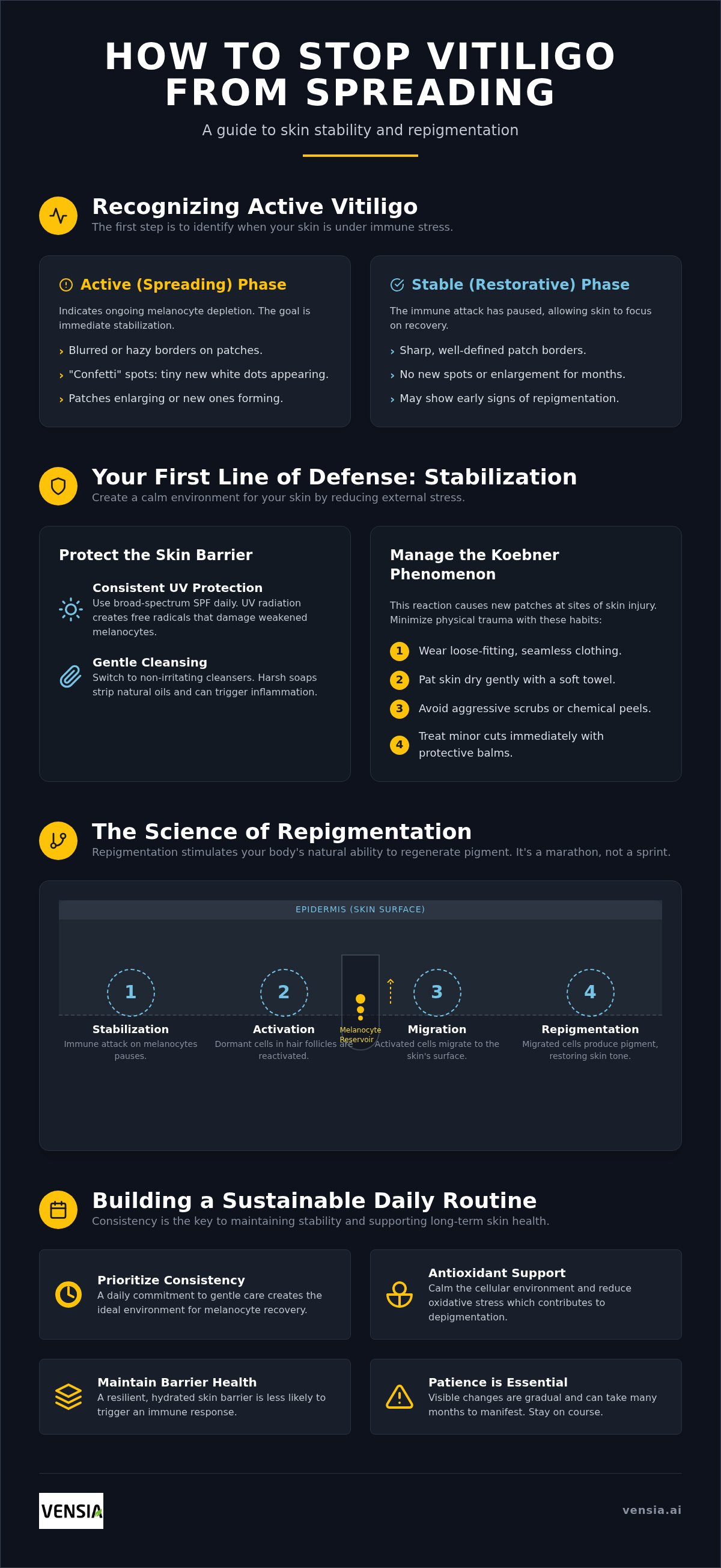
Vitiligo isn't a static condition; it's a dynamic biological dialogue between your immune system and your pigment-producing cells, known as melanocytes. When we talk about progression, we're describing a phase where these melanocytes are under significant immune stress. Recognizing the early signs is the first step in learning how to stop vitiligo from spreading. Look for "confetti" patches, which appear as tiny white dots near larger areas, or borders that look blurred and hazy rather than sharp. These are clear indicators that the condition is currently in an active state.
The transition from an active spreading phase to a stable restorative phase is the primary goal of any management plan. Stabilization means the immune attack has paused, allowing the skin to focus on recovery. By identifying these triggers early, you can shift your focus from managing new changes to encouraging the return of your natural skin tone.
What Does 'Spreading' Actually Mean for Your Skin?
Spreading occurs at a microscopic level. Your immune system mistakenly identifies melanocytes as foreign threats and begins to neutralize them. This activity manifests differently depending on the type of vitiligo you have. Non-segmental vitiligo often spreads symmetrically across both sides of the body, while segmental vitiligo typically stays confined to one area but may progress rapidly before stabilizing. Active vitiligo is a state of ongoing melanocyte depletion that requires immediate stabilization to prevent further loss. Understanding Vitiligo and its autoimmune roots helps you move from reactive anxiety to proactive management. It's about calming the cellular environment so your skin can breathe and begin the process of restoration.
Can You Truly Reverse Vitiligo Naturally?
The term "reversing" vitiligo often causes confusion. In a clinical and biological sense, reversal refers to repigmentation. This isn't about an overnight "cure" but rather stimulating your body's own ability to regenerate pigment. Your skin has hidden reserves of melanocytes located deep within hair follicles. When the immune environment stabilizes, these cells can migrate to the surface to fill in depigmented areas. It's a slow, methodical process. Think of it as a marathon, not a sprint. Success depends on consistency and patience; visible changes often take months to manifest as the skin returns to its balanced state. You aren't just covering up spots; you're supporting the biological return of your original skin tone through targeted, daily care.
Immediate Steps to Stabilize Depigmentation
Stabilization is your first line of defense. When your skin is in an active phase, it's incredibly sensitive to external stimuli. You must focus on creating a calm environment for your melanocytes by addressing oxidative stress and physical irritation. Understanding these triggers is essential for anyone researching how to stop vitiligo from spreading. By reducing the workload on your skin's immune system, you create the necessary conditions for future repigmentation.
The skin's acid mantle acts as a protective shield. When this barrier is compromised by harsh chemicals or extreme weather, the underlying immune system often overreacts. Maintaining a slightly acidic pH and high hydration levels helps keep these defense mechanisms in check. A resilient skin barrier is less likely to signal the immune system to attack pigment cells.
Protecting the Skin Barrier from External Stress
Sunburned skin is under immense biological pressure. UV radiation creates free radicals that further damage already weakened melanocytes, often leading to the expansion of existing patches. While exploring various Vitiligo Treatment Options, you'll find that consistent protection is a cornerstone of any management plan. Use a broad-spectrum SPF daily, even on cloudy days. Beyond sun protection, switch to gentle, non-irritating cleansers. Harsh soaps strip the skin of natural oils, triggering inflammatory responses that can accelerate the depigmentation process.
Managing the Koebner Phenomenon
The Koebner Phenomenon is a specific reaction where new vitiligo patches form at the site of a skin injury. This can be caused by anything from a minor scrape to persistent friction. To minimize this risk, you should audit your daily habits for potential skin trauma. Practical steps to reduce friction include:
- Switching to seamless or loose-fitting clothing to avoid rubbing.
- Patting the skin dry with a soft towel instead of rubbing it vigorously after a shower.
- Avoiding aggressive exfoliating mitts or harsh chemical peels.
- Treating minor cuts immediately with soothing, protective balms to ensure they heal without excessive inflammation.
Maintaining a resilient barrier is a daily commitment that pays off in skin stability. Using a specialized product like VENSIA Niacinamide Marshmallow Body Lotion can help soothe irritation and support the skin's natural moisture levels, providing a stable foundation for your restoration journey.
The Science of Repigmentation: How Melanocytes Recover
Once you achieve a stable state, the biological focus shifts from defense to restoration. While the initial goal is learning how to stop vitiligo from spreading, the ultimate objective is encouraging your skin to reclaim its natural pigment. Repigmentation is not a random occurrence; it's a precise cellular movement. It happens when melanocytes travel from protected reservoirs, such as hair follicles, to the depigmented surface layers of the skin. This migration is the body's natural way of filling in the gaps left by immune stress.
Recent advances in vitiligo treatment highlight that this migration requires a very specific environment. If the skin is too inflamed or under oxidative stress, these "new" melanocytes cannot survive the journey to the surface. This is why consistency in your daily care routine is more important than the potency of any single application. High-strength treatments can sometimes cause irritation, which inadvertently signals the immune system to react. Your skin needs a steady, reliable signal that the environment is safe for pigment cells to return and thrive over the long term.
The Role of Topical Melanocyte Stimulation
Specialized topical formulas work by "waking up" these dormant cells and providing the biological triggers they need to move. You'll often see the first signs of success as tiny, freckle-like dots within a white patch. This is known as a perifollicular repigmentation pattern, where pigment spreads outward from the hair follicle. Topical support works by protecting existing cells while encouraging new growth, ensuring the biological pathway remains open for restoration. By maintaining a calm, nutrient-rich landscape, you allow these pigment islands to eventually merge and create a more uniform skin tone.
Nutritional and Biological Co-factors for Skin Health
Cellular recovery depends on more than just stimulation; it requires structural support. Antioxidants like Vitamin C and E play a vital role in neutralizing the free radicals that disrupt melanocyte function. Additionally, ingredients like Niacinamide support the skin barrier, keeping the acid mantle in a state of resilience. When your internal wellness aligns with targeted external care, you create a synergistic effect that speeds up the recovery of your skin's natural balance. Maintaining this stability is the final piece of the puzzle in understanding how to stop vitiligo from spreading while fostering a landscape where new pigment can take root.
Creating a Daily Routine to Halt Progression
Establishing a structured daily routine is the most effective way to gain control over your skin's health. Consistency creates a cumulative biological effect that random treatments cannot match. When you're focused on how to stop vitiligo from spreading, your schedule should prioritize environmental defense during the day and cellular restoration at night. This multi-layered approach ensures your melanocytes are protected from stress while receiving the signals they need to stabilize and eventually repigment.
A comprehensive management plan involves five essential steps:
- Step 1: Morning Defense. Apply a broad-spectrum SPF and antioxidant-rich serum to neutralize free radicals caused by UV exposure.
- Step 2: Mid-day Hydration. Use a gentle moisturizer to maintain the skin barrier's integrity, preventing the dryness that leads to inflammation.
- Step 3: Evening Restoration. Apply a targeted formula like VENSIA Anti Vitiligo Cream to support the skin's natural recovery processes.
- Step 4: Weekly Monitoring. Take high-quality photos of patch borders under consistent lighting to track stability or changes.
- Step 5: Systemic Calm. Incorporate stress management techniques, as high cortisol levels are known to fuel systemic inflammation and autoimmune activity.
Morning Protection and Evening Restoration
Your skin's needs shift with the rising and setting of the sun. During the day, the goal is shielding; the skin is in a high-alert state, defending against pollution and radiation. At night, the body enters a repair phase. You'll achieve the best results by applying your restoration cream to clean, slightly damp skin. This increases permeability, allowing the active ingredients to reach the deeper layers where melanocytes reside. If you're layering products, always apply your anti-vitiligo formula first to ensure it isn't blocked by heavier oils or occlusive moisturizers.
Monitoring Progress: The 90-Day Window
Patience is a biological requirement. Skin cells typically take about 28 to 40 days to renew, but for deep-seated restoration, you must look at a 90-day window. This timeframe allows enough cycles for the "follicular reservoirs" mentioned earlier to begin migrating pigment to the surface. During this period, "no new patches" is a massive first-stage victory. It proves your routine is working to stabilize the condition. Look for subtle signs of success: shrinking patch sizes, darkening of the borders, or tiny islands of pigment appearing within the white areas. These are the markers that you've successfully learned how to stop vitiligo from spreading and have moved into the restoration phase.
Ready to take the first step toward a more balanced skin tone? Start your 90-day journey today with the VENSIA Anti Vitiligo Cream and commit to a routine built on scientific restoration.
Targeted Skincare: The VENSIA Approach to Balanced Tone
Understanding the biological triggers of depigmentation is a vital first step. However, the journey toward restoration requires a specialized toolset. VENSIA Anti Vitiligo Cream is designed for those who have mastered the basics of how to stop vitiligo from spreading and are now ready to focus on active repigmentation. By moving beyond simple environmental protection, this formula provides the targeted support your melanocytes need to return to the surface and thrive. It represents the logical progression from reactive prevention to proactive restoration.
Our commitment to innovation ensures that every application works in harmony with your skin's natural cycles. The cream is formulated for all skin types, providing a professional yet accessible solution for both men and women. It prioritizes biological restoration without the aggressive nature of traditional clinical treatments, offering a steady path toward radiant, even-toned skin.
Why Topical Restoration Matters
Generic moisturizers are often insufficient for the unique needs of depigmented skin. They lack the specific bio-active components required to foster a landscape where pigment cells can migrate and survive. VENSIA balances clinical confidence with a gentle, supportive approach, focusing on improving skin texture while evening out white patches. This specialized formula helps reduce the visual contrast between different skin tones by supporting the health of the follicular reservoirs. To understand more about the science behind this process, you can read our VENSIA Anti Vitiligo Cream: Your Repigmentation Guide.
Integrating VENSIA into Your Life
A successful routine is built on strategy rather than just coverage. When applying VENSIA Anti Vitiligo Cream, pay close attention to the edges of your patches. These margins are the most active areas of progression and the most critical zones for stabilization. By focusing your efforts here, you directly address the areas where the immune dialogue is most intense. This targeted application helps reinforce the boundaries of your skin's natural pigment.
Patience remains your strongest ally. We emphasize the first 90 days as the essential window for managing expectations and seeing the first signs of success. You aren't just using a product; you're joining a community of individuals committed to consistent, evidence-based care. Achieving healthier-looking, more confident skin is a journey of steady progress. With expert guidance and a reliable daily routine, you can move toward a future where your skin feels balanced, restored, and resilient.
Take Control of Your Skin's Future
Stabilizing your skin is a process that requires both scientific understanding and daily discipline. By managing external triggers like UV exposure and physical friction, you've already learned the essential steps of how to stop vitiligo from spreading. This transition from an active phase to a stable one is the foundation for all future progress. It's vital to remember that your skin's biological recovery is a marathon. The most significant results often appear after a consistent 90-day commitment to a structured routine that supports your skin's natural healing mechanisms.
VENSIA provides dermatologically inspired formulas designed for all skin types, specifically focusing on achieving visible repigmentation results. It's time to move beyond the anxiety of unpredictable changes and toward a clear, evidence-based path of restoration. You don't have to navigate this journey alone. Restore your skin's natural radiance with VENSIA Anti Vitiligo Cream and embrace a more confident version of yourself. Your journey to a balanced skin tone starts with a single, steady step today. We're here to guide you every step of the way.
Frequently Asked Questions
How can I stop my vitiligo from spreading further?
To effectively learn how to stop vitiligo from spreading, you must focus on skin stabilization. This involves protecting your skin from oxidative stress caused by UV rays and avoiding physical trauma, known as the Koebner Phenomenon. Consistent use of antioxidant-rich topical formulas helps maintain the skin barrier's integrity. By calming the immune response at the patch borders, you create a stable environment that prevents new areas of depigmentation from forming on the surface.
Can vitiligo be reversed once the pigment is gone?
Repigmentation is possible by stimulating your body's natural restorative processes. While we don't use the term "cure," biological restoration occurs when melanocytes migrate from hair follicles to the depigmented skin surface. This process requires a stable immune environment and targeted topical support to encourage these dormant cells to reactivate. Success depends on the presence of these follicular reservoirs and a consistent daily routine that prioritizes skin health and cellular balance.
Does stress really make vitiligo worse?
Emotional and physical stress can trigger systemic inflammation, which often exacerbates autoimmune conditions. High cortisol levels may signal the immune system to remain in an active state, potentially leading to the expansion of white patches. Managing your internal wellness is a vital component of a comprehensive skin care plan. Incorporating relaxation techniques alongside your topical routine helps lower the inflammatory markers that contribute to the progression of active depigmentation and support overall recovery.
How long does it take to see results from a vitiligo cream?
Visible changes in skin tone typically require a minimum of 90 days of consistent application. This timeframe aligns with the biological cycle of skin cell turnover and the slow migration of melanocytes. During the first month, the primary goal is often stabilization and stopping the expansion of current patches. By the second and third months, you may begin to notice small islands of pigment or darkening borders as the restoration process takes hold.
Is it possible to repigment skin naturally at home?
You can support your body's natural ability to restore pigment through a dedicated at-home routine. This isn't about home remedies, but rather using specialized, non-prescription formulas like VENSIA Anti Vitiligo Cream. By providing the right nutrients and protecting the skin from external stressors, you create the ideal conditions for your body to regenerate its own pigment. Consistency in your daily skincare steps is the most effective way to encourage this biological recovery and maintain results.
What are the first signs that vitiligo is starting to reverse?
The first sign of restoration is often "perifollicular repigmentation," which appears as tiny, freckle-like dots within the white patches. These dots indicate that pigment is successfully moving from the hair follicles to the surface. You might also notice that the hazy, blurred borders of your patches are becoming sharper and darker. These changes signal that the active spreading phase has paused and your skin has entered a stable, restorative state that favors long-term balance.
Should I avoid the sun if I have vitiligo?
You don't need to stay indoors entirely, but you must prioritize high-level UV protection. Sunburned skin experiences intense oxidative stress, which can trigger the immune system to target melanocytes. This often leads to the expansion of existing patches or the formation of new ones. Use a broad-spectrum SPF daily to shield depigmented areas. Controlled, brief exposure can sometimes be beneficial for pigment stimulation, but avoiding the inflammation of a burn is critical for stability.
Can diet help in stopping the spread of white patches?
A diet rich in antioxidants, such as Vitamins C and E, can support your skin's internal resilience. These nutrients help neutralize free radicals that cause cellular stress. While diet alone isn't a replacement for targeted topical care, it helps create a balanced internal environment. Combining a nutrient-dense diet with a structured daily routine is a holistic strategy for managing how to stop vitiligo from spreading while fostering long-term skin health and restoration.


