

What Causes White Patches on Skin? A Complete Dermatological Guide
What if those pale spots on your arms or face aren't just dry skin, but a signal that your body's pigment cells need a biological reset? It's exhausting to look in the mirror and wonder what causes white patches on skin, especially when every generic moisturizer you try fails to make a difference. You might feel a surge of anxiety every time a new spot appears, questioning if it's a simple fungal infection or a more complex condition like vitiligo. The confusion between different types of depigmentation often leads to frustration and wasted time on treatments that simply don't align with your skin's actual needs.
We understand that these visible changes affect more than just your appearance; they impact your confidence and daily peace of mind. This guide provides a clear dermatological roadmap to help you identify the specific triggers behind depigmentation and move toward effective restoration. We'll explore the biological mechanics of pigment loss, distinguish between common conditions, and outline a path for targeted recovery. By the end of this article, you'll have the knowledge to choose topical solutions with confidence and begin the journey of evening your skin tone.
Key Takeaways
- Identify the biological triggers and what causes white patches on skin by understanding how melanocytes impact your skin's pigment production.
- Distinguish between conditions like vitiligo and fungal infections through a comparative look at texture, borders, and common locations.
- Learn why specialized sun protection is non-negotiable for managing depigmented areas and preventing further spread.
- Explore a professional roadmap for biological restoration using targeted topical care to help your skin return to its natural, even tone.
Understanding Skin Hypopigmentation: Why White Patches Appear
Hypopigmentation occurs when your skin loses its natural pigment, resulting in areas that look lighter than your overall skin tone. This is distinct from depigmentation, which is the total absence of color. When you begin to investigate what causes white patches on skin, you'll find that these changes often manifest in high-visibility areas. The face, hands, and joints are common starting points because they face constant environmental exposure and physical friction. Understanding these initial signs is the first step toward reclaiming your skin's equilibrium.
The visual progression often follows a predictable pattern. It usually begins as a subtle, "faded" spot that might be hard to see under certain lighting. As the condition advances, these areas can transition into "milky white" or chalky patches with very defined borders. Beyond the physical symptoms, the immediate emotional impact can be significant. It's common to feel a sense of social anxiety or confusion when your skin's appearance shifts so noticeably. Early intervention isn't just about aesthetics; it's about stopping the progression and starting the process of biological restoration as soon as possible.
The Role of Melanin in Skin Health
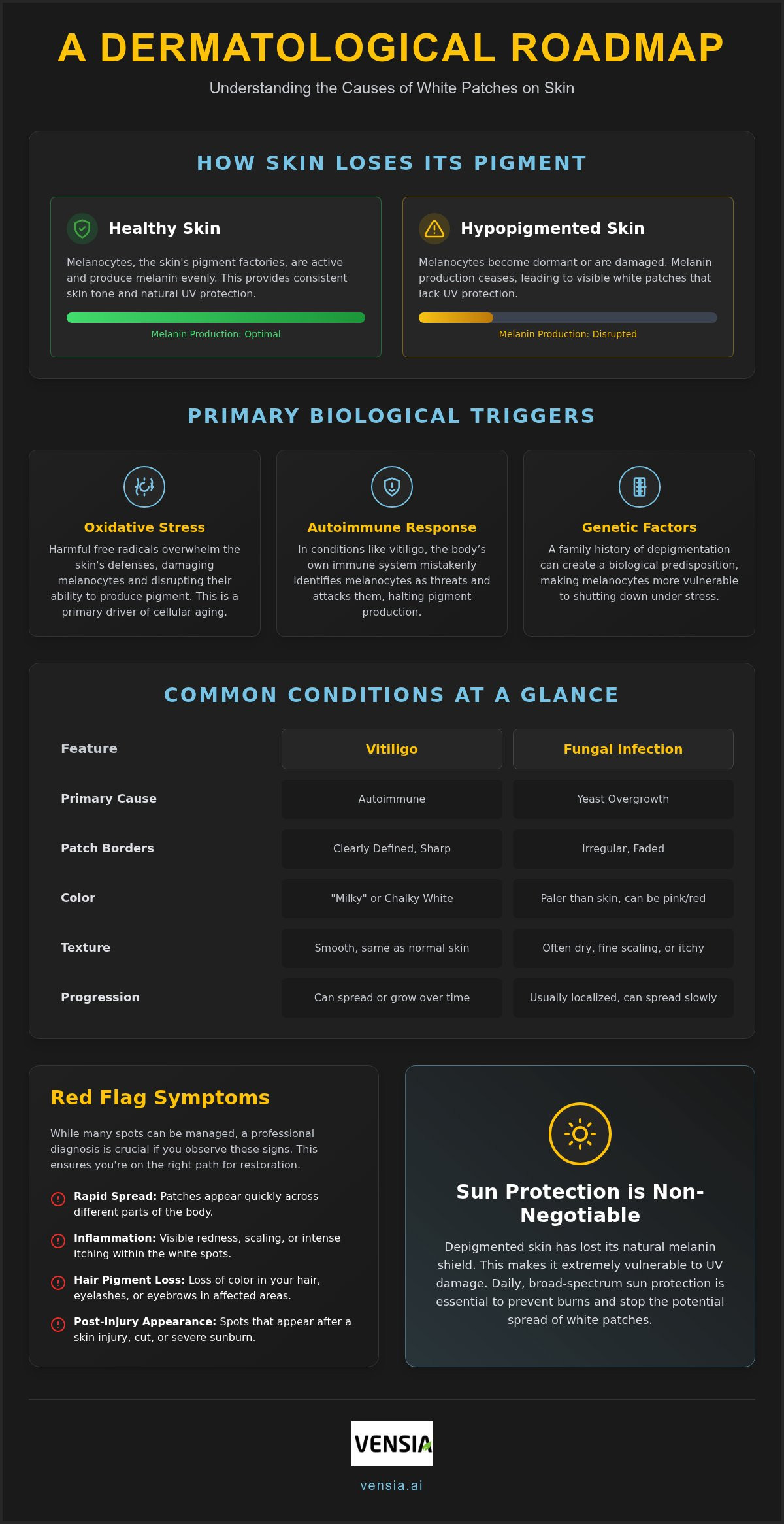
Melanin is your skin's natural protector and the primary source of its color. This pigment is produced by specialized cells called melanocytes. Think of these cells as a biological factory. When the factory is running smoothly, your skin maintains a consistent, even tone. Melanin serves a critical purpose by absorbing harmful UV rays and protecting your skin from deep-tissue damage. When you lose pigment, you lose that shield. This makes depigmented patches much more sensitive to the sun, leading to a cycle of vulnerability where the skin lacks the tools it needs to defend itself. Restoring this balance is essential for both your appearance and your skin's long-term health.
When to Consult a Professional
While many white spots can be managed at home with the right topical tools, a professional diagnosis is a vital part of the roadmap. You should prioritize a consultation if you notice specific "red flag" symptoms that suggest an active or systemic issue. These include:
- Patches that spread rapidly across different parts of the body.
- Visible redness, scaling, or intense itching within the white spots.
- A loss of pigment in your hair, eyelashes, or eyebrows.
- Spots that appear after a skin injury or a severe sunburn.
A dermatologist can help you distinguish between a localized fungal infection and an autoimmune response like Vitiligo. Understanding what causes white patches on skin in your specific case is the key to effective management. This clarity ensures you aren't wasting time on generic moisturizers when you actually need a targeted solution designed for repigmentation and cellular support. Once you have a diagnosis, you can choose a restoration path with absolute confidence.
The Biological Mechanism: Melanin Loss and Melanocyte Health
To understand what causes white patches on skin, we have to look beneath the surface at your melanocytes. These specialized cells act as the biological architects of your skin's color. They produce melanin, which is the pigment that gives your skin its unique shade. Think of these cells as a highly sophisticated factory production line. When the factory is healthy, it distributes pigment evenly across your skin. If the production line stops or the factory is damaged, white patches begin to emerge.
Oxidative stress is the primary driver of cellular aging and pigment loss. This biological process occurs when harmful molecules called free radicals overwhelm your skin's natural antioxidant defenses. It's a silent trigger that disrupts the factory's efficiency and damages cellular structures. In many cases, the melanocytes aren't actually gone; they're simply dormant. They've stopped producing pigment due to a hostile cellular environment. Distinguishing between dormant cells and those that have been completely destroyed is vital for determining your path to restoration.
Autoimmune Triggers and Genetic Factors
In conditions like vitiligo, your body's defense system mistakenly identifies melanocytes as foreign threats. This internal confusion leads the immune system to target and neutralize its own pigment-producing cells. Genetics also play a significant role. If you have a family history of depigmentation, your factory might be biologically predisposed to shut down under stress. This explains why some people experience stable patches that never change, while others see rapid growth as their immune response fluctuates.
Environmental and Lifestyle Stressors
External factors can also force the pigment production line to halt. The Koebner phenomenon occurs when physical trauma, such as a scrape, burn, or even tight clothing, triggers new patches to form in the injured area. Chemical exposure and severe sunburns act as intense environmental stressors that accelerate cellular damage. While some patches result from internal triggers, others like Tinea Versicolor stem from external fungal overgrowth that interferes with normal pigmentation. Identifying these stressors helps you create a protective environment for your skin. If you're looking to support your skin's natural recovery, exploring targeted biological restoration can help reactivate dormant cells and return balance to your complexion.
Common Conditions vs. Rare Causes: A Comparative Breakdown
Identifying the specific nature of depigmentation is the first step toward effective management. While we've discussed the biological "why," the visual "how" varies significantly between conditions. When you analyze what causes white patches on skin, you must observe the texture, the clarity of the borders, and the physical location of the spots. Some conditions leave the skin feeling smooth and completely void of color, while others present with a dry, scaly surface. Recognizing these subtle differences allows for a more targeted approach to restoration.
Other causes are more localized or related to previous skin trauma. Post-Inflammatory Hypopigmentation (PIH) often occurs after the skin heals from an injury, a burn, or a bout of severe acne. In these cases, the new skin hasn't produced enough melanin yet, leaving a temporary pale mark. Conversely, Idiopathic Guttate Hypomelanosis presents as small, "confetti-like" white spots typically found on the shins and forearms. These are generally a result of long-term cumulative sun exposure and become more common as we age. Distinguishing these from systemic conditions is essential for choosing the correct topical support.
Vitiligo: The Most Common Cause of Milky White Patches
Vitiligo is the primary cause of milky white patches that appear with sharp, well-defined edges. These patches are frequently symmetrical, appearing on both hands, wrists, or knees simultaneously. It's a progressive condition where small white dots eventually merge into larger confluent areas over time. Beyond the physical change, the psychological journey of managing vitiligo requires resilience and empathetic support. Understanding that these patches result from an internal immune response helps you focus on solutions designed for biological restoration and pigment stability.
Fungal Infections and Dryness
Fungal overgrowth and chronic dryness represent a different category of pigment loss. Tinea Versicolor, often called "sun fungus," creates small spots that prevent the skin from tanning. These usually appear on the back, chest, or upper arms and may have a fine, powdery scale when scratched. Pityriasis Alba is another common culprit, particularly in children with a history of eczema. It presents as faint, blurry, scaly patches on the cheeks that become more noticeable after sun exposure. Mistaking these for vitiligo is a frequent occurrence, yet they require antifungal care or intensive hydration rather than repigmentation strategies. Identifying what causes white patches on skin in your specific case ensures you aren't applying the wrong treatment to a delicate situation.
Managing White Patches: From Lifestyle to Targeted Topical Care
Once you understand what causes white patches on skin, the focus shifts from diagnosis to active management. This transition requires a shift in your daily routine, moving away from generic care toward targeted biological support. Your skin's needs change when pigment is lost. It becomes more vulnerable. It requires a stronger external shield to maintain its integrity and prevent further damage.
High-SPF sun protection is the most critical part of this new routine. Since depigmented areas lack the natural defense of melanin, they are highly susceptible to UV damage and increased oxidative stress. Protecting these patches prevents painful burns and stops the pigment factory from facing further environmental trauma. Without this shield, any progress in restoration can be quickly undone by a single afternoon of unprotected exposure.
Gentle exfoliation also plays a vital role in your recovery roadmap. By removing the buildup of dry, dead skin cells, you prepare the surface for better nutrient absorption. This ensures that your restoration creams can penetrate deeper into the epidermis where they are needed most. Maintaining a strong skin barrier through consistent moisturizing prevents the dryness and irritation that often accompany pigment changes. When you address what causes white patches on skin through a structured routine, you create an environment where restoration is possible.
Key Ingredients for Skin Restoration
Choosing the right ingredients can accelerate the recovery of your skin's natural tone. Niacinamide is a powerhouse for barrier repair. It improves skin texture and strengthens the surface against external irritants that might trigger further pigment loss. When combined with Marshmallow extract, it provides a soothing effect that calms sensitive or irritated patches. These ingredients, along with potent antioxidants, work to neutralize the oxidative stress we identified earlier as a primary driver of cellular damage. This combination supports the skin's biological needs while promoting a smoother, more even appearance.
The Importance of Consistency
Transformation doesn't happen overnight. Your skin needs time to respond to new treatments. Skin cell turnover typically takes 28 to 40 days, meaning results require patience and a steady hand. Skipping even a few days of your routine can disrupt the cellular restoration process and stall the progress you've already made. Set a realistic timeline for your journey and stick to your application schedule to give your melanocytes the best chance to recover. Reliability is the bridge between identifying a problem and achieving a visible result.
For those ready to begin their restoration journey, our VENSIA Niacinamide Marshmallow Body Lotion 200 ML offers the ideal blend of soothing hydration and barrier support to prep your skin for recovery.
Restoration and Recovery: The VENSIA Approach to Balanced Skin
VENSIA approaches skincare with a blend of clinical confidence and empathetic reassurance. We believe that understanding what causes white patches on skin is only the first step. The second is providing a clear, evidence-based path for restoration. Our philosophy centers on biological restoration, a process that respects the skin's natural healing capabilities while providing the specific nutrients needed to reactivate dormant melanocytes. Unlike traditional approaches that rely on harsh prescriptions or invasive clinical procedures, VENSIA focuses on modern research and gentle, effective formulations.
The VENSIA Anti Vitiligo Cream serves as a specialized tool for evening skin tone. It's formulated to target areas of pigment loss directly, supporting the skin's effort to return to its natural balance. To complement this targeted care, the VENSIA Niacinamide Marshmallow Body Lotion 200 ML improves overall skin texture and maintains the moisture barrier. These products are suitable for all skin types and designed for daily use, ensuring that your skin remains resilient throughout the recovery process. By addressing the cellular environment, we help you move toward a more uniform complexion with quiet authority.
Integrating Targeted Creams into Your Routine
Achieving visible results requires a methodical approach. We recommend a simple three-step routine to maximize the efficacy of your topical care:
- Cleanse: Start with a gentle cleanser to remove impurities and prepare the skin for nutrient absorption.
- Target: Apply VENSIA Anti Vitiligo Cream specifically to the white patches. This ensures the active ingredients focus on the areas requiring repigmentation.
- Nourish: Follow up with the VENSIA Niacinamide Marshmallow Body Lotion to hydrate the surrounding skin and strengthen the protective barrier.
We encourage you to take "before" photos today. Tracking your 90-day journey allows you to see the subtle shifts in your skin's appearance that might be missed day-to-day. Patience is key, as cellular restoration is a gradual process that relies on consistent, daily application. By avoiding the skipping of days, you maintain the momentum of the recovery process and support the natural turnover cycle of your skin cells.
Confidence Beyond the Surface
Your skin is capable of restoration. While the journey toward an even tone takes time, the shift in self-assurance is often immediate. Radiant, healthy-looking skin provides a foundation for confidence that goes beyond the surface. By choosing a path rooted in transparency and results, you're taking control of your skin's health. We understand the nuances of what causes white patches on skin and offer a roadmap that prioritizes your personal experience. We invite you to Explore VENSIA’s Targeted Skincare Collection and begin your personal roadmap to recovery today.
Your Roadmap to Restored Skin Confidence
Identifying the biological triggers is the first step toward reclaiming your natural balance. Whether your spots stem from an autoimmune response or environmental stressors, understanding what causes white patches on skin empowers you to move beyond confusion and toward a focused recovery plan. You've learned that cellular restoration requires more than just surface-level hydration. It demands a dedicated routine that addresses melanocyte health while protecting your skin from further oxidative damage.
VENSIA provides the specialized tools needed for this journey through dermatologically focused formulations that prioritize long-term skin health. Our products are suitable for all skin types and leverage innovative ingredients like Niacinamide and Marshmallow extract to soothe irritation and support the skin barrier. By focusing on biological restoration rather than temporary cosmetic fixes, you can begin to manage depigmentation and work toward a more uniform, radiant complexion.
Restore your skin’s radiance with VENSIA’s Anti Vitiligo Cream
Your skin is a resilient organ capable of remarkable improvement when given the right biological support. Don't underestimate the power of a consistent daily routine. Trust the science of restoration and move forward with confidence.
Frequently Asked Questions
Is it possible to repigment white patches on the skin naturally?
You can support your skin's natural repigmentation process by creating the right biological environment. While home remedies often lack efficacy, using targeted topical care helps reactivate dormant melanocytes. These cells require specific nutrients and protection from oxidative stress to begin producing melanin again. Consistent application of restorative creams can help manage the appearance of patches and encourage your skin to return to its original, balanced tone over several months of dedicated care.
How can I tell the difference between vitiligo and a fungal infection?
You can distinguish these conditions by looking at the texture and borders of the spots. Vitiligo typically presents as smooth, milky white patches with very sharp, well-defined edges. In contrast, fungal infections like Tinea Versicolor often feel slightly scaly or dry to the touch and may itch. Fungal spots also tend to have blurrier borders and are more likely to appear on the back or chest rather than the face and joints.
Can stress cause white spots to appear on the face?
High levels of emotional or physical stress can act as a trigger for pigment changes. While stress doesn't directly create the spots, it can accelerate an underlying autoimmune response or worsen the inflammation that leads to depigmentation. When people ask what causes white patches on skin, they often overlook the impact of cortisol on the immune system. Reducing stress alongside using soothing topical care can help stabilize your skin's appearance and prevent new patches.
What is the best cream for white patches on the skin?
The most effective cream is one that combines biological restoration with barrier support. For targeted repigmentation, VENSIA Anti Vitiligo Cream is designed to help even out skin tone by supporting melanocyte health. We also recommend pairing this with VENSIA Niacinamide Marshmallow Body Lotion. This combination ensures your skin remains hydrated and resilient, providing the necessary environment for long-term improvement and a smoother, more radiant skin texture across all body areas.
Are white patches on the skin contagious or dangerous?
White patches are generally not dangerous or contagious to others. Conditions like vitiligo and pityriasis alba are internal or environmental responses, so you cannot "catch" them or pass them on through contact. While a fungal infection is technically infectious, it is easily managed and doesn't pose a threat to your overall health. The primary concern is usually the social anxiety they cause, making effective management a priority for your personal well-being.
How long does it take for white spots to disappear with treatment?
Visible results typically require at least 90 days of consistent daily application. This timeline aligns with the natural skin cell turnover cycle, which generally takes between 28 and 40 days. Because you're working with the skin's biological processes, you won't see a change overnight. Most users notice a gradual softening of patch borders before the center begins to repigment. Sticking to your routine is the only way to ensure the restoration process stays on track.
Can children use topical creams for white patches?
Many topical creams are safe for children, but you should always verify the ingredients first. VENSIA products are formulated to be gentle and are suitable for all skin types, making them a modern alternative to harsh prescription options. If a child has Pityriasis Alba or eczema related spots, focus on deep hydration and barrier repair. It's always a good practice to perform a small patch test on a child's skin before starting any new daily routine.
Does sun exposure make white patches more visible or worse?
Sun exposure significantly increases the visibility of white patches by tanning the healthy skin around them. This creates a much sharper contrast, making the depigmented areas stand out more. Beyond the visual impact, UV rays cause oxidative stress that can damage vulnerable pigment cells and potentially expand the patches. This is why what causes white patches on skin is often linked to environmental trauma, making high SPF protection an essential part of your management strategy.


