

Home Vitiligo Treatment: A Guide to Repigmentation
What if the most effective way to restore your skin's natural pigment wasn't found in a sterile clinical waiting room, but within your own daily morning routine? It's exhausting to navigate a sea of conflicting advice, especially when you're balancing the desire for gentle solutions with the need for medical-grade results. You've likely felt the sting of social anxiety when new patches appear or the deep frustration of waiting months for even a tiny speck of color to return. Learning how to treat vitiligo at home shouldn't mean guessing which ingredients work or settling for slow, inconsistent progress.
We believe in a more precise, evidence-based path to recovery. You can achieve visible repigmentation by following a professional protocol that prioritizes both melanocyte stimulation and skin barrier health. This guide provides a clear, actionable strategy to manage your condition effectively from the comfort of your home. We'll walk through a streamlined daily routine designed to encourage pigment return and restore the self-assurance you deserve. By focusing on the critical first 90 days of treatment, you can move away from confusion and toward a state of clinical confidence and transformation.
Key Takeaways
- Understand the vital distinction between curing vitiligo and managing it through professional-grade repigmentation strategies that focus on melanocyte stimulation.
- Learn the biological mechanics of follicular repigmentation and how reducing oxidative stress allows your skin cells to recover their natural pigment.
- Discover a practical, evidence-based framework for how to treat vitiligo at home using a structured twice-daily routine that fits seamlessly into your lifestyle.
- Set realistic expectations for your journey, as visible repigmentation often begins as small dots within a consistent three-to-six-month treatment window.
- Explore how specialized topicals, like VENSIA Anti Vitiligo Cream, work to stabilize the skin barrier and provide the targeted care necessary for a successful transformation.
Understanding Vitiligo: Can It Be Treated at Home?
Vitiligo is often misunderstood as a purely cosmetic issue. It is a complex condition where melanocytes, the cells responsible for skin color, stop producing pigment. When researching Understanding Vitiligo, it's clear that while a permanent cure remains elusive, effective management and visible repigmentation are achievable goals. Many people ask about how to treat vitiligo at home because clinical environments can feel impersonal or rushed. The home setting is actually ideal for the sustained, daily discipline required to coax these cells back into action.
The primary objective of any home protocol is to stimulate dormant melanocytes to return color to white patches. This isn't about a quick fix. It's about creating a biological environment where your skin feels supported enough to begin the restoration process. Consistency is your most powerful tool in this journey toward recovery.
The Role of Melanocytes in Skin Recovery
Melanocytes are specialized cells located in the basal layer of your epidermis. In vitiligo, these cells don't always disappear completely. They often enter a state of dormancy or sleep due to oxidative stress or specific immune system signals. Biological triggers, such as targeted topical nutrients, can signal these cells to resume melanin production. Repigmentation is the process of restoring melanin to depigmented skin areas. This recovery often starts around hair follicles, where healthy melanocytes are most concentrated and protected.
Setting Realistic Expectations for Home Care
Success requires a shift in perspective. You should follow the "First 90 Days" rule. Most topical treatments require at least three months of consistent application before the first signs of recovery appear. You won't see a sudden wash of color across the skin. Instead, look for tiny, freckle-like islands or dots of pigment within the white patches. These small victories are proof that the treatment is working. Daily discipline is far more effective than occasional clinical visits because skin recovery is a cumulative process. Learning how to treat vitiligo at home empowers you to take control of your own transformation timeline.
The Science of Repigmentation: How Skin Heals
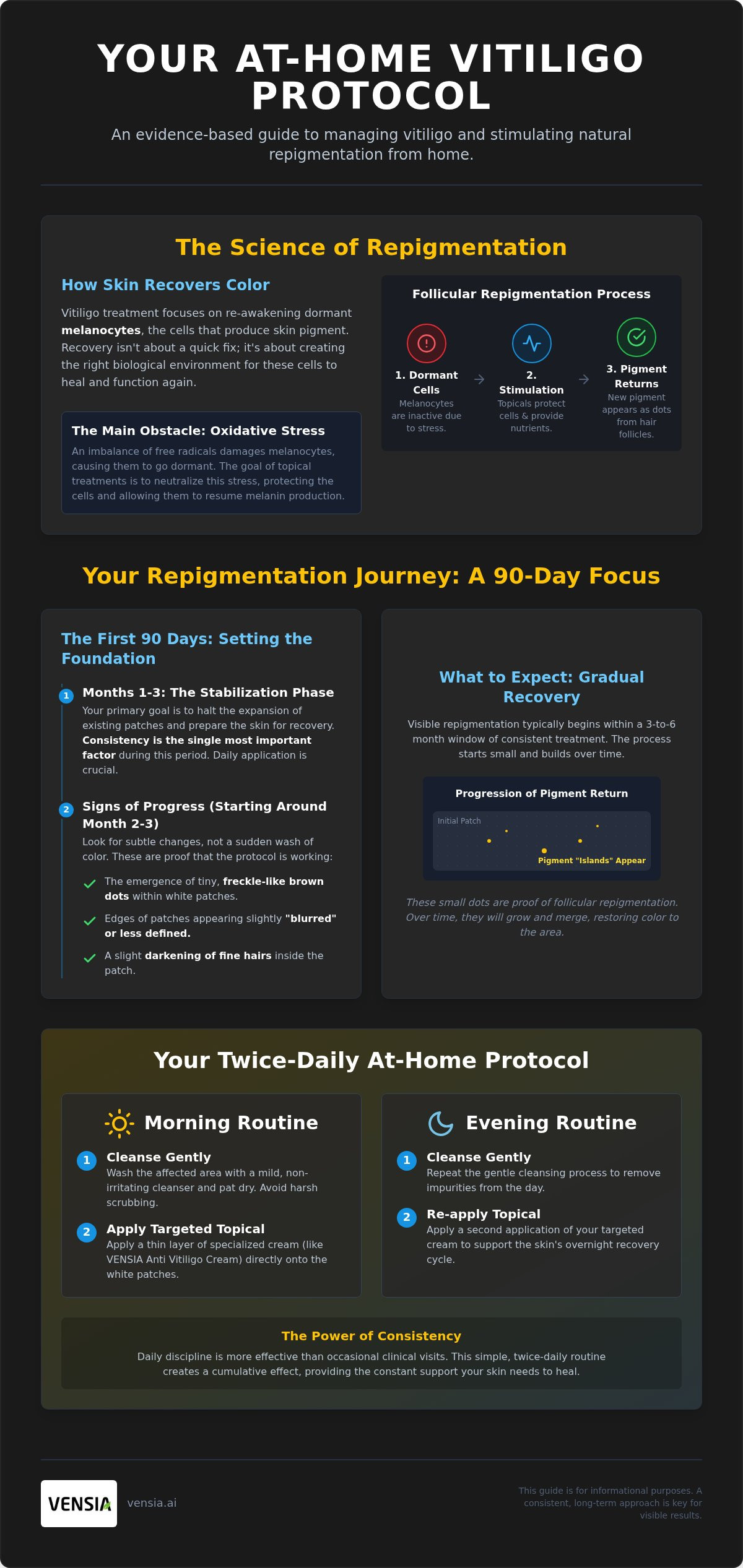
Understanding the biological mechanics of your skin is essential when you're looking for how to treat vitiligo at home. Healing typically occurs through a process called follicular repigmentation. This happens because the hair follicles within a white patch often retain a reservoir of healthy, active melanocytes. When these cells receive the right signals, they migrate to the skin's surface and begin producing melanin again. This creates the appearance of small, dark dots that eventually grow and merge to cover the depigmented area.
Oxidative stress is the primary obstacle in this recovery process. It occurs when an imbalance of free radicals damages melanocytes, causing them to go dormant or perish. Exploring the latest research into treatment options highlights how neutralizing this stress is pivotal for recovery. Targeted creams work by delivering antioxidants and nutrients directly to the basal layer of the epidermis, creating a protective shield that allows melanocytes to function without interference.
Understanding the Repigmentation Timeline
Repigmentation is a marathon, not a sprint. During the first three months, your primary goal is to stabilize the existing patches and prepare the cellular environment for new pigment production. Consistency during this initial window is the biggest predictor of long term success. If you stop treatment too early, you interrupt the cellular migration before it becomes visible to the naked eye.
By month two, you should carefully observe your skin for these subtle signs of progress:
- A reduction in the expansion of existing white patches.
- The edges of the patches appearing slightly "blurred" or less sharp.
- The emergence of tiny, pinpoint brown specks within the depigmented area.
- A slight darkening of the fine hairs inside the patch.
The Importance of the Skin Barrier
A compromised skin barrier leaks moisture and invites inflammation, creating a hostile environment for new pigment. Dry or flaky skin hinders the penetration of active ingredients and slows down cellular communication. Hydration is not just about comfort; it is a clinical necessity for maintaining the healthy environment melanocytes need to thrive. Ingredients like niacinamide are particularly effective here because they strengthen the lipid barrier and reduce redness.
Maintaining deep hydration with a specialized formula like VENSIA Niacinamide Marshmallow Body Lotion ensures your skin remains resilient throughout the healing process. When the barrier is strong, your skin can focus its energy on restoration rather than defense. This foundational health makes every other step in your routine more effective as you learn how to treat vitiligo at home.
Topical Treatments vs. Natural Remedies: What Works?
Many people begin their journey by researching how to treat vitiligo at home using ingredients found in their kitchen cabinets. Turmeric, mustard oil, and ginger are frequently cited in online forums as accessible solutions. While these ingredients possess mild anti-inflammatory properties, they lack the molecular delivery systems required to reach the deeper layers of the epidermis where melanocytes reside. Natural doesn't always translate to effective when you're managing a complex biological response. Relying on raw botanicals often results in wasted time during the critical early stages of the condition.
The Problem with General Home Remedies
Kitchen ingredients often fail to penetrate the skin barrier effectively. Turmeric, for instance, contains large molecules that sit on the skin's surface, causing staining without providing therapeutic benefits to dormant pigment cells. DIY pastes also carry a hidden risk. They can cause contact dermatitis or localized irritation. In some cases, this irritation can trigger a "Koebner phenomenon," where skin trauma leads to the development of new depigmented patches. Understanding the limitations of these "natural" approaches is vital for anyone serious about recovery.
The Advantage of Specialized Vitiligo Creams
Modern science offers a bridge between harsh prescriptions and ineffective home remedies. While many medical vitiligo treatments involve potent corticosteroids, these carry significant risks like skin thinning and telangiectasia when used long term. Specialized formulas like VENSIA Anti Vitiligo Cream provide a sophisticated, non-steroidal alternative designed specifically for daily, at-home application. These products are engineered to stabilize the skin environment and encourage melanocyte migration without the side effects of traditional steroids.
A dedicated cream is the most logical choice for managing patches on both the face and body. Unlike general moisturizers, these specialized formulas utilize "even out" technology to target depigmented zones while supporting the surrounding healthy skin. They offer a professional safety profile, allowing for the months of continuous use required for visible results. Choosing a research-backed topical ensures your efforts in learning how to treat vitiligo at home translate into a tangible, lasting transformation. By prioritizing targeted care over kitchen remedies, you give your skin the precise tools it needs to restore its natural balance.
Your Daily At-Home Vitiligo Protocol: A Step-by-Step Routine
Establishing a structured routine is the most effective way to see results when you're committed to learning how to treat vitiligo at home. Skin cells thrive on predictability. A twice-daily application schedule ensures that active ingredients remain present in the epidermis, providing the continuous signaling needed for melanocytes to wake from dormancy. This isn't just about applying cream; it's about creating a comprehensive environment for recovery.
We recommend the "Target and Protect" method. This involves applying concentrated treatments directly to depigmented patches while using supportive, barrier-strengthening products on the surrounding skin. Always begin with gentle cleansing. Removing surface oils and environmental debris is essential because it allows your treatment to penetrate deeply rather than sitting on the surface. For depigmented areas, sun protection is non-negotiable. Without melanin, these patches are highly vulnerable to UV damage, which can trigger further pigment loss.
Morning: Preparation and Protection
Your morning routine focuses on shielding the skin and initiating the day's recovery. Follow these three steps for a successful start:
- Step 1: Cleanse. Use a mild, non-stripping wash to refresh the skin without disrupting its natural pH balance.
- Step 2: Target. Apply a thin layer of VENSIA Anti Vitiligo Cream directly to the white patches. Massage it in gently until fully absorbed to stimulate local circulation.
- Step 3: Nourish and Protect. Apply VENSIA Niacinamide Marshmallow Body Lotion to the rest of the area. The niacinamide strengthens the skin barrier while the marshmallow extract provides a soothing, hydrated base. Finish with a broad-spectrum SPF on any exposed patches.
Evening: Restoration and Recovery
The evening is when your body enters its natural repair cycle. This is the optimal time for deep restoration. Your nighttime protocol should focus on clearing the day's pollutants and maximizing treatment absorption.
- Step 1: Purify. Remove sweat, pollutants, and sunscreen with your gentle cleanser. This ensures a clean canvas for your evening application.
- Step 2: Re-treat. Apply your Anti Vitiligo treatment again. During sleep, your skin's permeability increases, allowing the formula to work more efficiently at the cellular level.
- Step 3: Refine. Use a lotion with gentle exfoliating properties, such as the Niacinamide Marshmallow Body Lotion. This helps remove dead skin cells and improves overall texture, which makes your primary treatment more effective over time.
Consistency is the bridge between a white patch and restored pigment. You can start your journey toward visible transformation today by choosing the VENSIA Anti Vitiligo Cream as the foundation of your daily protocol.
Optimizing Your Results with VENSIA Specialized Care
VENSIA Anti Vitiligo Cream serves as the core of a transformation-focused routine. Our commitment to innovative, research-backed ingredients ensures that your skin receives the precise biological signals needed to restart melanin production. While the primary treatment targets depigmented patches, the VENSIA Anti Pigmentation Cream helps even out the surrounding skin tone. This creates a more uniform appearance by addressing dark spots or age-related discoloration that can make vitiligo patches more prominent. This dual-action approach is a critical component of how to treat vitiligo at home with professional results.
There is a powerful synergy between these targeted treatments and the VENSIA Niacinamide Marshmallow Body Lotion. This lotion doesn't just hydrate; it provides the radiant finish and barrier support necessary for long-term health. It helps improve dryness and rough skin while organic Vitamin C and gentle exfoliants prepare the skin for better absorption of the Anti Vitiligo Cream. By combining these products, you create a professional-grade protocol that makes the process of skin restoration manageable and efficient.
Why VENSIA for At-Home Management?
VENSIA offers a blend of clinical confidence and empathetic reassurance. We understand that your journey is personal, and our products reflect a solution-oriented mindset. VENSIA Anti Vitiligo Cream is suitable for women and men of all skin types, providing a versatile option for anyone seeking recovery. Our brand functions as a knowledgeable guide, offering a clear path forward without the coldness of traditional pharmaceuticals. With global availability and a simple ordering process, maintaining the consistency required for repigmentation is easier than ever.
The First 90 Days with VENSIA
The first three months are the most significant phase of your recovery. We encourage you to document your journey with high-quality photos every two weeks. Because the initial dots of pigment are often small, these photos provide the visual proof of progress that helps maintain your motivation. VENSIA is a supportive presence during this recovery process, relying on transparency and the strength of our results to build your trust. Success is built on daily discipline and the right specialized care.
Start your repigmentation journey with VENSIA Anti Vitiligo Cream today.
Begin Your Transformation Journey Today
Restoring your skin's natural pigment is a journey rooted in biology and sustained by daily discipline. Successful repigmentation depends on stimulating dormant melanocytes and protecting the skin barrier from oxidative stress. While simple kitchen remedies often lack the depth to penetrate the epidermis, a structured protocol using specialized topicals provides the targeted support your skin needs to heal. Consistency during the first 90 days remains the most significant predictor of your success.
By understanding how to treat vitiligo at home with professional-grade care, you move away from confusion and toward a state of clinical confidence. VENSIA provides specialized formulas for repigmentation that are designed for all skin types. Our gentle, niacinamide-enriched body care ensures your skin stays resilient and radiant throughout the recovery process. You don't have to navigate this path alone; the tools for transformation are now within your reach.
Restore your skin’s natural radiance with VENSIA Anti Vitiligo Cream
Take the first step toward reclaiming your even skin tone and restoring your self-assurance today. Your skin has the potential to heal. With the right routine, those first islands of pigment are closer than they seem.
Frequently Asked Questions
Can vitiligo be cured permanently at home?
Vitiligo does not currently have a permanent medical cure, but you can achieve significant repigmentation and effective management from your own home. The goal of learning how to treat vitiligo at home is to stimulate dormant melanocytes and restore your skin's natural balance. By following a consistent daily protocol, you can stabilize the condition and encourage the return of pigment to white patches over time.
How long does it take to see repigmentation results?
Patience is essential because skin recovery follows a biological timeline. Most users begin to see initial repigmentation as small, dark dots within 3 to 6 months of consistent application. The first 90 days are the most critical window for stabilization. If you maintain your routine twice daily, these small islands of color will eventually merge to provide more uniform coverage across the treated areas.
Is it safe to use vitiligo cream on the face?
Yes, VENSIA Anti Vitiligo Cream is specifically designed for use on both the face and body. Its non-steroidal formula makes it a safer alternative for the delicate skin on your face compared to traditional clinical treatments. Always ensure the skin is clean before application and avoid direct contact with your eyes or mouth. It absorbs quickly, allowing you to proceed with your normal daily skincare routine.
What is the best diet to support vitiligo treatment at home?
While no specific food cures the condition, a diet high in antioxidants helps combat the oxidative stress that damages melanocytes. Focus on leafy greens, colorful vegetables, and foods rich in Vitamin B12 and folic acid. Supporting your skin from the inside out complements your topical routine, creating a healthier biological environment for pigment cells to thrive and migrate during your at-home treatment process.
Can I use makeup or camouflage while treating vitiligo?
You can certainly use camouflage products or makeup while following your repigmentation protocol. It is important to apply your targeted treatment first and allow it to absorb completely into the skin for about 10 to 15 minutes. Once the cream is dry, you can apply non-comedogenic makeup or specialized camouflage creams to help restore your self-assurance while the treatment works beneath the surface.
Does stress make vitiligo worse, and how can I manage it?
Psychological and physical stress can trigger the immune system to attack melanocytes, potentially leading to new patches. Managing stress is a vital part of how to treat vitiligo at home effectively. Incorporating regular exercise, adequate sleep, and a predictable skincare routine helps stabilize your body's responses. A calm internal environment supports the external restoration process and helps prevent the condition from spreading further during active phases.
Are there any side effects to at-home vitiligo creams?
Specialized, non-steroidal treatments like VENSIA Anti Vitiligo Cream are formulated to be gentle and suitable for all skin types. Unlike prescription corticosteroids, they don't cause skin thinning or visible blood vessels with long-term use. While side effects are rare, some individuals with highly sensitive skin might experience mild, temporary redness. We always recommend performing a small patch test on your inner arm before starting full application.
How do I know if my vitiligo is spreading or stabilized?
Stabilization occurs when the borders of your white patches become distinct and stop expanding for several months. If you notice confetti-like spots or blurred, rapidly moving edges, your vitiligo may be in an active phase. Documenting your patches with photos every two weeks is the most reliable way to monitor these changes. Stable vitiligo is generally more responsive to topical repigmentation treatments and consistent daily care routines.


