

How to Improve Skin Texture: The Complete 2026 Restoration Guide
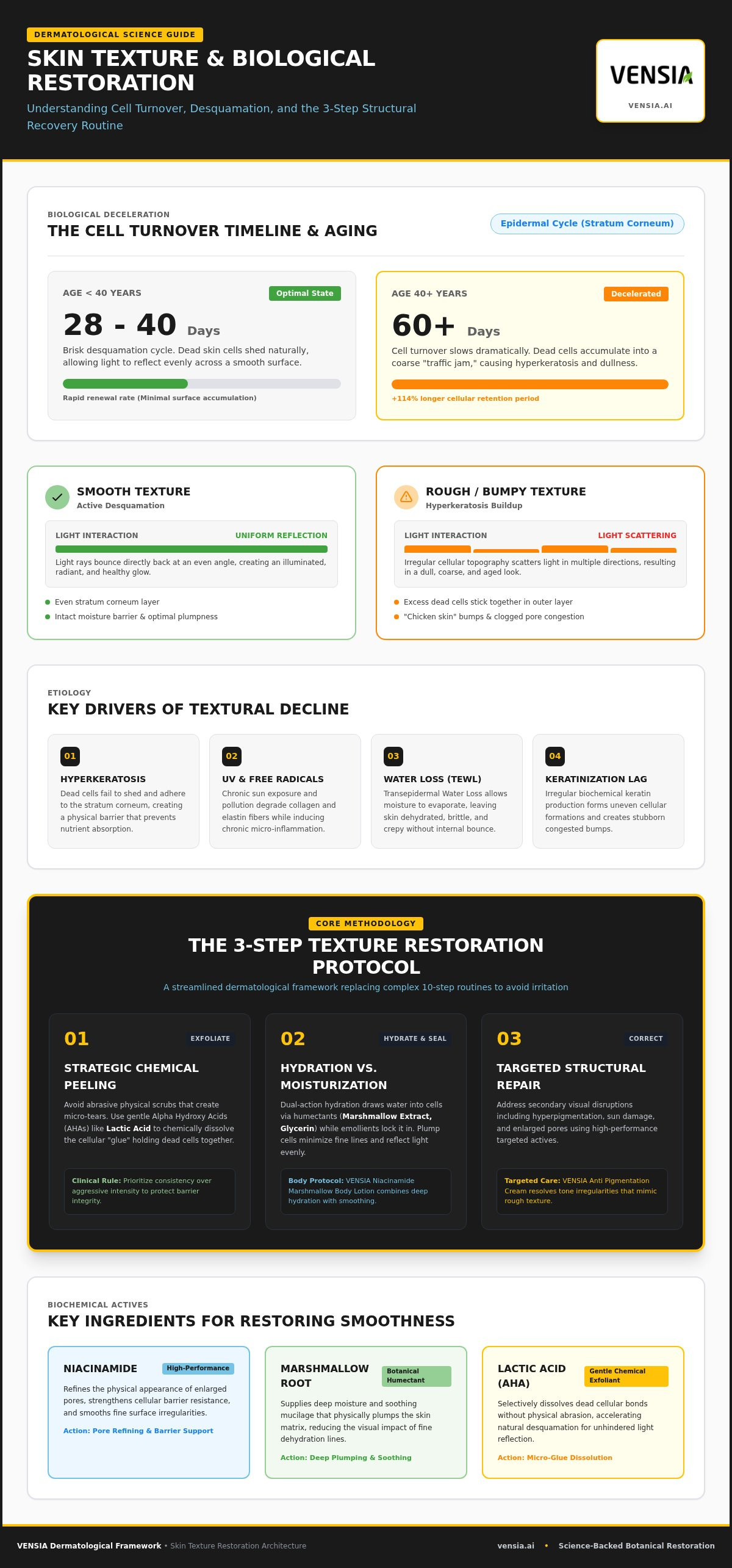
Did you know that after age 40, your epidermal cell turnover can slow from a brisk 28 days to over 60 days? This biological deceleration is the primary reason many people struggle with how to improve skin texture as dead cells accumulate, leading to "chicken skin" bumps and a dull, aged appearance. It's exhausting to deal with persistent dryness or an uneven tone that refuses to budge, especially when many products promise a glow but deliver only irritation. You deserve a solution that respects your skin's biology while delivering visible results.
We understand that restoration is about more than just surface-level fixes; it's about supporting your skin's natural recovery cycles. In this 2026 restoration guide, you'll discover the biological triggers of rough skin and a dermatological routine designed to restore a smooth, radiant complexion. We'll break down the science of barrier-repairing botanicals and high-performance actives like niacinamide to help you reduce the appearance of pores and fine lines. By the end of this article, you'll have a clear, step-by-step path to achieving the soft, confident skin you deserve.
Key Takeaways
- Identify the biological causes of roughness, including how hyperkeratosis prevents your skin from reflecting light and feeling smooth.
- Discover a step-by-step dermatological routine that explains how to improve skin texture through strategic exfoliation and barrier-first hydration.
- Explore the unique benefits of marshmallow root and niacinamide for plumping the skin and refining the appearance of enlarged pores.
- Learn how to treat the underlying pigmentation and fine lines that often create the illusion of an uneven surface.
- Build a consistent 2026 restoration schedule that balances active treatments with deep, soothing nourishment for a radiant complexion.
What Causes Rough Skin Texture? The Biological Basics
Skin texture refers to the physical feel and visual uniformity of your skin's surface. When your skin is healthy, it appears smooth and radiant because it reflects light evenly. However, when the surface becomes irregular, light scatters, which results in a dull or aged appearance. Understanding how to improve skin texture starts with recognizing that your skin is a dynamic, living organ that relies on a precise biological balance to maintain its luster.
A primary culprit behind persistent roughness is hyperkeratosis, or the excessive buildup of dead skin cells. These cells accumulate in the stratum corneum, which is the outermost layer of the epidermis. Instead of shedding naturally, these cells stick together, creating a physical barrier that feels coarse to the touch and prevents nourishing ingredients from penetrating effectively. This buildup doesn't just feel bad; it also creates a visual "film" that makes your complexion look tired.
The Role of Desquamation in Smooth Skin
Desquamation is the natural biological process where your skin sheds dead cells to make room for new, healthy ones. In a youthful state, this cycle completes every 28 to 40 days. As we age or face environmental stress, this process slows significantly. This lag causes a "traffic jam" of cells on the surface. These stagnant cells eventually clog pores and create an uneven topography that looks bumpy, especially in areas prone to congestion like the nose and chin.
Environmental and Lifestyle Triggers
External factors often accelerate textural decline. Chronic UV exposure is particularly damaging; it degrades the collagen and elastin fibers that keep your skin firm and smooth. Pollution also plays a role by generating free radicals that trigger inflammation and disrupt the skin's barrier. These factors combine to make how to improve skin texture a challenge that requires a multi-faceted approach.
Another critical factor is Transepidermal Water Loss (TEWL). When your skin's moisture barrier is compromised, water evaporates into the air, leaving the surface dehydrated and brittle. This lack of internal hydration makes fine lines more prominent and gives the skin a parched, "crepy" feel that lacks bounce. Keratinization is the biochemical process where skin cells produce keratin and move toward the surface to form a protective barrier, but when this process becomes irregular, it results in visible roughness.
The 3-Step Foundation for Improving Skin Texture
Improving your skin's surface doesn't require a complex 10-step regimen. Overcomplicating your routine often leads to irritation rather than smoothness. A streamlined, three-step approach provides the necessary support for your skin's natural restoration. By focusing on exfoliation, hydration, and targeted treatment, you address the biological roots of roughness while encouraging long-term health.
Choosing the Right Exfoliant
The first step in how to improve skin texture is removing the buildup of dead cells that cause a coarse feel. While physical scrubs are common, they often create micro-tears that compromise your barrier. Gentle chemical exfoliants, such as Alpha Hydroxy Acids (AHAs), are far more effective. Lactic acid dissolves the "glue" holding dead cells together without the need for abrasive friction. Following the American Academy of Dermatology guidelines on exfoliation is essential to ensure you don't overdo it. Look for signs of a compromised barrier, like stinging or redness, and prioritize consistency over aggressive intensity.
Hydration vs. Moisturization
Many people confuse these two terms, but they serve different roles in smoothing your skin. Hydration involves drawing water into the cells using humectants like glycerin or marshmallow extract. Moisturization is about sealing that water in with emollients. A properly hydrated barrier allows skin to remain plump, which minimizes the appearance of fine lines and helps the surface reflect light. This creates the "glow" associated with healthy skin. For body care, a specialized formula like the VENSIA Niacinamide Marshmallow Body Lotion provides both deep hydration and gentle exfoliating benefits in one step.
The third step involves addressing specific structural issues with targeted treatments. Texture isn't just about roughness; it's also about the visual disruptions caused by dark spots and sun damage. Using a specialized formula like the VENSIA Anti Pigmentation Cream helps correct these irregularities. This final step ensures that your complexion isn't just smooth to the touch, but also visually uniform. Consistency is the key here. It takes time for the skin to cycle through its restoration process, so stick to your routine for at least four to eight weeks to see a true transformation.
Key Ingredients for Smoothness: Niacinamide and Marshmallow Root
Most skincare guides focus exclusively on the face, yet the skin on your body often faces greater challenges. Thicker epidermal layers and slower cell turnover on the arms and legs can lead to persistent roughness or "chicken skin." When considering how to improve skin texture across your entire body, two ingredients stand out for their ability to restore smoothness without causing irritation: Niacinamide and Marshmallow Root Extract. These actives work in tandem to address both the structural and surface-level causes of an uneven complexion.
The Science of Niacinamide for Pores
Niacinamide, or Vitamin B3, is a versatile powerhouse that addresses texture from multiple biological angles. It helps regulate surface oil production, which prevents the clogs that lead to a bumpy, uneven surface. By boosting the natural production of ceramides, it strengthens the moisture barrier to ensure the skin remains resilient and supple. A Harvard Health analysis of proven skincare ingredients confirms that niacinamide is clinically recognized for its ability to improve hyperpigmentation and fine lines. This ingredient effectively refines "orange peel" skin texture by tightening pores and smoothing out structural irregularities caused by environmental stress.
Marshmallow Extract: Natures Smoothing Agent
While niacinamide works on a structural level, Marshmallow Root Extract provides an immediate, soothing effect. This botanical is rich in mucilage, a complex polysaccharide that forms a protective, breathable film over the stratum corneum. This film locks in moisture and provides a physical "slip" that instantly makes rough patches feel softer. Marshmallow extract acts as a natural cushion, which is particularly beneficial for those with sensitive skin or conditions like keratosis pilaris. Its synergy with organic Vitamin C helps brighten the complexion while maintaining a calm, hydrated environment for cellular repair.
These two ingredients create a powerful synergy for those wondering how to improve skin texture effectively. Niacinamide repairs the barrier and refines pores, while marshmallow root provides the hydration and soothing slip necessary for a touchable finish. If you're looking for a targeted solution for body skin, the VENSIA Niacinamide Marshmallow Body Lotion combines these actives to treat dryness and roughness simultaneously. It's a specialized formula designed to deliver professional-grade results for all skin types, ensuring your body receives the same level of care as your face.
Addressing Texture Issues from Pigmentation and Fine Lines
Texture is often perceived through the eyes before it's felt by the hands. When your skin tone is uneven, it creates a visual "noise" that mimics the appearance of physical roughness. Dark spots, sun damage, and post-inflammatory hyperpigmentation scatter light differently than clear skin. This scattering makes the surface look irregular and dull. Understanding how to improve skin texture requires a dual-action strategy that treats these visual disruptions alongside physical ones. By fading pigmentation, you essentially "quiet" the surface, which allows the skin's natural smoothness to become the focal point of your complexion.
Targeted creams play a vital role in this restoration. They don't just sit on the surface; they deliver active ingredients that work to even out the topography while fading stubborn spots. This combined approach ensures that as your skin's tone becomes more uniform, the physical surface feels more refined. The VENSIA Anti Pigmentation Cream is specifically designed for this purpose. It targets dark spots, fine lines, and wrinkles simultaneously, which makes it a versatile tool for anyone seeking a comprehensive restoration of their skin's radiance.
Smoothing Fine Lines and Wrinkles
Fine lines are essentially microscopic valleys on the skin's surface. As internal collagen production drops, these valleys deepen, creating a crepy texture that feels less than smooth. Supporting your skin's structural integrity is vital for long-term health. This involves more than just basic hydration; it requires active ingredients that encourage cellular renewal and repair. Fading age spots also contributes significantly to a younger-looking surface. When you remove the sharp contrast of dark spots, the skin appears more uniform and vibrant. To prevent further damage, daily broad-spectrum SPF is non-negotiable. UV rays are the primary driver of both pigmentation and the collagen breakdown that leads to textural decline.
Managing Uneven Skin Tone
Pigmentation removal products work at a cellular level to regulate the overproduction of melanin. By targeting the biological pathways responsible for dark spots, these treatments allow newer, more evenly pigmented cells to reach the surface. This process is essential for clearing post-acne marks and solar lentigines that disrupt your complexion's flow. For those dealing with specific de-pigmentation needs, the VENSIA Anti Vitiligo Cream offers a specialized evidence-based path for repigmentation and balance. If you're ready to achieve a truly uniform and touchable complexion, explore our collection of specialized restoration creams to find the right match for your skin's unique needs.
Your 2026 Skin Texture Restoration Routine
Consistent habits turn biological potential into visible results. Knowing how to improve skin texture is only the first step; the true transformation happens through a disciplined, daily application of evidence-based formulas. Your routine should focus on protection during the day and deep restoration at night. This cycle ensures your skin has the resources it needs to repair the collagen matrix and shed accumulated dead cells effectively.
Your morning routine should prioritize defense. Start with a gentle, non-stripping cleanse to refresh the surface. Apply a brightening serum rich in antioxidants to neutralize environmental pollutants. Crucially, finish with a high-SPF sunscreen. UV rays are the primary cause of textural decline, so daily protection is the most effective way to prevent future "crepy" skin and pigmentation spots. As evening falls, transition to repair. Use a double-cleanse method to thoroughly remove debris and sunscreen. This creates a clean canvas for your targeted treatment, such as the VENSIA Anti Pigmentation Cream, which works overnight to even out tone and smooth fine lines. Seal these actives with a nourishing lotion to prevent nocturnal water loss.
Body care requires equal attention. Apply a niacinamide body lotion immediately after showering while your skin is still damp. This timing maximizes absorption and locks in moisture before it can evaporate. Dedicate one evening a week to gentle chemical exfoliation rather than using harsh physical scrubs; this single habit significantly accelerates the removal of the stubborn cell buildup discussed in earlier sections.
Face vs. Body: Why Texture Care Differs
Skin on the body is significantly thicker than the delicate skin on your face. This structural difference means your arms and legs require richer formulations with higher concentrations of humectants to achieve the same softening effects as facial treatments. Issues like "strawberry legs" or rough elbows stem from a localized buildup of keratin that demands specialized care. Marshmallow extract is particularly valuable here. It provides a soothing, protective film that covers larger surface areas comfortably, reducing the friction that often leads to further irritation and roughness.
The Timeline: What to Expect
Restoring your complexion is a marathon, not a sprint. During weeks one and two, you'll likely notice improved hydration and an immediate softening of the skin's surface. True structural changes take longer to manifest. Between weeks four and eight, visible pore refinement and a reduction in the appearance of fine lines typically occur as niacinamide begins to stabilize oil production and boost ceramides. By the third month, you can expect a significant improvement in overall tone and texture clarity. This timeline aligns with the natural 45 to 60 day turnover cycle of mature skin, proving that patience is a vital ingredient in any restoration journey.
Embrace Your Path to Smoother Skin
Restoring a smooth complexion is a journey rooted in biological science and consistent care. You've learned that roughness isn't a permanent condition; it's a sign that your skin needs support with its natural desquamation and hydration cycles. By moving away from aggressive scrubbing and toward a foundation of gentle exfoliation and deep moisture, you create the ideal environment for recovery. Ingredients like niacinamide and marshmallow root provide the structural repair and immediate soothing required to refine pores and soften even the most stubborn dry patches.
Understanding how to improve skin texture is the first step toward reclaiming your confidence. Whether you're addressing "strawberry legs" or fine lines on the face, the path forward is clear and evidence-based. VENSIA provides research-driven, innovative formulations designed for all skin types, offering targeted solutions for both pigmentation and texture irregularities. If you're ready to transform your routine and achieve a touchable, glowing finish, it's time to take action. Shop the VENSIA Collection for Smooth, Radiant Skin today and begin your restoration. You deserve a complexion that feels as vibrant as you are.
Frequently Asked Questions
How long does it take to improve skin texture?
Visible softening often starts within the first 14 days as surface hydration levels stabilize. However, true structural restoration takes longer. Because the skin's natural turnover cycle ranges from 28 to over 60 days depending on your age, you should maintain a consistent routine for at least 4 to 8 weeks. This period allows new, smoother cells to reach the surface and for ingredients like niacinamide to refine pore appearance and barrier health.
Can I improve skin texture naturally at home?
You can effectively manage how to improve skin texture at home by supporting your skin's biological processes. Focus on gentle, non-stripping cleansing and consistent hydration. Using botanical ingredients like marshmallow root extract provides a natural mucilage that soothes rough patches. While professional treatments exist, a disciplined daily routine using targeted topical creams and high-SPF protection is often the most sustainable way to achieve long-term smoothness and a radiant complexion.
Does niacinamide help with rough, bumpy skin?
Niacinamide is a powerhouse for refining rough or bumpy skin. It works by regulating sebum production and boosting the synthesis of ceramides, which are essential for a smooth moisture barrier. Clinical trials indicate that a 2% to 5% concentration can reduce surface oil by up to 30% over 8 to 12 weeks. This reduction prevents the clogs that cause texture irregularities, resulting in a more uniform and touchable surface.
What is the best exfoliant for uneven skin texture?
Chemical exfoliants, specifically Alpha Hydroxy Acids (AHAs) like lactic acid, are superior to physical scrubs for smoothing uneven surfaces. Unlike abrasive beads that can cause micro-tears, AHAs gently dissolve the bonds between dead skin cells. This process allows the skin to shed more efficiently without compromising the barrier. For body texture, look for formulations that combine gentle exfoliating agents with soothing humectants to prevent irritation and maintain deep, long-lasting hydration.
How do I fix "orange peel" skin texture on my face?
"Orange peel" texture is often the result of enlarged pores and a loss of skin elasticity. To address this, focus on ingredients that improve structural firmness and regulate oil. Niacinamide is particularly effective for pore refinement, while targeted treatments like the VENSIA Anti Pigmentation Cream help even out the surface. Consistent UV protection is also vital, as sun damage degrades the collagen that keeps your pores tight and your skin surface smooth.
Is it possible to smooth skin texture after 40?
It's absolutely possible to restore smoothness after 40, though it requires more patience. As cell turnover slows to 60 days or more, dead cells accumulate more easily, leading to a dull or "crepy" feel. You can counter this by using richer formulations and active ingredients that stimulate renewal. Prioritizing barrier-repairing emollients and consistent exfoliation helps your skin maintain a healthy glow and a softer, more radiant texture despite the natural biological slowdown.
Why is my skin texture suddenly getting worse?
Sudden textural changes often stem from a compromised moisture barrier or environmental stressors. If your skin feels rough or looks dull unexpectedly, it might be due to increased Transepidermal Water Loss (TEWL) or over-use of harsh products. Seasonal shifts and pollution also trigger inflammation that disrupts the skin's surface. Returning to a simple, supportive routine focused on deep hydration and gentle protection can usually stabilize the skin and begin the restoration process.
Can body lotion really improve the texture of my arms and legs?
A specialized body lotion is essential for managing how to improve skin texture on the limbs. The skin on your arms and legs is thicker and has fewer oil glands than facial skin, making it prone to dryness and "strawberry" bumps. Formulations like the VENSIA Niacinamide Marshmallow Body Lotion use high-quality humectants to lock in moisture and soothe rough patches. Daily application after showering ensures the skin remains supple, radiant, and resilient.


