

Sun Damage Spots on Face Removal: Choosing a Treatment
Sun damage can be improved, but it can’t be completely erased. Treatment may lighten sun damage spots on the face and improve their appearance, while the best approach depends on the spot’s depth and your skin’s pigmentation. A dermatologist should examine suspected age spots before treatment because some skin cancers can look similar.
It’s understandable to want a clearer, more even-looking complexion, especially when sun damage spots appear alongside rough texture or fine lines. The right skincare can target visible pigmentation, but choosing carefully matters: different options suit different concerns, and some marks need medical attention rather than cosmetic care.
This guide explains how sun damage can affect the face, how common sunspots differ from warning signs, and how topical products, peels, light-based procedures, or laser resurfacing may help. You’ll also learn why daily sun protection supports results and helps limit further damage.
Key Takeaways
- Sun damage may be softened but can’t be completely erased; treatment aims to improve its appearance.
- Have a dermatologist assess suspected age spots before cosmetic treatment, since some skin cancers can resemble them.
- The spot’s depth, location, and your skin’s pigmentation help determine which treatment may be suitable.
- Daily sun protection supports treatment results and helps limit further damage.
- For dark spots and uneven tone, VENSIA Anti Pigmentation Cream is a topical option to consider as part of your skincare routine.
Choosing treatment based on skin type and pigmentation
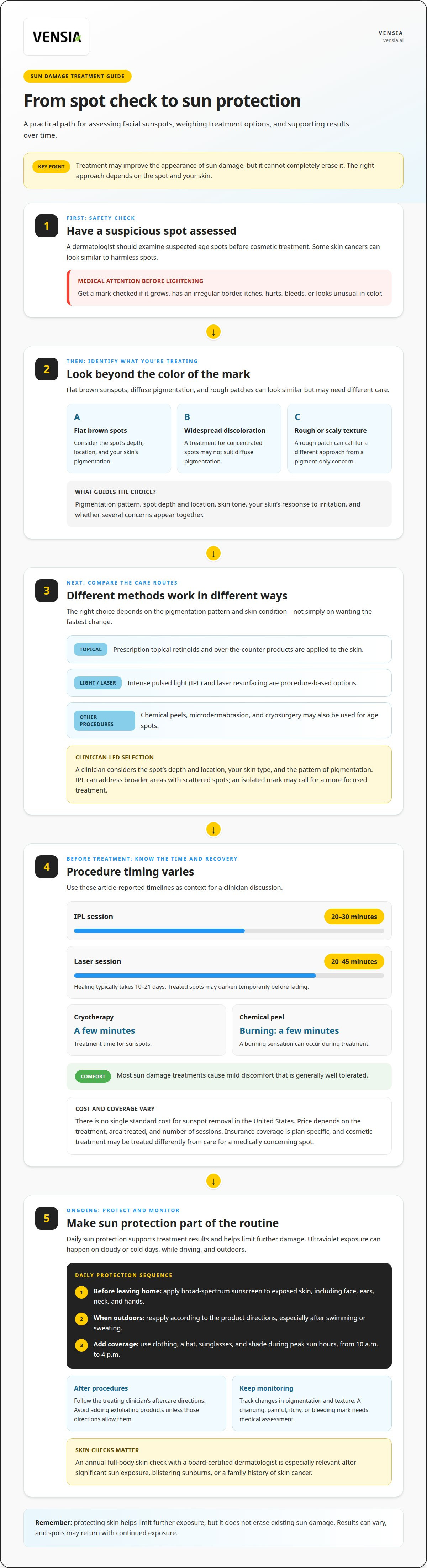
Choose a treatment by identifying the mark, not just matching its color. Flat brown sunspots, diffuse pigmentation, and rough patches can look similar but may need different care. A dermatologist should examine suspected age spots before cosmetic treatment because skin cancer can resemble a harmless spot. A spot that grows, has an irregular border, itches, hurts, bleeds, or looks unusual in color needs medical attention before any lightening routine.
Skin tone and the pattern of pigmentation also shape your options. A treatment targeting concentrated brown spots may not suit widespread discoloration or a rough, scaly patch. A dermatologist considers the spot’s depth and location, your skin’s response to irritation, and whether several concerns appear together. Sun-damaged skin may benefit from separate approaches for visible spots and texture changes.
Options used for age spots include prescription topical retinoids, intense pulsed light (IPL), laser resurfacing, microdermabrasion, chemical peels, and cryosurgery. These treatments work differently: topical products are applied to the skin, while procedures target or remove affected surface areas. The right choice depends on the pigmentation pattern and skin condition, not simply on the desire for the fastest change.
In the United States, there is no single standard cost for sunspot removal. The price depends on the treatment, the area treated, and the number of sessions. Insurance coverage is plan-specific, and cosmetic treatment may be treated differently from care for a medically concerning spot. Review your plan’s coverage terms before scheduling a cosmetic procedure.
For sunspots and uneven tone, IPL uses pulses of light to target visible discoloration. A typical IPL session takes 20-30 minutes. It can address broader areas with scattered spots, while a single isolated mark may call for a more focused treatment. A clinician weighs the location and depth of pigmentation, along with your skin type, before selecting light-based treatment.
Other procedure timelines differ. Cryotherapy for sunspots takes a few minutes, while most laser sessions take 20-45 minutes. Healing after laser treatment typically takes 10 to 21 days, and treated spots may darken temporarily before fading. Chemical peels can cause a burning sensation that lasts a few minutes. Most sun damage treatments cause mild discomfort that is generally well tolerated.
At-home and over-the-counter products offer another route for visible pigmentation. A topical product can fit a routine focused on dark spots and uneven tone, but it should not replace assessment of a growing, bleeding, or unusually colored mark. Have a dermatologist check a spot before treating it as cosmetic.
For sun damage spots on the face, removal does not mean erasing all sun damage. Treatments can improve appearance, but results vary with the type and depth of pigmentation. An annual full-body skin check with a board-certified dermatologist is especially relevant after significant sun exposure, blistering sunburns, or a family history of skin cancer.
Sun protection and long-term maintenance
Treatment can improve visible brown spots, but ongoing ultraviolet exposure can contribute to new pigmentation and uneven tone. Daily sun protection helps limit further damage, whether you’ve had laser treatment or chemical peels, or use topical care. Make it part of your regular routine, not something reserved for bright summer days. Ultraviolet exposure can also occur while driving and outdoors on cloudy or cold days.
Apply sunscreen to all exposed skin before leaving home, including your face, ears, neck, and hands. Cleveland Clinic recommends this approach to help protect areas often left uncovered during everyday activities. Choose a broad-spectrum sunscreen for daily use and follow its directions for application and reapplication. A commute, a walk, and time near a window can all add to your exposure throughout the day.
Build other protective habits into the same routine:
- Use a broad-spectrum sunscreen every day, including overcast or cold days.
- Cover exposed skin with clothing, a hat, or sunglasses when outdoors.
- Seek shade during peak sun hours, from 10 a.m. to 4 p.m.
- Reapply sunscreen while outdoors according to its directions, especially after swimming or sweating.
- Remember often-exposed areas such as the ears, neck, and backs of the hands.
Sun protection matters after cosmetic procedures, too. Skin treated with a laser or chemical peels may need particular care during recovery. Follow the treating clinician’s aftercare directions, and avoid adding exfoliating products unless those directions allow them. Consistent sun protection supports the skin as it heals and helps reduce renewed exposure to treated areas.
Long-term maintenance means repeating simple steps, not relying on a single application. Apply sunscreen to exposed skin before leaving home. If you’ll be outdoors, bring it along and reapply as directed. A hat and shade offer useful additional protection, but they don’t replace sunscreen on exposed areas. This routine can help reduce the chance of developing further sun-related brown spots.
Sun protection supports treatment, but it doesn’t erase existing sun damage. Results from procedures or topical care can vary, and spots may return with continued exposure. Track changes in pigmentation and texture over time. A mark that grows, bleeds, hurts, itches, or changes color needs medical assessment, not another cosmetic product. Prevention and attention to changing spots serve different purposes.
Signs of photoaging, including uneven skin color and texture
Photoaging can change both facial skin color and texture. Recognizing these changes helps distinguish routine cosmetic concerns from signs that need dermatology assessment.
Photoaging and sun-damaged skin
Photoaging is skin change associated with ultraviolet exposure, including sunspots, redness, wrinkles, and rough patches. Signs can begin in the teens to early 20s, and the face, neck, arms, and hands are commonly affected. Not every change is purely cosmetic: actinic keratoses may signal future skin cancer, so a new or changing patch deserves attention.
Look at the overall pattern, not just one brown spot. Sun damage may appear as scattered marks, broader areas of diffuse hyperpigmentation, or redness from broken capillaries. Fine wrinkles and rough texture can accompany uneven color. For example, a cheek may have small, flat spots and a coarse surface, while the nose has persistent redness.
Uneven skin color and texture
Uneven color means pigmentation or redness varies across nearby areas, while uneven texture refers to roughness or visible wrinkling. These differences matter because a flat brown spot and a scaly patch call for different attention. Actinic keratoses may appear as small, rough, scaly patches, sometimes red or brown. Have a changing patch assessed rather than treating it as an ordinary dark spot.
A dermatologist can assess suspicious changes and distinguish cosmetic pigmentation from lesions that need medical attention. An annual full-body skin check with a board-certified dermatologist is recommended, especially after significant sun exposure, blistering sunburns, or with a family history of skin cancer. Discuss a spot with a doctor if it grows, has an irregular border, itches, hurts, bleeds, or looks unusual in color.
Topical care can address some visible concerns, but it won’t diagnose a lesion. Topical L-ascorbic acid may help protect against UVA and UVB rays, support collagen production, and lighten dark spots. A simple regimen can pair a targeted topical product with daily sun protection. Follow product directions, and avoid applying an exfoliating product over irritated or broken skin.
Procedures such as resurfacing target selected signs, including pigmentation or fine wrinkles, but they don’t assess whether a mark is cancer. Cosmetic care addresses appearance, while dermatology evaluation focuses on skin health. If a patch is rough, scaly, or changing, have it assessed before choosing a topical routine or resurfacing treatment.
Visible signs of facial sun damage
Facial sun damage can show up as changes in color, texture, and fine lines. Sunspots are flat brown marks that often appear on the face, shoulders, forearms, and backs of the hands. A cheek with scattered spots may look different from an area with broader, diffuse pigmentation. These patterns help describe the concern, but appearance alone cannot identify every skin condition.
Sun exposure can also contribute to redness from broken capillaries, rough texture, wrinkles, and actinic keratoses. These signs may appear together: a forehead might have fine lines and rough patches, while the cheeks show uneven color. The neck, arms, and hands are also commonly exposed and may show similar changes.
Common visible changes include:
- Flat brown spots: sunspots often develop after sun exposure.
- Uneven pigmentation: diffuse hyperpigmentation can appear across broader areas.
- Redness: broken capillaries may create visible red areas.
- Texture changes: roughness, wrinkles, and scaly patches can occur.
The timing varies. Signs of photoaging usually begin in a person’s teens to early 20s, while people using tanning beds may notice changes within a few years. Long-term sun exposure can cause DNA changes that may appear as actinic keratosis or skin cancer. This range matters because a cosmetic spot and a potentially concerning lesion can look alike.
Actinic keratoses may appear as small, scaly red or brown patches. They can be a warning sign of future skin cancer, so don’t assume a rough facial patch is simply dry skin or pigmentation. A mark that grows, bleeds, hurts, itches, has an irregular border, or looks unusual in color needs medical attention. A board-certified dermatologist can assess these changes.
Fine lines and wrinkles are visible signs of photoaging, but they don’t tell the whole story. Topical L-ascorbic acid may help protect skin from UVA and UVB rays, support collagen production, and lighten dark spots. It addresses some appearance concerns, not diagnosis. A topical routine can target discoloration, while a changing scaly patch needs assessment before cosmetic care.
Look for patterns across exposed areas rather than focusing on one mark. Compare your face with your neck and the backs of your hands, and note changes in color, texture, or shape. These observations can help you describe what you see during dermatology care. Since sun damage cannot be completely erased, recognizing its signs supports informed decisions about care and long-term skin health.
Effects and appearance of sun damage
Sun damage is cumulative, so facial changes can reflect years of exposure rather than one sunny afternoon. Its appearance may combine pigmentation, redness, wrinkles, and roughness instead of one isolated spot. For example, brown marks may appear alongside changes in texture. Treatments can improve visible signs, but sun damage cannot be completely erased. This distinction sets realistic expectations for cosmetic care.
The face is commonly affected, along with the neck, arms, and hands. These areas receive repeated exposure during everyday activities, including driving and time outdoors. Tanning beds also expose skin to ultraviolet light; some users notice damage within a year or sooner. The timing and pattern vary, but visible changes can appear earlier than expected.
Sun exposure can affect skin beyond its appearance. Long-term exposure can cause DNA changes that may appear as actinic keratosis or skin cancer. A new mark that changes, bleeds, or looks unusual needs more than cosmetic attention. Cosmetic care addresses appearance, while medical assessment addresses possible disease. Don’t confuse the two.
Visible improvement doesn’t mean every effect has been reversed. Treatment may lighten brown pigmentation or smooth selected texture, while other sun-related changes remain. For example, someone treating spots may still notice fine wrinkles or redness. Multiple treatment types may be used for optimal results, but the choice depends on the concerns and their location.
That distinction can guide the next step:
- Scattered brown spots: focus discussion on pigmentation and its distribution.
- Rough or scaly patches: seek assessment before treating them as cosmetic discoloration.
- Several concerns together: describe color, texture, and any changes as separate issues.
Skin care after treatment still matters because ongoing exposure can contribute to further damage. A clearer appearance today doesn’t prevent new spots later. Daily sun protection helps reduce future exposure, while attention to changing marks supports earlier assessment. This combination matters whether care involves topical products or professional procedures.
Patients often expect removal to mean a permanent return to untouched skin. A more accurate goal is improving the visible appearance of selected spots while protecting skin from additional exposure. If pigmentation is the main concern, explore topical care for uneven pigmentation as one part of a broader skin-care routine. Keep appearance goals separate from medical evaluation of suspicious changes.
VENSIA: VENSIA Anti Pigmentation Cream | Removes Dark spots , Fine Lines, Wrinkles & Ageing Spots Suitable for Women/Men - All Skin Types - 30 gm| Even Skin Tone - Pigmentation removal
VENSIA Anti Pigmentation Cream | Removes Dark spots , Fine Lines, Wrinkles & Ageing Spots Suitable for Women/Men - All Skin Types - 30 gm| Even Skin Tone - Pigmentation removal is a topical option for people focused on dark spots and uneven-looking tone. It may fit a cosmetic skincare routine when pigmentation is the concern and the mark doesn’t have warning signs.
Use sun protection alongside topical care to help limit further exposure. A cream isn’t a substitute for assessing a spot that grows, bleeds, hurts, itches, or changes appearance. Have suspicious or unusual marks assessed before treating them as cosmetic concerns.
For questions about VENSIA Anti Pigmentation Cream or skincare focused on pigmentation, contact VENSIA.
Choose a next step that fits your skin goals
Decide what you want to address first, such as a cluster of dark spots or generally uneven tone. That priority can help you choose a manageable skincare routine and track how your skin responds over time. Focus on visible improvement, not completely reversing past sun exposure.
If you’re considering a topical option for pigmentation, VENSIA Anti Pigmentation Cream is intended for dark spots and uneven-looking tone. For guidance on VENSIA products and choosing an option that fits your skincare goals, contact VENSIA to discuss your options.
A measured approach to removing sun damage spots on your face can help you make informed choices without rushing into cosmetic care. Keep sun protection in your routine, and give your skin’s needs thoughtful attention as you move forward.
Frequently Asked Questions
Can sun damage be reversed?
Sun damage cannot be completely reversed, though treatment can improve its visible appearance. The change you notice depends on what you’re addressing: a flat brown spot, rough texture, or fine lines may call for different approaches. Lightening pigmentation, for example, won’t necessarily smooth a rough patch. Set a specific goal with a qualified professional, and keep sun protection in your routine to help limit further damage.
Are freckles sun damage?
Freckles and sunspots can both look like small brown marks, so color alone can’t identify a spot. Sunspots are flat brown marks that develop after sun exposure, though individual marks can vary in appearance. If a spot is new, changing, irregular, itchy, painful, or bleeding, don’t assume it’s a freckle. Have a doctor assess concerning changes rather than trying to fade them cosmetically.
Are there at-home treatments or over-the-counter remedies to treat premature skin aging?
At-home skincare can support care for visible concerns, but it can’t determine whether a mark needs medical attention. Topical L-ascorbic acid may help protect against UVA and UVB rays, support collagen production, and lighten dark spots. Follow product directions and avoid layering irritating products. If a routine causes persistent irritation, stop using the irritating product and seek professional advice before restarting.
How do I remove sun spots?
First, establish whether the mark is a sunspot or a lesion that needs medical assessment. Options used for sunspots include topical treatments, intense pulsed light, laser treatment, chemical peels, and cryotherapy. The spot’s depth and location influence the choice, and some cases need more than one approach. Treated spots may temporarily darken after laser treatment before fading, so follow the selected treatment’s care instructions.
Is sun damage permanent?
Some visible effects can improve, but sun damage cannot be completely erased. Selected spots or texture concerns may respond to treatment, while other changes remain. Distinguish between improving existing marks and preventing further exposure: treatment addresses appearance, while sun protection helps limit additional damage. If a mark changes or develops symptoms, seek assessment instead of treating it solely as a cosmetic concern.
What Does Sun Damage Look Like?
Sun damage can appear as flat brown spots, diffuse darker pigmentation, redness from broken capillaries, wrinkles, rough texture, or scaly patches. For example, a face may have brown marks on the cheeks and roughness near the forehead. These signs can overlap, and appearance alone can’t reliably identify every lesion. A changing, bleeding, painful, itchy, or unusually colored spot needs medical assessment.
What are sun damage spots on the face, and how can they be distinguished from skin cancer?
Sun damage spots are often flat brown marks that develop after sun exposure. However, skin cancer can resemble an age spot, so appearance alone can’t safely distinguish them. Discuss a mark with a doctor if it grows, has an irregular border, itches, hurts, bleeds, or looks unusual in color. Have suspected age spots assessed before pursuing cosmetic treatment rather than relying on home observation alone.
When should a dermatologist examine a dark or changing facial spot?
Arrange medical assessment if a spot grows, develops an irregular border, itches, hurts, bleeds, or changes to an unusual color. Don’t wait to add it to a cosmetic skincare routine. A dermatologist can assess the mark before treatment because skin cancer may resemble an age spot. Regular full-body skin checks are especially relevant for people with significant sun exposure, blistering sunburns, or a family history of skin cancer.


