

How to Layer Niacinamide with Vitamin C in Your Routine
You don’t have to choose between vitamin C and niacinamide. In most routines, they can be used together: apply vitamin C after cleansing, then layer niacinamide once the first serum has absorbed. Knowing how to layer niacinamide with vitamin C can help you build a clear, comfortable routine without unnecessary steps.
If you’ve heard that these ingredients cancel each other out or shouldn’t be combined, the concern is understandable. In practice, order, formula texture, and your skin’s response all matter. If layering feels irritating, use the serums at different times of day instead.
This guide explains what each ingredient contributes, which serum to apply first, and how long to wait between layers. You’ll also learn when to separate them into morning and evening routines, how to introduce them gradually, and what to consider if your skin is sensitive. A few thoughtful adjustments can help you build a routine that suits your skin without unnecessary steps.
Key Takeaways
- Vitamin C and niacinamide can generally fit into the same skincare routine; your skin’s response and each formula help determine the best approach.
- Layer serums from lighter to heavier textures, allowing each one to absorb before applying the next.
- Separate the ingredients into morning and evening routines if your skin is sensitive or layering feels uncomfortable.
- Introduce new products gradually and pay attention to signs of irritation as your routine develops.
- Choose a product format that suits your needs, including a niacinamide and vitamin C body lotion for dry or rough skin.
Can you use niacinamide and vitamin C together?
Yes. Niacinamide and vitamin C can usually be used in the same routine, rather than treated as ingredients that cancel each other out. Vitamin C, also called L-ascorbic acid in its formal form, is an antioxidant. Niacinamide, a form of vitamin B3, supports a range of skin concerns, including uneven tone and excess oil. Combining them can make a routine address more than one concern without requiring separate ingredient categories.
The benefit of pairing antioxidants is that they address different parts of a skincare routine. Vitamin C helps protect skin from oxidative stress, while niacinamide supports the skin barrier and can help improve the appearance of uneven tone. Together, these ingredients may complement each other: one offers antioxidant support, and the other adds barrier-focused care. They don’t need to be mixed together in your palm. Use products formulated with each ingredient, applying them in separate layers so each can absorb.
Niacinamide can also be useful when oiliness is part of your concern. A study by Draelos and colleagues examined the effect of 2% niacinamide on facial sebum production. That makes the ingredient relevant to routines focused on shine, as well as those aimed at supporting a more even-looking complexion. Its benefits aren’t limited to facial serums; the product’s intended use and formulation matter when choosing where it belongs in your routine.
Consistency matters more than adding extra layers. Initial brightening from vitamin C may become visible within two to four weeks, while improvement in uneven tone and texture may take six to eight weeks of daily use. These timelines describe different outcomes, so don’t treat them as interchangeable. Keep your routine steady and assess your skin over time rather than changing several products at once.
Niacinamide and vitamin C can be used with retinol or exfoliating acids, but combining several active ingredients may increase the chance of irritation. Niacinamide serum can serve as a buffer beneath retinol. One practical approach is to use vitamin C in the morning and retinol in the evening instead of layering every active in one routine.
If your skin is sensitive, limit how many products you introduce at once. Start each serum every other day, then gradually increase to daily use if your skin tolerates it. The Cleveland Clinic recommends beginning with a lower concentration of vitamin C for sensitive skin; higher concentrations may cause redness or irritation in some cases. If layering stings or leaves persistent redness, use the ingredients in separate routines.
Layering order for niacinamide and vitamin C serums
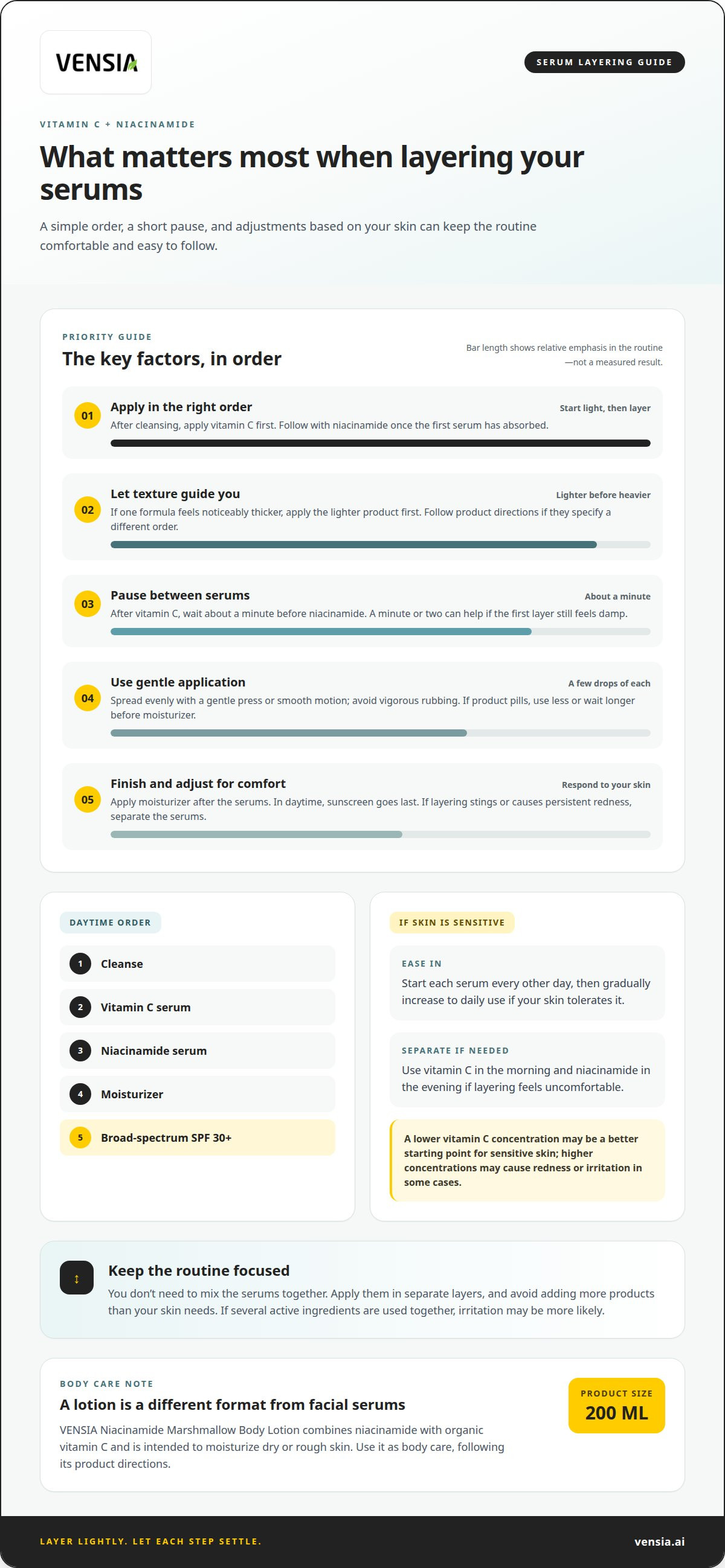
Apply vitamin C after cleansing, then layer niacinamide once the first serum absorbs. Let product texture guide the order of your skincare steps. Knowing how to layer niacinamide with vitamin C starts with applying lighter products before heavier ones.
Choosing the Serum Application Order
The usual order is vitamin C first, followed by niacinamide. This places the lightweight serum on clean skin before you add another layer.
After cleansing, smooth on vitamin C serum, then apply niacinamide serum. If one formula feels noticeably thicker, use texture as your guide and apply the lighter product first. This helps prevent a denser layer from sitting beneath a watery serum and disrupting even application. Aim for a comfortable sequence, not more products than your skin needs.
Next, apply moisturizer to support your routine. In the daytime, sunscreen goes last, before going outside. Use broad-spectrum SPF 30+ sunscreen every morning when using these serums. If the product directions specify another order, follow them because formulas can differ in texture and intended use.
Absorption Time and Waiting Between Layers
A short pause between serums lets the first layer settle before you apply the next. This can reduce shifting or stickiness when another product goes over a serum that still feels wet.
After vitamin C, wait about a minute before applying niacinamide. A minute or two between products can help each layer absorb, especially if the first serum still feels damp. Your skin doesn’t need to feel tight or completely dry. Let visible wetness settle, then continue gently.
Use a few drops of each serum and spread them evenly without vigorous rubbing. Gently press or smooth vitamin C over your face, let it absorb, then apply niacinamide. If a product pills, use less or wait longer before applying moisturizer. Pilling is a cue to adjust how you apply the products, not to add more.
Build your routine from cleanser to serum to moisturizer, then finish daytime skincare with sunscreen. This order keeps heavier creams from sitting beneath lightweight serums. A practical guide to how to layer niacinamide with vitamin C also considers where you’re applying each product: facial serums and body lotions have different intended uses.
For body care rather than facial serum layering, VENSIA Niacinamide Marshmallow Body Lotion combines niacinamide with organic vitamin C and is intended to moisturize dry or rough skin. Use the lotion as body care, following its product directions.
Separating the serums between morning and evening routines
Using vitamin C in the morning and niacinamide in the evening gives each ingredient a separate place in your routine. This approach can suit sensitive skin or anyone who prefers fewer layers at once. It also makes it easier to identify which product may be affecting your skin if irritation develops after you introduce a new formula.
For a morning routine, apply vitamin C after cleansing and toning, then follow with moisturizer. Vitamin C is an antioxidant, so using it during the day can complement a routine that addresses exposure to free radicals. Finish with sunscreen as the final skincare layer before going outside. Broad-spectrum SPF 30+ sunscreen is recommended every morning when using these ingredients, regardless of whether niacinamide is in that same routine.
At night, apply niacinamide serum after cleansing, then add moisturizer. Niacinamide can also be used in the morning, so separating the ingredients is an option, not a requirement. If two serums feel like too much in one routine, use vitamin C in the morning and niacinamide in the evening. This keeps the steps distinct while making both ingredients part of your regular skincare.
Sensitive skin may benefit from separating the serums, which reduces the number of active layers applied together. Start with vitamin C in the morning and niacinamide at night, using each every other day at first. If your skin tolerates both, gradually increase to daily use. The Cleveland Clinic recommends starting with a lower concentration of vitamin C for sensitive skin, since higher concentrations may cause redness or irritation in some cases.
Keep the morning order consistent: cleanse, apply vitamin C, moisturize, then apply sunscreen. Sunscreen goes at the end because it is the final protective skincare layer, not a serum to place beneath moisturizer. A moisturizer that contains sunscreen can serve as the daytime finishing step. Follow the product directions and apply it before going outdoors.
In the evening, keep your routine focused: cleanse, apply niacinamide, then finish with moisturizer. If you use retinol at night, using vitamin C in the morning can keep those active steps separate. Niacinamide can fit into either routine, depending on your skin’s comfort and the product directions. Choosing one serum for each time of day may make regular use easier.
Products containing vitamin C and niacinamide
Products containing both ingredients can simplify a routine, while separate serums let you adjust each formula independently. Check the ingredient list and directions before combining them with other active skincare. Serums, creams, and moisturizers can differ in texture and intended use, which affects where each fits. For example, a lightweight serum can go beneath a richer moisturizer.
There isn’t one concentration that suits every skin type. A study examined 2% niacinamide for its effect on facial sebum, but that figure alone doesn’t establish an ideal concentration for everyone. Choose formulas your skin tolerates. For higher-strength L-ascorbic acid, particularly above 10 to 15%, some formulators and dermatologists recommend applying vitamin C and niacinamide in separate steps.
Formulation also matters. L-ascorbic acid is typically formulated at a pH between 2.5 and 3.5. Vitamin C products can differ in their form and overall formula, so two products with the same headline ingredient may not feel or behave identically. Look at texture and directions as well as the ingredient name. A watery serum and a cream, for instance, usually occupy different places in a layered routine.
Patch test a new product on a dime-sized area of skin, then observe the area for at least 24 hours before applying it across your face. Watch for redness, irritation, or discomfort. This small test can help you notice an immediate reaction before using the product over a larger area, though it doesn’t guarantee that later use will be irritation-free.
Introduce products one at a time. After adding a new skincare product, wait at least a week before introducing another; if your skin is sensitive, you can wait an additional week or two. Start using a new product every other day, then increase to daily or twice-daily use only if your skin tolerates it. Changing one thing at a time makes it easier to identify which formula may be affecting your skin.
For example, begin with a vitamin C serum alone, then add niacinamide after your skin has adjusted. If redness or irritation appears, pause the newest product rather than changing several steps at once. If you’re concerned about dark spots or uneven tone, compare them under consistent lighting instead of introducing multiple products that make the effect difficult to assess.
How to layer vitamin C and niacinamide
If your skin is sensitive, use vitamin C in the morning and niacinamide in the evening rather than layering them at once. The Cleveland Clinic recommends starting with a lower concentration of vitamin C for sensitive skin, then adjusting your routine according to how your skin responds.
Applying Both Ingredients
Layering means applying each serum separately, one after the other, rather than blending them together. This preserves each formula’s texture and makes it easier to tell how your skin responds to each ingredient.
After cleansing, apply a few drops of vitamin C serum and let it absorb before applying niacinamide. Follow with moisturizer, and finish a daytime routine with sunscreen. If one serum has a heavier texture, apply the lighter formula first. Follow the product directions, too, since the form of vitamin C and the overall formulation can affect how a serum is used.
Vitamin C products aren’t all formulated alike. L-ascorbic acid is one form of vitamin C, while other products may use different forms. Formulation can affect texture and stability, so follow the product directions rather than assuming every serum layers in the same way. Don’t mix serums in your hand; apply each as a separate step.
Layering for Sensitive Skin
A sensitive-skin routine limits the number of active ingredients applied at once. Start with vitamin C in the morning and niacinamide at night, initially using each every other day. This spacing makes it easier to notice whether redness or irritation follows one product, instead of trying to identify the cause after layering several new formulas.
If your skin remains comfortable, increase use gradually. For sensitive skin, the Cleveland Clinic recommends starting with a lower concentration of vitamin C. Higher concentrations may cause redness or irritation in some cases. Pause a product if irritation develops, and avoid adding another new active while your skin settles.
For a more structured approach, introduce one serum first and keep the rest of your routine familiar. Add the second ingredient only after you know how the first feels on your skin. Separating the steps helps you assess each product’s effect without changing several things at once.
Texture offers another practical clue. A thin serum usually goes before a richer moisturizer, while a formula that pills may need a smaller amount or more time to absorb. Let each layer settle before applying the next, and follow the product directions if they differ.
Track changes in brightness or uneven tone under similar lighting, rather than judging your skin after one application. Consistent serum layering may show signs of improvement after 4-6 weeks. To explore gentle niacinamide body care, view skincare options.
VENSIA: VENSIA Niacinamide Marshmallow Body Lotion 200 ML - Moisturizing, Improving Dryness, Rough Skin Soothing, Organic Vitamin C, Gentle Exfoliating, All Skin Types
VENSIA Niacinamide Marshmallow Body Lotion 200 ML combines niacinamide and organic vitamin C in a body-care formula. Consider it when dryness or rough skin is your concern and you want both ingredients in a lotion rather than separate facial serums.
The lotion is described as moisturizing, soothing for rough skin, and gently exfoliating. Its body-lotion format makes it distinct from the facial serum routine discussed above; use it as body care and follow the product directions. It’s suitable for all skin types, though introducing a new product gradually can help you notice how your skin responds.
If you’re looking for niacinamide and vitamin C body care for dry or rough skin, this lotion may suit that need. Contact VENSIA if you’d like to learn more about the product.
Build a routine that fits your next step
Use what you’ve learned about how to layer niacinamide with vitamin C as a starting point, then keep your routine focused on your main skin concern. Facial serums and body care serve different needs, so choose products for their intended use and follow their directions. For dryness or roughness, VENSIA Niacinamide Marshmallow Body Lotion combines niacinamide with organic vitamin C. VENSIA also offers Anti Vitiligo Cream and Anti Pigmentation Cream for targeted skincare concerns.
Introduce changes gradually and notice how your skin responds before adding more products. That steady approach makes it easier to shape a routine around comfort, texture, and the care you want to prioritize. If you’d like help considering a suitable next step, contact VENSIA for skincare guidance.
Small, thoughtful adjustments can help you build a manageable routine and feel more confident caring for your skin.
Frequently Asked Questions
Can You Use Them Daily?
Yes, daily use may suit your routine once your skin tolerates both products. If either serum is new, introduce it gradually instead of starting both at full frequency. Begin with one product and keep the rest of your skincare unchanged. If redness, dryness, or irritation develops, reduce use or separate the serums between morning and evening so you can identify what your skin tolerates.
What can these ingredients do for your skin?
Vitamin C provides antioxidant support and can brighten the appearance of uneven skin tone. Niacinamide supports the skin barrier and can help address concerns such as excess oil and uneven tone. For example, someone concerned about dullness and shine may find both ingredients relevant. Their effects depend on the product formulas and your skin’s response, so choose products based on your concerns and introduce them thoughtfully.
When can I expect to see visible improvements?
Visible changes vary by concern and ingredient. Initial brightening from vitamin C may appear within two to four weeks, while visible improvement in uneven tone and texture may take six to eight weeks of daily use. These timelines describe different outcomes, not one schedule. Keep your routine consistent and compare the same areas under similar lighting instead of judging progress after one application.
Why Layer These Two Serums?
Layering lets one routine address complementary concerns with separate ingredients. Vitamin C can support a brighter-looking complexion, while niacinamide supports the skin barrier and can help with uneven tone. For example, someone concerned about both dullness and excess oil may choose products featuring each ingredient. If two serums feel like too many steps, use them at different times of day instead.
Why do some people think it’s unsafe to mix the two?
Some concerns stem from questions about how formulas interact, especially with high-strength vitamin C. Some formulators and dermatologists recommend separating vitamin C and niacinamide when L-ascorbic acid is above 10 to 15% concentration. Irritation may also be mistaken for an ingredient conflict. If your skin reacts, use the products separately and introduce them individually to help identify which formula may be contributing.
Should vitamin C or niacinamide go on first?
Apply vitamin C first, then niacinamide, if the vitamin C formula has the lighter texture. When deciding how to layer niacinamide with vitamin C, use product texture as a guide and apply lighter formulas before heavier ones. For example, apply vitamin C after cleansing, then niacinamide, followed by moisturizer. Follow product directions if they specify another sequence, since formulas can differ.
How long should you wait between applying vitamin C and niacinamide?
Let the vitamin C serum absorb before applying niacinamide. About a minute is a practical pause; wait a minute or two if the first layer still feels wet. The goal is to let the products settle, not to follow a rigid timer. If the layers pill, use less serum or allow more time before applying the next product.
Can niacinamide and vitamin C be used in the same skincare routine?
Yes, they can usually be included in one routine, either layered or applied at separate times. How to layer niacinamide with vitamin C depends on your skin’s comfort, the products’ textures, and their directions. Someone comfortable with multiple steps may layer both, while someone with sensitive skin may prefer vitamin C in the morning and niacinamide at night.


