

Can I Use Anti-Pigmentation Cream With Retinol? How to Pair Them
A crowded routine isn’t the only way to address uneven skin tone. If you’re wondering whether you can use anti-pigmentation cream with retinol, the short answer is yes. Whether to layer them or use them on different nights depends on the cream’s ingredients and how your skin responds.
It makes sense to be cautious: retinol can irritate skin, and introducing several active ingredients at once makes it harder to tell what your skin tolerates. Learn how to pair or alternate pigment-focused products, choose a starting routine, and give your skin time to adjust.
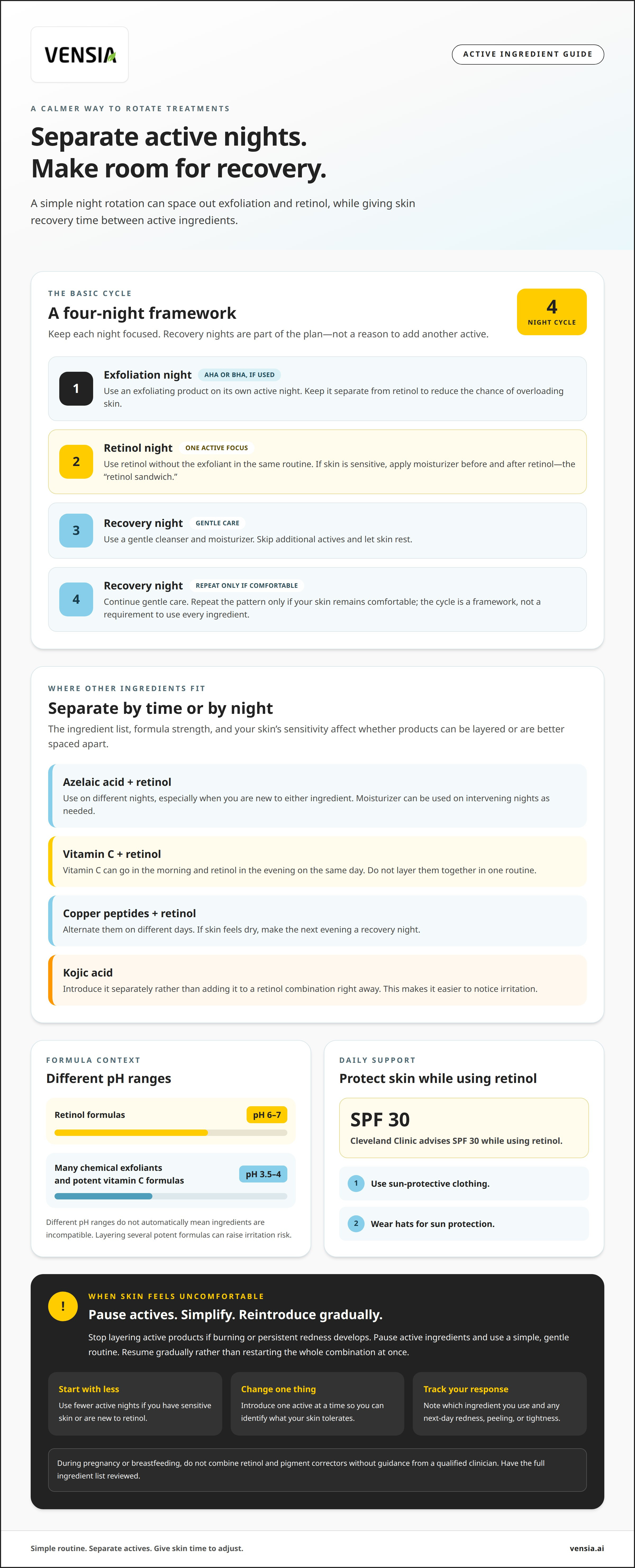
We’ll also cover supportive steps, including sun protection. Cleveland Clinic advises using SPF 30 and wearing sun-protective clothing and hats while using retinol. The aim is a clear, manageable routine, not a race to use the most products.
Key Takeaways
- Learn why irritation can affect the appearance of pigmentation, and how to respond if your skin becomes uncomfortable.
- Use different nights to space out stronger active ingredients and make a routine easier to tolerate.
- Understand which ingredients may fit alongside retinol and which are better separated into morning and evening routines.
- Build up retinol use gradually, guided by your skin’s response rather than the urge to use it more often.
- Keep an anti-pigment routine simple, with supportive care and sun protection as part of the plan.
Can I use retinol if I am using other pigment correctors & skin care?
Yes, retinol can fit with pigment correctors, but combining several actives may irritate skin. The ingredients, their strength, and your skin’s sensitivity determine whether to layer or alternate them.
Irritation, sensitivity, and post-inflammatory hyperpigmentation
Post-inflammatory hyperpigmentation (PIH) is darkening that can remain after skin inflammation or injury. Retinol-related redness, peeling, or stinging can trigger irritation, and the resulting marks may be especially concerning for people with darker skin tones. If your skin is sensitive, introduce one active at a time and watch for changes before adding another. A calm routine matters because irritation can undermine efforts to improve uneven tone.
Stop layering active products if burning or persistent redness develops. Retinoid side effects are usually temporary, but adding more products while skin is inflamed can increase discomfort. If your skin reacts easily, try retinol less often at first and adjust only as it tolerates use.
Managing irritation and skin-barrier damage
Barrier care means reducing irritation while the skin’s protective outer layer recovers. If a retinol combination causes a reaction, pause active ingredients and use a simple, gentle routine. Moisturizers containing ceramides can go underneath retinol to help limit irritation; a zinc-containing barrier cream can go over it to soothe skin. For sensitive skin, apply moisturizer before and after retinol, a method often called the “retinol sandwich.”
Resume active ingredients gradually rather than restarting the whole combination at once. This makes it easier to identify which product caused the reaction and reduces unnecessary strain on the skin barrier.
PH compatibility between actives
pH describes how acidic or alkaline a formula is, and different actives may be designed for different pH ranges. Retinol formulas are recommended around pH 6 to 7, while many chemical exfoliants and potent vitamin C formulas are designed around pH 3.5 to 4. These differences don’t automatically make ingredients incompatible, but layering several potent formulas can raise irritation risk. Separate them into morning and evening routines or different nights.
Keep your routine simple when you’re unsure how a combination feels on your skin. A cleanser, moisturizer, and one active ingredient provide a clearer starting point than several new formulas at once.
Combining retinol with pigment correctors
Azelaic acid and retinol can be used on different nights, particularly when you’re new to either ingredient. Vitamin C can go in the morning and retinol in the evening; use them on the same day, but don’t layer them together in one routine. Introduce kojic acid separately rather than adding it to a retinol combination immediately, so you can notice irritation before making the routine more complex.
During pregnancy or breastfeeding, don’t combine retinol and pigment correctors without guidance from a qualified clinician. The ingredients in a pigment cream matter, so have the full product ingredient list reviewed. For sun protection, Cleveland Clinic advises SPF 30, sun-protective clothing, and hats while using retinol. Daily protection helps reduce sun exposure while you address pigmentation.
Alternating active ingredients on different nights
Alternating active ingredients gives skin recovery time between products that may cause dryness or irritation. Rather than applying every pigment-focused ingredient together, assign each one a separate evening. This makes a routine easier to follow and helps you identify which ingredient affects your skin. Retinol may support collagen and help improve the appearance of hyperpigmentation, but using it alongside exfoliants can increase irritation.
Build a simple night rotation
A basic skin-cycling pattern separates exfoliation, retinol, and recovery. Night 1 is for an exfoliating product, Night 2 is for retinol, and Nights 3 and 4 are recovery nights. During recovery, use a gentle cleanser and moisturizer rather than adding another active. Then repeat the cycle if your skin remains comfortable. The pattern is a framework, not a requirement to use every ingredient.
For example, if your routine includes an AHA or BHA exfoliant, use it on a different night from retinol. Separating them lowers the chance of overloading your skin with active ingredients at once. If dryness or stinging appears, pause exfoliation and keep recovery nights simple.
Alternate pigment correctors and retinol
Azelaic acid and retinol can be assigned to different nights, especially when you’re beginning a combination routine. For example, use azelaic acid one evening and retinol another, with moisturizer on intervening nights as needed. This lets you observe how each ingredient affects your skin before deciding whether the schedule feels manageable.
Copper peptides can also be alternated with retinol, using them on different days. A simple pattern is retinol one evening, copper peptides the next, then a recovery evening if your skin feels dry. Don’t add several unfamiliar active ingredients at once. Changing one ingredient at a time makes it easier to identify the cause of sensitivity.
Adjust the schedule to your skin
Start with fewer active nights if you have sensitive skin or are new to retinol. A dermatologist can help tailor a routine if persistent irritation or difficult hyperpigmentation affects your choices. Keep notes on which ingredient you use and when, plus any redness, peeling, or tightness the next day. Those details help you see whether a rotation suits your skin or needs simplifying.
Alternating nights doesn’t mean every evening needs a treatment. Recovery nights are part of the plan, not wasted time. If your skin stays comfortable, maintain the schedule before adding another ingredient. If irritation returns, remove the newest active and return to a simpler routine. This measured approach supports consistency without asking your skin to tolerate multiple strong ingredients in one application.
Combining retinol with other topical treatments
Retinol can fit into a routine with other topical products, but timing matters. When starting out, apply anti-pigmentation cream and retinol at separate times or on different nights.
Layering anti-pigmentation cream with retinol
Layering means applying products in a planned order, while separating active ingredients can help limit irritation. Retinol is a vitamin A derivative that supports cell turnover, which can help improve the appearance of pigmentation and fine lines. Start with one active in the evening, then add the other on a different night once you know how your skin responds.
For a gentler routine, use vitamin C in the morning and retinol at night. They can be used on the same day, but shouldn’t be layered together in one routine. Hyaluronic acid can go under retinol to draw water into the skin; moisturizer can support comfort afterward.
Avoid applying retinol on the same day as exfoliating AHAs or BHAs. If benzoyl peroxide is also part of your routine, use it once a week on a day without retinol. These examples help prevent a crowded routine, where redness or dryness makes it difficult to tell which ingredient caused the reaction.
Some experienced users may mix a small amount of retinol with other active products. This isn’t a good starting point for beginners because it combines ingredients before their individual effects are clear. Introduce one product at a time instead, and keep the rest of your routine familiar.
Dermatologist guidance before combining treatments
A dermatologist can assess pigmentation’s depth and severity and help determine an appropriate treatment plan. Seek guidance before combining products if pigmentation is persistent, worsening, or difficult to identify, or if previous combinations caused significant irritation. These details can affect which ingredients are appropriate and how they fit together.
Retinol may help with pigmentation in the skin’s superficial layer, but it has limits for deeper dermal pigmentation. A topical routine may not address every cause or depth of discoloration. A dermatologist can assess the pattern and severity rather than relying on product layering alone.
If a combination causes marked redness, burning, or peeling, stop the active products and return to gentle cleansing and moisturizing. A reaction that doesn’t settle, or pigmentation that becomes more noticeable after irritation, is a reason to seek professional assessment. Bring the product ingredient lists, including retinol strength, so the dermatologist can review the full combination.
Retinol concentration and frequency of use
Retinol concentration and application frequency both shape how easily a topical routine fits your skin. Retinol supports skin-cell turnover, but starting with a stronger serum or applying it nightly can increase irritation. Over-the-counter products range from 0.01% to 1%, so check the label before setting a schedule. A low-strength formula gives beginners a more measured starting point.
Consider a product at 0.1% or 0.2% when first using retinoids. Another starting recommendation is 0.25% or less, with use two to three nights per week. These are starting guides, not targets you need to reach immediately. If your skin is sensitive, applying retinol once weekly is preferable to pushing through irritation, which may worsen pigmentation.
Some guidance suggests starting every second night and gradually increasing use as tolerated. Schedules differ because skin response matters more than a fixed calendar. Choose a cautious starting frequency, then keep it steady long enough to notice dryness, redness, or peeling. If irritation develops, reduce applications or pause rather than increasing strength and frequency together.
Concentration is only one part of the decision. Pure retinoic acid is about 20 times stronger than retinol, so these forms aren’t interchangeable when comparing labels. Don’t assume that a higher percentage will improve the appearance of pigmentation faster. A retinol application works through gradual turnover, and noticeable pigmentation changes may take several weeks to months.
- Starting: Choose a low-strength topical retinol, such as 0.1% or 0.2%, and apply it two to three nights per week.
- Adjusting: Increase use gradually only when your skin tolerates the current schedule.
- Reacting: Cut back or pause if irritation appears; once-weekly use can be preferable to aggravating skin.
Give each adjustment time to show how your skin responds. Retinoid users may need up to 12 weeks to see full results, so frequent changes make it harder to assess a routine. Avoid raising concentration and application frequency at the same time. After 2-3 months or when the product is finished, the next concentration decision can reflect both tolerance and progress.
Retinol is used in the evening, not as a morning serum. Keep daytime skincare focused on protection, and don’t double the next application to make up for a missed night. A consistent, tolerable schedule is more useful than choosing a higher strength before your skin is ready.
Simple anti-pigment skincare routines
A useful anti-pigment routine gives each step a clear purpose: cleanse, treat, moisturize, and protect. If you’re asking, “Can I use anti-pigmentation cream with retinol?”, consider the products’ ingredients and your skin’s response. A consistent routine makes it easier to notice effects and identify which product may cause irritation. You can include both products without applying them together.
A practical morning routine
In the morning, cleanse gently, apply a vitamin C product if your skin tolerates it, then moisturize. Finish with broad-spectrum SPF 50+ as part of an anti-pigment routine. Retinol belongs in the evening, so this AM/PM split keeps vitamin C and retinol from being layered together. Sun protection helps limit exposure that can contribute to visible pigmentation.
Apply sunscreen to exposed skin and follow its directions for reapplication, especially after swimming or sweating. Hats and sun-protective clothing add physical coverage. These steps support a pigmentation-focused skincare routine rather than relying on a topical product alone.
A calm evening routine
At night, cleanse and let your skin dry before applying retinol. Cleveland Clinic advises waiting 30 minutes after washing your face before applying a retinol product. Use a pea-size amount across the face, then moisturize. On nights without retinol, apply your pigment corrector as directed and keep the rest of the routine simple.
For example, a beginner might reserve retinol for a couple of evenings each week and use a pigment-focused cream on another evening. Keep recovery nights free of strong exfoliating acids. Avoid adding a new serum, scrub, or chemical exfoliant during the same week you introduce retinol. Changing one product at a time makes the cause of dryness or redness easier to recognize.
- Morning: Cleanse, moisturize, and apply SPF 50+.
- Retinol evening: Cleanse, wait for dry skin, apply a pea-size amount, and moisturize.
- Other evenings: Use the pigment corrector or choose a recovery routine.
Consistency matters more than a crowded shelf. Retinol may take several weeks to months to produce noticeable pigmentation results, and retinoid users may need up to 12 weeks to see full results. Don’t increase application frequency just because changes aren’t immediate. Track the nights you use each active and note irritation; that record can help you judge whether the routine is sustainable.
The question “Can I use anti-pigmentation cream with retinol?” is best approached one product at a time, with a schedule your skin tolerates. Choose a straightforward pigmentation-care option to support your treatment step: explore pigmentation care.
VENSIA: VENSIA Anti Pigmentation Cream | Removes Dark spots , Fine Lines, Wrinkles & Ageing Spots Suitable for Women/Men - All Skin Types - 30 gm| Even Skin Tone - Pigmentation removal
VENSIA Anti-Pigmentation Cream is a skincare option for people focusing on dark spots and uneven-looking skin tone. Its product description also names fine lines, wrinkles, and ageing spots. The cream is suitable for all skin types and formulated for both men and women. Consider it as a pigment-care step when you want a cream focused on these visible concerns.
If retinol is already part of your routine, introduce any additional active gradually and follow the product’s directions. Tracking how your skin responds can help you maintain a simpler routine and avoid adding several new products at once. A cream for visible pigmentation doesn’t replace sun protection or professional assessment when pigmentation is persistent or changing.
For information about VENSIA Anti Pigmentation Cream, contact VENSIA.
Make your next skincare step a considered one
If you’re still wondering whether you can use anti-pigmentation cream with retinol, focus on a routine you can follow and adjust it to your skin’s response. A product’s purpose and ingredients matter as much as where it sits in your routine. Keep your next step simple and avoid adding several unfamiliar products at once.
VENSIA offers VENSIA Anti-Pigmentation Cream for dark spots, fine lines, wrinkles, ageing spots, and uneven-looking skin tone. Its range also includes VENSIA Anti-Vitiligo Cream and VENSIA Niacinamide Marshmallow Body Lotion, described as moisturizing and soothing for dry or rough skin. Choose a product based on the concern you want to address, rather than adding products without a clear role.
For help considering VENSIA skincare options, contact VENSIA for skincare advice. A thoughtful routine can start with one clear choice and grow at a pace that feels manageable.
Frequently Asked Questions
Can you combine retinol with other topical skin treatments?
Yes, but the best approach depends on the other product and your skin’s tolerance. For example, hyaluronic acid can be layered under retinol, while exfoliating AHAs or BHAs are better used on separate days. If your routine includes several active ingredients, introduce them individually. That way, if dryness or redness appears, you can identify which product may be contributing instead of changing everything at once.
How to use it?
For facial use, cleanse gently and let your skin dry before applying retinol. Use a pea-size amount across the face, avoiding the eyes and lips, then moisturize. Start with a low-strength product and a modest schedule; don’t apply extra to make up for a missed night. In the morning, use sunscreen and sun-protective clothing. Follow the product label, since formulas and directions can differ.
Can you use anti-pigmentation cream and retinol together?
They can be part of the same broader routine, but using both in one application isn’t always the best starting point. Check the anti-pigmentation cream’s active ingredients: an exfoliating acid or another potent active may make same-night use harder to tolerate. A practical first trial is to use each product on a separate evening. Add or change one product at a time, and watch for discomfort.
Which anti-pigmentation ingredients are safe to combine with retinol?
Niacinamide may help counter some irritating effects of retinol and can be layered beneath it. Vitamin C is commonly used in the morning, with retinol in the evening, rather than layering both in one routine. Azelaic acid is another ingredient to consider on a separate night. “Safe” depends on the full formula and your skin’s response, so introduce each active separately instead of starting several together.
Can hydroquinone be used with retinol, and what are the risks?
Hydroquinone and retinol should be combined only under a treatment plan suited to your skin. Pairing active products can increase irritation, which may worsen the appearance of pigmentation. The appropriate approach depends on the product formulation, application schedule, and your skin’s sensitivity. If hydroquinone is part of your regimen, ask a dermatologist how to use it alongside retinol rather than creating a combination independently.
Should retinol and dark-spot cream be used on the same night or alternated?
Alternating nights is a sensible starting point, particularly when the dark-spot cream contains other active ingredients. For example, use retinol one evening and the pigment cream another, keeping the remaining nights simple. If both products are already familiar and comfortable, the ingredient list still matters before layering them. Separate application times won’t prevent every reaction, but they can make it easier to identify which product causes irritation.
How often should beginners use retinol with pigmentation treatments?
Beginners can start with a low-strength retinol a few nights per week, or less often if their skin is sensitive. Initially, use pigmentation-focused products on other nights rather than increasing both products together. Once the schedule feels comfortable, adjust gradually and note any redness, peeling, or tightness. A tolerable routine is more useful than one that forces you to stop because of irritation.
What are the side effects of combining retinol and anti-pigmentation products?
Possible effects include dryness, redness, peeling, stinging, and increased sensitivity. If irritation triggers inflammation, post-inflammatory hyperpigmentation can leave darker marks, a concern for people prone to uneven tone. Stop active products if a reaction develops and give your skin time with a gentle cleanser and moisturizer. Seek medical advice for persistent or severe symptoms, or if pigmentation becomes more pronounced after the irritation settles.


