

Explaining Vitiligo to a Child: What It Is and Why It Happens
A change in skin color isn’t a sign that a child is dirty, contagious, or at fault. Explaining vitiligo to a child can start simply: it’s a condition in which the immune system affects the cells that give skin its color, leaving lighter patches. A child can’t catch vitiligo from someone else.
It’s understandable to wonder why the patches appeared and what to say when a child notices them or hears questions from others. Vitiligo’s exact cause isn’t known, and it can affect children of every skin tone. This guide to explaining vitiligo to a child covers how changes in pigment happen, where patches may appear, and how to talk about appearance with warmth and honesty. You’ll also find ways to reassure a child that vitiligo isn’t their fault and that they deserve to feel comfortable joining in at school and with friends.
Key Takeaways
- Explain that vitiligo changes skin color when pigment-producing cells are affected, and it can’t spread from person to person.
- Reassure your child that vitiligo isn’t caused by poor hygiene or anything they or their family did.
- Learn how the pattern of lighter patches can differ and where they may appear, including on hair or inside the mouth.
- Make space for your child to talk about questions, classmates, and how they feel about changes in their appearance.
- Find supportive ways to help your child feel comfortable participating in everyday activities without pressure to hide their patches.
Chapter 1: What Exactly Is Pediatric Vitiligo?
Vitiligo affects close to 1 percent of children, or about one in 100. It’s a skin disease that changes pigment, but it isn’t an infection or skin cancer. Most children with vitiligo are as healthy as other children. The condition can still affect quality of life, especially when a child feels singled out or worries about developing new patches.
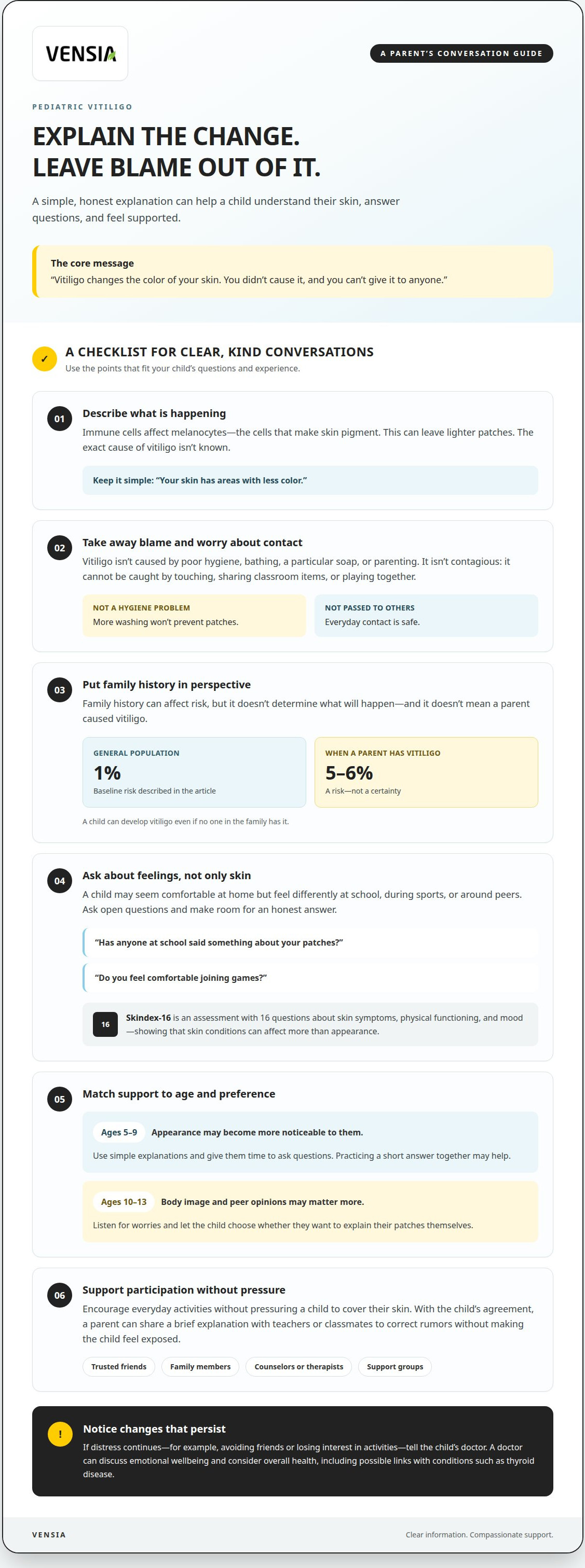
Checking emotional wellbeing means asking about daily experiences, not just looking at skin. A doctor can ask whether a child avoids photographs, swimming, or group activities, and whether comments from peers affect their confidence. Skindex-16 is an assessment with 16 questions about skin symptoms, physical functioning, and mood. The questions illustrate how a skin disorder may affect more than appearance.
Ask specific, open questions to understand what the child is experiencing. For example, try, “Has anyone at school said something about your patches?” or “Do you feel comfortable joining games?” Ask about friendships and relationships with peers, too. A child may seem fine at home but feel anxious during changing, sports, or class presentations.
Age can shape these conversations. Children aged 5-9 may become more aware of appearance, so simple explanations and time to ask questions can help. For ages 10-13, emotional effects may intensify as body image and peer opinions become more prominent. Listen for changes in behavior, such as withdrawing from friends or avoiding activities the child previously enjoyed.
When a child feels different, reassure them that vitiligo isn’t their fault and doesn’t make them less worthy of friendship. Explain that their patches are differences in skin color, not something they can pass to someone else. Invite them to share what bothers them, then help them choose words for answering questions.
Teachers and classmates can learn that vitiligo isn’t contagious and can’t be caught through touch. With the child’s agreement, a parent can share a brief explanation with school staff or classmates, correcting rumors without making the child feel exposed.
Match support to the child’s needs. A younger child might practice a short answer with a parent, while an older child may prefer to decide whether to explain their patches themselves. Encourage social activities without pressuring them to cover their skin. Trusted friends, family members, counselors, therapists, or support groups can provide additional support.
If distress continues, tell the child’s doctor about specific changes, such as avoiding friends or losing interest in activities. A doctor can also consider overall health, including possible links between vitiligo and conditions such as thyroid disease. Emotional support matters alongside understanding skin changes. Feeling heard can help a child approach school and relationships with greater confidence.
Explaining that vitiligo is not caused by poor hygiene or parenting
Vitiligo’s exact cause isn’t known, but it isn’t caused by poor hygiene or parenting. It isn’t contagious, either. A child can’t catch it through touching, sharing classroom items, or playing together. Clear explanations help separate the condition from blame and from common worries about everyday contact.
Vitiligo is an autoimmune condition: immune cells affect melanocytes, the cells that produce skin pigment. This describes a process in the body, not something a child or parent chose. Bathing, using a particular soap, or changing a child’s routine doesn’t explain why vitiligo develops. Avoid suggesting that more washing or stricter care will prevent patches.
Family history can be relevant without making vitiligo inevitable. When a parent has vitiligo, a child may have a 5-6% risk; the baseline risk in the general population is 1%. These figures describe risk, not certainty. A parent’s history can be part of the picture, but it doesn’t mean the parent caused the condition or passed it on through a specific action.
A child may develop vitiligo even if no one in the family has it. Family history is one factor, not a complete explanation. If a child asks, “Did I get this because of something I did?” answer plainly: “No. You didn’t cause it, and you can’t give it to anyone.” Leave room for follow-up questions.
Vitiligo can occur alongside other autoimmune conditions, including thyroid disease, type 1 diabetes, and alopecia areata. An association doesn’t mean every child with vitiligo has another condition. A doctor may use a blood test to check for thyroid problems or diabetes. This looks at related health concerns; it doesn’t show that poor hygiene or parenting caused the skin changes.
Parents can respond to blame-based comments with calm, specific language. If someone suggests a child is dirty, explain that vitiligo changes pigment and isn’t a hygiene problem. If a relative worries that it runs in the family, clarify that family history can affect risk, but it doesn’t determine what will happen to a child.
The emotional impact of these misconceptions matters, too. A child might feel responsible, avoid friends, or worry about passing vitiligo to a sibling. Ask what they’ve heard and where they heard it, including online or from classmates. Then answer the concern directly, without making the child responsible for educating everyone around them.
For example, a child can tell a classmate, “Vitiligo changes the color of my skin. You can’t catch it from me.” Parents can share the same simple message with teachers if rumors arise. Consistent explanations make clear that everyday contact is safe and that neither the child nor their caregivers caused the condition.
What vitiligo is and how it affects skin color
Vitiligo changes skin color when pigment-producing cells are lost or stop working. Understanding this process helps explain why white patches appear and why they need sun protection.
Skin Pigment and Color Changes
Melanocytes make melanin, the pigment that gives skin, hair, and parts of the eyes their color. In vitiligo, immune activity damages these cells, reducing pigment in affected areas. The change is a loss of color, not a loss of skin or a sign of skin cancer. This distinction can help a child understand why a patch looks different while remaining part of their skin.
For a simple explanation, compare pigment to color in a drawing: some areas have less color, but the skin itself is still there. Vitiligo can also lighten hair or areas inside the mouth. Patches may look more noticeable beside a child’s usual skin tone, but appearance alone doesn’t show how the condition feels physically.
How Skin Patches Change
Vitiligo patches may start in one area and change in size or number over time. They can spread quickly at first and then stay stable for years, or change more slowly. Most patches have no symptoms, though some may itch. Photographs taken in consistent lighting can help families describe visible changes to a dermatologist.
A dermatologist can usually diagnose vitiligo by examining its characteristic white patches. A Wood’s lamp, used in a dark room, can reveal affected areas that are difficult to see with the naked eye. Arrange an appointment when new or changing light patches appear, so a dermatologist can assess the skin and consider whether further checks may be useful.
Age-appropriate books or videos can help a child understand what pigment does. Choose an explanation with clear illustrations and a child-friendly example, such as comparing skin pigment to color in a picture. Watch or read together, then ask what the child understood or still wonders about.
Treatments include topical corticosteroid creams, tacrolimus for sensitive areas such as the face and neck, and narrow-band ultraviolet B therapy. PUVA combines psoralen with ultraviolet light. Treatments can have different risks and results, and no treatment removes every patch completely. A child’s doctor can discuss options, likely effects, and possible risks before treatment begins.
Vitiligo patches have less melanin, so they’re more vulnerable to sunburn and skin damage. Use sunscreen every day on exposed patches and include them in the child’s usual sun-protection routine. Protecting the skin matters whether or not the family chooses therapy.
Pediatric vitiligo types and common locations
Vitiligo patterns describe where lighter patches appear and how they’re arranged. Recognizing a pattern can help parents discuss visible changes without treating every patch as a different condition.
Generalized vitiligo is the most common type. It often affects both sides of the body in a roughly symmetrical pattern. For example, a child may notice patches in corresponding areas on both hands. This pattern reflects pigment loss in more than one body region, rather than a single isolated spot.
Segmental vitiligo usually affects one side of the body and typically doesn’t appear elsewhere. A child might have a patch along one arm while the other arm looks unchanged. This one-sided pattern helps explain why vitiligo doesn’t look the same from child to child, even when they have the same condition.
Patch locations also vary. They may appear on the face, hands, or feet, and pigment changes can affect hair or areas inside the mouth. A parent can describe a location plainly, such as “the lighter patch near your eye” or “the small area on your hand,” without suggesting that the child’s whole body will change.
Vitiligo patches can appear in different combinations, with varying edges and sizes. Some may be easy to see, while others are subtle against a child’s natural skin tone. A dermatologist can assess the pattern across the body and distinguish visible changes from other causes of uneven skin color.
A pattern alone doesn’t show how a child feels or whether the condition is changing. Ask what they notice during everyday routines, such as getting dressed, swimming, or looking in a mirror. If a child points out a new area, record where it is and when they noticed it. This gives the family a clear account to discuss during medical care.
Patch location may also affect a child’s daily experience. A patch on the face may prompt questions from classmates, while one on a hand may be more visible during games or writing. These examples don’t predict emotional effects; they help parents ask about specific situations instead of assuming what feels difficult.
Appearance concerns can arise with any pattern, including a small patch. Vitiligo isn’t a sign that melanocytes are being lost because a child is unhealthy, and a parent’s observations can support compassionate conversations. If another autoimmune condition, such as alopecia areata, is part of the child’s health history, discuss it as a separate concern rather than assuming it explains every skin pattern.
Talking with children about appearance and vitiligo
Let your child’s questions set the pace. A younger child might ask why a patch looks different; an older child may worry about classmates noticing. Answer the question they actually asked, using clear words such as, “Your skin has areas with less color.” Then pause. A quiet moment gives them room to ask more without feeling overwhelmed.
Ask about specific situations instead of assuming how your child feels. For example, try, “How did you feel when someone asked about your patches?” or “Are there times you’d rather not talk about them?” Children aged 5-9 may become more aware of appearance, while concerns can intensify for ages 10-13. Their own responses matter more than age alone.
Give your child control over how much they explain. Practice a short response together, such as, “Vitiligo changes my skin color, and it can’t spread to you.” They can use it when they want or choose not to discuss their skin. Don’t pressure them to cover patches or treat every question as an opportunity to educate others.
Classroom rumors can sometimes cause more stress than the patches themselves. If your child describes teasing or a claim that vitiligo spreads through touch, ask what happened and what support they want. With their agreement, a parent can share a brief, factual explanation with a teacher or classmates. This helps correct misinformation while respecting the child’s privacy.
Changes in skin can prompt worries about what might happen next. Explain that patches may spread or remain stable, and that their course doesn’t reflect anything the child did. If a child asks whether a new patch means they caused a change, answer directly: “No. This isn’t your fault.” Avoid promising that patches will disappear, since treatment results vary.
Notice signs that appearance concerns are affecting everyday life. A child who stops joining activities, avoids friends, or feels uncomfortable at school may need more support. Ask about a specific example, such as skipping a game or avoiding a class photo. A trusted adult, counselor, or therapist can help if emotional distress continues.
Keep health concerns distinct from appearance worries. For example, a doctor may discuss checks for thyroid disease or diabetes, but those checks don’t mean a child’s patches are their fault. If medical appointments cause concern, explain what the next visit involves and invite the child to prepare questions beforehand.
Support your child’s confidence with practical choices: let them decide whether to answer questions, identify a trusted person at school, and keep joining activities they enjoy. For families considering skin-care options, explore vitiligo care options as part of a broader conversation about the child’s comfort and needs.
VENSIA: VENSIA Anti Vitiligo Cream
VENSIA Anti Vitiligo Cream is a skincare option for families exploring care for skin affected by vitiligo. It may suit parents considering topical skincare alongside the child’s broader care plan. Vitiligo treatments vary in their results, and no treatment removes every patch completely, so avoid promising a particular outcome. For a child, discuss any product with their doctor before use, especially when deciding how it fits with other care. Keep the conversation focused on the child’s comfort and choices, not pressure to hide patches or change their appearance. To learn more about VENSIA Anti Vitiligo Cream, visit VENSIA’s website.
Let Your Child Help Shape What Comes Next
Make the next conversation something your child can shape, not a speech they have to sit through. Ask what they want friends or teachers to know, and let them decide when they’re ready to share. A simple check-in after a school day or social event can make room for questions that didn’t come up earlier.
As your child grows, their concerns may change. Keep listening without making appearance the center of every conversation. When explaining vitiligo to a child, the goal isn’t to find perfect words; it’s to help them feel heard, included, and able to speak up about what they need.
If you’re considering skincare options for vitiligo, take time to choose a next step that fits your family’s needs. For information about VENSIA’s skincare offerings, start a conversation with VENSIA. Keep your child part of the discussion, and let their comfort guide how you move forward together.
Frequently Asked Questions
What Is Vitiligo?
Vitiligo causes areas of skin to lose pigment. It can also affect hair or color inside the mouth. A dermatologist can often recognize its characteristic patches by examining the skin. If a child notices a new pale area, note when it appeared and where, then share those details during an appointment.
Are the white patches present at birth?
Vitiligo patches aren’t necessarily present at birth; the condition usually first appears later in childhood. A child might notice a small pale area that becomes more visible over time or develop patches in different places. If a new area appears, avoid guessing what caused it. Record its location and timing so a dermatologist can assess the change.
Why Did This Happen?
No one knows exactly why vitiligo happens. It’s an autoimmune condition, and family history can influence risk, but neither a child nor a parent causes it through daily choices. Vitiligo can also be associated with conditions such as thyroid disease or type 1 diabetes. That association doesn’t mean a child has either condition; a doctor can decide whether health checks are appropriate.
What Else Should I Know?
Vitiligo patches usually have no symptoms, though they can sometimes feel itchy. Notice whether a child mentions discomfort, especially if it’s new or persistent, and include that detail in a discussion with their doctor. Patches with less pigment are more vulnerable to sunburn, so make sunscreen part of the child’s everyday outdoor routine.
Where does vitiligo typically occur on a child’s body?
Vitiligo can appear on different areas, including the face, hands, and feet. It may also affect hair or mucosal areas, such as inside the mouth. The pattern can offer clues: generalized vitiligo often appears on both sides, while segmental vitiligo usually affects one side. A body map or dated notes can help describe where patches have appeared.
How to explain vitiligo to a child in simple, age-appropriate words?
Use a short explanation suited to the child’s question: “Some parts of your skin have less color, and you didn’t cause it.” For a younger child, compare pigment to color in a drawing. An older child may want more detail about how the body affects pigment. Pause after explaining, then invite them to ask what they’re wondering about.
How should parents respond to questions or teasing about a child's skin?
Listen first, then ask what was said and how your child wants to respond. Practice a brief line together, such as, “It’s a skin condition, and you can’t catch it from me.” If teasing continues, help the child identify a trusted teacher and discuss what support would feel useful. Don’t pressure them to explain their skin to everyone.
What books or videos help children understand vitiligo?
Choose age-appropriate books or videos with clear illustrations and a child-friendly explanation, such as comparing skin pigment to color in a drawing. Watch or read together, then invite your child to share their questions.


