

How age, gender and lesion location shape vitiligo’s emotional impact
Vitiligo can change how someone feels about their appearance, even when the skin changes seem small to others. The emotional impact of vitiligo may include self-consciousness, lower confidence, social withdrawal or distress, and it can differ with age, gender and where patches appear.
It’s understandable to focus on visible changes. Patches on the face, hands or other exposed areas can draw attention and affect how someone feels about their body. But appearance is only part of the experience. Questions, misconceptions and worries about daily life can also influence mood and social connection.
This article explains how vitiligo may affect self-esteem, body image, relationships and emotional wellbeing. It also considers why adolescents and younger adults may face particular pressures, how experiences can differ between women and men, and why patch location may matter. These responses vary, so no single experience represents everyone with vitiligo.
Key Takeaways
- Notice how changes in confidence or social habits may reflect the emotional side of vitiligo, not just its visible patches.
- Consider age, gender and lesion location as factors that can shape a person’s experience, rather than assuming one pattern applies to everyone.
- Explore how appearance-related concerns can influence clothing choices, body image and comfort in social settings.
- Build self-acceptance without expecting yourself to feel positive all the time; small choices can help you feel more at ease in your own skin.
- If distress becomes difficult to manage, reaching out for emotional support can be a meaningful part of caring for yourself.
Self-esteem, confidence and social isolation
Vitiligo can affect confidence when visible patches draw attention or change how someone feels in social settings. Other people’s reactions, including staring, comments or exclusion, can also affect self-esteem and connection.
Unwanted Attention and Social Exclusion
Unwanted attention and exclusion occur when people stare, make remarks, tease or leave someone out because of visible skin changes. In one study of 326 people with vitiligo, over half said people stared at them, while 20%-25% reported snide remarks from strangers. Such experiences can make a routine event, like joining a sports activity or meeting new people, feel more difficult.
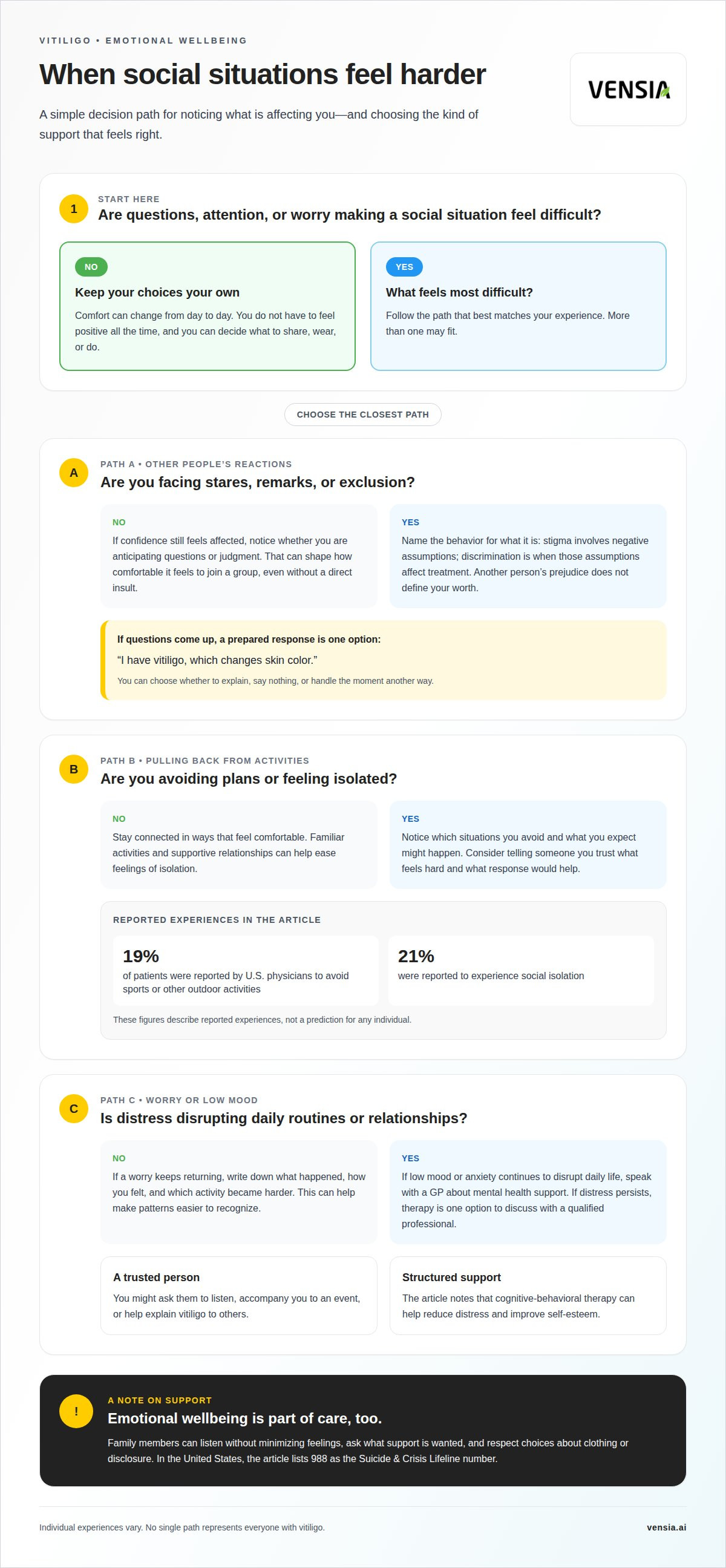
Social withdrawal can follow when someone expects questions or judgment. US physicians reported that 19% of their patients with vitiligo avoided sports or other outdoor activities, and 21% experienced social isolation. These figures describe reported experiences, not a prediction for every person. Preparing a short response, such as “I have vitiligo, which changes skin color,” can help someone decide how to handle questions.
Stigma and Discrimination
Stigma means making negative assumptions about someone because of vitiligo; discrimination occurs when those assumptions affect how they are treated. Misconceptions can lead to teasing, exclusion or awkward interactions, putting pressure on friendships, work relationships and family life. Someone may conceal patches or avoid a gathering to limit unwanted attention.
Confidence can be affected even without a direct insult. Someone might hesitate to introduce themselves or join a group after noticing people looking at their hands or face. Identifying the behavior can help separate another person’s prejudice from their own worth. Supportive relationships can also ease feelings of isolation.
Family Support and Social Connection
Family members can help by listening without minimizing someone’s feelings, asking what support they want and respecting their choices about disclosure or clothing. Before a family gathering, for example, ask whether they would prefer company, a brief explanation for relatives or no discussion of their skin.
Steady support can strengthen relationships without making vitiligo the person’s defining feature. Invite them to familiar activities, keep plans flexible and respond calmly to teasing without speaking over them. If distress persists, encourage them to discuss emotional support, including therapy, with a qualified professional.
Confidence can also shift with time and circumstances. In one survey, 70% of women and 54% of men with vitiligo experienced self-esteem issues related to the condition. Those figures show that both women and men may face challenges, though individual feelings differ. A person can feel comfortable with their skin one day and self-conscious the next.
In the United States, 988 Suicide & Crisis Lifeline is the listed crisis support number. Emotional distress deserves attention, especially when it begins to disrupt daily routines or relationships. Asking a trusted person to listen, arranging therapy, or sharing feelings with family can create a clear next step instead of facing distress alone.
Depression and anxiety associated with vitiligo
Vitiligo can add a psychological burden through appearance concerns, uncertainty and difficult social experiences. Anxiety may show up as persistent worry, while depression can involve low mood or reduced interest in usual activities. These feelings can affect sleep, concentration, relationships and everyday decisions, even when visible patches cover a small area.
Reported figures show why emotional wellbeing deserves attention. More than half of surveyed people with vitiligo reported mental health diagnoses, including anxiety and depression. A global study reported formal depression diagnoses in 24.5% of patients and anxiety diagnoses in 28.8%. Another reported moderate-to-severe depressive symptoms in 55%. These findings describe groups, not an individual’s likelihood or diagnosis.
Worry can focus on whether patches will spread, whether children might inherit vitiligo, or whether new treatments will become available. In a hospital-based study of 326 people, two-thirds worried about these concerns. Uncertainty can become stressful when it repeatedly occupies someone’s thoughts or affects choices, such as avoiding photographs, postponing plans or struggling to focus at work.
Anxiety, low mood and stress can reinforce one another. Someone distressed about a visible patch might avoid a social event and then feel more isolated. Tracking situations that trigger worry can help identify patterns. Note what happened, the feelings that followed and which activity became harder. These specific examples can help a therapist or doctor understand the distress.
Psychotherapy can offer structured support. Cognitive-behavioral therapy can help people with vitiligo reduce distress and improve self-esteem. A therapist may help someone recognize unhelpful thought patterns, practise coping strategies and gradually return to avoided activities. The aim is not to dismiss real challenges, but to build responses that support everyday life.
Emotional support can also come from family, trusted friends and peer communities. One practical first step is to tell someone you trust what feels difficult and what kind of response would help. You might ask them to listen, accompany you to an event or help explain vitiligo to others. If low mood or anxiety continues to disrupt daily routines, speak with a GP about mental health support.
Skin care and emotional care address different needs. For someone also seeking a topical product for vitiligo, VENSIA Anti Vitiligo Cream is a skin-care option; it does not replace therapy or mental health support.
Self-acceptance and positive self-image
Self-acceptance doesn’t mean liking every change or feeling positive every day. It means making room for feelings about appearance without letting vitiligo define personal worth.
Teenagers and Self-Consciousness
Self-consciousness is heightened concern about how other people see visible skin changes. Among pediatric age groups, teenagers aged 15 to 17 were reported as the most self-conscious about vitiligo. School can intensify that pressure through photographs, changing rooms, class presentations or comments from peers. A teenager who starts avoiding these situations may need support that addresses both practical concerns and feelings about appearance.
Parents can start by asking what feels hardest and listening before suggesting solutions. A teenager, for example, might want help responding to a classmate’s question but not want an adult to speak for them. Respecting that choice preserves their agency and can make support feel less like unwanted attention.
Confidence and Self-Acceptance
Confidence means taking part in daily life without letting appearance concerns dictate every choice. Self-acceptance can include frustration as well as moments of comfort; constant optimism isn’t required. Someone might choose short sleeves one day and cover patches another day. Neither choice defines their progress.
People with vitiligo can try separating their skin condition from their broader identity. Write down one quality unrelated to appearance, such as being a dependable friend, and one activity that matters, such as playing music. This reflection gives self-esteem more than one foundation, especially when visible changes attract attention.
Shame can grow when someone feels they must hide patches to be accepted. That feeling doesn’t mean they are less worthy. If someone avoids a family photograph, they can pause and name the concern: fear of comments, discomfort with the image or a wish for privacy. Identifying the specific feeling can clarify what choice or support would help.
Body image is shaped by how someone interprets their appearance, not just by what they see in the mirror. People with vitiligo may notice whether self-criticism changes after looking at a patch, comparing photographs or hearing a remark. Try describing the skin neutrally, such as “a lighter patch on my hand,” rather than using judgmental language.
Try a brief daily check-in: name one feeling, one situation that influenced it and one response that helped. After a difficult conversation, for example, someone might note feeling exposed, identify an unexpected question and prepare a reply for next time. This builds awareness without requiring a positive mood. Self-image can shift as people practise choices that reflect their comfort, values and boundaries.
Differences in psychological impact by age, gender and lesion location
The psychosocial impact of vitiligo can vary with life stage, gender and patch location. These factors help explain differences in quality of life, but they don’t determine how any individual will feel.
Psychosocial Distress and Quality of Life
Psychosocial distress is emotional strain connected to social experiences, relationships and daily activities. It matters because quality of life involves more than skin symptoms: it also includes how comfortably someone participates in work, relationships and community life.
In the 2021 VALIANT study, at least 40% of people with vitiligo experienced daily quality-of-life concerns related to the condition. Those concerns may involve practical choices, such as whether to attend an event, or emotional strain, such as anticipating questions. A daily pattern can affect wellbeing even when someone continues their usual activities.
Patch location can shape these experiences. People with facial lesions generally report lower quality of life and more depressive symptoms. Facial patches may be harder to conceal in conversations or photographs, making appearance concerns more immediate. Patches on covered areas may be less visible in some settings, although their emotional significance remains personal.
Emotional and Psychological Well-Being
Emotional and psychological wellbeing describes how someone feels and functions while living with vitiligo. Considering age and gender alongside patch location helps reveal different pressures, rather than assuming everyone shares the same experience.
People aged 18-30 tend to report lower quality of life and higher rates of depression than older patients. This life stage can involve forming relationships, pursuing education or building a career. For example, concern about visible patches may affect confidence during a first date or a job interview. These pressures may overlap, but each person’s circumstances remain distinct.
Some studies report lower quality of life among women with vitiligo than among men. This is a group-level finding, not a rule for every woman or man. Social expectations about appearance may influence how people experience visible changes, while individual relationships, communities and priorities matter too.
Consider the situations that affect wellbeing: a facial patch that draws attention, an uncomfortable work setting or a relationship where someone wants to explain their condition. Naming the situation can make the psychosocial impact easier to discuss with someone you trust or a healthcare professional. It can also distinguish a general mental health concern from a specific challenge that may call for practical support.
Body image and confidence
Body image is how someone experiences and evaluates their appearance, including visible vitiligo patches. Clothing, photographs, makeup routines and other daily decisions can affect confidence. Addressing these pressures means identifying which situations feel difficult and choosing coping strategies that support comfort, rather than imposing one ideal response.
Clothing can become a daily calculation. In a global study, 55.2% of patients with vitiligo frequently had trouble deciding what clothes to wear because of their condition. Someone might choose long sleeves for a work meeting, then feel frustrated about dressing around patches. That choice can be practical, but it can also carry an emotional cost if concealment feels compulsory.
Nearly 60% of people with vitiligo reported frequently concealing visible signs with makeup, concealer or clothing. Concealment may help someone feel prepared for a particular setting; choosing not to conceal can also be a valid expression of personal comfort. The useful question is whether the choice feels self-directed. For example, a person might wear makeup to a formal event but leave patches uncovered during a relaxed afternoon.
A MyVitiligoTeam member described spending two hours applying makeup before work because of facial vitiligo; the member was 49 years old. This individual account illustrates how a routine can take time and attention, but it doesn’t represent every patient’s experience. Someone facing a similar routine could note what feels burdensome, then consider whether a simpler approach or different choice better fits that day.
Skin tone can influence how patches appear. Contrast between pigmented and depigmented skin may be more visible on darker skin tones. This can affect comfort with photographs, public settings or personal presentation. Discussions with a dermatologist can include these appearance-related concerns alongside skin care, so patients can explain what matters to them as well as discuss clinical changes.
Try breaking a body-image concern into three parts: the situation, the feeling and the choice you want to make. For example, “I feel self-conscious in this photograph, and I’d rather be included without editing my skin” states a clear preference. Someone else may prefer a retake or makeup. Neither response measures confidence; both express a personal boundary.
Keep a short record for several days: note when appearance concerns arise and what helps you feel at ease. A pattern might show that certain lighting, clothing or comments affect confidence more than patches themselves. This can support a focused conversation with a dermatology professional or therapist. For a topical skin-care option, explore VENSIA Anti Vitiligo Cream as one choice alongside your personal approach to appearance and confidence.
VENSIA: VENSIA Anti Vitiligo Cream
VENSIA Anti Vitiligo Cream is a skincare option for people looking for a product focused on vitiligo. It can be part of a personal skincare routine when visible patches are a concern, but it does not address emotional distress or replace mental health support.
Choosing a cream is separate from building confidence or finding emotional support. Consider what you want from your skincare routine while also making space for wellbeing. If anxiety, low mood or difficulty coping continues, speak with a qualified health professional about appropriate support.
Explore VENSIA Anti Vitiligo Cream on VENSIA’s website to learn more about this skincare option.
Choose a next step that supports you
Your relationship with your skin doesn’t have to follow anyone else’s timeline. The emotional impact of vitiligo can be part of your experience without defining your identity, choices or relationships. Choose a personal next step: share a concern with someone you trust, write down what helps you feel comfortable or seek support for distress that affects daily life.
Skincare can be one part of caring for yourself, while emotional wellbeing may call for different support. Choose what feels useful now, whether that means learning about a skincare option or making space for an honest conversation. Small, self-directed choices can help you move forward with greater clarity.
If you’d like to ask VENSIA about its skin-care offerings, contact VENSIA. Your next step can be thoughtful, practical and guided by what matters to you.
Frequently Asked Questions
How does vitiligo affect mental health and emotional well-being?
Vitiligo can affect mental wellbeing through concerns about appearance, uncertainty or other people’s reactions. The emotional impact of vitiligo may show up as stress before social events, difficulty concentrating or discomfort in photographs. Notice changes in sleep, routines or interest in usual activities. If these changes persist or interfere with daily life, discuss them with a trusted healthcare professional.
How common are anxiety and depression among people with vitiligo?
Anxiety and depression are recognized concerns for people living with vitiligo, but prevalence estimates vary across studies and groups. A diagnosis is not inevitable, and statistics cannot determine an individual’s mental health. Notice patterns such as persistent worry, low mood or losing interest in activities. A healthcare professional can assess these experiences and help identify suitable support.
How does vitiligo affect self-esteem, body image, and confidence?
Visible patches can influence how someone judges their appearance and feels in situations such as taking photographs or meeting new people. Try identifying the specific moment that affects confidence rather than judging the whole day or your entire appearance. Someone might feel comfortable at home but uneasy under bright lighting. That distinction can clarify what support or adjustment might help.
How can vitiligo affect relationships, dating, and social interactions?
Vitiligo can leave someone unsure when to explain their skin changes or how a date might respond. There is no required moment to share personal information. Someone might offer a brief explanation if a conversation turns to their patches, or wait until trust develops. Friends, partners and relatives can help by listening without making every conversation about skin.
What emotional challenges do children and teens with vitiligo face?
Children and teens may worry about classmates noticing patches, asking questions or reacting during swimming or school photographs. Adults can make support practical by asking what the young person wants before stepping in. A student, for instance, may prefer help preparing a response to a peer rather than having a parent contact the school immediately. Respecting that preference supports their sense of control.
How does vitiligo-related stigma or discrimination affect quality of life?
Stigma can make everyday interactions tiring when someone anticipates intrusive questions, unkind comments or exclusion. It may also affect whether they join a group or speak openly about their skin. After a hurtful interaction, writing down what happened and how it affected daily life can help someone explain the impact to a trusted person. Supportive communities can offer connection without requiring lengthy explanations.
Which factors influence the emotional impact of vitiligo?
Emotional responses can depend on patch location and visibility, age, personal relationships, cultural expectations and other people’s reactions. The same person may feel differently in different settings. Patches might matter more during a work presentation than when spending time with close friends. Noticing where distress rises or eases can show when a practical change, conversation or additional emotional support may help.
What coping strategies help people manage the emotional effects of vitiligo?
Helpful strategies include talking with someone you trust, preparing a brief response to questions and keeping meaningful activities in your routine. Some people also find therapy, peer support or a conversation with a healthcare professional useful. Choose one manageable step, such as telling a friend what kind of support you prefer. If distress continues to disrupt daily life, seek professional mental health support.


