

Accepting Your Skin With Hyperpigmentation While Exploring Care
Treating every dark spot more aggressively can make it harder to fade. Hyperpigmentation occurs when excess melanin creates darker patches or spots. Accepting your skin with hyperpigmentation can go hand in hand with choosing care that respects your skin’s needs. It can affect people of every skin tone, and irritation or repeated friction may deepen discoloration, especially on dark skin.
It’s understandable to want clearer, more even-looking skin while also wanting to feel at ease with the skin you have. This guide explains common causes of hyperpigmentation, when a change deserves medical attention, and how to approach exfoliation and at-home products without adding unnecessary irritation. You’ll also find practical ways to care for dark skin, including sun protection and gentler routines, plus a realistic view of what care may and may not change. The goal isn’t to make you feel you must erase every mark. It’s to help you make informed choices and build a routine that supports healthy-looking skin and your comfort in it.
Key Takeaways
- Learn what can trigger darker patches and recognize when a change in your skin may deserve medical attention.
- Understand how acne, bites, irritation, and other skin inflammation can leave lingering discoloration.
- Explore gentler approaches to exfoliation and at-home care that help avoid adding irritation.
- Find practical ways to care for dark skin while setting realistic expectations for how marks may change over time.
- Discover ways to support your confidence and emotional well-being while deciding what care feels right for you.
Should I ever seek medical care for hyperpigmentation?
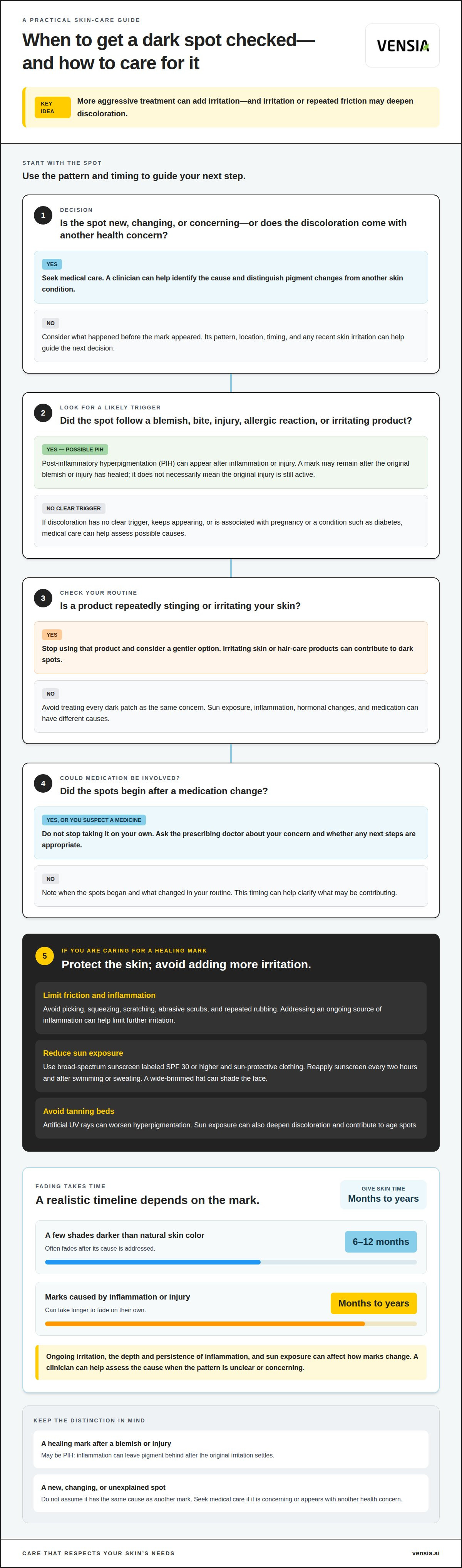
Hyperpigmentation is often harmless and doesn’t signal a serious medical condition. Still, a clinician can help identify its cause and distinguish pigment changes from another skin condition. Seek medical care if a spot is new, changing, or concerning, or if discoloration appears alongside another health concern. The pattern, location, timing, and any recent skin irritation can help guide that discussion.
Melanin gives skin its color, and excess melanin in one area can create darker patches across all skin tones. Sun exposure commonly contributes to age spots, particularly after years of excessive exposure. Melasma is another type of hyperpigmentation. Hormonal changes can contribute, and melasma may appear during pregnancy. Hormonal changes during pregnancy, as well as PCOS or diabetes, can darken skin folds, nipples, and genitalia. Hemochromatosis may also cause hyperpigmentation when iron levels are five times higher than usual.
Injury and inflammation can leave post-inflammatory hyperpigmentation, or PIH. Acne blemishes, cuts, burns, mosquito bites, and allergic reactions can trigger inflammation and melanin deposition in the affected area. A mark may remain after the original injury or blemish has healed. Irritating skin or hair care products can also cause dark spots. If a product repeatedly stings or irritates your skin, stop using it and consider a gentler option.
Medication can also contribute to dark spots. If you suspect a medicine is involved, don’t stop taking it on your own. Ask the doctor who prescribed it about your concern and whether any next steps are appropriate. Sharing when the spots began and what changed in your routine can help clarify the timing. This matters because the underlying cause influences how care is approached.
Medical care is especially useful when discoloration has no clear trigger, keeps appearing, or is associated with pregnancy or a condition such as diabetes. A clinician can assess the affected areas and consider likely causes, including sun exposure, irritation, and medication. For example, darker folds during hormonal changes may call for a different discussion than a mark left by acne. Avoid treating every dark patch as the same concern.
Makeup can provide temporary coverage if you choose; a concealer or foundation close to your natural skin tone can soften the contrast. Clothing can cover affected areas while also reducing direct sun exposure. Treatment timing varies: visible change may take a few months or a year, while a spot a few shades darker than your natural skin color often fades within 6 to 12 months after its cause is addressed.
Post-inflammatory hyperpigmentation
Post-inflammatory hyperpigmentation (PIH) appears after inflammation or injury triggers pigment changes. The affected skin may develop flat, darker patches after the original irritation settles. Acne blemishes, mosquito bites, allergic reactions, cuts, and burns can all leave marks. In each case, inflammation can lead to melanin depositing in the affected area. PIH can occur across skin tones, though the contrast may be more noticeable against a person’s natural complexion. The mark reflects a pigment change and doesn’t necessarily mean the original injury is still active.
A pimple that heals but leaves a brown spot, or a bite that darkens after scratching, are examples of inflammatory hyperpigmentation. Picking at pimples can prolong irritation, so avoid squeezing or scratching skin imperfections. A gentler approach also means noticing potential triggers, such as a product that irritates your skin. When inflammation continues, new patches may appear even as older spots begin to fade. Addressing the trigger helps limit further irritation, while existing marks may need time to fade.
Sun exposure can deepen discoloration. UV exposure may make PIH more visible, and tanning beds can worsen hyperpigmentation through artificial UV rays. Sun can also contribute to age spots, which are commonly linked to years of excessive exposure. A healing acne mark and an age spot may look similar but have different causes. A mark that follows a blemish suggests PIH, while changes on sun-exposed areas may have other causes. Avoid assuming every dark patch has the same origin.
Protect hyperpigmented skin with broad-spectrum sunscreen labeled SPF 30 or higher, plus sun-protective clothing. Reapply sunscreen every two hours and after swimming or sweating, as the American Academy of Dermatology advises. A wide-brimmed hat can shade the face, while covering exposed skin reduces direct sun exposure. These steps help limit additional darkening while marks heal. Tanning beds are best avoided because artificial UV exposure can make discoloration worse.
Fading takes time. A spot a few shades darker than your natural skin color will usually fade within 6 to 12 months after its cause is addressed. Marks caused by inflammation or injury can take months to years to fade on their own. The depth and persistence of the original inflammation, continued irritation, and sun exposure can all affect what happens next. A gradual change is different from a new trigger creating fresh discoloration. Protecting the area and avoiding repeated injury supports a calmer healing environment.
Care should focus on your skin’s current condition, not on scrubbing away pigment. Repeated rubbing can irritate skin and contribute to further darkening, so avoid abrasive scrubs and picking. If acne, an allergic reaction, or another source of inflammation continues, focus first on reducing that irritation. Note whether new patches follow a particular trigger, such as a bite or product. This pattern can help distinguish a healing mark from recurring inflammation and guide a more thoughtful approach to care.
At-home care and over-the-counter products
A steady routine can help protect skin and support a healthy-looking barrier. Start with gentle cleansing, moisturizer, and broad-spectrum sunscreen labeled SPF 30 or higher. Sun exposure can make darker patches more noticeable, so include exposed areas such as the face, neck, and hands. Sun-protective clothing adds coverage when you’re outdoors. Regular washing, exfoliating, and moisturizing can support healthy-looking skin, but rough scrubs may irritate it and create another problem.
Make sunscreen a consistent part of daytime care. People applying sunscreen to help prevent hyperpigmentation should reapply it every 2 hours and after swimming or sweating, according to the American Academy of Dermatology. Zinc oxide and titanium dioxide are physical sunscreen ingredients. Tinted sunscreen with iron oxide can also help protect against visible light, which may contribute to dark spots. Choose broad-spectrum protection, and consider clothing or a hat for additional coverage when spending time outside.
Some over-the-counter ingredients may help fade dark spots. Options include azelaic acid, glycolic acid, kojic acid, a retinoid, or vitamin C. These ingredients work differently, and adding several at once can make it harder to identify what’s causing irritation. Introduce a new product on a small patch of skin first. Stop using it if irritation develops. If a product burns or stings when applied, the American Academy of Dermatology recommends stopping its use.
Exfoliation doesn’t mean scrubbing harder. A rough scrub or lemon juice can irritate skin and may worsen discoloration, especially if a recent injury or blemish has left the area sensitive. Avoid liquid bleach on skin. It can cause harm and isn’t a safe way to remove dark patches. Instead, exfoliate gently and moisturize afterward. Moisturizer supports the skin barrier, helping limit dryness and discomfort when your routine includes active ingredients.
Choose products for targeted care, not to lighten your overall complexion. Skin-lightening products shouldn’t be used to change a person’s natural skin tone. If you’re trying a natural remedy or a new treatment, test it on a small patch and stop if irritation develops. Keep the rest of your routine simple while you assess your skin’s response. For example, avoid starting a retinoid, glycolic acid, and vitamin C together. A gradual approach makes it easier to identify the product causing a reaction and adjust your routine.
Consistency matters more than layering numerous products. Use sunscreen and moisturizer regularly, then introduce one exfoliating or spot-care ingredient at a time. If redness, burning, or stinging develops, stop using the irritating product rather than pushing through discomfort. Avoid picking blemishes, since inflammation can leave additional marks. A gentle routine protects skin from further irritation while giving existing discoloration time to change.
Managing hyperpigmentation on dark skin
Dark spots can stand out against a deeper skin tone, but a thoughtful approach starts by identifying the trigger. Acne, friction, irritation, and sun exposure can each contribute to discoloration. Melasma may appear during pregnancy or with hormonal changes, so its pattern and timing matter. Similar-looking patches can have different causes, and treating the wrong trigger may prolong irritation. Note where marks appear and what came before them, such as a breakout, rubbing, or a change in skin care.
Treatment can carry risks, especially when it irritates or injures the skin. Laser therapy, intense pulsed light, and chemical peels can worsen hyperpigmentation by injuring the outer skin layer. A dermatologist can assess dark spots and discuss care options, including cosmetic procedures. This can be useful when patches persist, spread, or return after a possible trigger has been addressed. Avoid harsh exfoliation and repeated rubbing, which can cause additional irritation and make discoloration more noticeable.
Sun protection supports care across all skin tones. Use broad-spectrum sunscreen and protective clothing, and consider a wide-brimmed hat outdoors. Seek shade during peak sunlight and reduce direct exposure to help limit further darkening. Repeated friction can also thicken and darken affected skin, particularly in people with deeper skin tones. For example, tight clothing may keep an area irritated. Choose looser coverage where practical and avoid rubbing the patch.
Set realistic expectations before starting treatment. Skin renewal takes between 30 and 60 days, so visible improvement may take three to six months. Treatments for hyperpigmentation may take a few months or a year to work. Some areas fade with good sun protection, while other marks may lighten without disappearing completely. Hyperpigmentation can be a lifelong condition, even when treatment clears some spots or reduces their contrast. Track changes over time rather than judging care by daily appearance.
Pregnancy-related melasma deserves a thoughtful approach. Hormonal changes can contribute to melasma, and its pattern may shift as those changes occur. If dark patches begin during pregnancy, don’t assume they’re the same as an acne mark or sun-related spot. A dermatologist can assess the pattern and discuss suitable options. Gentle skin care and sun protection can support your skin while helping avoid unnecessary irritation.
Choose care that prioritizes skin integrity over rapid lightening. A new treatment shouldn’t leave skin persistently inflamed, since injury can cause additional discoloration. If a procedure or product irritates your skin, pause and seek medical guidance about the reaction. Accepting your natural skin tone doesn’t prevent you from addressing specific spots. It lets you choose care based on comfort, health, and realistic goals.
How can I manage negative feelings or low self-esteem related to hyperpigmentation?
Visible dark spots can affect how comfortable you feel in photographs, at work, or around friends. You may find yourself checking a mark in every mirror or choosing clothes to cover it. Notice when these feelings are strongest, such as before a social event or after comparing your skin with edited images. Naming the situation can help separate the emotion from the spot itself. Your skin’s appearance is one part of you, not a measure of your worth.
Set a personal goal that includes well-being, not just a change in skin tone. For example, you might aim to follow a gentle routine without repeatedly checking your reflection. You can also choose whether to use makeup or clothing for coverage on a particular day. These choices are yours. Covering a mark doesn’t mean you reject your skin, and leaving it visible doesn’t mean you have to feel a certain way. Give yourself room to make different choices in different settings.
Try a simple response when self-critical thoughts arise. First, identify the thought, such as “everyone is looking at this spot.” Then consider what you actually observed instead of assuming what others think. Shift your attention to a specific activity, like speaking with a friend or finishing a task. This practice won’t change the pigment, but it can help interrupt repeated checking and worry. Focus on actions you can control.
Support from other people can make the experience feel less isolating. If you’re coping with hyperpigmentation, you can seek support through support groups or online chats. Choose a group where members discuss their experiences respectfully, rather than pressuring one another to pursue a particular treatment. You could share a concern, such as feeling self-conscious in bright lighting, and listen to how others manage similar moments. A trusted friend can also offer support without making skin care the only topic.
Set boundaries around comments and comparisons. If someone asks about a dark patch, a brief response such as “I’m comfortable not discussing my skin” can end the conversation. Curate social media by unfollowing accounts that make you feel inadequate and keeping those that show varied skin tones without demanding perfection. Before an event, decide whether you want coverage, then prepare your chosen makeup or outfit. Having a plan can reduce last-minute pressure.
Skin care can be one part of self-care, not a test of discipline or self-acceptance. If you choose to address dark spots, keep expectations centered on gradual care and comfort. If emotional distress starts interfering with daily activities or relationships, consider talking with a qualified mental health professional. For targeted pigmentation care, explore a focused skin-care option that fits your routine and personal goals.
VENSIA
VENSIA offers targeted skin-care options for pigmentation concerns, including the Anti Pigmentation Cream for dark spots and uneven-looking tone. The brand also offers a niacinamide and marshmallow body lotion to moisturize dry, rough skin and provide gentle exfoliation. These products can complement a considered at-home routine, but they don’t replace medical care when a changing or concerning mark needs assessment. Choose care that suits your skin’s needs and personal goals, without treating your natural skin tone as something that must change. Explore VENSIA’s skin-care options online to find a product for your routine.
Choose care that supports your confidence
Your next step can be small and personal. Decide what you want skin care to support, whether that’s feeling comfortable in your routine, addressing a particular spot, or spending less time thinking about your complexion. Those goals can change, and they don’t need to follow anyone else’s timeline. Accepting your skin with hyperpigmentation can coexist with choosing care. Neither choice has to define how you feel about yourself.
Keep your priorities in mind as you make decisions. If a product or routine adds stress, discomfort, or pressure to change your natural skin tone, you can reconsider it. Choose options that suit your needs and support a relationship with your skin that feels thoughtful, not critical.
If you’d like to explore skin-care options with VENSIA, contact VENSIA to discuss your skin. Move forward at your own pace, with care guided by your comfort and confidence.
Frequently Asked Questions
What is hyperpigmentation?
Hyperpigmentation describes areas of skin that appear darker than the surrounding skin because of increased pigment. It may look like small, distinct spots or broader patches, and its color can vary with your natural complexion. The term describes an appearance, not one single cause. For example, a mark left after a blemish and a sun-related spot may both look darker, even though their triggers differ.
How can I cope with age spots, sun spots, liver spots and other forms of hyperpigmentation?
Start by choosing what helps you feel comfortable day to day. If you want coverage, try makeup that blends with your natural skin tone or choose clothing that covers the area. If you prefer not to cover spots, you don’t have to. For a useful record, take occasional photos in similar lighting rather than inspecting your skin repeatedly. This can help you notice gradual changes without making your appearance a daily focus.
How can I accept and feel confident about skin with hyperpigmentation?
Confidence can grow alongside skin care, without waiting for spots to disappear. Identify one situation where you feel self-conscious, then decide what might help: wearing an outfit you enjoy, using makeup, or changing the subject if someone comments. Accepting your skin with hyperpigmentation doesn’t require liking every mark. It can mean treating yourself with respect while choosing how to care for your skin, whether to cover spots, and how much attention to give them.
What causes hyperpigmentation and what types are common?
Common forms include post-inflammatory marks after acne or injury, melasma associated with hormonal changes, and age spots linked to sun exposure. These categories have different patterns and triggers, so similar-looking patches may not share the same cause. For instance, note whether a mark followed a breakout or appeared on an area often exposed to sunlight. That history can help clarify the type of discoloration you’re noticing.
What skincare ingredients can help fade hyperpigmentation safely?
Over-the-counter products containing azelaic acid, glycolic acid, kojic acid, retinoids, or vitamin C may help fade dark spots. Choose a product that fits your routine and introduce one active ingredient at a time so you can identify irritation. Test a new product on a small area first. Stop using it if it burns or stings. Avoid harsh scrubs and lemon juice, which can irritate skin.
When should I see a dermatologist about hyperpigmentation?
Arrange a medical assessment if a dark spot is changing, appears without an obvious trigger, or concerns you. A dermatologist can examine its appearance and location, ask when it began, and consider factors such as irritation, sun exposure, or medication. Bring a brief list of the skin products and medicines you use, along with notes about when the mark appeared. Don’t stop a prescribed medicine without discussing your concern with its prescriber.


