

Skincare Routine for Post-Acne Dark Spots: Ingredients and Daily Care
Exfoliation alone won’t clear post-acne dark spots; the better approach is to treat active acne while supporting the skin as the marks fade. A skincare routine for post-acne dark spots should include broad-spectrum sunscreen with SPF 30 or higher each day, since UV exposure can darken existing marks and slow fading.
It’s understandable to want to scrub away discoloration after a breakout heals. But irritating your skin can make uneven tone more noticeable, while untreated acne can lead to new marks. This guide explains how to pair gentle acne care with tone-evening ingredients, what to avoid, and why fading takes time. You’ll also learn how to introduce products thoughtfully and build a consistent routine without overloading your skin.
Key Takeaways
- Use broad-spectrum sunscreen with SPF 30 or higher each day to help prevent UV exposure from deepening post-acne discoloration.
- Learn to distinguish flat dark marks from lingering redness and changes in skin texture, since they can fade at different rates.
- Introduce one tone-evening ingredient at a time, and avoid harsh exfoliation that may irritate skin or worsen discoloration.
- Pair gentle care for active acne with care for leftover marks, and avoid picking or squeezing blemishes.
- Set realistic expectations: some dark spots take months to fade, so consistency matters.
1. Daily broad-spectrum sunscreen
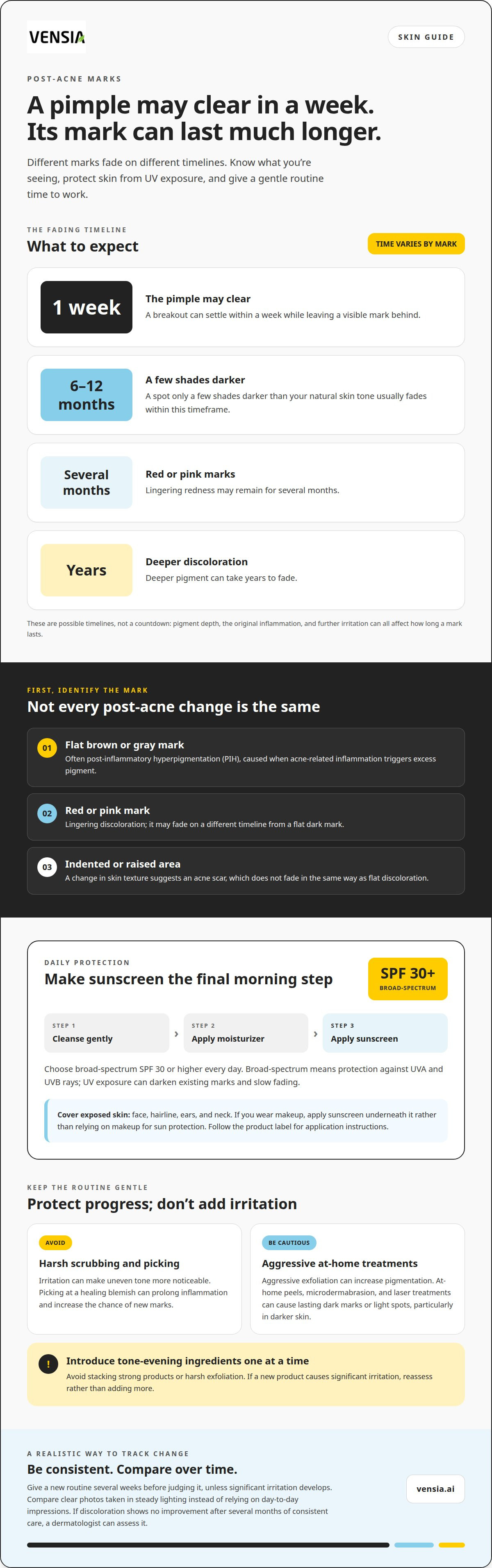
A morning routine for post-acne dark spots can follow three steps: cleanse gently, apply moisturizer, then finish with broad-spectrum sunscreen. Choose sunscreen with SPF 30 or higher and use it every day. This final step helps limit UV exposure, which can darken existing marks and slow fading.
A skincare routine for post-acne dark spots should include sunscreen labeled “broad-spectrum” and SPF 30 or higher. SPF indicates protection from UVB rays, while broad-spectrum labeling means the product protects against UVA and UVB rays. Both details matter when you’re protecting areas where acne left visible pigment changes. A moisturizer can sit beneath sunscreen if your routine includes one.
Apply sunscreen to exposed skin, including your face, hairline, ears, and neck. Dark marks may be most visible on your cheeks or forehead, but other uncovered areas are exposed to sunlight too. Follow the product label for application instructions. If you wear makeup, apply sunscreen underneath it rather than relying on makeup for sun protection.
Daily use matters because UV exposure can affect existing spots even when you aren’t deliberately sunbathing. A commute, outdoor lunch, or time beside a bright window can add to everyday exposure. Make sunscreen part of your morning routine, and follow its label for daytime use.
For a skincare routine for post-acne dark spots, choose a formula you can comfortably wear every day. If sunscreen feels unpleasant, a lighter texture or different format may suit you better. The priority is broad-spectrum protection with SPF 30 or higher, not an extra step that leaves your skin irritated or makes your routine difficult to maintain.
Keep the order simple: cleanse, apply any tone-evening product according to its directions, moisturize, then apply sunscreen. Don’t skip sun protection because a dark spot seems to be fading. Continued exposure can deepen pigmentation, so steady protection remains part of caring for uneven tone.
At the end of the day, remove sunscreen gently rather than scrubbing your skin. Avoid harsh friction on acne-prone areas, since irritation can make a routine harder to tolerate. Aim for consistent care: SPF 30 or higher each morning, broad-spectrum coverage, and gentle cleansing at night. These steps help protect skin while post-acne marks fade.
2. How long does it take for post-acne marks to fade?
A flat brown or gray mark is often post-inflammatory hyperpigmentation, or PIH. It develops when acne-related inflammation triggers excess pigment in the skin. Red or pink marks are lingering discoloration, while an indented or raised area suggests an acne scar that changes skin texture. The distinction matters: flat marks and textured scars don’t fade in the same way.
A pimple can clear within a week, yet leave a visible mark for months. The American Academy of Dermatology says a spot only a few shades darker than natural skin tone usually fades within 6 to 12 months. Deeper discoloration can take years, while redness may linger for several months. The depth of pigment, the strength of the original inflammation, and further irritation all affect the timeline.
Give a new routine several weeks before judging it, unless significant irritation develops. Take a clear photo in steady lighting and compare it with a later photo instead of relying on day-to-day impressions. A flat mark that gradually lightens differs from a depression or raised area that remains after acne settles. If discoloration shows no improvement after several months of consistent care, a dermatologist can assess it. Deeper discoloration often needs professional care.
In the United States, treatment for post-inflammatory hyperpigmentation is not typically covered by health insurance; aggressive procedures can also cause permanent dark marks or light spots, particularly in darker skin.
Time alone doesn’t tell the whole story. A brown mark that slowly lightens, for example, differs from a scar that changes cheek texture. Picking at a healing blemish can prolong inflammation and increase the chance of new hyperpigmentation. A dermatologist can assess whether a mark is flat discoloration, redness, or a textural scar, then consider its depth and skin response when discussing care.
Be patient, but keep observing your skin. If a spot becomes more noticeable, new acne keeps appearing, or a routine causes substantial irritation, reassess rather than adding several strong products at once. The goal is steady fading without creating more inflammation. Consistent daily care and tracking changes over months give a clearer picture than expecting a mark to disappear after a few applications.
3. Irritating home remedies and unregulated lightening creams
Scrubbing a dark mark can irritate skin and worsen uneven pigmentation. The American Academy of Dermatology notes that aggressive exfoliation can increase pigmentation, especially in deeper skin tones. At-home chemical peels, microdermabrasion, and laser treatments can also cause permanent dark marks or light spots for people with darker skin. These methods can trade one visible concern for another.
DIY recipes can sound gentle because they use familiar ingredients. For example, an online recipe may suggest a pumpkin peel followed by a turmeric mask one to two times a week. Another may recommend a homemade aspirin mask made with five uncoated tablets, left on for 20 minutes. Those examples are not reliable treatment instructions. A kitchen recipe doesn’t establish that its strength, contact time, or combination suits acne-prone skin.
Be cautious with any remedy that stings, burns, or leaves skin persistently red. Irritation can aggravate inflammation, and aggressive exfoliation may deepen pigmentation rather than lift it. Skip harsh scrubbing and avoid stacking several peels or masks in one routine. If a new product causes discomfort, stop using it rather than extending its contact time or applying it more often.
Take particular care with unregulated lightening creams. Unclear labeling or a missing ingredient list makes it difficult to know what you’re applying. Some over-the-counter dark-spot products can remove too much pigment and cause hypopigmentation, leaving lighter patches. A lighter spot is not the same as a more even tone, so avoid chasing fast results with stronger or unidentified formulas.
Home care works best when it stays simple. Choose a labeled product intended for skin, follow its directions, and introduce one new treatment at a time. Don’t combine a peel, abrasive scrub, and lightening cream in the same evening. If you’re trying a tone-evening product, keep other steps gentle so you can notice irritation and identify what may have triggered it.
Look at the skin’s response, not a recipe’s promised schedule. A pumpkin mask used once or twice weekly can still irritate, and a 20-minute aspirin mask isn’t automatically safe because its timing sounds precise. Avoid applying unregulated products to active breakouts or freshly irritated skin. A calm, consistent routine is a more considered choice than escalating home remedies whenever a mark remains visible.
4. Niacinamide and tone-evening ingredients
Niacinamide is one ingredient to consider for flat post-acne marks. A study found it reduced the appearance of hyperpigmentation, likely by interrupting pigment transfer to surface skin cells. This may support a more even-looking skin tone over time. It’s a targeted option, not a reason to add several new products at once.
For an evening routine, cleanse gently, apply one tone-evening product as directed, then moisturize. If the product contains niacinamide, keep the rest of your routine familiar while you observe your skin. Add one pigment-supporting ingredient at a time. This makes it easier to notice irritation and prevents overlap between several new treatments.
Other topical ingredients work differently. Gentle AHAs, including glycolic acid, mandelic acid, and fruit acids, help loosen dull surface cells so skin can look brighter and smoother. They exfoliate the surface, but they don’t remove every dark mark. Follow the product label, and avoid pairing a new acid with multiple other active products right away.
Consider your skin’s response before adding more ingredients. If you’re introducing glycolic acid, for example, don’t start niacinamide and another exfoliating product on the same evening. A simple routine makes it easier to identify irritation. If redness, burning, or persistent discomfort develops, stop the new product rather than pushing through.
More active ingredients don’t automatically mean better results. Some over-the-counter dark-spot products can remove too much pigment and cause hypopigmentation, or lighter patches. Check the ingredient list and directions before use. Don’t apply extra product or use it more often than directed to speed fading. That can increase irritation without helping you achieve an even skin tone.
Let consistency guide your approach. Use one selected ingredient according to its directions, keep the rest of your evening routine gentle, and pay attention to changes in the marked area. Niacinamide and AHAs target different aspects of the skin’s appearance, so choose based on your routine and tolerance rather than stacking them. A focused routine is easier to follow and assess.
5. Treating acne and post-acne dark spots at the same time
Treat active acne while caring for the marks it leaves behind. Dermatologists recommend addressing both concerns at the same time, since new breakouts can create fresh discoloration as older marks fade. Picking or squeezing blemishes can prolong inflammation and increase the chance of post-inflammatory hyperpigmentation. A practical routine addresses current pimples without neglecting the flat marks already visible.
For mild acne, dermatologists recommend starting with a benzoyl peroxide product containing 2.5%. This approach targets breakouts while limiting irritation compared with starting at a higher concentration. If the 2.5% product irritates your skin, use it every other day instead. Follow its label directions, and avoid applying extra product to individual spots in an effort to speed results.
Pair acne care with a separate, gentle approach to discoloration. For example, keep your acne treatment in one step and use a tone-evening ingredient in another, rather than layering several new actives together. Introduce products one at a time so you can identify which step causes irritation. If your skin becomes persistently uncomfortable, simplify the routine instead of adding another exfoliant.
Avoid habits that keep inflammation active. Don’t pick a whitehead before applying acne treatment, and avoid rubbing roughly when cleansing around a tender breakout. A blemish that heals without squeezing is less likely to develop extra inflammation from handling. This matters for every skin tone, including darker skin tones that may develop more visible pigment changes after irritation.
Set expectations according to the type of mark. A flat brown spot can gradually fade while new acne produces fresh marks. A raised or indented area changes texture and differs from flat discoloration. If breakouts keep appearing, address acne consistently instead of focusing only on leftover spots. This way, daily care addresses the source of new marks as well as existing uneven tone.
See a dermatologist if post-acne discoloration isn’t improving after several months of consistent care. Deeper discoloration often needs professional care, and a dermatologist can assess whether a persistent mark is pigment change, lingering redness, or a textural scar.
To explore a focused option for uneven tone, browse tone-evening care.
VENSIA: VENSIA Anti Pigmentation Cream | Removes Dark spots , Fine Lines, Wrinkles & Ageing Spots Suitable for Women/Men - All Skin Types - 30 gm| Even Skin Tone - Pigmentation removal
VENSIA Anti Pigmentation Cream is positioned for dark spots, uneven tone, fine lines, wrinkles, and ageing spots. It may suit a routine that already includes consistent sun protection and gentle acne care, but still needs to address lingering marks. Keep the distinction clear: a topical cream is intended for changes in skin tone, not indented or raised acne scars.
Use the product according to its label, and avoid combining it with several new active ingredients at once. This makes it easier to notice how your skin responds and keeps your routine focused. Continue daily sun protection as you care for visible pigmentation. For persistent marks or changes in skin texture, a dermatologist can assess the concern.
Contact VENSIA to learn more about its anti-pigmentation cream.
Make your next skincare step a steady one
Post-acne marks can take time to change, so choose consistency over urgency. Keep to a small number of steps you can maintain, and notice how your skin responds before making further changes. A thoughtful skincare routine for post-acne dark spots isn’t about adding every trending ingredient; it’s about choosing care that fits your skin and staying alert to new irritation or breakouts.
If you’re ready to explore a targeted option for uneven tone, consider whether VENSIA Anti Pigmentation Cream fits your skincare needs. Keep expectations grounded in your skin’s response, and seek professional advice for persistent marks or changes in skin texture. A clear next step can make daily care feel more manageable.
Reach out to VENSIA for skincare support as you decide what suits your routine. With a considered approach, you can care for your skin without rushing its progress.
Frequently Asked Questions
Can I exfoliate dark spots away?
No. Exfoliation may help dull surface cells shed, but scrubbing a mark doesn’t simply remove the pigment beneath it. Gentle AHAs, such as glycolic or mandelic acid, work differently from rough scrubs or aggressive peels. If exfoliation leaves your skin burning or persistently red, stop that step. Irritation can make discoloration more noticeable, so a stronger product isn’t automatically a better choice.
How long does it take for post-acne marks to fade?
It depends on the mark’s depth and color. The American Academy of Dermatology says a spot a few shades darker than your natural skin tone usually fades within 6 to 12 months. Deeper discoloration may last for years, while redness can remain visible for several months. Compare occasional photos taken in similar lighting; daily mirror checks can make gradual change difficult to notice.
What are post-acne dark spots?
Post-acne dark spots are flat areas of color change left after a breakout, rather than dents or raised scars. They may appear brown or gray, depending on your skin and the mark. A flat patch where a pimple healed, for example, differs from a lasting change in cheek texture. This distinction helps set appropriate skincare expectations, since texture changes aren’t simply pigment.
What causes post-acne dark spots and how can you tell them apart from acne scars?
Acne-related inflammation can prompt excess pigment, leaving a flat mark after the blemish settles. Picking or squeezing can prolong that inflammation and increase the chance of discoloration. A dark, flat patch indicates a color change; an indented or raised area changes skin texture. Check the mark in natural light without pressing it. Persistent texture changes or uncertainty about a mark are reasons to seek a dermatologist’s assessment.
What skincare ingredients fade post-inflammatory hyperpigmentation?
Niacinamide is one option: a study found it reduced the appearance of hyperpigmentation, likely by interrupting pigment transfer to surface skin cells. Gentle AHAs, including glycolic and mandelic acids, loosen dull surface cells, serving a different role from niacinamide. Introduce one tone-supporting ingredient at a time, follow its label, and keep other routine steps familiar so you can identify a reaction.
How should you use sunscreen to prevent dark spots from getting darker?
Choose a broad-spectrum sunscreen with SPF 30 or higher and use it each day. Broad-spectrum coverage protects against UVA and UVB rays, while UV exposure can deepen existing discoloration. Apply it as the final step of your morning skincare, following the product label. Sunscreen helps protect marks from further darkening; it doesn’t replace a tone-evening product or remove pigment on its own.
How long does it take for post-acne dark spots to fade with skincare?
Skincare can support fading, but it doesn’t set a precise timetable for each spot. A mark only a few shades darker than natural skin tone usually fades within 6 to 12 months, according to the American Academy of Dermatology. Deeper discoloration may take years. Give a new routine several weeks before assessing it, unless significant irritation develops, and track changes under consistent lighting.
How do azelaic acid, retinoids, vitamin C, and niacinamide compare for dark spots?
These ingredients aren’t interchangeable. Niacinamide has evidence for reducing the appearance of hyperpigmentation by interrupting pigment transfer, while AHAs such as glycolic acid loosen dull surface cells. Vitamin C appears in some skincare formulas, but its presence alone doesn’t establish how a product will affect your marks. Introduce one new active at a time and avoid layering several unfamiliar ingredients together.


